- Category
- World
Russian Banks, Email and Internal Systems Become “Easy Targets” as Trusted Certificates Disappear
 Prefer U24 Media on Google
- Authors

-111f0e5095e02c02446ffed57bfb0ab1.jpeg "Photo of Roman Kohanets")
Russian companies could be forced to spend heavily rebuilding national web infrastructure to keep state and corporate sites online, after mass revocations of international security certificates began locking Russian domains out of mainstream browsers.
This was reported by Ukraine's Foreign Intelligence Service on its official website on August 12.
We bring you stories from the ground. Your support keeps our team in the field.
The service assessed that Russia's war has hollowed out its economy and is now spreading into its digital sector. State services such as the Federal Tax Service, along with major banks, are increasingly failing to load in mainstream browsers such as Chrome, Firefox and Safari.
More than 20,000 Russian domains have been left without internationally recognized security validation, the agency estimated, among them the state-linked lender Gazprombank and the diamond miner Alrosa. Roughly 90 percent of the Russian market still leans on foreign-issued certificates, it noted.
The disruption traces back to Japanese certificate authority GlobalSign, which began revoking certificates issued to sanctioned Russian companies in June. One documented wave covered about 310 domains across 44 firms, including entities tied to Rosneft, Gazprombank, Alrosa, VEB.RF and the United Aircraft Corporation.
-5bac6dd82f2bd3723cfacf355deb12fd.jpg)
Market sources cited by RBC estimated the initial revocation list touched 15,000 to 20,000 second-level domains. A second-level domain is the core registered name that sits directly before a country suffix, like .ru—for example, gazprombank in gazprombank.ru.
Once the subdomains layered beneath each one are counted, the number of affected certificates could run into the hundreds of thousands. Independent analysis of the affected .ru domains has painted a similar picture of the reach of the revocations.
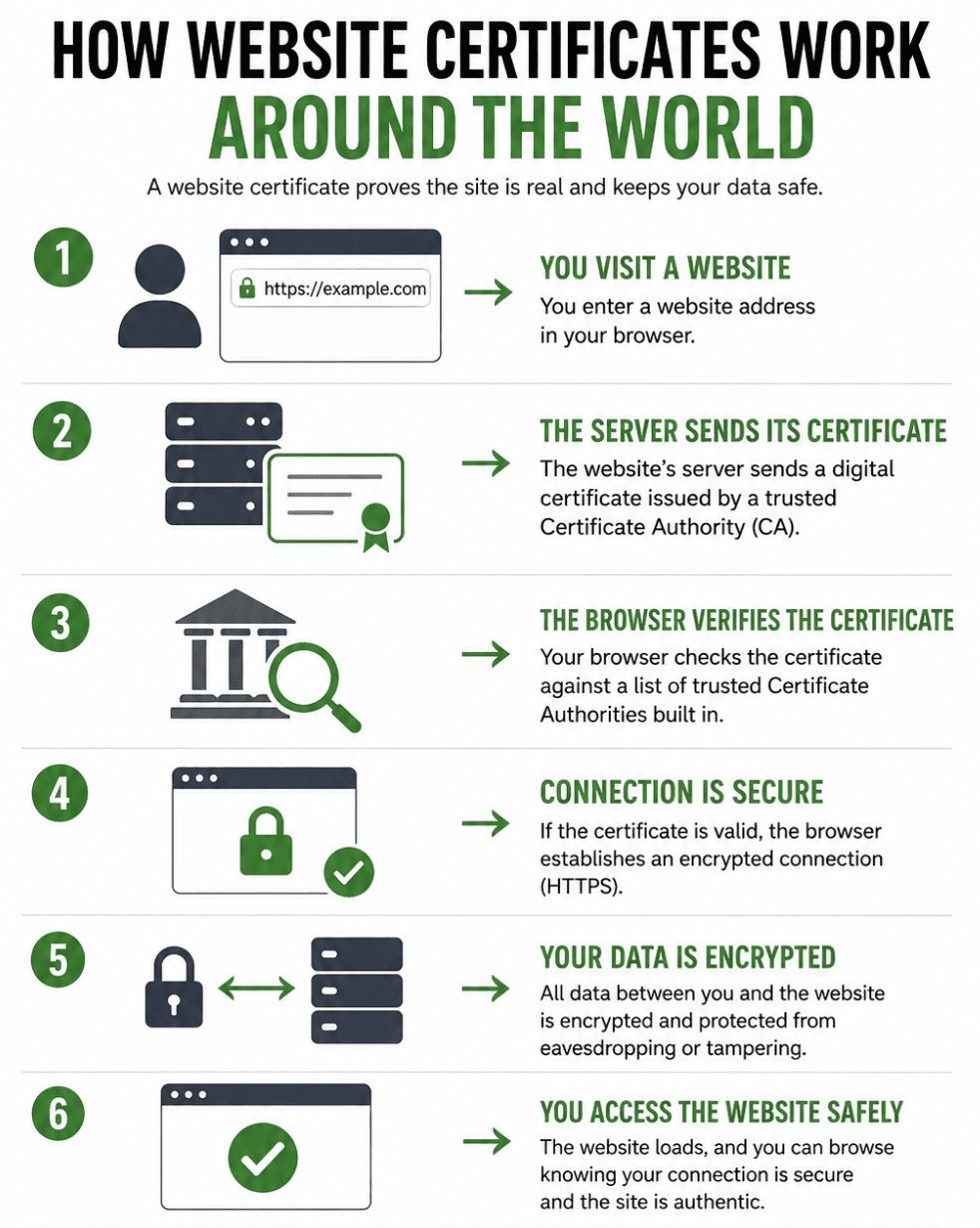
When a certificate is revoked, a site loses the credential that browsers rely on to verify its authenticity and encrypt traffic. Chrome, Safari, Firefox and Edge can then mark the connection as unsafe or block the page outright.
The revocations followed new rules from the CA/Browser Forum, an industry body of certificate authorities and browser makers, that require issuers to screen clients against US and other sanctions lists. GlobalSign, owned by Japan's GMO Internet Group, had little room to keep serving sanctioned Russian clients.
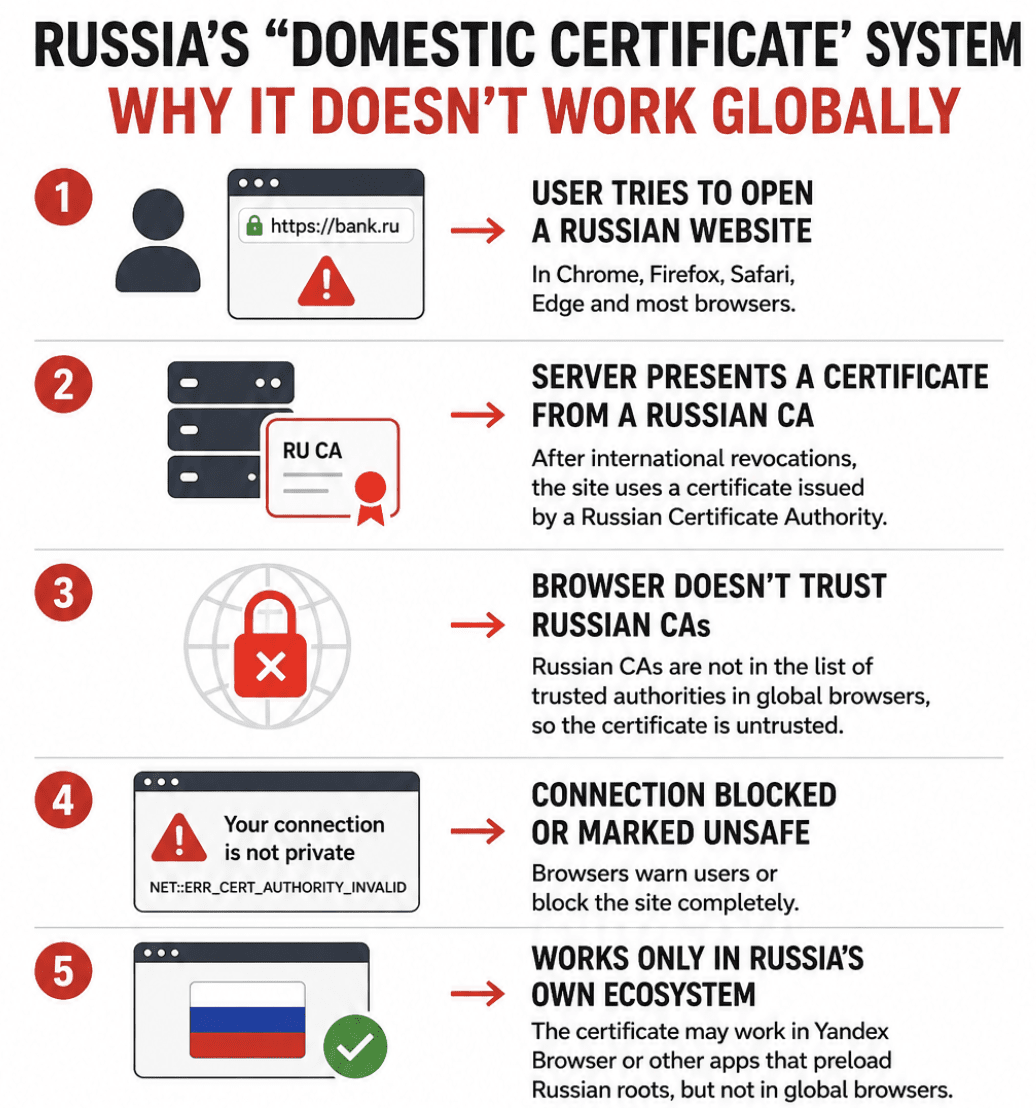
Moscow's response has been to push homegrown substitutes. Russia's Digital Development Ministry has urged users to install state-issued certificates via the Gosuslugi public services portal, and Yandex Browser already ships with the domestic certificate built in. Those credentials work inside Russia's own systems but carry no automatic trust in Chrome, Safari or Firefox.
Ukraine's Foreign Intelligence Service emphasized that the domestic certificates cost nothing, while the rebuild around them does not. Reconfiguring infrastructure at large corporations could take up to six months and demand a wholesale swap of software and operating systems, the agency indicated, leaving the bill with Russian businesses already squeezed by war and sanctions.
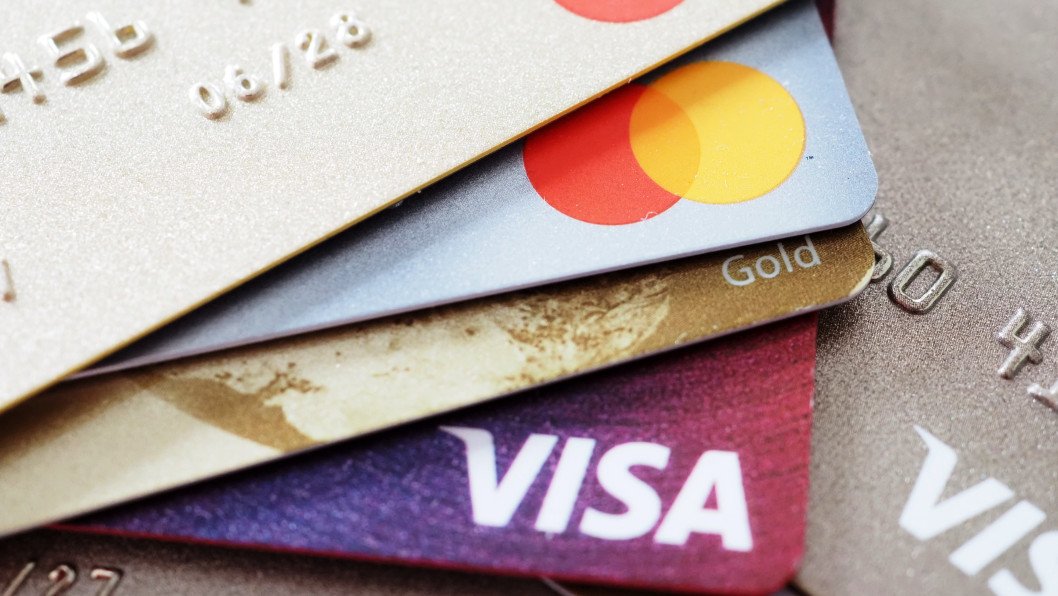
It warned that the loss of trusted certificates turns Russian internal systems, email and banking interfaces into soft targets for hackers. The service also dismissed the recommended switch to Yandex Browser as prone to freezing and cache failures, and as offering no real protection for user data.
The certificate crisis is only the latest step in Russia's drift toward a walled-off internet. In 2025, Russia stripped more applications from Apple's App Store than any other country, 1,213 in total, up from 171 the year before. Much of that purge targeted VPNs and other tools used to evade state blocks, as Roskomnadzor tightened its grip on what Russians can access online.
Discuss this article:

-c439b7bd9030ecf9d5a4287dc361ba31.jpg "Photo of Katherina Popilnichenko")


-72b63a4e0c8c475ad81fe3eed3f63729.jpeg "Photo of Cyril Barabaltchouk")