- Category
- Investigations
Siemens and Fanuc Left Russia—But Their CNC “Brains” Still Power Its Missile Factories
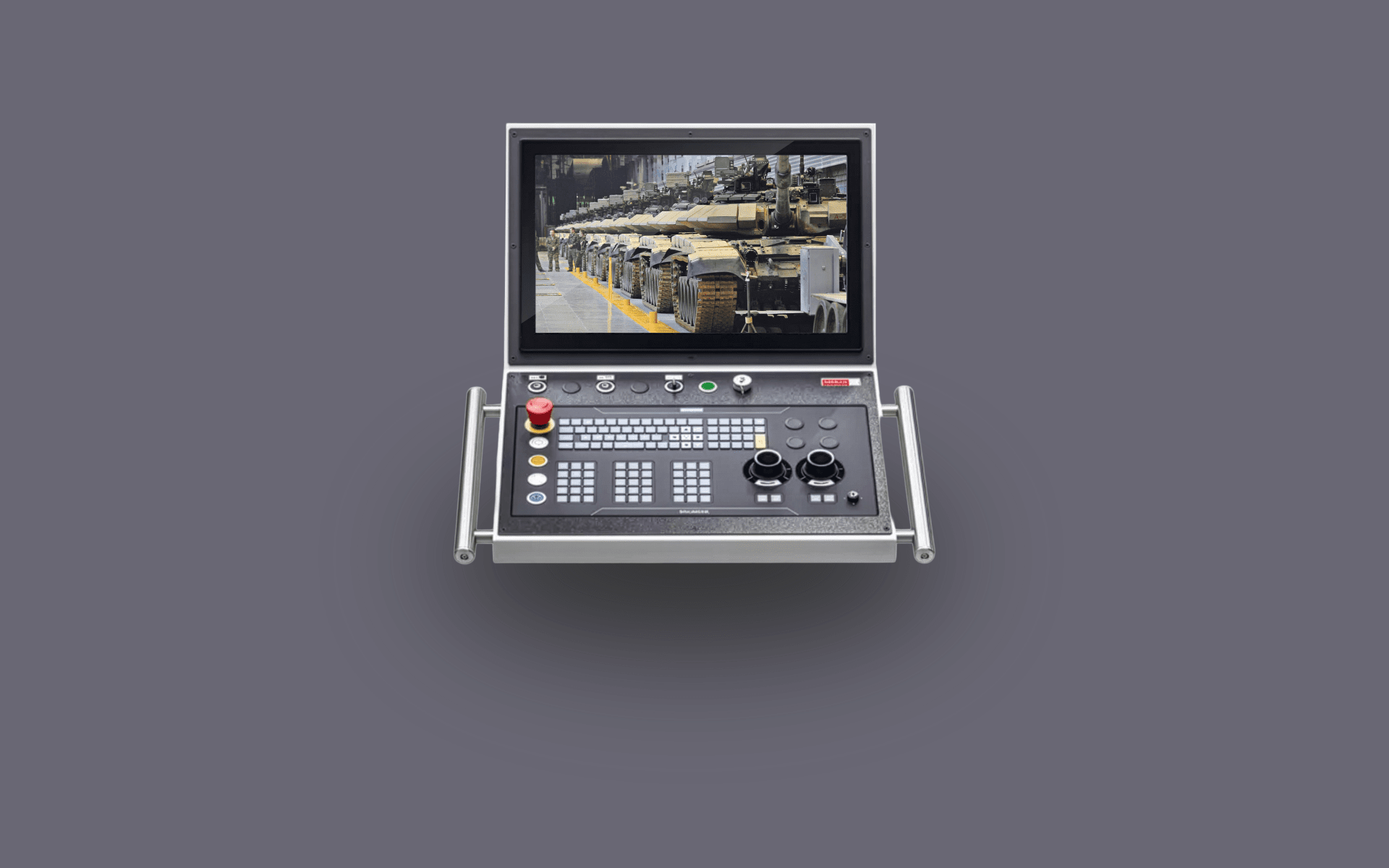
Russia still cannot build modern weapons without Western CNC technology. German Siemens and Japanese Fanuc systems continue powering machines inside Russian military factories despite sanctions meant to stop them.
 Prefer U24 Media on Google
- Authors




Why CNC machines matter for Russia’s arms Industry
CNC machines are highly sophisticated and extraordinarily difficult to manufacture. They are used to cut complex metal parts with extreme precision. Unlike humans, CNC machines can operate around the clock and, most importantly, operate at exceptional speed and accuracy—down to the micron.
In modern warfare, the production of missiles, air defense systems, and other precision weapons is impossible without CNC machines, where even the slightest error can have catastrophic consequences. It is therefore no surprise that the primary users of this equipment in Russia are military enterprises and defense plants. Before the full-scale invasion, Russia had virtually no domestic CNC production and imported nearly all such machines from abroad.
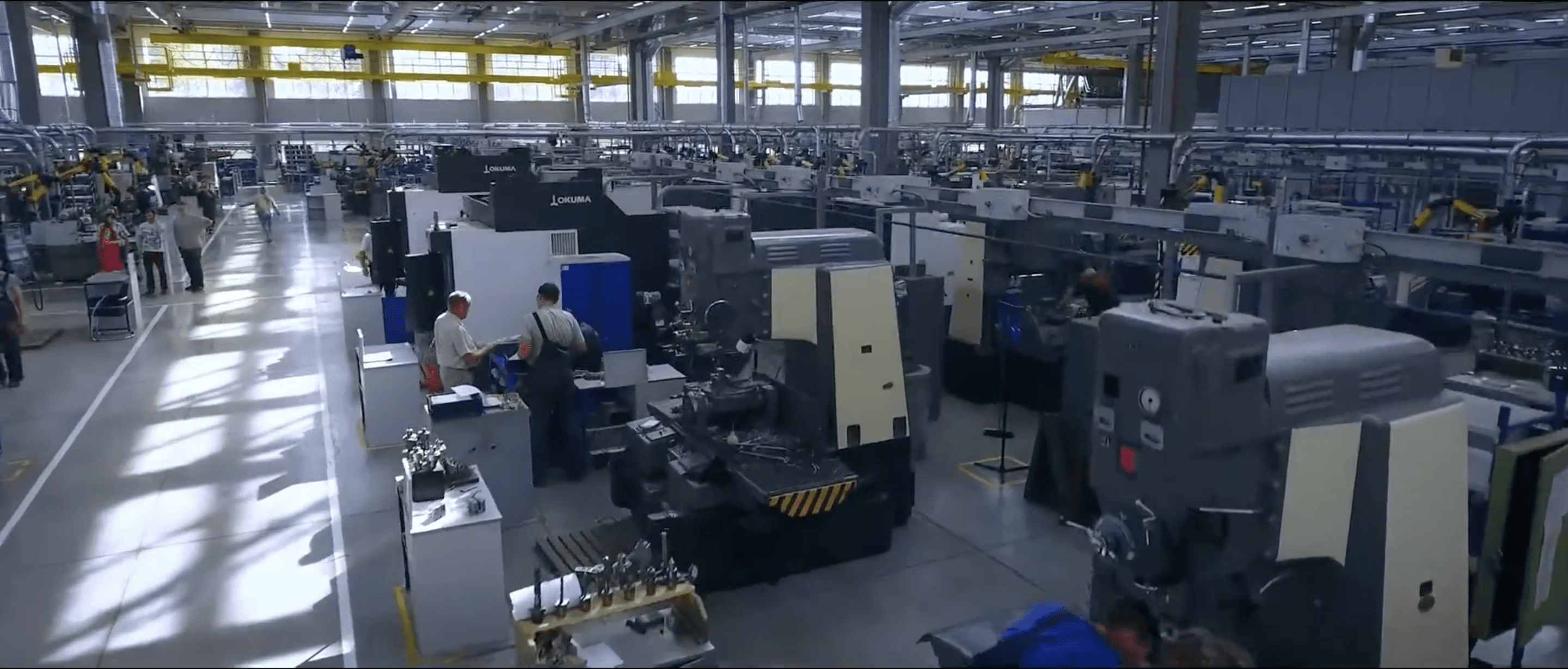
The companies that officially left Russia
Today, Germany, Japan, and China are considered the global centers of machine-tool manufacturing. It is there that the most important component of the machine is developed — the CNC system itself, the software “brain” that controls the machine’s ultra-precise movements in space. Producing these systems is an advanced and technologically demanding process, which is why most countries rely on products from only a handful of major companies. Among them are the German conglomerate Siemens and the Japanese holding company Fanuc.
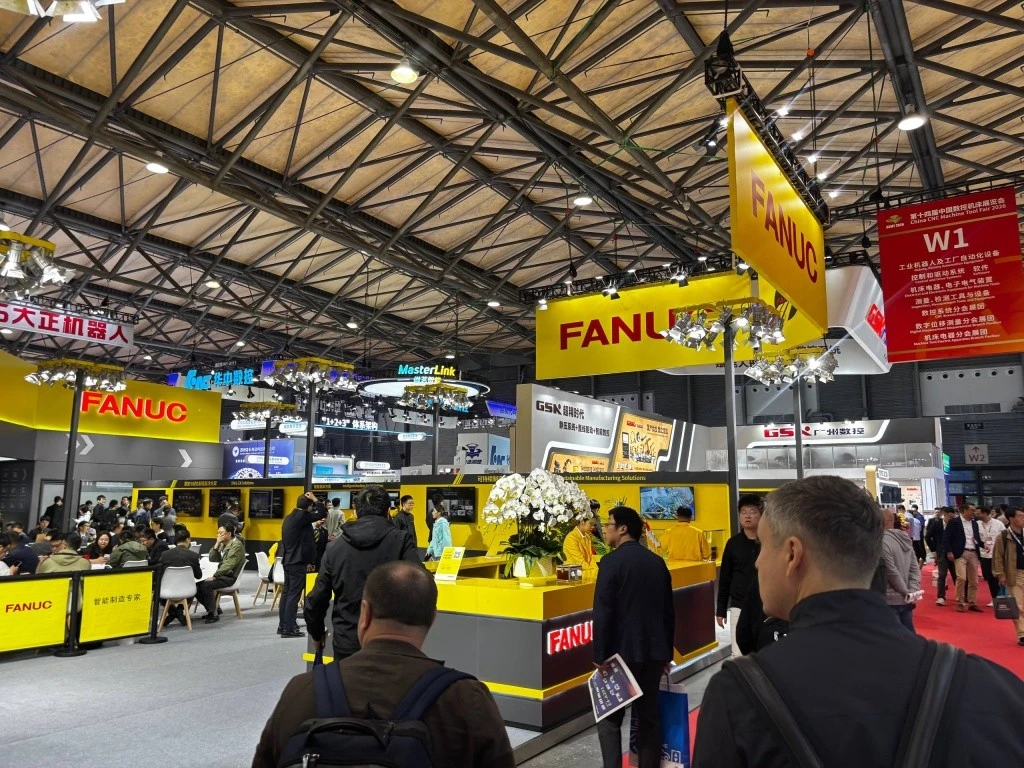
In 2022, Western manufacturers of dual-use goods, including metalworking equipment, announced en masse their withdrawal from the Russian market. Yet despite the undeniable importance of this step, it proved far from sufficient to halt Russia’s military-industrial complex entirely. Machines equipped with Western-developed Fanuc and Siemens CNC systems continue to appear in large numbers at Russian factories and industry exhibitions in 2025 and 2026. The Cyber Force of the Armed Forces of Ukraine provided United24 Media with unique documents revealing the path Western products take through Russian weapons systems—and explaining why time is running out for German and Japanese CNC developers to respond.
How Siemens and Fanuc tech end up at Russian military factories
Despite bans on exporting metalworking equipment directly to Russia, nothing prevents Western manufacturers from supplying their products to other countries. Exporters are required to ensure that buyers will not use the equipment for military purposes, but if the importer is a civilian Chinese manufacturer with a “good” reputation, the transaction is considered perfectly legal. Once delivered to such a factory, the German or Japanese CNC system is integrated into a locally manufactured machine body. The finished product is then considered Chinese-made and enters the international market freely.
Since China has never joined sanctions against Russia, Western CNC systems embedded in Chinese products frequently end up in Russian industrial facilities. Nevertheless, major manufacturers such as Siemens and Fanuc have shown little willingness to curtail exports of CNC systems to China, as China remains one of the world’s largest machine-tool markets, with thousands of Chinese firms officially purchasing these systems for their equipment.
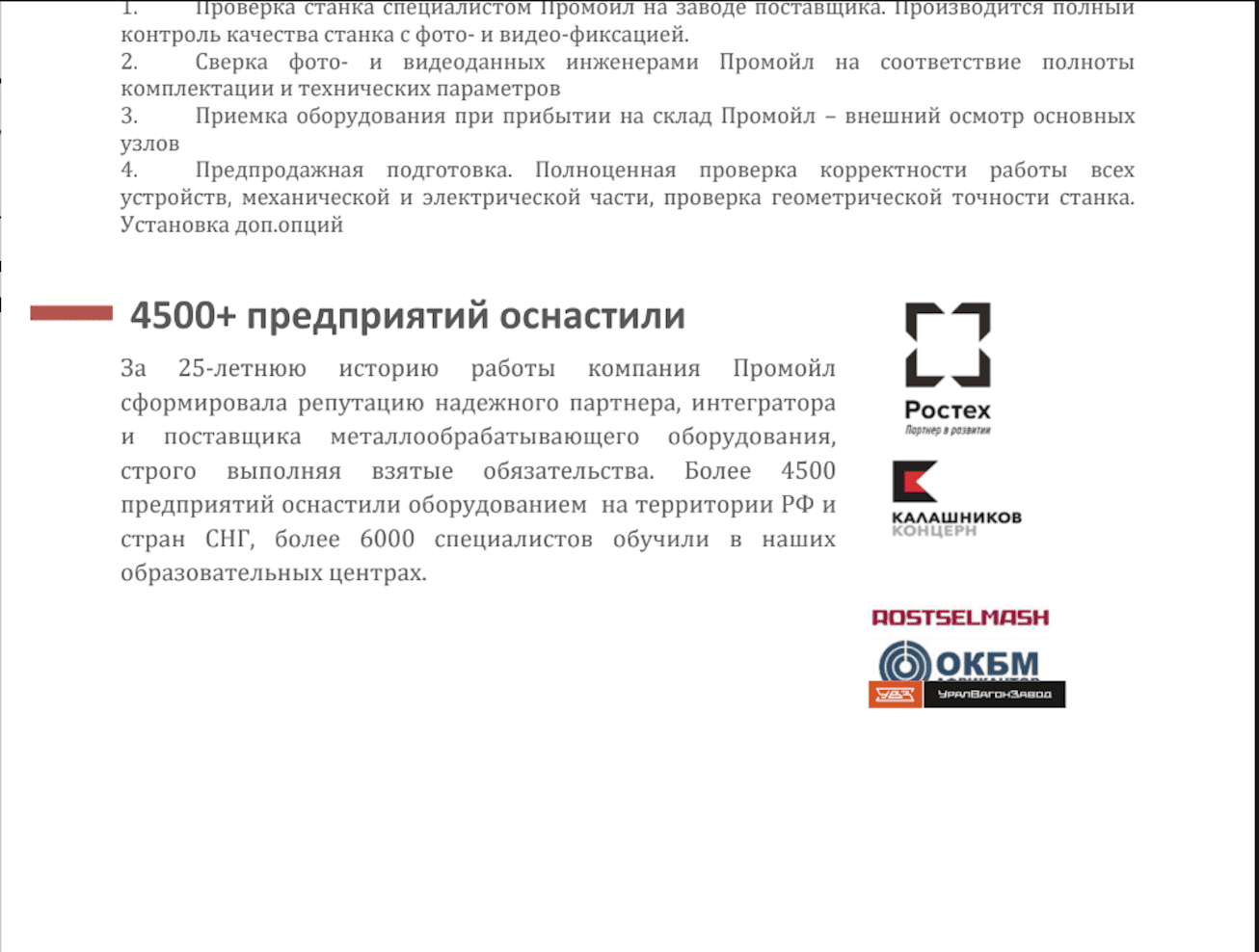
In Russia, an entire network of specialized distributors eagerly awaits these “legal” machines, maintaining extensive client bases among military factories and defense plants. One of the most successful is Promoil LLC, which openly lists its military-linked partners in commercial proposals from 2025. Among them are Rostec, Kalashnikov Concern, Uralvagonzavod, and other Russian defense enterprises.
The distributor itself was placed under US sanctions as early as 2023—yet deliveries to Russia continued uninterrupted because the machines for Promoil, equipped with Siemens and Fanuc systems, were manufactured at Chinese factories.
Moreover, despite sanctions, the company posted record profits in 2023, with net income increasing sixfold to 2 billion rubles ($27.9 million).
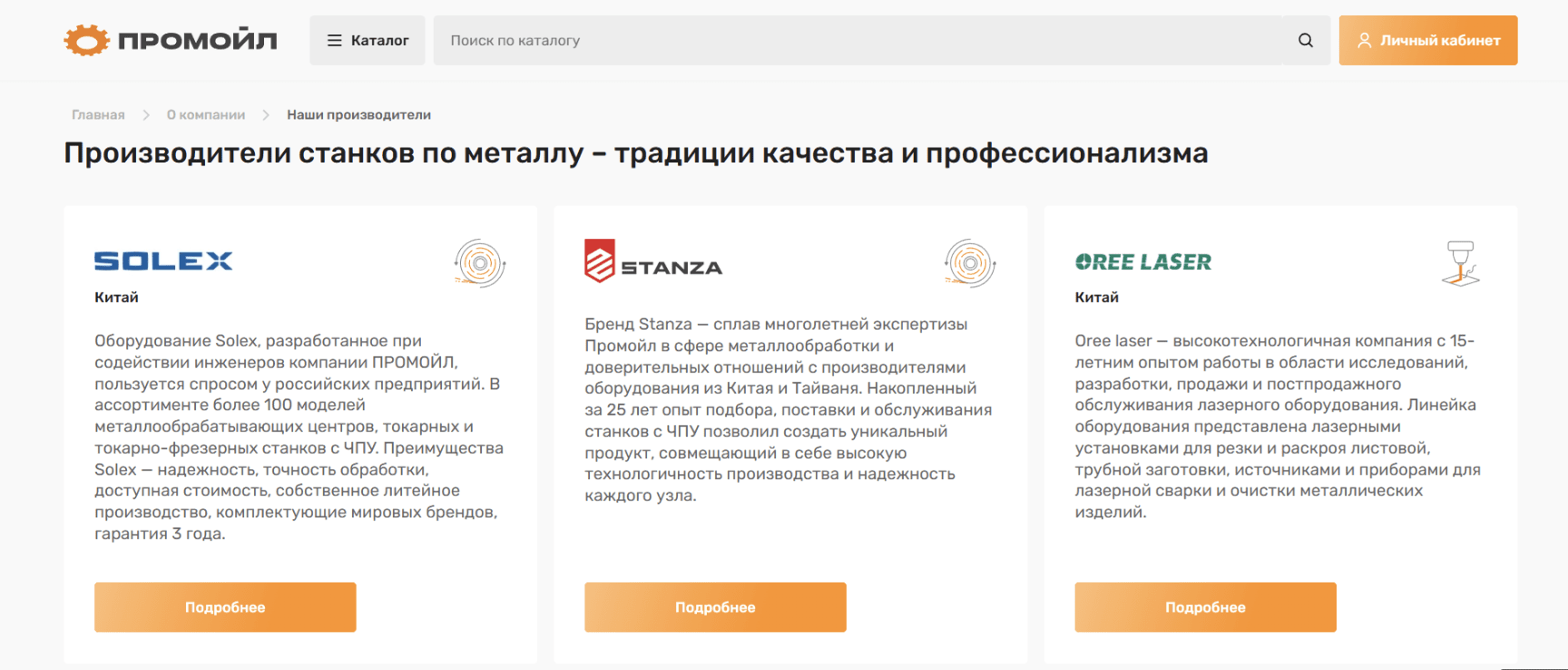
On its website and in a February 2025 product catalog, the company identifies its two primary manufacturers as SOLEX and STANZA. Or perhaps not manufacturers at all: the English-language internet contains virtually no information about either brand. No websites, no reviews from foreign industrial users, and references to SOLEX and STANZA exist only on Russian-language resources.
The distributor repeatedly emphasizes that the machines originate from China and Taiwan. So who is actually producing Promoil’s equipment? A closer look reveals the answer.
How are Russian suppliers hiding the origins of Western CNC technology?
Spring 2024. Promoil LLC celebrates its 25th anniversary and releases 14 exclusive interviews with clients from across Russia. Factory representatives discuss their businesses and proudly showcase new equipment. Most of the machines bear the mysterious SOLEX and STANZA logos.
“Our company was founded in 2023,” says the director of SPK Vector LLC, which manufactures automotive components. “We received an order for a couple of products in the trucking industry—in this case, for KamAZ .”. Six months later, new orders came in, and Ural joined in.” UralAZ is Russia’s automotive plant sanctioned by the US and Japan.
Behind the director stands a SOLEX NL201E machine, suspiciously similar to an identical model produced by the Chinese manufacturer NEWAY. In adjacent footage, the control panel clearly displays Fanuc’s yellow logo—unmistakable even from a distance.
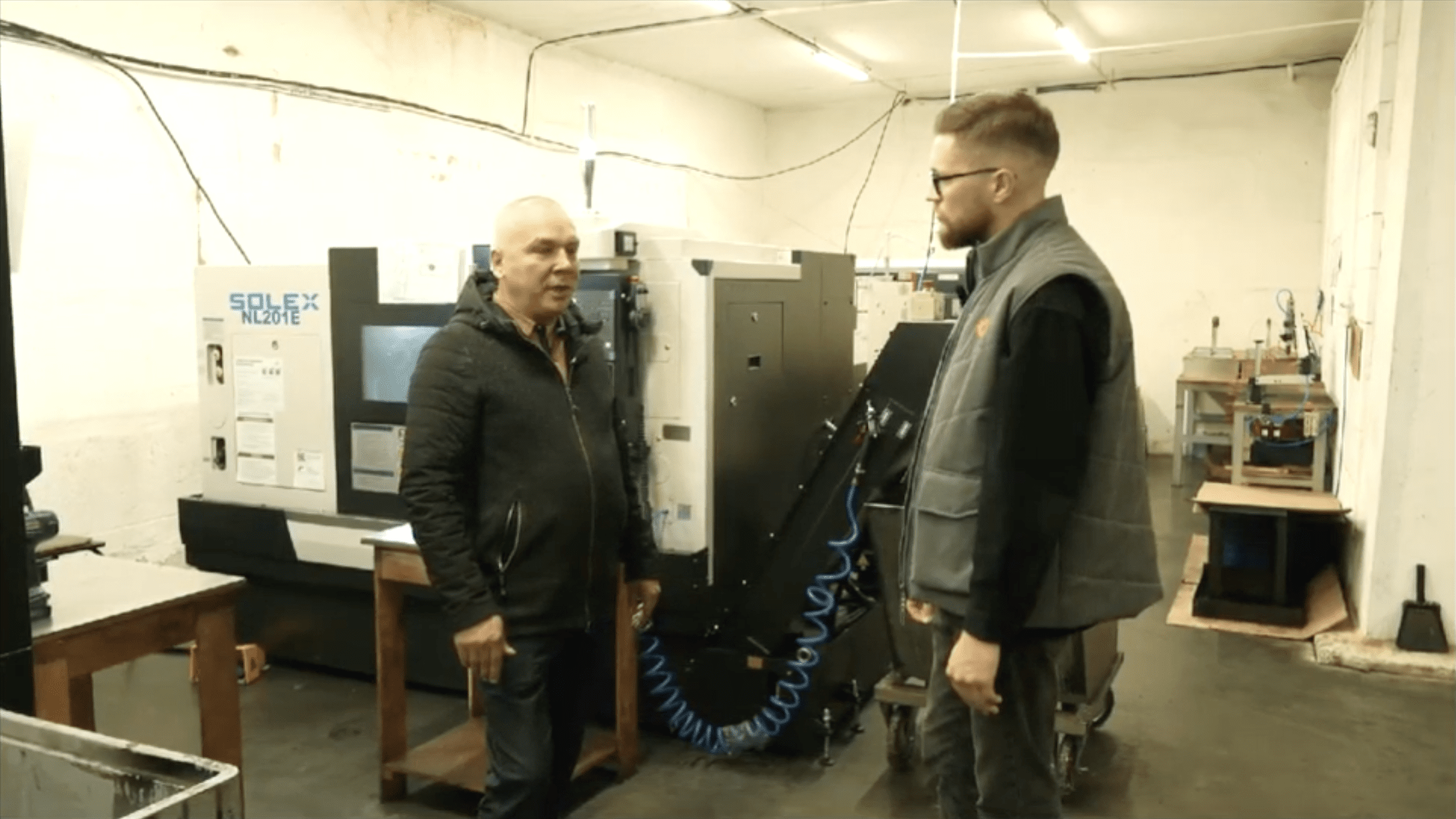
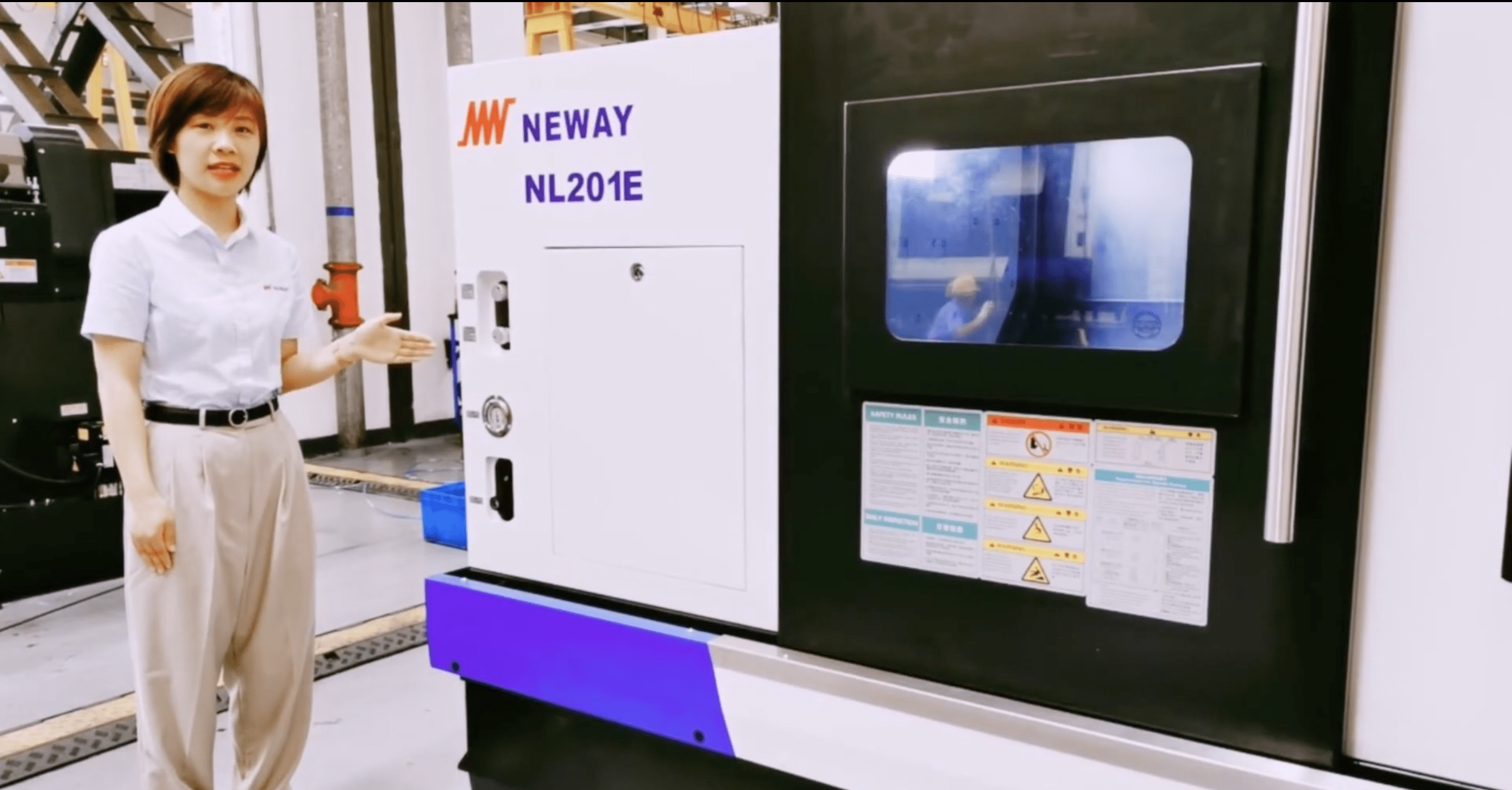
The hypothesis is confirmed in the very next interview.
This time, a tour is given by Evgeny Nesterov, technical director of RNK Engineering Inc. On its official website, the company states that it manufactures tooling for assembling armored vehicles, aircraft fuselages, wings, rotor blades, and other aerospace components, and highlights its experience fulfilling contracts for the aviation, rocket and space, and shipbuilding industries.
Open-source data reveal even more: in June 2022, RNK Engineering sought state support for a project aimed at retooling its plant to produce components for Russian aircraft, missiles, helicopters, and UAVs. Despite this, the company still does not appear on EU or US sanctions lists.
But that is not the most revealing detail. The machines supplied by Promoil were apparently installed in haste, because many still lacked the fake-brand stickers meant to disguise their origin. The solution on-site was simple: original manufacturer logos were covered with sheets of paper or blurred during video editing. Even so, the effort failed. We identified NEWAY as the real producer behind the SOLEX brand, while machines labeled STANZA turned out to come from the Taiwanese factory AKIRA SEIKI and the Chinese brand TAIKAN (Shenzhen Create Century Machinery).
Following the machines to Russia’s arms industry
After reviewing the remaining videos, we compiled most of the findings into a single table. There was no doubt left: the equipment supplied to Promoil’s military-industrial clients was manufactured by NEWAY, AKIRA SEIKI, and TAIKAN. Most machines were equipped with Fanuc CNC systems, though Siemens systems also appeared in two cases.
One example was Russia’s Zavod-Reduktor industrial manufacturing company, which openly acknowledges on its own website that it supplies sanctioned Russian military manufacturers:
KAMAZ — bearing assemblies, sprockets, cylindrical gears, bevel gears, single-stage gearboxes;
UNITED METALLURGICAL COMPANY — drive assemblies for metallurgical equipment: gearboxes, electric motors, frequency converters;
SEVERSTAL — drive assemblies for metallurgical equipment;
URALMASH — gears, worm gear reducers, worm-drive motors;
URALVAGONZAVOD — gearboxes and motor-reducers for railway equipment and manufacturing needs.
Like many other clients, Zavod-Reduktor remains outside international sanctions regimes.
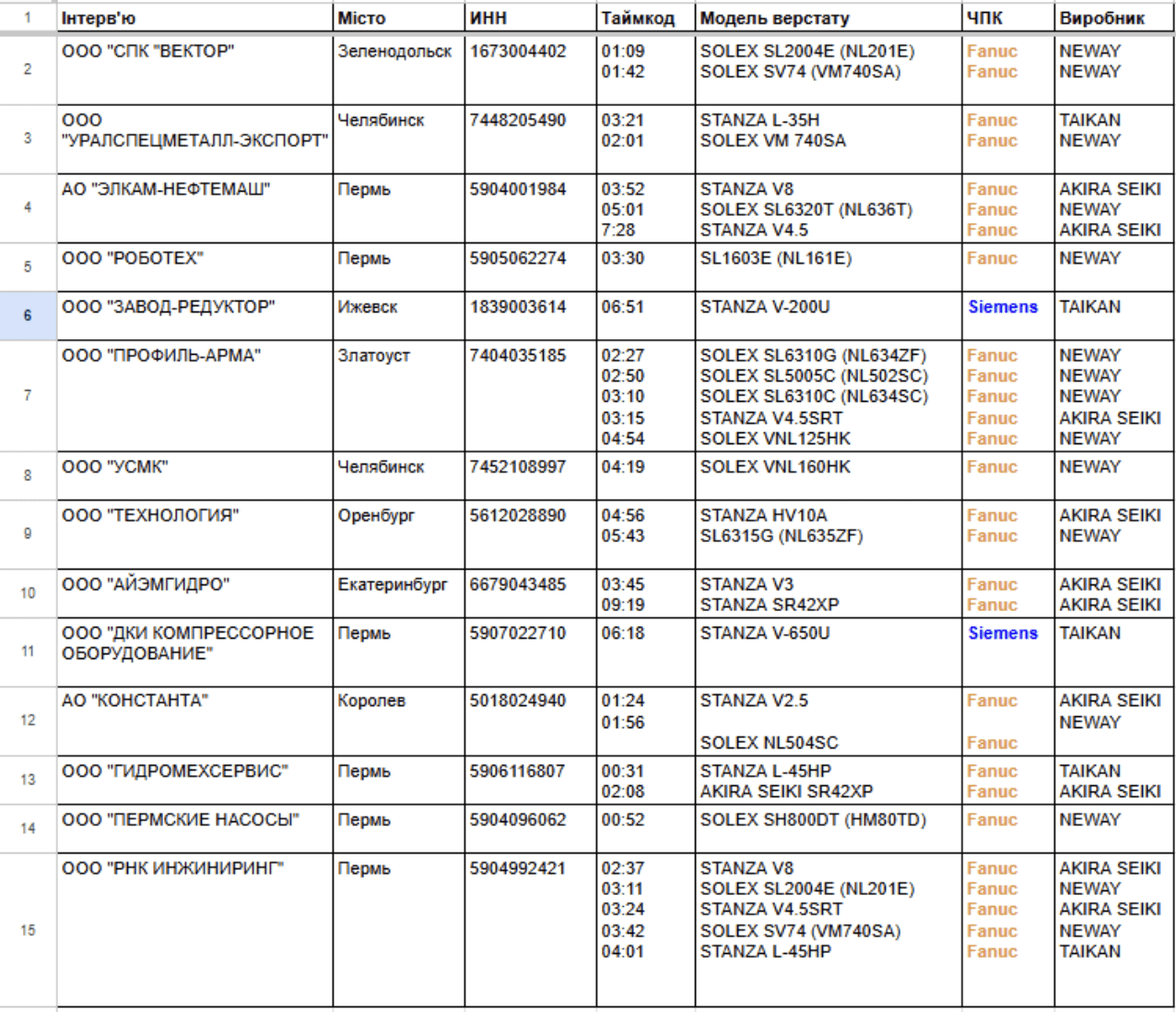
Shortly afterward, we obtained Promoil’s full machine-tool catalog as of February 2025. The interview footage represented only a fraction of the total inventory. The actual product range under the SOLEX and STANZA labels includes dozens, if not hundreds, of models. All prices are listed in yuan. Nearly all machines use Fanuc or Siemens (Sinumerik One) CNC systems.
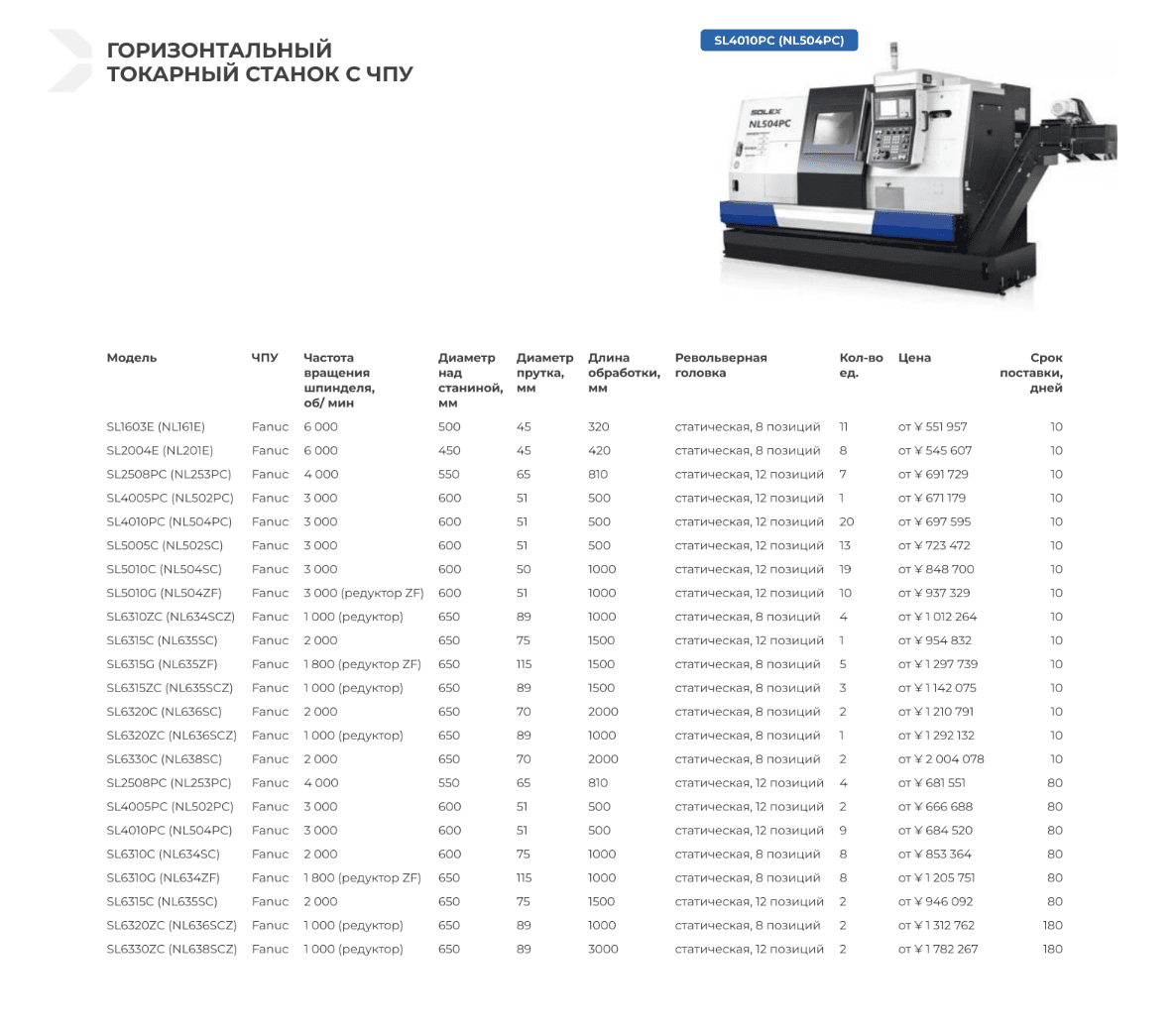
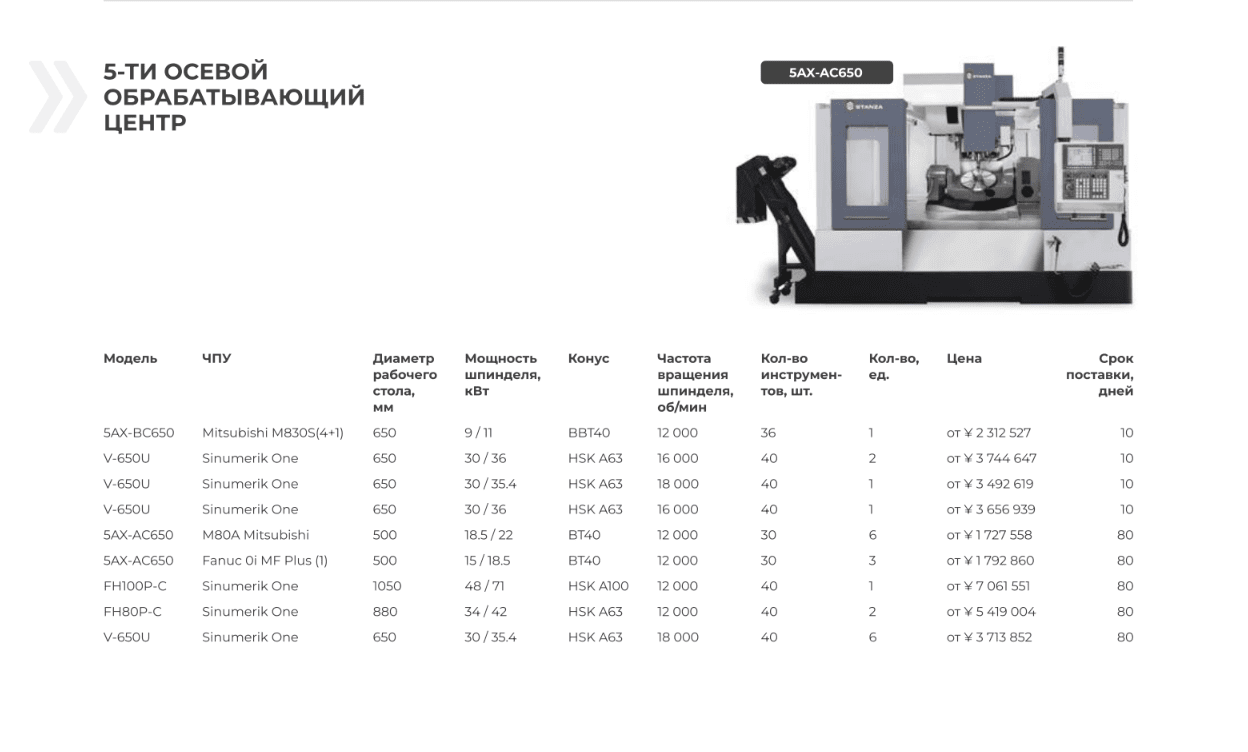
Ukraine’s Defense Intelligence has already identified Akira Seiki equipment at Russian factories producing artillery, ballistic missiles, and engines for guided aerial bombs. The United Kingdom also flagged suspicious deliveries from NEWAY and, together with Ukraine, imposed sanctions on its Chinese subsidiary. Nevertheless, none of the three identified manufacturers is currently under US or EU sanctions—meaning Western CNC developers continue supplying them with valuable technologies without restriction.
To clarify the situation, our editorial team sent inquiries to all three Chinese manufacturers, as well as to Fanuc and Siemens themselves. In response to an inquiry, Siemens AG stated that it has not delivered any sanctioned goods to Russia and has no direct commercial relationship with the Chinese manufacturer behind the TAIKAN machines. The company said that it conducts training sessions in Türkiye, China, and Eastern Europe to mitigate the risk of sanctions violations.
"If we receive any indications of circumvention, we will investigate these immediately and involve the necessary and relevant authorities,” said Siemens.
Still, Siemens acknowledged that "it cannot always be ruled out that certain goods may reach Russia without the manufacturer knowing and without the manufacturer's consent.”
TAIKAN, AKIRA SEIKI, and NEWAY did not respond to requests for comment. FANUC, a Japanese manufacturer of CNC systems, had not responded to the inquiry by the time of publication.
Russia’s CNC network remains intact
Promoil is not the only sanctioned CNC distributor in Russia. Other Russian suppliers continue operating as well. For example, one year after US sanctions were imposed, dozens of machines equipped with Western CNC systems still remained in the warehouse of supplier SFG Baltika in St. Petersburg, with additional deliveries scheduled through the end of 2025.
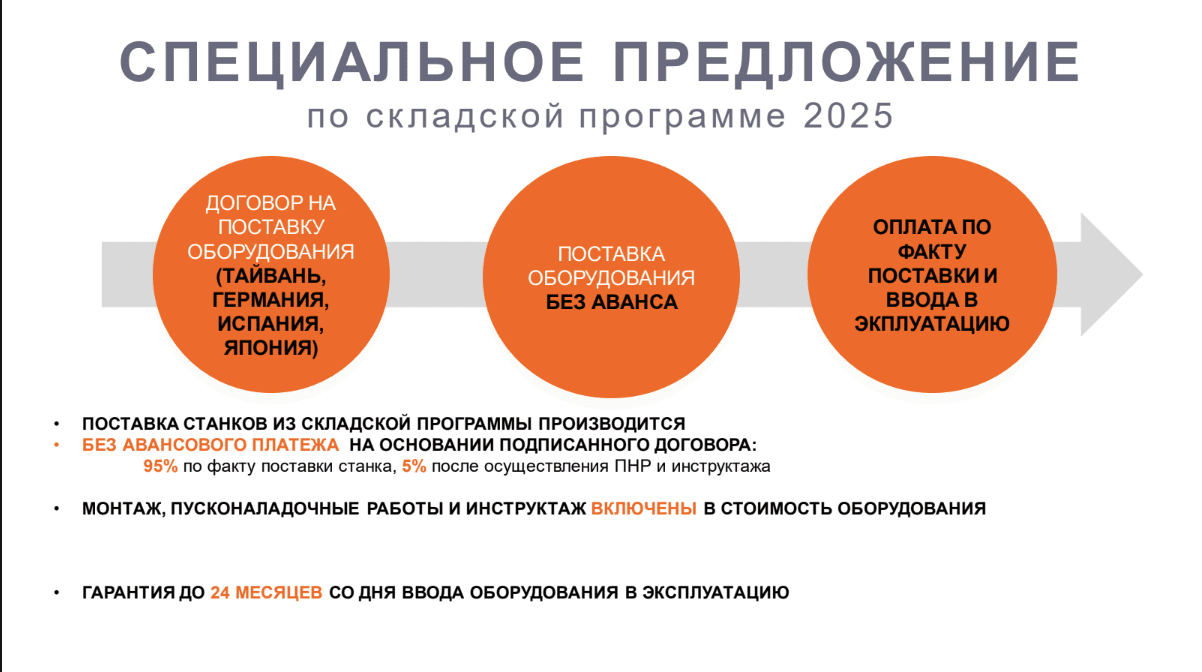
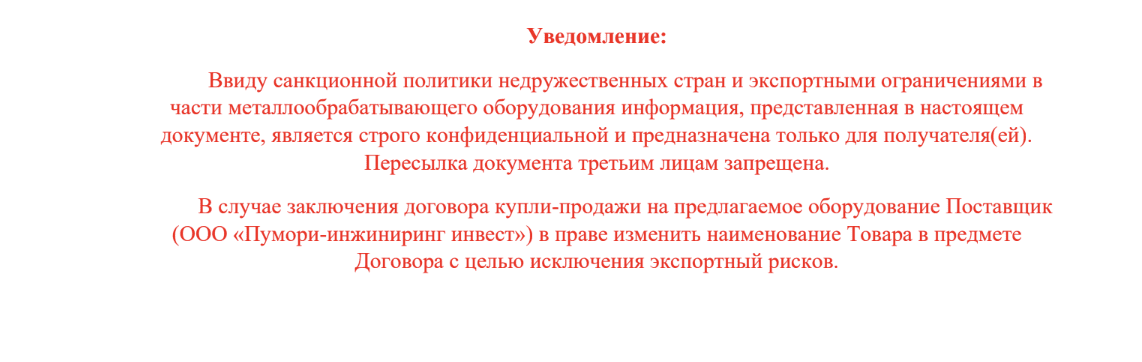
Russian supplier Pumori-Engineering Invest expressed particular caution regarding sanctions in correspondence with Arzamas Machine-Building Plant JSC. The exchange took place in August 2025, when both the supplier and the customer had long been sanctioned. The distributor stressed that the document was confidential and noted that machine names could be intentionally altered during shipping to mislead export-control authorities in countries hostile to Russia.
Nevertheless, many suppliers connected to Russia’s defense industry still remain entirely unsanctioned. One example is Instrumentalnaya Sistema PTK, which imports high-precision machine tools into Russia for general and specialized mechanical engineering, including systems based on Siemens 808D CNC technology.
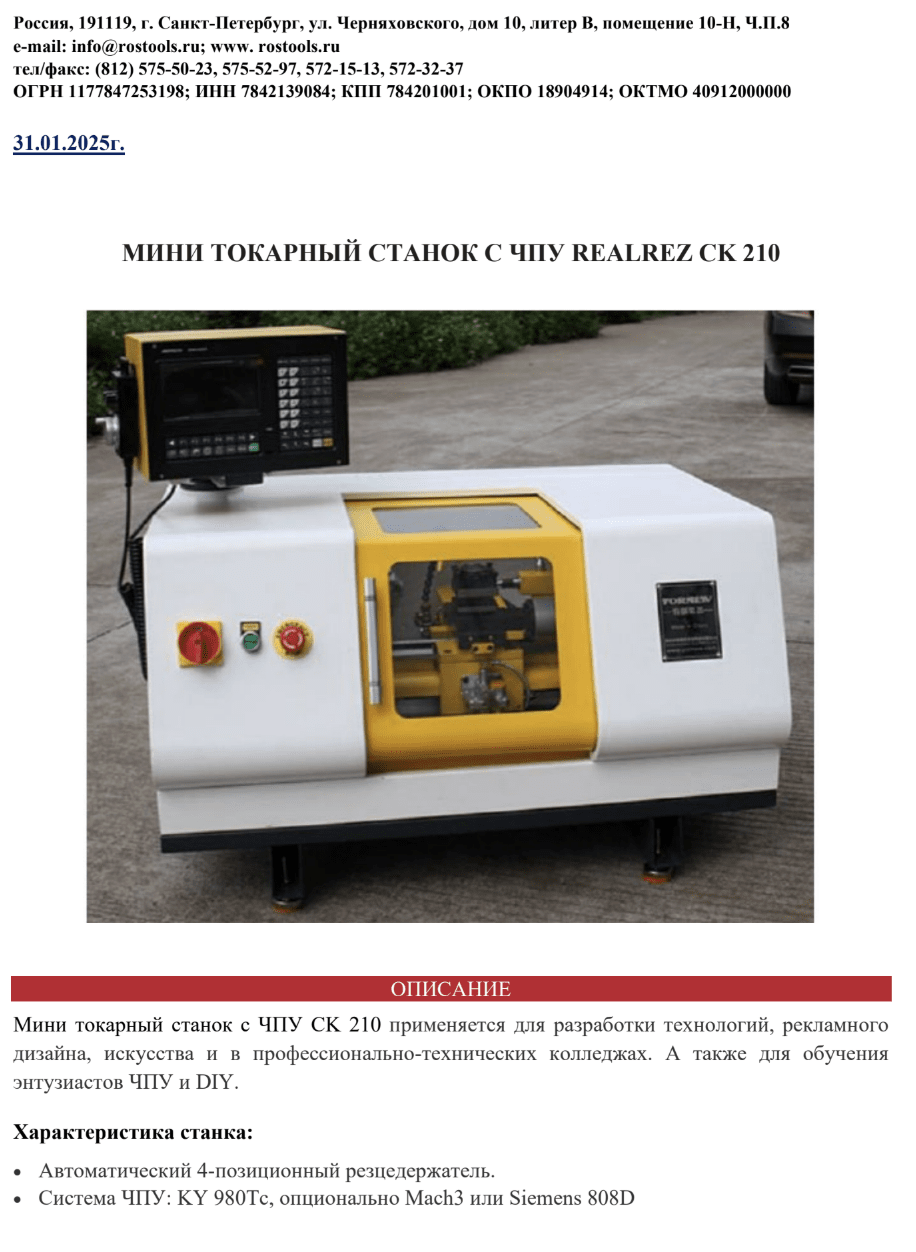
Through the company’s founders, Yuri Bizyaev and Mikhail Boykov, we traced links to another company—Stankobox LLC—whose website states: “All CNC machines are equipped with GSK, Siemens, and Fanuc control systems.”
In the past, Stankobox fulfilled state contracts for sanctioned Russian enterprises, including Khrunichev State Research and Production Space Center, Mashzavod Shtamp, and UEC-UMPO, and also supplied equipment to Russian-occupied Crimea.
Neither Bizyaev nor Boykov nor their companies are currently subject to international sanctions.
Another unsanctioned company is JSC Promyshlennye Tekhnologii (CJSC Idustrial Technologies), which develops and manufactures systems and assemblies for Russia’s Vostochny and Plesetsk cosmodromes, the Ministry of Defense, and major Russian factories and design bureaus. In 2025, the company ordered approximately $500,000 worth of Siemens-equipped CNC machines from China.
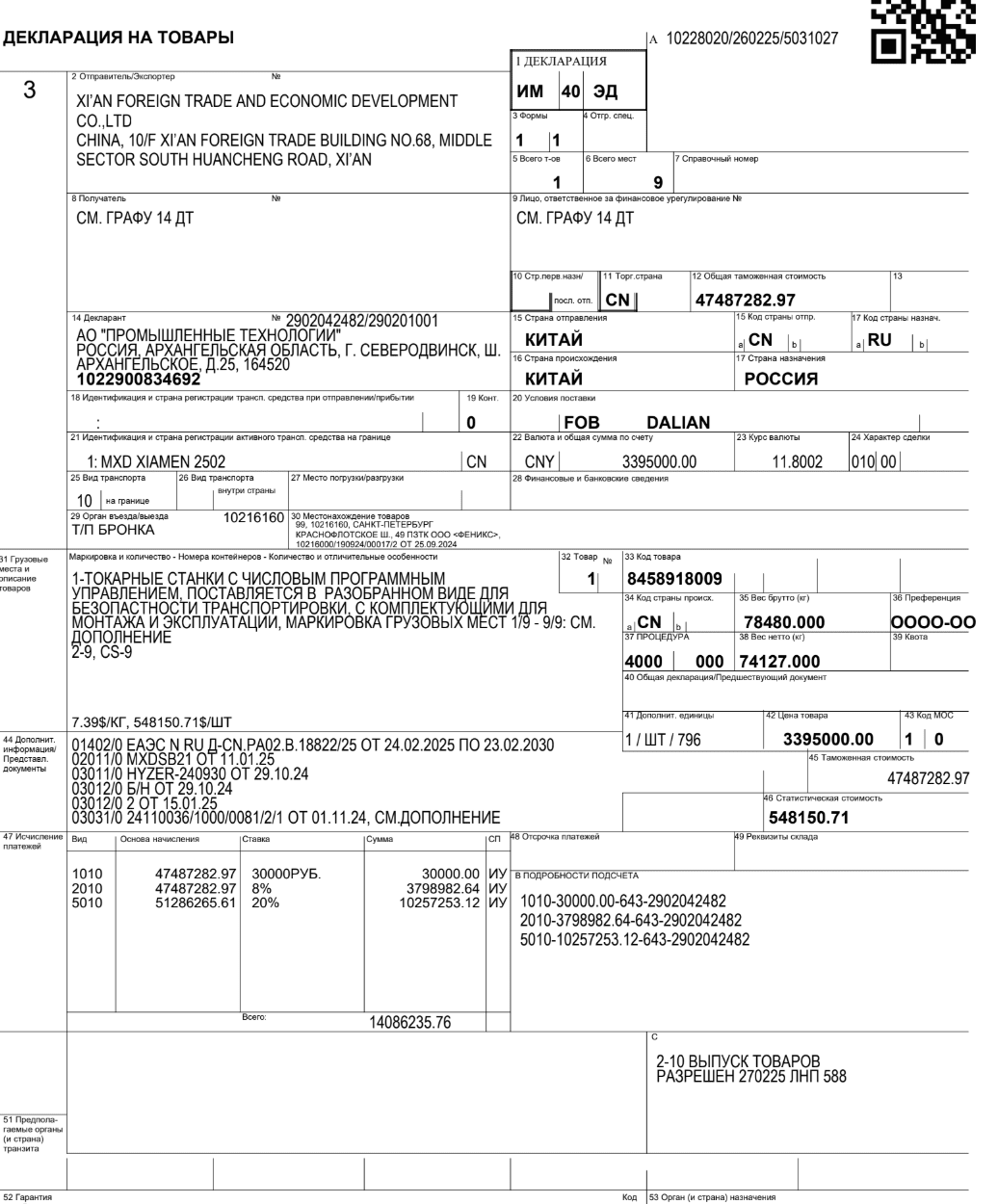
Meanwhile, Russia is not waiting for Siemens and Fanuc to devise mechanisms for restricting the use of their systems at military plants. Instead, it is investing heavily in expanding its own industrial capabilities.
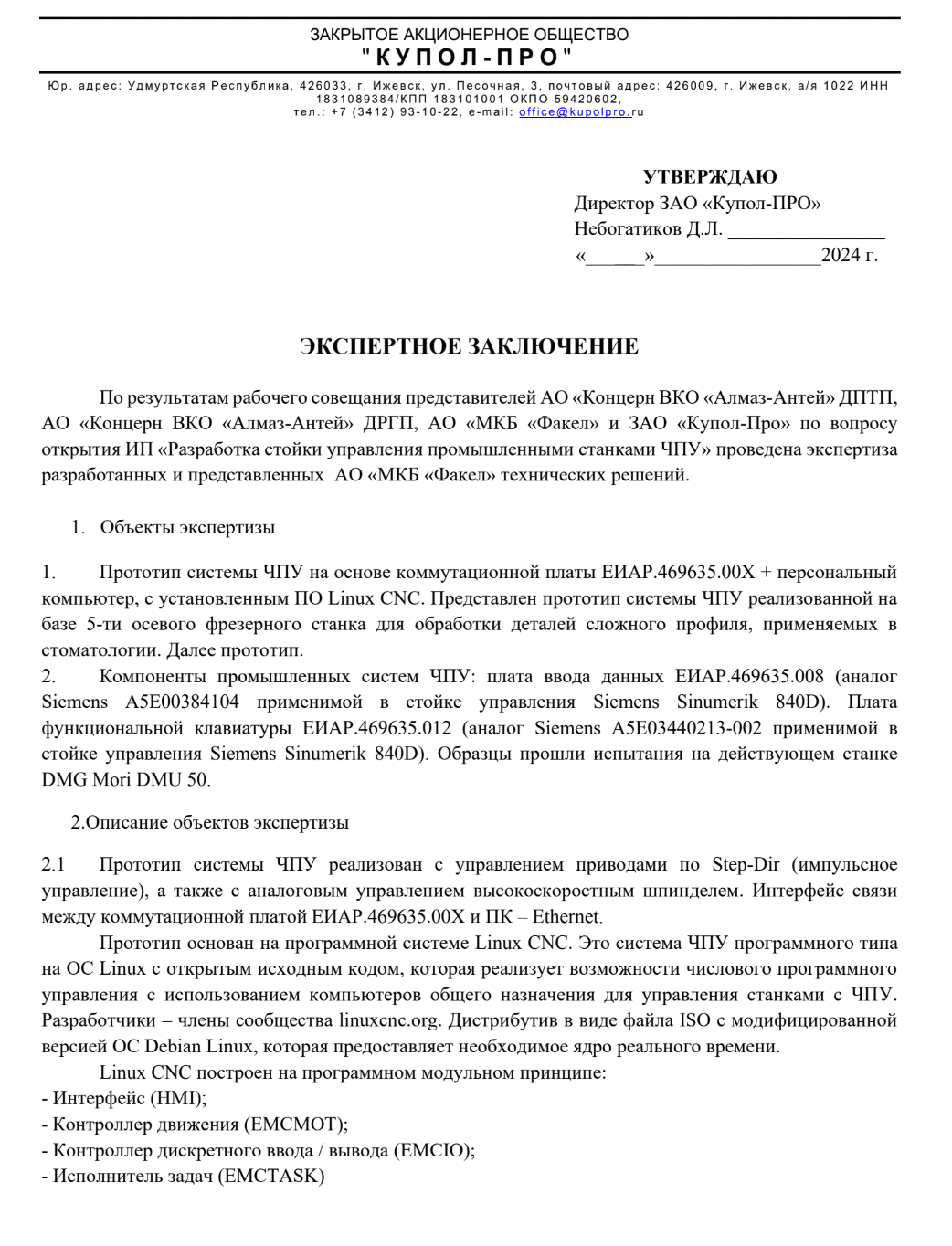
Documents obtained by the editorial team show that enterprises belonging to the Almaz-Antey concern—manufacturer of Russia’s air defense systems—are actively developing spare parts for servicing Western machine tools already operating at Russian military plants and are specifically planning to replace the CNC systems themselves.
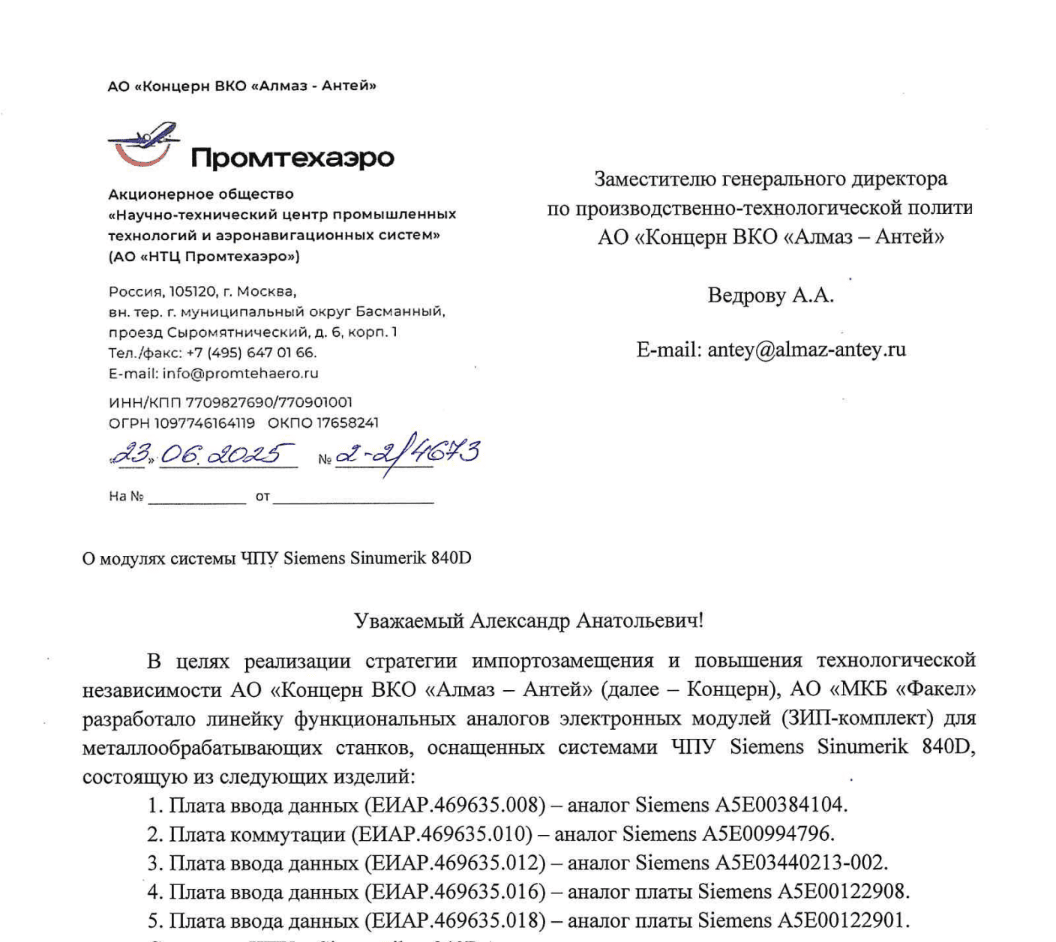
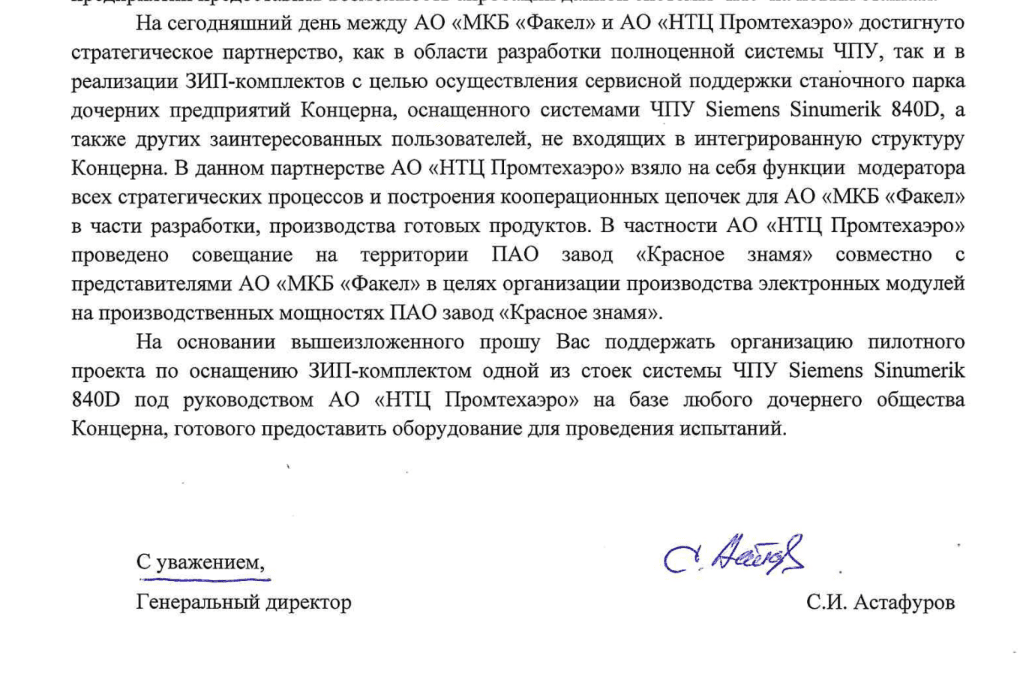
Ulyanovsk Machine Tool Plant has also announced efforts to integrate Russian CNC systems into Western machines. The plant, formerly part of the German-Japanese DMG Mori holding in Ulyanovsk, was transferred to the control of Russia’s Federal Property Management Agency (Rosimushchestvo) after the full-scale invasion and resumed operations for the Russian arms industry.
In May 2026, the plant showcased copies of the Western STX 510 and DMC 1035 machines at the Metalloobrabotka-2026 exhibition. Photographs of the equipment display markings for the Russian IntNC PRO CNC system, developed by IT and engineering INELSY company and mass-produced by JSC Kupol-PRO, another enterprise within the Almaz-Antey group.
Even so, Russian manufacturers still appear to prefer Japan’s Fanuc systems:
“We chose Fanuc because there are more specialists available, and training existing personnel is easier,” one Promoil client admitted in an interview.
“No, there are no difficulties—it’s just a regular Fanuc, everything is familiar,” said another representative.
“[We want to wish Promoil] growth, development, and adaptation to new realities,” said the director of another enterprise. “Today we wear masks, tomorrow we’re under sanctions… We hope no external factors affect your development and that you keep moving toward your goals—and of course continue helping us!”
International sanctions remain an effective instrument for pressuring Russian manufacturers. But given the scale of Chinese supply chains, only the CNC developers themselves can truly disrupt the massive flow of restricted technology. In 2025, Fanuc told a UNITED24 Media journalist that if confirmed cases of deliveries to Russia emerged, the company would terminate cooperation with the relevant partners. The decision, this time, rests solely with the companies themselves.
This material was prepared as part of the cooperation between the StateWatch think tank and UNITED24 Media.
Discuss this article:


-206008aed5f329e86c52788e3e423f23.jpg "Photo of Oleksandr Moiseienko")