- Category
- Latest news
Europe Blows Up Russian Soyuz Rocket Launch Site in French Guiana
 Prefer U24 Media on Google
- Authors


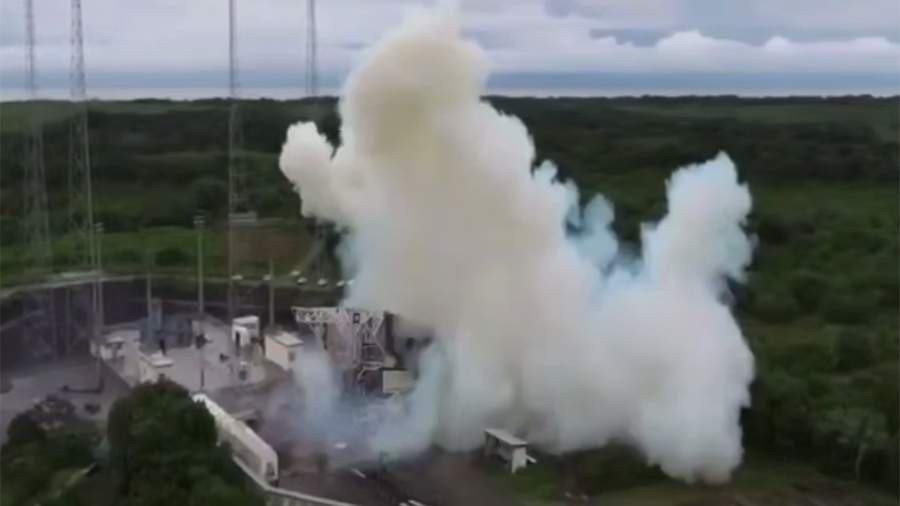
The European Space Agency (ESA) has dismantled key elements of the launch complex used for Russian Soyuz-ST rockets at the Kourou spaceport in French Guiana, effectively ending the site’s operational role in joint missions with Russia.
We bring you stories from the ground. Your support keeps our team in the field.
According to Deutsche Welle on April 25, the demolition included a controlled explosion of a 52-meter mobile service tower that had been part of the Soyuz launch infrastructure.
Former Roscosmos press chief Dmitry Strugovets, who published footage of the blast, said that prior to the demolition, critical structural components had already been removed. “Before that, the so-called ‘tulip’—four truss supports that held the rocket before launch—and the cable masts were cut,” he wrote.
The end of an era of European-Russian space cooperation.
— Jürgen Nauditt 🇩🇪🇺🇦 (@jurgen_nauditt) April 25, 2026
On April 24, 2026, the former launch pad for Russian Soyuz-ST rockets at the Guiana Space Centre (CSG) in Kourou, French Guiana, was demolished as planned.
Cooperation with the Russian terrorist regime ended with the… pic.twitter.com/3fWrDFoYh0
The remaining infrastructure at the site—including the assembly and testing complex, railway lines, liquid oxygen storage facilities, and fueling systems—will be transferred to MaiaSpace, a French startup affiliated with Arianespace. The company plans to reuse up to 80% of the existing infrastructure for its own launch vehicle program.
MaiaSpace is developing a two-stage rocket, Maia, with both expendable and partially reusable configurations. The rocket is expected to measure approximately 50 meters in length with a diameter of 3.5 meters. Its first stage will be powered by three Prometheus methane-fueled engines, each producing around 100 tons of thrust, while the second stage will use a single vacuum-optimized engine.
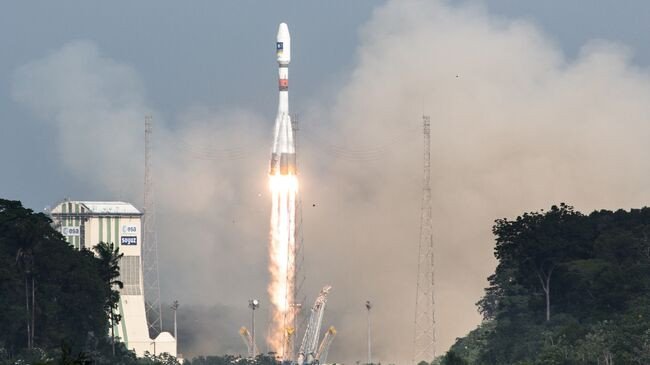
According to previously announced specifications, the expendable version will be capable of delivering payloads of up to 1.5 tons to sun-synchronous orbit, while the reusable variant will carry up to 500 kilograms. The system may also include a Colibri upper stage.
According to Deutsche Welle, MaiaSpace has already secured initial commercial agreements, including a 2025 contract with French company Exotrail and a January 2026 deal with Eutelsat for launching OneWeb satellites. The first launch of the Maia rocket is currently scheduled for 2027.
The dismantling of the Soyuz launch site follows the collapse of a 15-year cooperation program between ESA and Roscosmos known as “Soyuz at Kourou.”
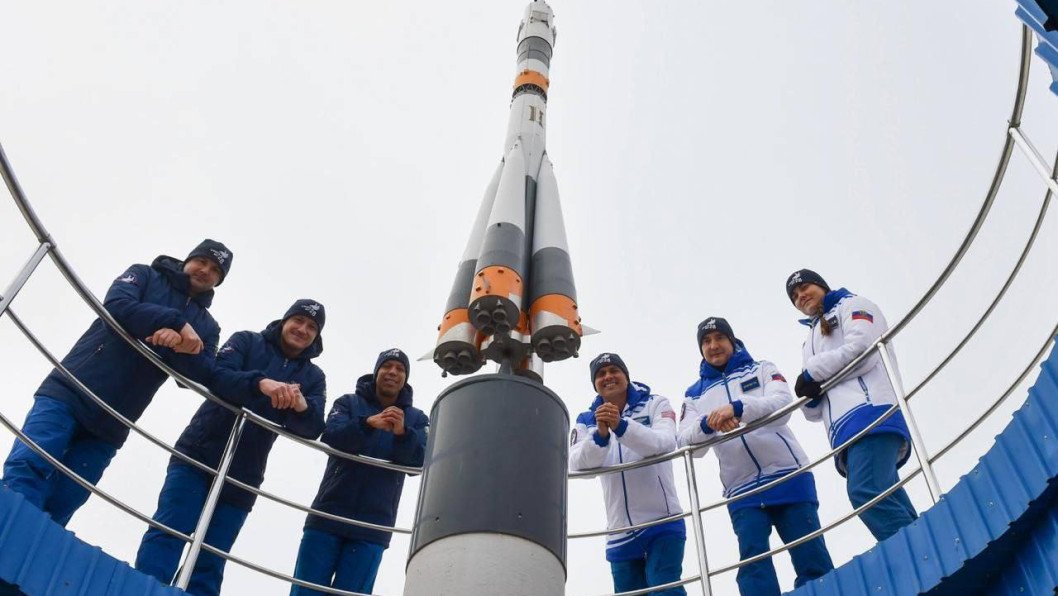
The program conducted 26 successful launches before being suspended after Russia’s full-scale invasion of Ukraine in 2022. Following the introduction of US and EU sanctions on Russia’s space sector, Roscosmos withdrew its personnel and halted operations at the site.
Kourou, located near the equator, has long been considered advantageous for commercial launches due to the additional velocity rockets gain from Earth’s rotation. The transition of the site to a European-led program reflects broader efforts by ESA and its partners to replace Russian launch capabilities and expand independent access to space.
Earlier, a structural collapse at the Baikonur Cosmodrome damaged the only operational launch pad used for Russian crewed missions, potentially halting flights to the ISS for up to two years. The incident, caused by a Soyuz rocket engine blast, rendered the facility inoperable and marked the first disruption to Russia’s crewed launch capability since 1961.
Discuss this article:
-9a7b3a98ed5c506e0b77a6663f5727c5.png)