- Category
- Latest news
European Leaders Visit Devastated Kyiv Power Plant to Mark 4th Full-Scale Invasion Anniversary
 Prefer U24 Media on Google
- Authors

-72b63a4e0c8c475ad81fe3eed3f63729.jpeg "Photo of Cyril Barabaltchouk")
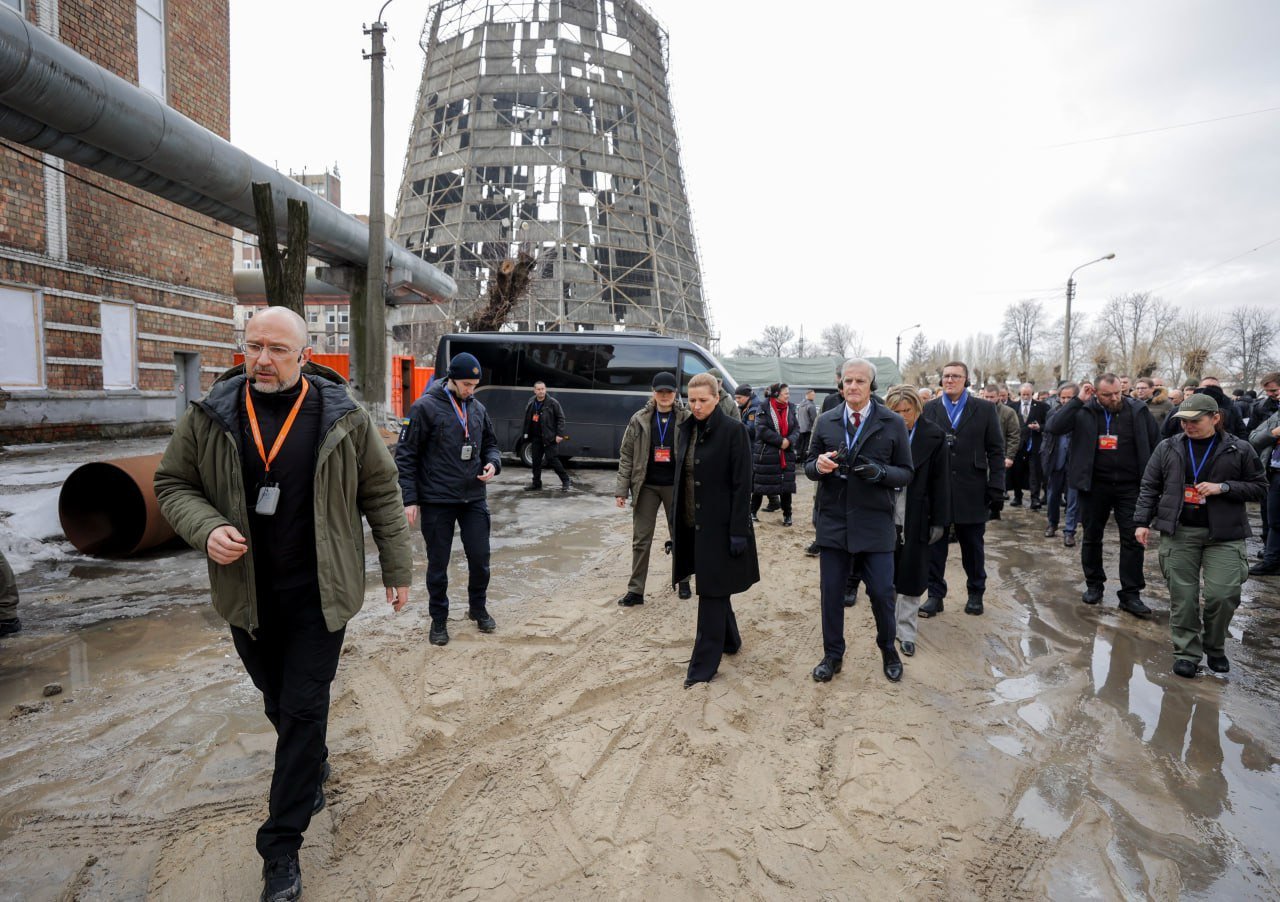
On the fourth anniversary of Russia’s full-scale invasion of Ukraine, First Deputy Prime Minister and Minister of Energy of Ukraine Denys Shmyhal visited one of Kyiv’s Combined Heat and Power (CHP) plants alongside Ukraine’s international allies, Shmyhal said in a statement on February 24.
The visit, which included prominent guests such as European Commission President Ursula von der Leyen, European Council President António Costa, and the Presidents of Finland, Estonia, and other European nations, highlighted the severe impact of Russia’s attacks on Ukraine’s energy infrastructure.
We bring you stories from the ground. Your support keeps our team in the field.
During the visit, the Minister reflected on the devastating consequences of Russian missile and drone strikes. He emphasized, “At such sites, war ceases to be just a statistic or an image on a screen. Here, it is clear that Russia is waging war against light, heat, and the ability to live normally.”
The plant, which provides heating to 500,000 residents of Kyiv, has endured 13 Russian attacks over the past four years, with nine of them occurring in the past six months alone.
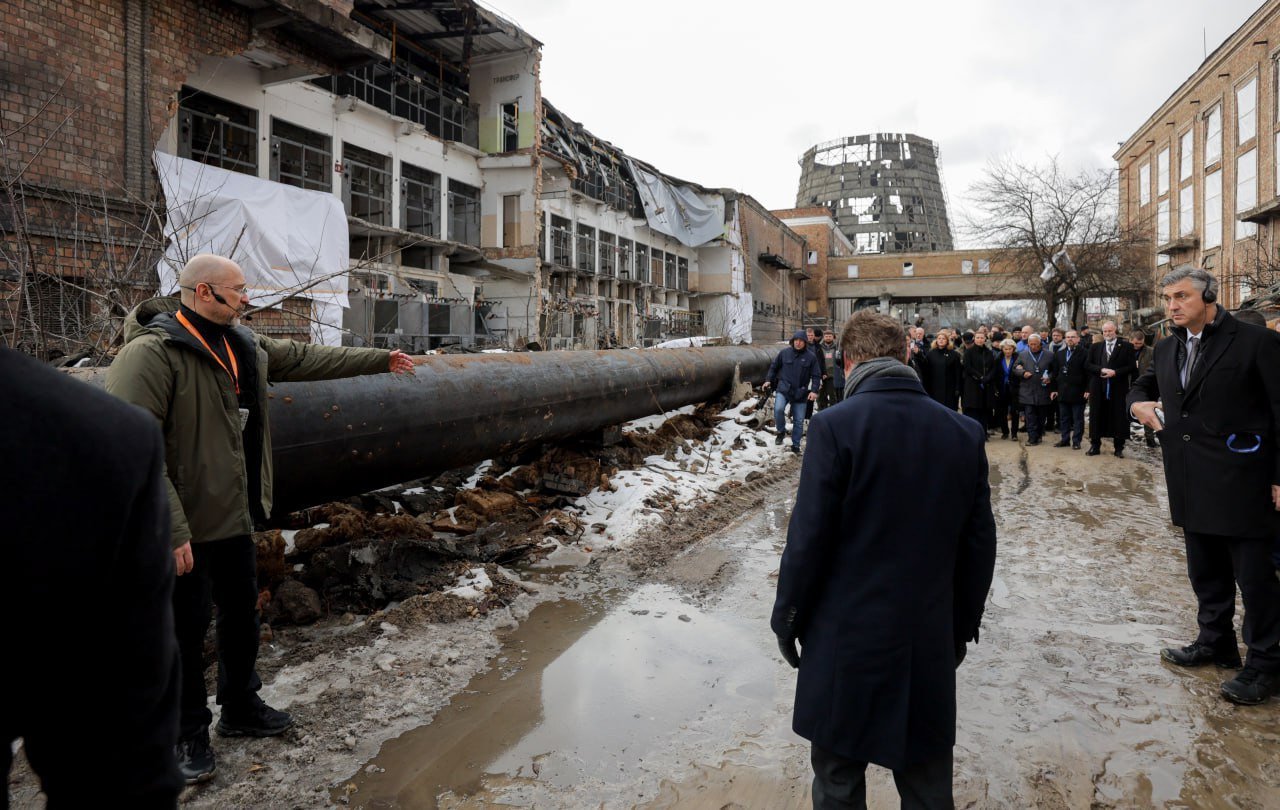
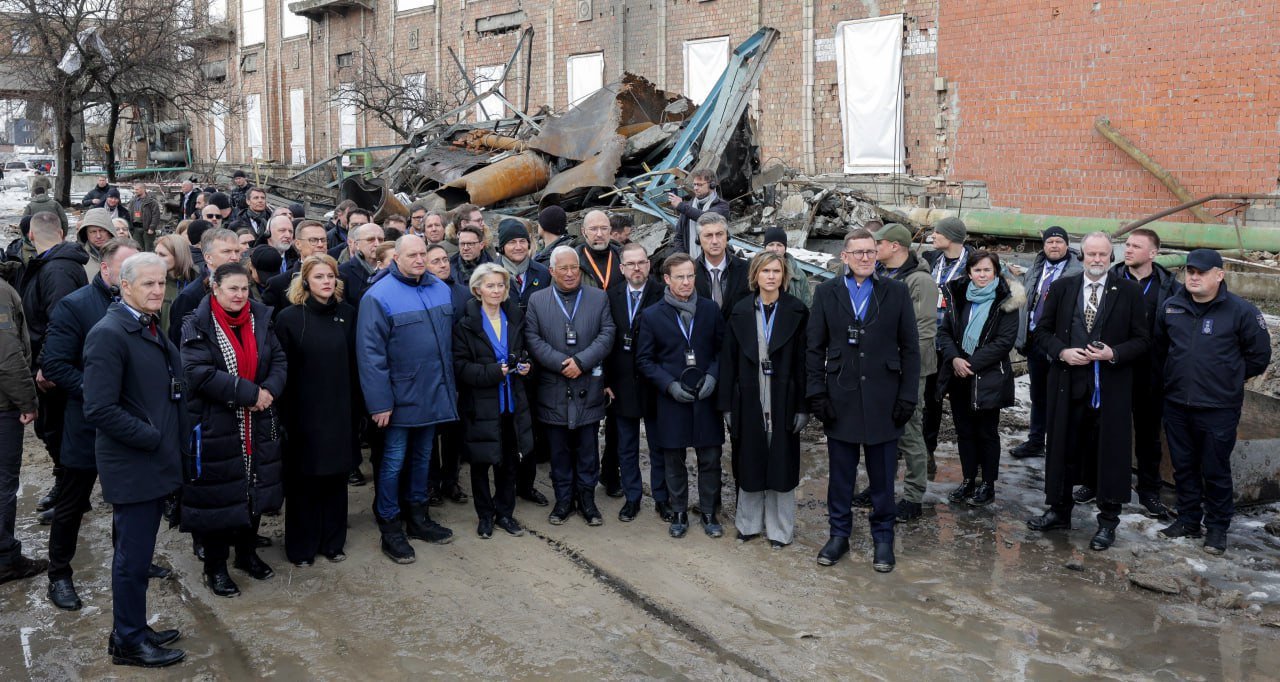
A recent strike in January halted electricity production, and in early February, five ballistic missiles targeted the facility, stopping its heating production. This left over 1,100 apartment buildings, 118 schools, and 18 hospitals without heat.
Ukraine’s Security Service (SBU) had previously classified Russia’s systematic strikes on Ukraine’s energy infrastructure as crimes against humanity, citing extensive evidence that the attacks are aimed at destroying civilian living conditions.
According to SBU, its investigators have documented a sustained campaign by Russia targeting power generation and heating systems as part of a broader policy directed against Ukraine’s civilian population.
“This is both a crime scene and evidence of Russian barbarity, but also a symbol of our resilience, partnership, and solidarity,” Shmyhal stated. Despite the continuous damages, Ukraine continues to repair and rebuild, often under the threat of further attacks.
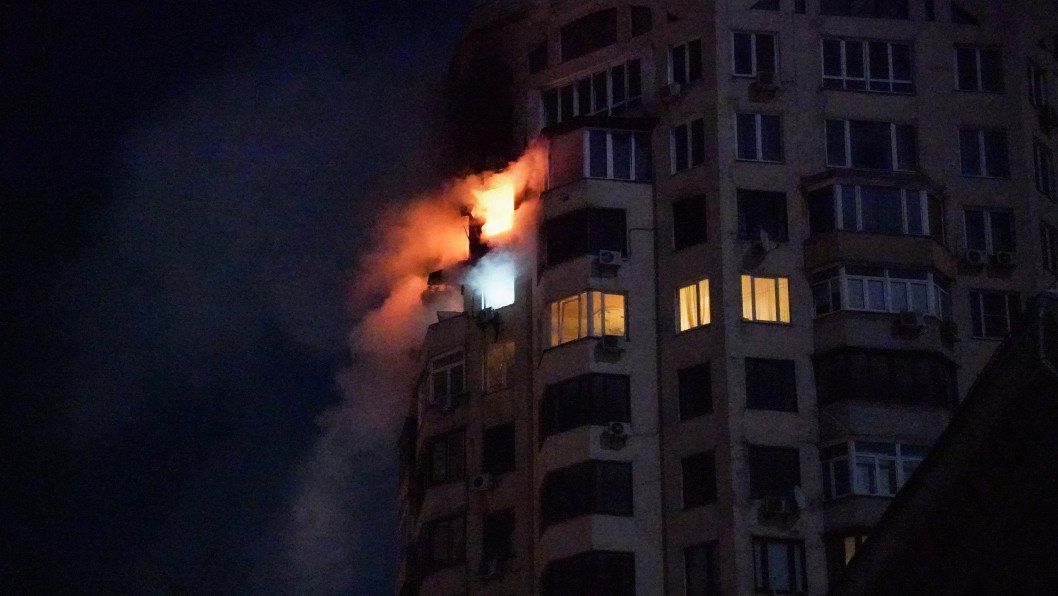
Over 40 countries and organizations have supported Ukraine’s energy sector this winter. In 2025, about €600 million ($706 million) was mobilized through the Energy Support Fund, and since the beginning of the war, Ukraine has received over 2,000 humanitarian shipments for its energy infrastructure, according to Shmyhal.
“Light will inevitably prevail,” he concluded, reaffirming the determination to restore Ukraine’s energy resilience.
Earlier, Russia had launched its largest air assault on Ukraine so far in 2026, firing a total of 447 aerial targets, including missiles and drones, at critical energy infrastructure across western regions.
Key power facilities, including the Burshtyn and Dobrotvir thermal power plants, sustained damage during the coordinated overnight strike.
Denys Shmyhal stated that high-voltage lines operating at 750 kV and 330 kV—critical to Ukraine’s national grid—were hit, alongside the two thermal power plants.
“As of now, between 4.5 and 5 stages of emergency power outages have been implemented across the country,” Shmyhal said. He added that nuclear power stations had temporarily reduced output to maintain grid stability.
Discuss this article:



-111f0e5095e02c02446ffed57bfb0ab1.jpeg "Photo of Roman Kohanets")