- Category
- Latest news
Russia Freezes Ukrainian Cities as It Bombards Power Grid Ahead of NATO Chief Visit
Russia launched a large-scale, multi-wave strike on Ukraine’s energy infrastructure during the coldest nights of this winter, hitting heat and power plants across eight regions and leaving hundreds of thousands of civilians without heating as temperatures plunged to 25°C (13F°) below zero.
 Prefer U24 Media on Google
- Authors




The overnight assault unfolded in waves, beginning with Shahed-type attack drones and ballistic missiles, followed by cruise missiles launched from the sea and from strategic bombers. The strikes focused on combined heat and power plants (CHPs) and thermal power stations (TPPs) that were operating primarily to keep cities warm, according to Ukrainian authorities on February 3.
The attack came just ahead of the arrival of NATO Secretary General Mark Rutte, underscoring Moscow’s continued targeting of civilian infrastructure amid diplomatic engagement.
We bring you stories from the ground. Your support keeps our team in the field.
Ukraine’s energy sector was once again a central target. DTEK, the country’s largest private energy company, said its thermal power plants suffered significant equipment damage. This was the ninth mass attack on DTEK’s facilities since October 2025.
Prime Minister Denys Shmyhal said Russia deliberately struck civilian heating infrastructure at the height of the cold spell.
“Targets were exclusively civilian: hundreds of thousands of families, including children, were deliberately left without heat in the harshest winter frosts, when the temperature outside is −25 °C,” Shmyhal said.
Eight regions of Ukraine came under attack.
— Denys Shmyhal (@Denys_Shmyhal) February 3, 2026
This was another russian crime against humanity - an attempt at winter genocide.
russia used ballistic and cruise missiles, as well as drones, to strike high-rise residential buildings, TPPs and CHPs that were operating solely to…
President Volodymyr Zelenskyy said the attack was a focused assault on Ukraine’s energy system, combining ballistic missiles, cruise missiles, and drones. Ukrainian officials reported more than 70 missiles and roughly 450 attack drones launched during the strike. At least nine people were injured nationwide.
Kyiv
In the capital, two people were injured. More than 1,170 apartment buildings were left without heating, primarily in the Darnytskyi and Dniprovskyi districts. Parts of the city experienced emergency power outages, while scheduled blackouts remained in effect on the right bank of the Dnipro River.
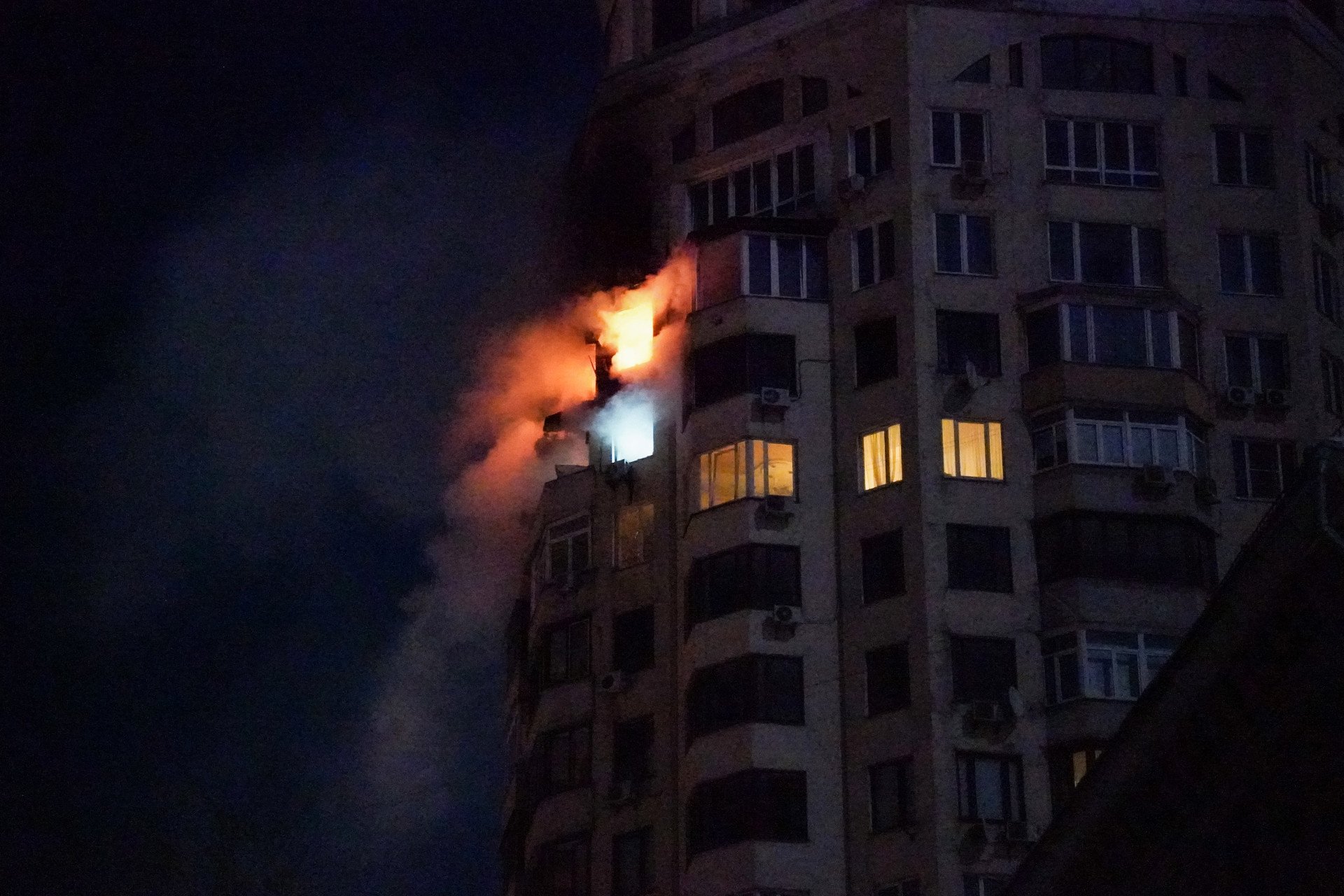
A five-story residential building was damaged in Dniprovskyi district, while a fire broke out on the upper floors of a 26-story building in Darnytskyi district.
Recovery efforts following the Russian strike across our regions are ongoing. Once again, there was a targeted attack specifically on energy facilities – the Russians used a significant number of ballistic missiles in combination with other missiles, more than 70 missiles in… pic.twitter.com/EymOingPiY
— Volodymyr Zelenskyy / Володимир Зеленський (@ZelenskyyUa) February 3, 2026
Drone debris also fell on the grounds of a kindergarten. In the Pecherskyi district, a gas station building, four vehicles, and power lines were damaged. Another drone strike hit a 22-story residential building in the Shevchenkivskyi district between the 16th and 17th floors.
Emergency services and utility crews began repair work overnight, while restoration efforts continued in buildings that had already lost heat before the strike.
Kyiv region
A 51-year-old man was injured in the Kyiv region. Energy infrastructure, private homes, and vehicles were damaged during the attack.
🔴 Russian forces called conducted the biggest attack against Ukraine in this year.
— UNITED24 Media (@United24media) February 3, 2026
Preliminarily, about 350-500 drones were deployed as well as about 65 missiles. pic.twitter.com/fqxUJVMGeX
Kharkiv
Two people were injured in Kharkiv, where emergency failures at energy facilities forced authorities to drain heating systems supplying 820 buildings connected to one of the city’s largest combined heat and power plants, to prevent the network from freezing.
“I understand how difficult this is in twenty-degree frost. But the unprecedented enemy attack on critical infrastructure leaves no other option. Our specialists see no alternative,” Kharkiv Mayor Ihor Terekhov said.
More than 100 “Points of Invincibility” were opened across the city, offering warmth, hot drinks, and charging stations. In the surrounding region, more than 16,000 residents were left without heating. Disruptions were also reported in public electric transport, prompting the launch of additional bus routes.
Sumy region
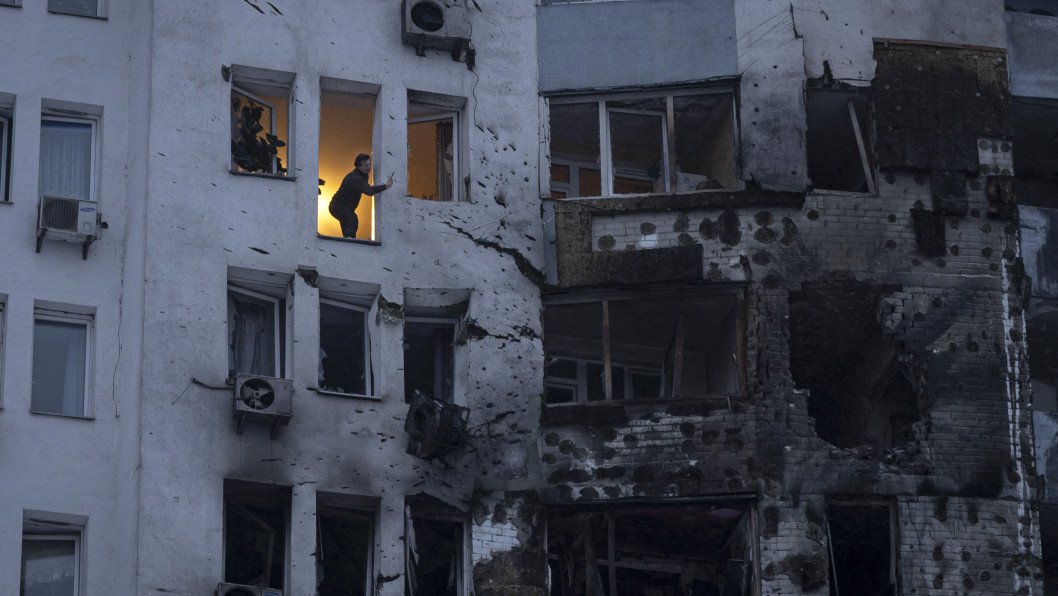
In Sumy, multiple apartment buildings in the Zarichnyi district were hit. One strike damaged the seventh floor of a residential building, disrupting heat supply and shattering up to ten windows.
Another impact on a separate building caused a fire, damaging balconies and windows. In Konotop, a private house was destroyed.
Dnipro
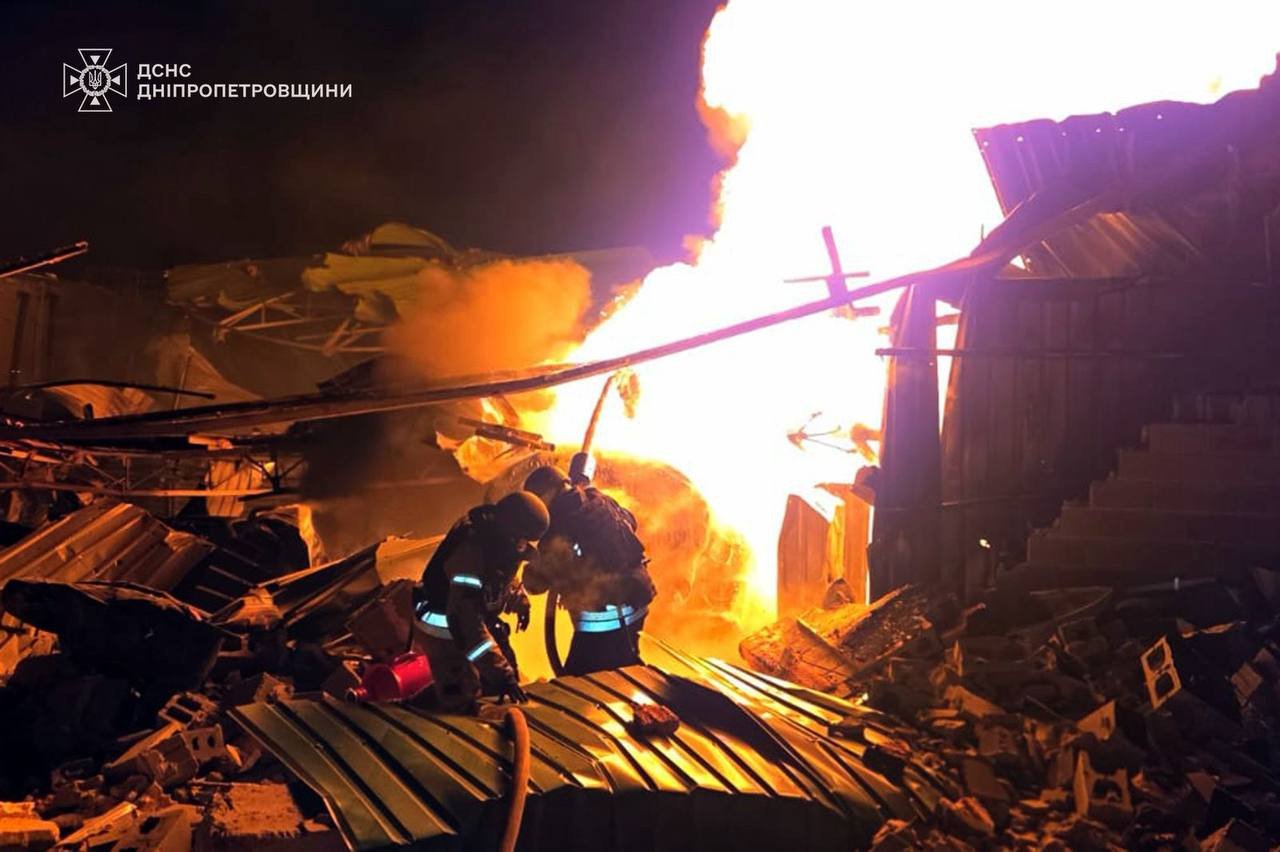
In Dnipro, infrastructure facilities, two private houses, a three-story residential building, and a dormitory were damaged. Fires were reported in nearby communities in the Synelnykove district, with damage to infrastructure, a private enterprise, garages, and vehicles.
Vinnytsia region
Strikes hit critical infrastructure in the Vinnytsia region, sparking fires. Power was cut to 50 communities as repair crews worked to restore electricity.
Odesa region
In the southern Odesa region, attacks on energy and civilian infrastructure left more than 50,000 people temporarily without power. Three residential buildings, warehouses, administrative facilities, and cars were damaged. Critical infrastructure facilities switched to generator power.
Ukraine’s Air Force said Russian Tu-95MS strategic bombers likely launched cruise missiles from the Caspian Sea early in the morning.
Russia chooses winter terror over diplomacy, targeting Ukraine’s energy infrastructure. The temperature in Ukraine is below -20°C (-4°F).
— Defense of Ukraine (@DefenceU) February 3, 2026
Over 70 missiles and 450 attack drones were launched across Sumy, Kharkiv, Kyiv and Kyiv region, Dnipro, Odesa, and Vinnytsia. They were all…
Monitoring channels described the assault as the largest combined missile-and-drone strike on Ukraine since the start of 2026, estimating between 350 and 500 drones and up to 65 missiles of various types were used.
The timing of the attack—on the eve of NATO Secretary General Mark Rutte’s arrival—was widely seen by Ukrainian officials as a deliberate signal, reinforcing Russia’s pattern of striking civilian energy infrastructure during diplomatic moments and extreme weather conditions.
Earlier, Ukraine condemned Russia’s deadly strike on a civilian bus in the Dnipro region after at least 15 people were killed.
Discuss this article:



-72b63a4e0c8c475ad81fe3eed3f63729.jpeg "Photo of Cyril Barabaltchouk")

-111f0e5095e02c02446ffed57bfb0ab1.jpeg "Photo of Roman Kohanets")