- Category
- Latest news
First-of-Its-Kind Kill: Ukraine Downs Russian Molniya Drone Using Fiber-Optic FPV
 Prefer U24 Media on Google
- Authors


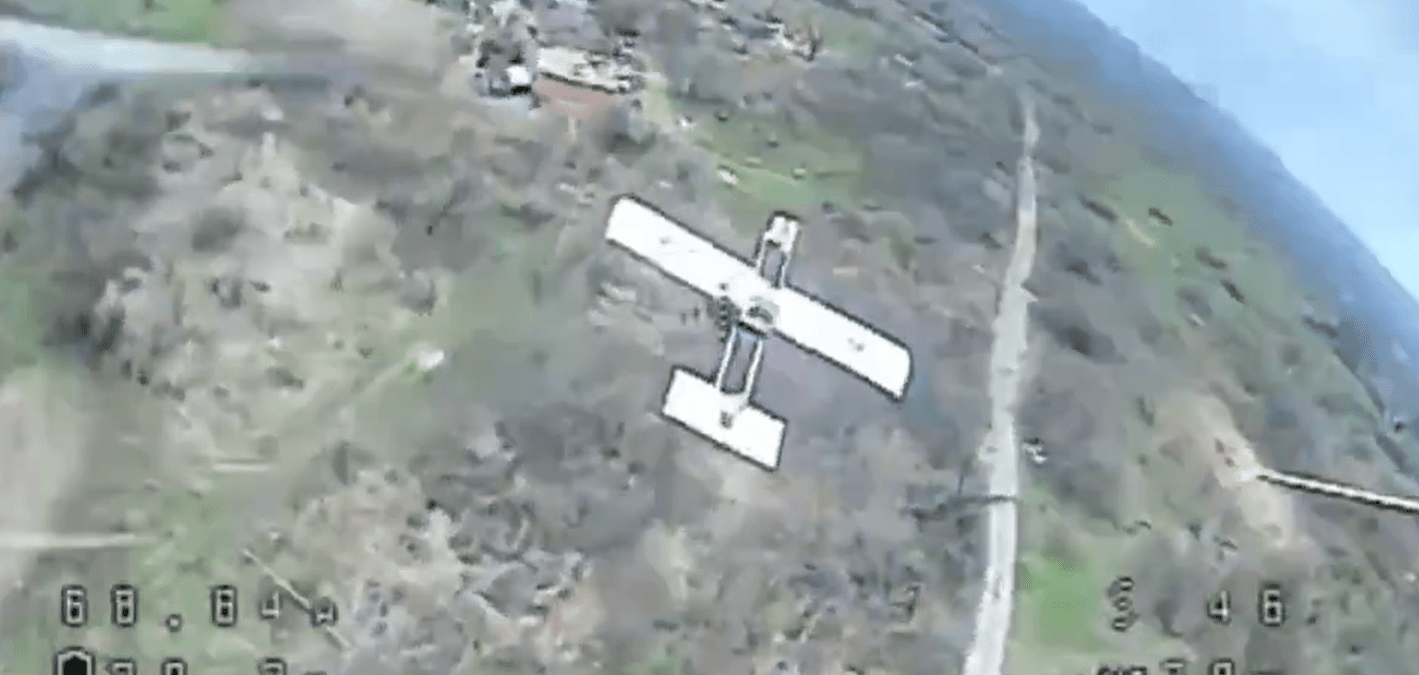
Ukrainian drone operators have achieved what appears to be a first on the battlefield—successfully intercepting a Russian loitering munition using a fiber-optic FPV drone, a feat that highlights the rapid evolution of drone-on-drone warfare, according to the Apachi strike group, part of Ukraine’s 81st Airmobile Brigade, on March 30.
The strike was carried out on the Sloviansk axis, where Russian forces have recently intensified drone activity.
We bring you stories from the ground. Your support keeps our team in the field.
According to the unit, operators used an FPV drone equipped with a fiber-optic control system to engage and destroy a Russian Molniya-type loitering munition in mid-operation.
The Molniya drone presents a challenging target even for experienced operators.
Unlike quadcopter-style UAVs, it features fixed-wing, aircraft-like aerodynamics, allowing it to maintain stable speed and flight characteristics while remaining relatively small and difficult to track.
Apachi drone group of the 81st Airmobile Brigade AFU hit Ru Kamikaze-type strike drone Molnia by fiber optic drone in north part of Siversk, Donetsk region, Ukraine
— Auditor (@auditor_ya) March 30, 2026
48.927570, 38.078768@GeoConfirmed pic.twitter.com/Ccq4DpiCJ9
The Apachi team noted that intercepting such a target with a standard FPV drone is extremely difficult due to its speed, stability, and size.
The use of a fiber-optic FPV drone adds another layer of complexity.
Unlike radio-controlled systems, fiber-optic drones rely on a physical cable for control, which makes them resistant to electronic warfare—but also introduces a critical vulnerability.
If the cable is damaged or severed, the operator immediately loses control of the drone.
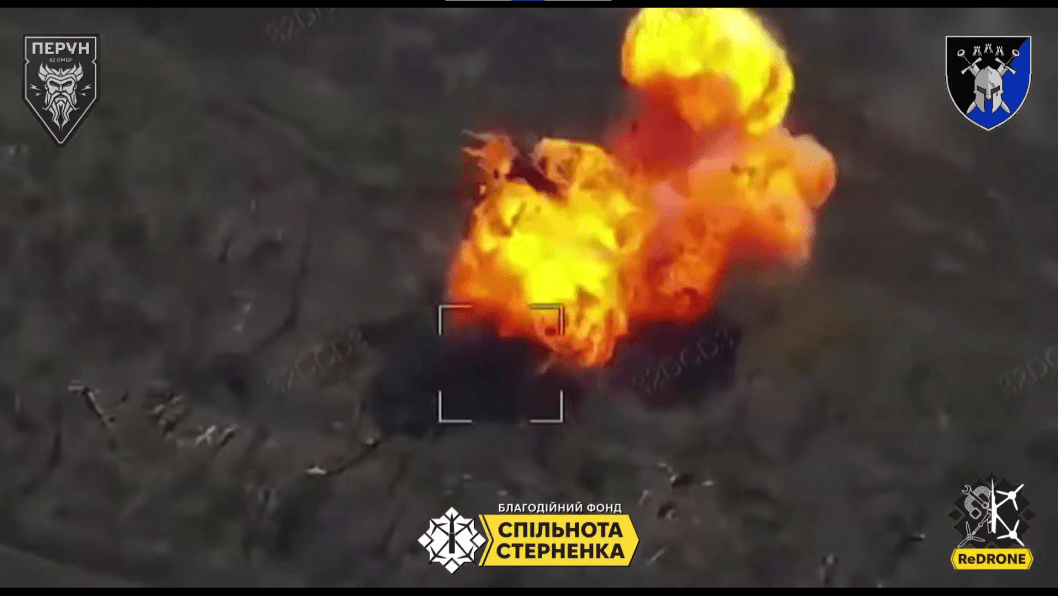
Despite this risk, the Apachi unit described the mission as a challenge they successfully overcame, demonstrating both technical skill and precision in execution.
Ukrainian forces say the interception comes amid a noticeable increase in the use of Molniya-type drones by Russian forces.
These loitering munitions are being deployed to strike logistics hubs, rear-area positions, and vehicles, while also targeting civilian areas near the front line.
The growing use of such systems has made counter-drone capabilities an increasingly important part of battlefield operations.
Earlier, Ukrainian forces shot down a Russian Ka-52 attack helicopter using an FPV drone in the Pokrovsk sector.
The helicopter was targeted by operators from the “Khyzhaky Vysot” drone unit of Ukraine’s 59th Separate Assault Brigade of Unmanned Systems.
As claimed, pilots of this Russian Ka-52 helicopter were able to eject after being hit by an FPV drone. After ejecting, the crew took cover in a trench behind burned-out armor. A follow-up drone reconnaissance flight later discovered that Russian pilots were already dead.
Discuss this article:


-c439b7bd9030ecf9d5a4287dc361ba31.jpg "Photo of Katherina Popilnichenko")


-111f0e5095e02c02446ffed57bfb0ab1.jpeg "Photo of Roman Kohanets")

-72b63a4e0c8c475ad81fe3eed3f63729.jpeg "Photo of Cyril Barabaltchouk")