- Category
- Latest news
Hungary Calls to Drop Russian Energy Sanctions as Iran War Spikes Fuel Prices
 Prefer U24 Media on Google
- Authors

-72b63a4e0c8c475ad81fe3eed3f63729.jpeg "Photo of Cyril Barabaltchouk")
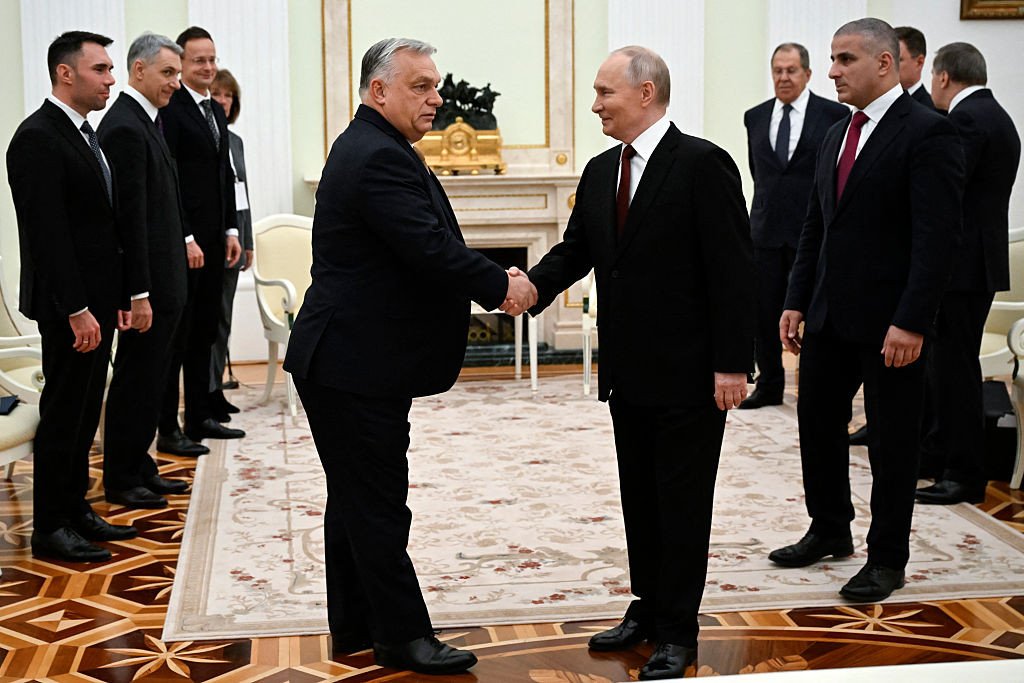
Hungarian Prime Minister Viktor Orbán accused Ukraine of contributing to rising fuel prices in Hungary.
Orbán said he had asked the European Commission to suspend sanctions on Russian energy, according to a statement he published on Facebook, European Pravda reported on March 9.
Orbán said fuel prices in Hungary have increased due not only to the war in the Middle East but also because of what he described as a disruption of Russian oil supplies through the Druzhba oil pipeline via Ukrainian territory.
We bring you stories from the ground. Your support keeps our team in the field.
What Orbán describes as a “disruption,” however, was actually a direct result of Russian military aggression. The Druzhba pipeline was rendered inoperable on January 27 when a Russian drone strike hit a key pumping station near Brody in Western Ukraine, causing critical internal damage.
Ukrainian officials have repeatedly presented evidence of the strike, pointing out the irony that Hungary is blaming Kyiv for an energy crisis caused entirely by Moscow’s own missiles.
The sudden spike in global energy costs follows the rapidly escalating conflict in the Middle East. Following the outbreak of the US-Israel war with Iran in late February, fears of a prolonged disruption to the region’s massive crude output have sent global markets into a panic.
According to The Guardian, Brent crude prices skyrocketed past $116 per barrel on March 9 after Iran effectively closed the Strait of Hormuz—a vital trade artery for a fifth of global oil supplies. With traders bracing for further retaliatory strikes on critical petroleum infrastructure, the G7 is now scrambling to artificially stabilize the market and prevent a severe global economic shock.
According to the Hungarian prime minister, the halt in transit of Russian oil poses a threat not only to Hungary but to the European Union as a whole.
-1a5fcbcc996c3558ed26e0f3739360a9.jpg)
Orbán announced that he had convened an emergency government meeting to discuss the situation in the energy sector and the impact of rising oil prices, European Pravda wrote.
He also said he had sent a letter to European Commission President Ursula von der Leyen calling for a revision of EU sanctions policy toward Russia, particularly restrictions related to energy.
“In all of Europe, we must reconsider and suspend all sanctions imposed on Russian energy carriers. I initiated this in a letter to the President of the European Commission, Ursula von der Leyen,” Orbán said.
In a related diplomatic dispute, Ukrainian officials previously accused Hungarian security forces of mistreating seven employees of Ukraine’s state-owned Oschadbank following their abduction in Budapest. The employees, who were transporting valuables from Vienna, were stopped by Hungarian counter-terrorism officers.
According to Ukraine’s Foreign Ministry, the detainees were held for approximately 28 hours while blindfolded and handcuffed and were not granted consular access during that time. Ukrainian officials also stated that their personal belongings were confiscated.
The situation further escalated after one of the detainees, who has diabetes, reportedly did not receive his prescribed medication and was later hospitalized after receiving an injection administered by Hungarian authorities.
Hungary has repeatedly criticized EU sanctions on Russian energy since the start of Russia’s full-scale invasion of Ukraine, arguing that the restrictions harm European economies more than they weaken Moscow. The Druzhba pipeline remains one of the key routes for Russian oil supplies to Central Europe.
Orbán’s latest demands align perfectly with Budapest’s long-standing strategy of weaponizing its energy ties to Moscow. Rather than simply complaining about the pipeline disruption, Hungary is actively using it to hold the rest of Europe hostage.
Orbán had previously explicitly linked the Druzhba pipeline dispute to his ongoing veto of a massive €90 billion European support package for Ukraine. By demanding that Kyiv restore the flow of Russian oil before Hungary lifts its blockade on financial aid, Orbán continues to position himself as the Kremlin’s most vital shield within the EU.
Discuss this article: