- Category
- Latest news
Latvia-Based Companies Reportedly Provide Services to Russian Tankers in Violation of EU Sanctions
 Prefer U24 Media on Google
- Authors


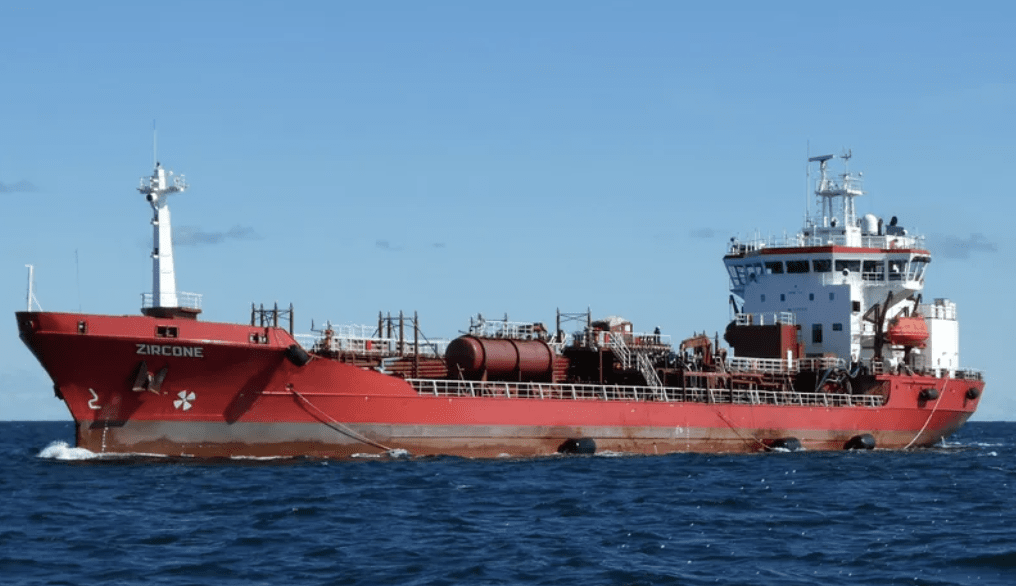
Companies based in Latvia are reportedly continuing to provide services to vessels associated with Russia's maritime operations, notwithstanding the sanctions framework established by the European Union and its partners, according to Delfi on November 10.
The reporting focuses on the activities of the Cyprus-flagged tanker Zircone, which operates from a Latvian base and is involved in ship refueling. A notable number of the vessels it services are identified as being part of the Russian maritime segment often referred to as the “shadow fleet.”
Recently, the Zircone called at the port of Riga, where it reportedly took on marine fuel. The vessel docked at the oil product terminal managed by SIA Ovi, a company specializing in the wholesale supply of petroleum products. Representatives from SIA Ovi offered no comment regarding their clientele or the cargo transfers.
However, according to Delfi, public shipping records indicate that a safety inspection performed on the Zircone during its port call in Riga resulted in the identification of eight safety deficiencies.
-ed051fb1853bcb98ed81f53fa31bd834.png)
It is observed that tankers like the Zircone and the Rina adhere strictly to international sanctions lists, reportedly avoiding service to vessels explicitly designated by EU or US sanctions. Accountability for other potential breaches is made complex by an existing exceptional status for bunkering operations, which provides certain limited exemptions from specific sanctions requirements.
Both vessels were previously associated with Fast Bunkering, a Latvian company formerly registered within the Port of Riga. Since the full-scale invasion of Ukraine, Fast Bunkering has modified its corporate details, including its name, address, and ownership, suggesting a possible continuation of operations through different Latvian-registered firms.
According to Delfi, analysts have estimated that the activities of this fleet have potentially generated around $25 billion in supplementary revenue for Russia over the past two years, achieved by navigating around the established oil price ceilings and international restrictions.
Earlier, a New Zealand-based entity, Maritime Mutual, was implicated in allegedly providing insurance coverage for oil tankers transporting sanctioned crude from both Russia and Iran. The total commercial value of the cargo moved under these policies reportedly amounts to tens of billions of US dollars.
Discuss this article:


-c439b7bd9030ecf9d5a4287dc361ba31.jpg "Photo of Katherina Popilnichenko")

-72b63a4e0c8c475ad81fe3eed3f63729.jpeg "Photo of Cyril Barabaltchouk")