- Category
- Latest news
Lifted Sanctions Allow Russia to Sell European Lukoil Assets, Zelenskyy Reveals
 Prefer U24 Media on Google
- Authors

-72b63a4e0c8c475ad81fe3eed3f63729.jpeg "Photo of Cyril Barabaltchouk")
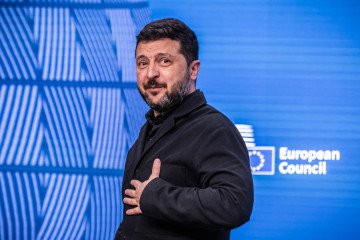
Lifted sanctions are allowing Moscow to sell European Lukoil assets, while Western partners explicitly pressured Kyiv to halt Russian oil strikes, Ukrainian President Volodymyr Zelenskyy told journalists on April 9.
He confirmed the pressure: “I won’t say who asked us to do this. But partners did ask – it’s a fact. They asked at different levels, from political to military leadership.”
We bring you stories from the ground. Your support keeps our team in the field.
The requests were driven by fears that Ukrainian strikes, combined with the Middle East crisis, would drastically impact global energy prices. “During the blocking of the Strait of Hormuz, partners sent various signals to different countries that have some influence,” Zelenskyy explained.
“Some were asked to increase production, others to expand transit capacity, and we were asked to scale back strikes – meaning our responses to Russian attacks. They believed this would have an impact on energy prices,” he continued.
However, the Ukrainian leader publicly dismissed this assessment, stating, “I believe Russian oil does not have a significant impact on the global market. And I said this openly.”
With a ceasefire now taking hold in the Middle East and the Gulf, Zelenskyy is demanding that harsh sanctions on Russian energy be fully reinstated. He warned that if they are not, it would validate his suspicions that the recent easing was heavily manipulated by Moscow.
“I am waiting for sanctions on Russian oil to be fully reimposed, as they were before,” he said. “Otherwise, each day will only strengthen my belief that this was a Russian game – to use a convenient pretext to lift sanctions on energy resources and gain the ability to sell Lukoil’s assets.”
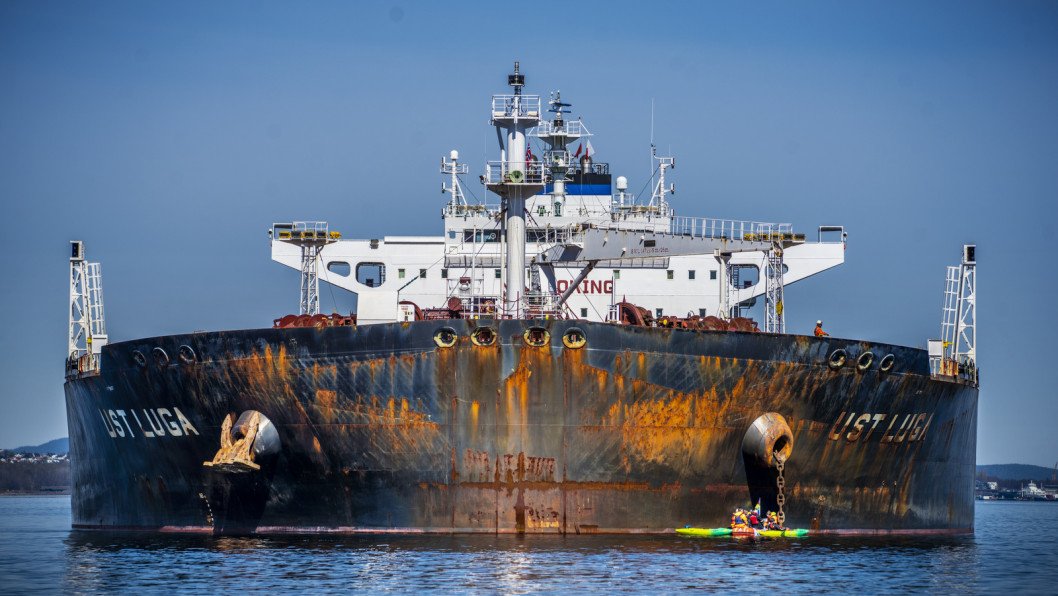
According to Zelenskyy’s assessment, Russia holds around 20 distressed assets in Europe, including refineries in Romania and Bulgaria, which “would go bankrupt” if full sanctions remained in place for another six to twelve months.
“As for the oil business, at least in Europe, Russians cannot use these assets in their own interests or sell them,” he noted. “That is why I believe sanctions were eased, in part, to allow Russia to sell these assets. If this analysis is wrong, then we will once again see strong sanctions imposed on Russia’s energy resources – because it is precisely energy resources that finance their war, a war that everyone must help bring to an end.”
Addressing Ukraine’s recent successful strikes deep inside Russian territory, Zelenskyy credited the rapidly improving effectiveness of domestic drone technology, noting that “sometimes we conduct operations in which we destroy multiple targets, and sometimes we choose to focus on just one.”
-a0b35bfcbe089eb7ede164b42f6aba00.png)
Framing the attacks as direct and necessary retaliation for Russia’s continued bombardment of Ukraine’s energy grid, he offered a clear ultimatum to Moscow. “Russians now have major problems with some of their facilities. After any strike on our energy sector, we respond – and that is entirely fair,” Zelenskyy declared. “If Russians want this to stop, they must stop their strikes, and then we will act in kind.”
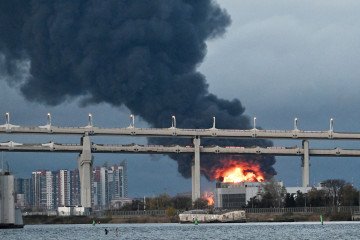
Zelenskyy’s comments come on the heels of a massive surge in global oil prices linked to the conflict in Iran and the closure of the Strait of Hormuz. As Russian crude prices hit a 13-year high, Kyiv escalated its deep-strike drone campaign against Moscow’s energy infrastructure, specifically targeting Baltic export hubs like the Primorsk port.
Discuss this article: