- Category
- Latest news
Poland Secretly Tests US Naval Drones for Baltic Sea Missions, Inspired by Ukraine, Video
 Prefer U24 Media on Google
- Authors

-111f0e5095e02c02446ffed57bfb0ab1.jpeg "Photo of Roman Kohanets")
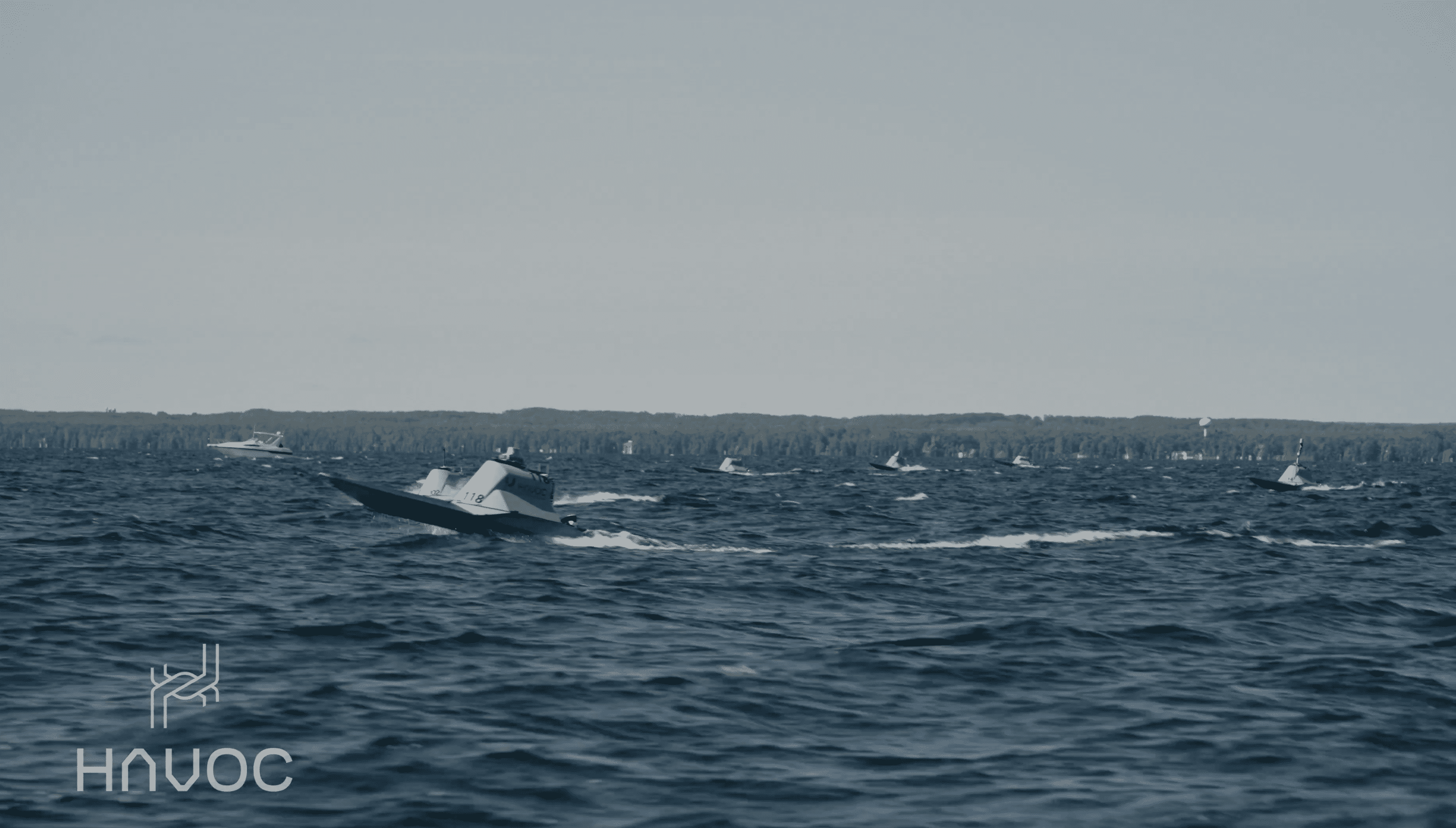
Poland has quietly begun testing autonomous naval drones developed by the US company HavocAI, signaling a new phase in its maritime defense posture aimed at countering Russian influence in the Baltic Sea.
The trials, conducted by the elite JW Formoza special operations unit, involved night navigation, signals intelligence collection, and simulated infiltration missions modeled on Ukrainian tactics in the Black Sea. This was reported by Army Recognition and Intelligence Online on July 31.
According to the reports, the trials took place near Gdynia, a key port city on Poland’s northern coastline. The operation reflects Warsaw’s growing interest in scalable, low-cost unmanned platforms modeled on systems such as Ukraine’s Sea Baby and Magura V5, which have been used successfully against the Russian Black Sea Fleet.
The tested systems are based on HavocAI’s Rampage Gen 1 and Gen 2 models. Each drone can carry approximately 300 pounds (136 kilograms) of payload and is equipped with solar panels, potentially extending operational range.
The California-based company, founded only 18 months ago, focuses on low-cost, mass-producible naval drones and has rapidly expanded its portfolio. “We’re developing a heterogeneous fleet that can be deployed simultaneously in the US, Europe, and the Pacific,” CEO Paul Lwin told Defense One in a June 2025 interview.
HavocAI’s autonomous architecture allows multiple vessels—from 14-foot models to upcoming 100-foot variants—to function within a single coordinated system.
The company confirmed a strategic partnership with the US company Lockheed Martin Ventures.
The collaboration will integrate Lockheed’s weapons systems and industrial manufacturing capabilities with HavocAI’s autonomy software, responding to rising Pentagon demand and congressional funding for AI-powered naval platforms.
Collaborative autonomy in action. You can't do it with one boat. No remote controlled choreography. Just real world capability.
— HavocAI (@HavocAi_USV) July 25, 2025
It's a quick clip of Rampage Gen 2 at a Navy exercise for which HavocAI was selected. Gen 2 first hit the water just last month, and it's performing… pic.twitter.com/6MAZymQvGy
Defense Express added that Poland’s tests suggest it is not only replicating Ukrainian operational concepts but also adapting them to the Baltic theater, where maneuver denial and unmanned saturation attacks are considered decisive.
The estimated cost of each drone is below $250,000, significantly cheaper than conventional naval strike assets.
“Poland has recognized that modern naval warfare favors mass, autonomy, and survivability,” Defense Express noted on July 31. “These covert trials mark a shift toward operational readiness for potential war scenarios in the Baltic.”
Earlier, it was reported that Poland is equipping its armed forces with Ukrainian‑tested “Warmate” loitering munitions, following Ukraine’s battlefield experience.
These precision strike drones will form part of Poland’s long‑term procurement strategy under a contract running through 2035.
Discuss this article:




-c439b7bd9030ecf9d5a4287dc361ba31.jpg "Photo of Katherina Popilnichenko")

-72b63a4e0c8c475ad81fe3eed3f63729.jpeg "Photo of Cyril Barabaltchouk")