- Category
- Latest news
Poland to Launch National Combat Drone as Alternative to Iran-Made Shahed UAVs
 Prefer U24 Media on Google
- Authors

-c439b7bd9030ecf9d5a4287dc361ba31.jpg "Photo of Katherina Popilnichenko")
Poland is entering the final stages of developing a national drone designed to serve as an equivalent to the Iranian-made Shahed.
Defense Minister Władysław Kosiniak-Kamysz confirmed the progress through Polish Radio on March 19, noting that the project must move to practical use as quickly as possible.
We bring you stories from the ground. Your support keeps our team in the field.
This initiative is a primary focus for the newly established Center for Autonomous Systems in Warsaw. The center brings together military institutes, scientists, and industry experts to accelerate the adoption of new technologies.
The Polish defense ministry reported a significant increase in funding for these technologies. While the country allocated approximately $27M for drones in 2023, the budget for 2026 is set to reach $6.7B.
These funds are designated for drones, autonomous systems, and counter-drone measures. A portion of the investment will support an anti-drone system along Poland’s eastern border.
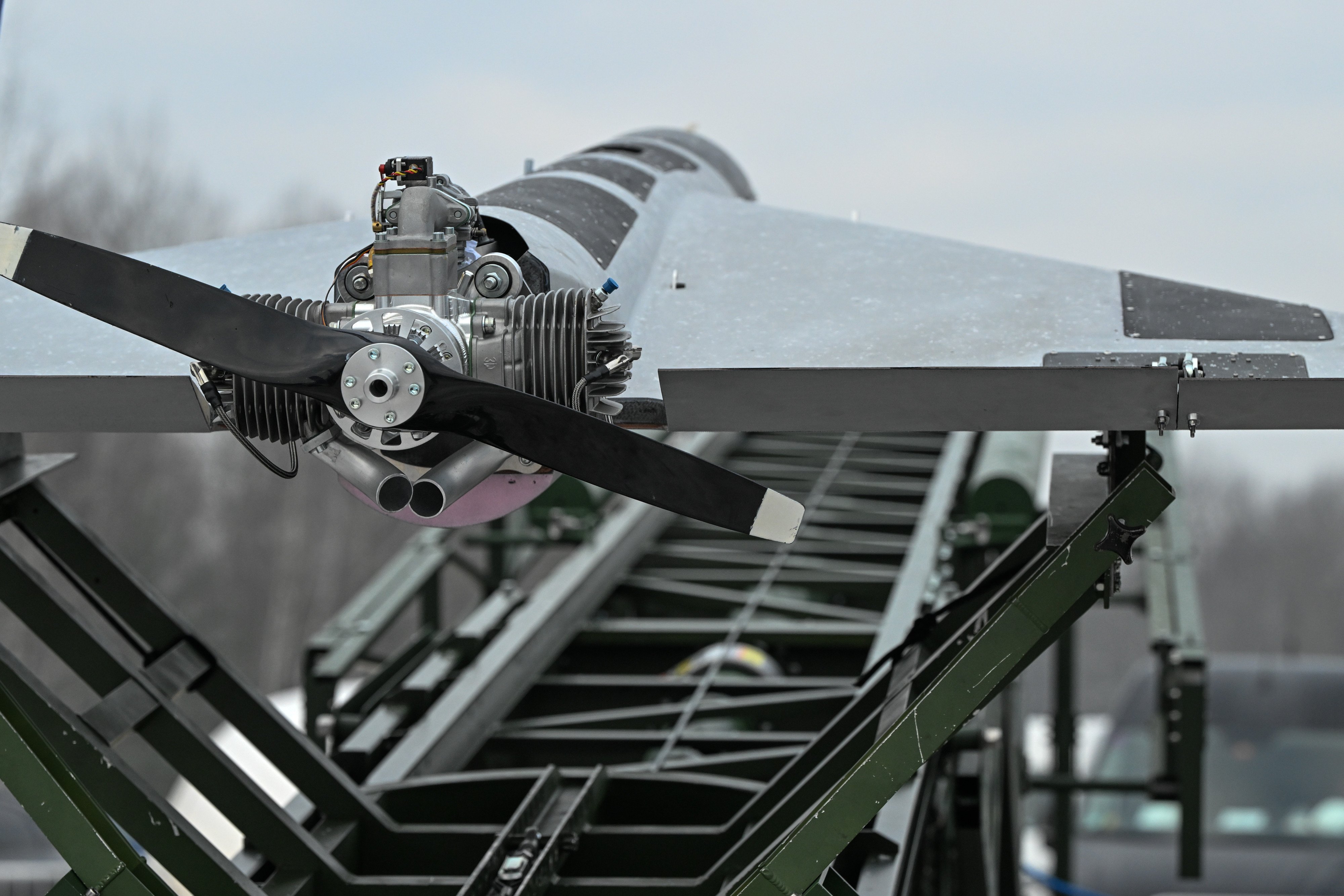
Although the defense minister did not name the specific model, the project likely refers to the PLargonia program. This drone was first shown at the MSPO exhibition in September 2025 and features a delta-wing design. The aircraft is built for both training and combat missions.
In its AT version, the drone acts as a target to train air defense operators and simulate combat scenarios. The OWA strike version is equipped with a warhead. Its compact size and delta-wing shape allow it to function effectively as a loitering munition.
-0a3923137677578e9b8351e4796234c4.jpg)
The PLargonia uses a 32-horsepower 342i B4 TS piston engine with a rear-mounted propeller. It has a wingspan of 2.2 meters and a length of 2.6 meters. With a maximum takeoff weight of 85 kilograms, the strike version can carry a payload of 16 to 20 kilograms.
The drone reaches a cruising speed of 185 km/h and has a maximum flight range of 900 kilometers. It can be launched from ground platforms without the need for traditional airport infrastructure.
Polish Prime Minister Donald Tusk announced that Poland would be prepared to lay anti-personnel mines along its eastern border within 48 hours of its official withdrawal from the Ottawa Convention.
This move followed a six-month exit process initiated in August 2025, which allowed Warsaw to resume the production and use of mines as part of the "East Shield" defense project.
Discuss this article:



-72b63a4e0c8c475ad81fe3eed3f63729.jpeg "Photo of Cyril Barabaltchouk")