- Category
- Latest news
Private Bunker Demand Skyrockets in Russia Amid Rising Fears
 Prefer U24 Media on Google
- Authors

-111f0e5095e02c02446ffed57bfb0ab1.jpeg "Photo of Roman Kohanets")
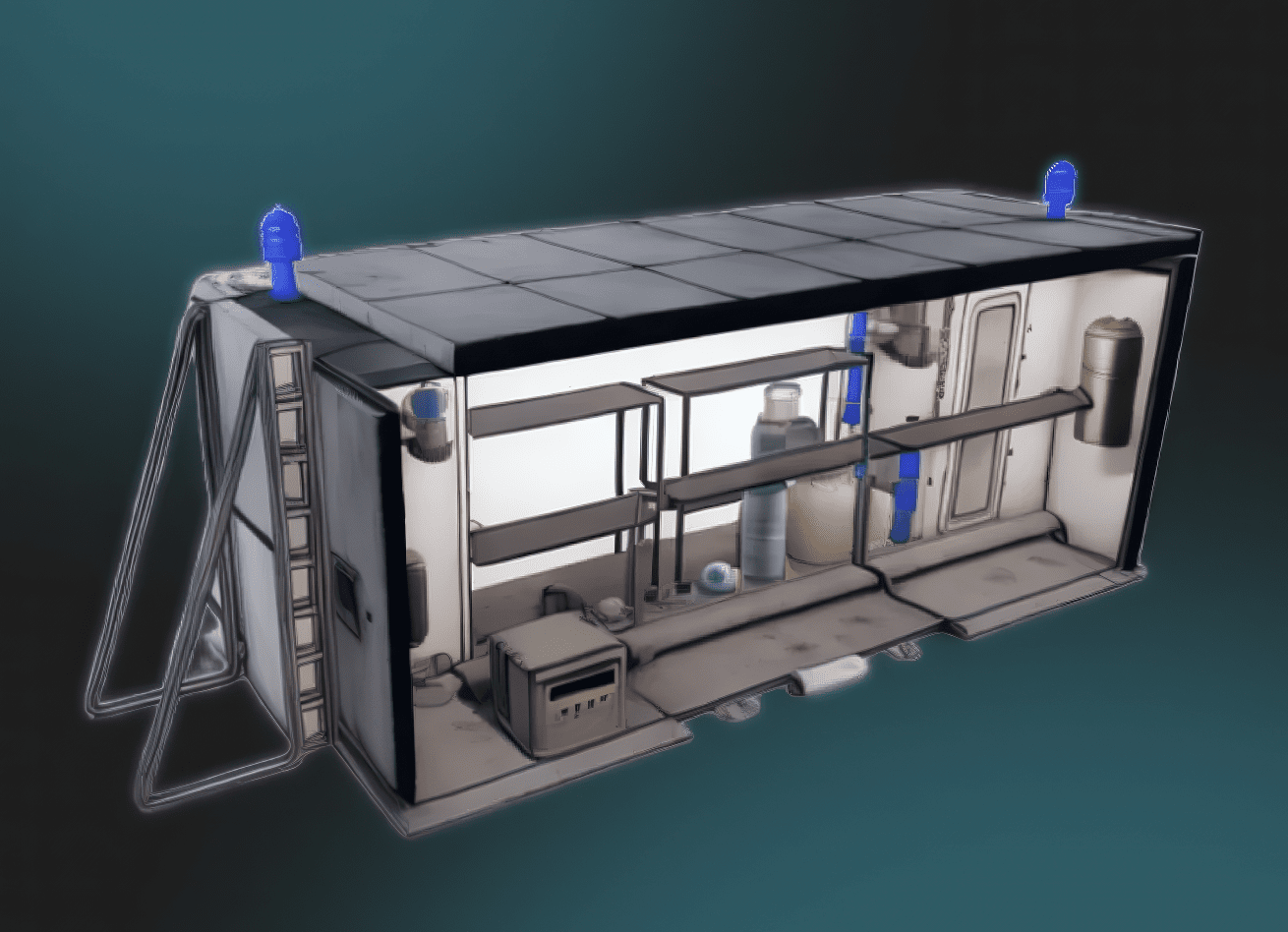
Demand for private bunkers in Russia has jumped 140% as wealthy clients seek protection from fears of a wider war, according to The Moscow Times on April 6.
The outlet reported that the surge has unfolded against the backdrop of Russia’s war against Ukraine and heightened tensions in the Middle East.
The main buyers were described as top managers and major businessmen in Moscow, while some officials were also among the clients, though their identities were not disclosed.
We bring you stories from the ground. Your support keeps our team in the field.
The Russian Telegram channel Shot reported that orders for private shelters have been arriving almost daily since early March, pushing installation queues into the summer.
Interest in placing bunkers at dachas and country homes also rose sharply, with applications for such sites rising by 2.5 times.
The most basic models were described as compact, reinforced structures for two people, situated up to five meters underground, while wealthier clients chose customized versions with larger living areas, kitchens, showers, and entertainment systems.
Luxury underground bunker for long-term autonomous survival
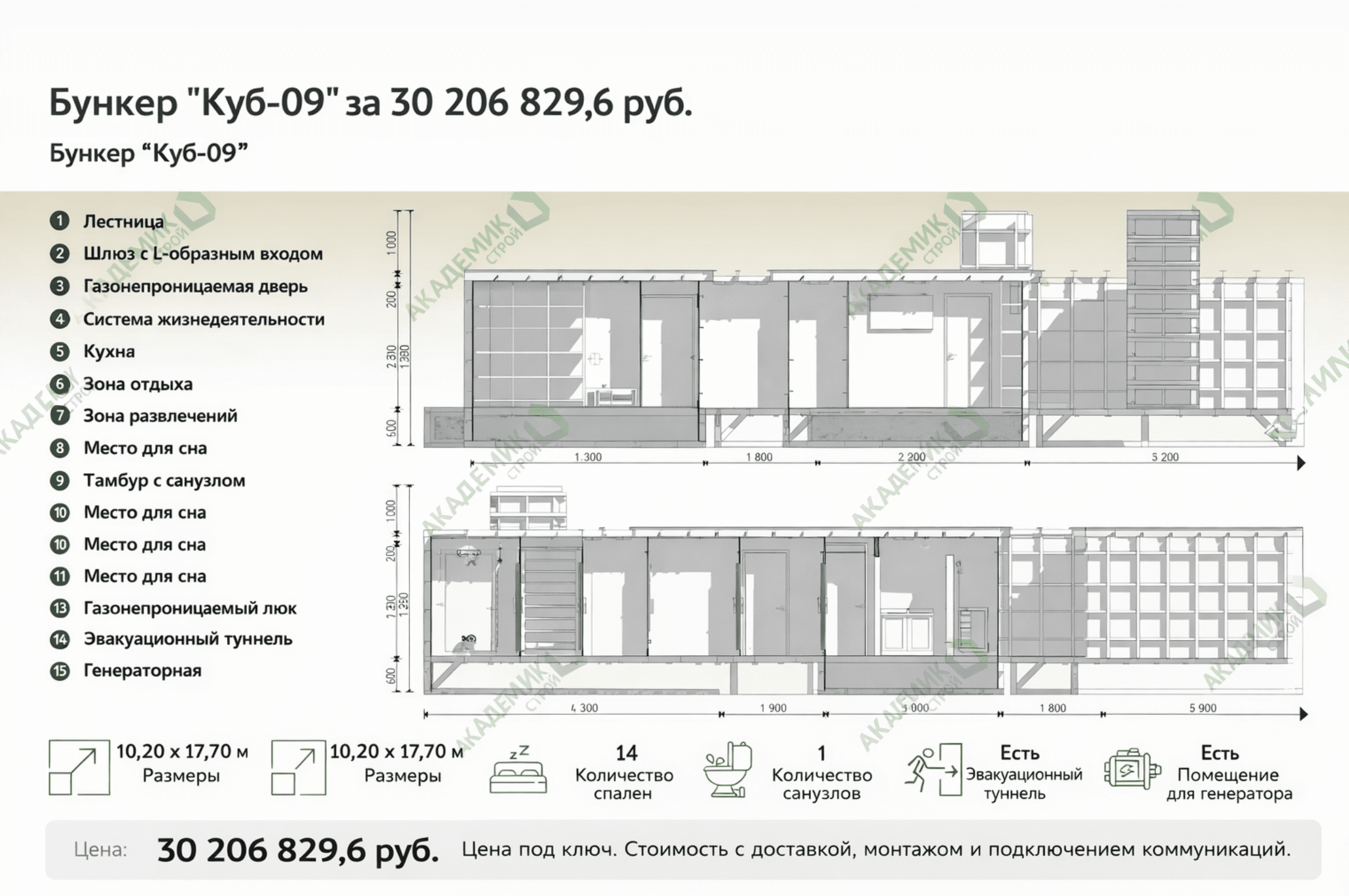
The Kub-09 is taken as an example of a commercially available large underground bunker developed by the Russian company Akademik-Stroy, designed to accommodate 12 to 14 people in a self-contained shelter with a total area of 74.73 square meters and a usable area of 61.7 square meters.
According to the blueprint, the layout includes a staircase, an L-shaped entry airlock, a gas-tight door, a life-support system, a kitchen, a rest area, an entertainment zone, four sleeping spaces, an anteroom with a bathroom, a gas-tight hatch, an evacuation tunnel, and a separate generator room.
The listed turnkey price is 30,206,829.6 rubles, or about $376,000.
More expensive shelters were described as full underground apartments built with reinforced concrete methods similar to those used in metro construction.
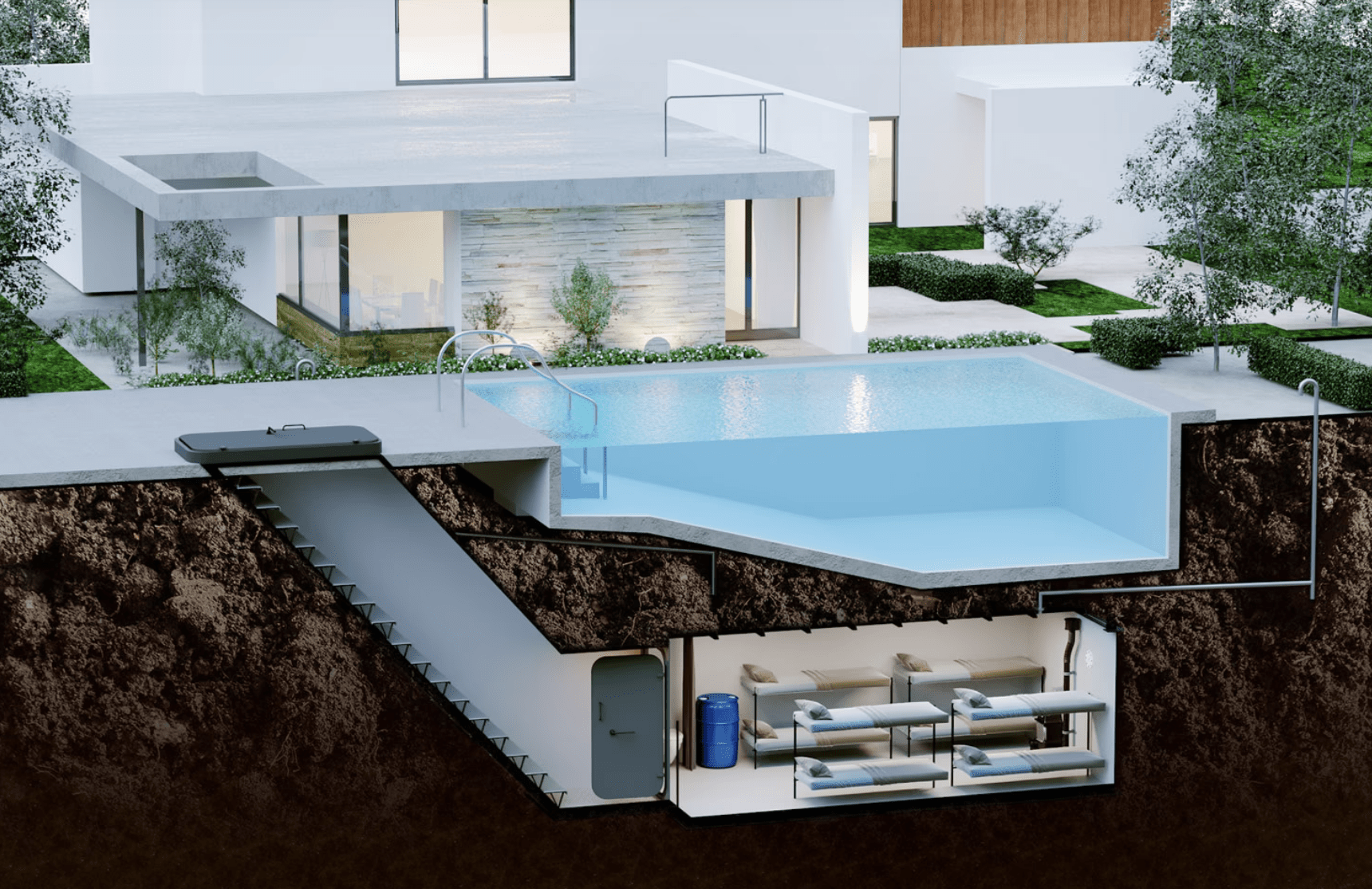
According to Shot, they can include fuel and water reserves, autonomous life-support systems, and sealed ventilation designed to allow a family to remain underground for months.
The outlet added that the contracts strictly prohibit manufacturers from disclosing bunker locations or buyers' identities.
The growing fear of escalation also appears to be reflected in stronger official protections around key state-linked sites as Russia’s Federal Protective Service moved to establish a protected zone of more than three square kilometers around the residence linked to Russian leader Vladimir Putin, Bocharov Ruchey, in Sochi.
The draft order dated March 13 would create a security perimeter on land and at sea around the site, which lies near homes, sanatoriums, and public beaches.
The proposed rules would ban drone flights of any weight class, most anchoring of water transport, helipad construction, vehicle and motorcycle repairs, and waste dumping.
They would also prohibit shooting ranges, indoor firing venues, paintball and airsoft clubs, and other organizations, including schools, from using items that resemble weapons.
Discuss this article:

-c439b7bd9030ecf9d5a4287dc361ba31.jpg "Photo of Katherina Popilnichenko")