- Category
- Latest news
Russia Proposes “Super-Prisons” Blending Pre-Trial Detention With Industrial Labor
 Prefer U24 Media on Google
- Authors

-111f0e5095e02c02446ffed57bfb0ab1.jpeg "Photo of Roman Kohanets")
Russia’s Justice Ministry has proposed a legal change that could pave the way for “super-prisons” combining pretrial detention and prison labor under one roof, according to Agenstvo on March 17.
The draft law, published on Russia’s official legal acts portal, would permit convicted prisoners to remain in pretrial detention centers, or SIZO, if they are employed at production sites operating inside those facilities.
We bring you stories from the ground. Your support keeps our team in the field.
The proposal would amend the law regulating Russia’s penal system and further blur the line between detention centers for suspects and institutions for sentenced inmates.
At present, convicted prisoners can stay in SIZO or prisons only if they are assigned to maintenance work. Under the new rules, they could remain there for industrial labor as well, including woodworking, garment manufacturing, and food production.
Yevgeny Smirnov, a lawyer at the human rights organization First Department, noted that such production sites remain limited, but the legal change could lay the groundwork for broader use.
-e393994fbbcc90e7a534d23fcaa451be.jpg)
“The state benefits from creating large ‘prison’ centers where both defendants and convicted prisoners are held, and where production is also located,” Smirnov told Agenstvo.
“This makes it possible to save money by cutting transport and staff costs and to make production more efficient.”
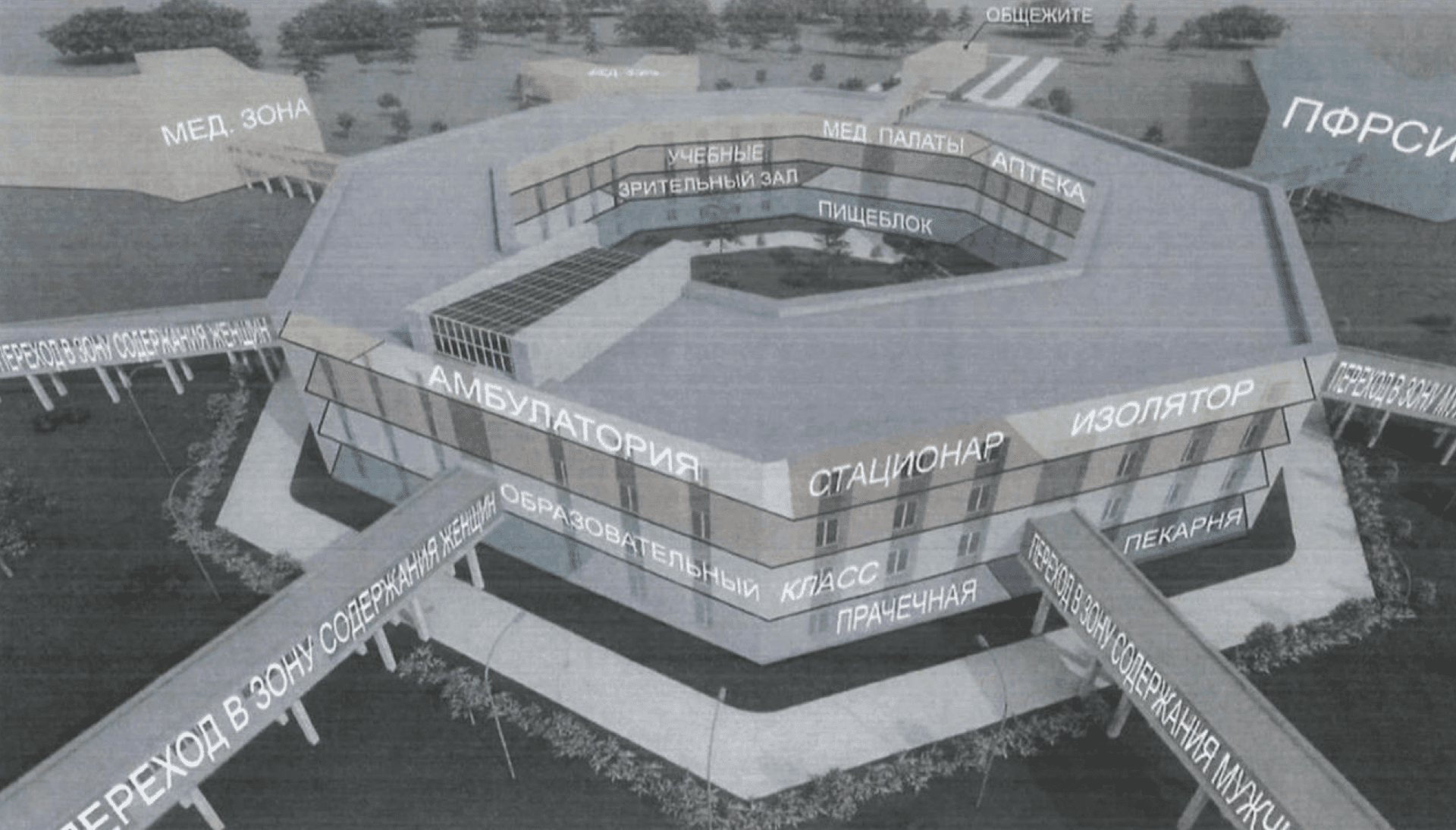
Smirnov warned that the initiative appears to be a legal preparation for larger “super-prisons,” where detainees awaiting trial and sentenced prisoners would be held in the same complex. If Russia moves ahead with that model, he noted, keeping convicted prisoners in SIZO could become routine rather than exceptional.

One such facility, designed for 3,000 inmates, has been under construction in Russia’s Kaluga region since 2024.
The proposal would make that model easier to expand by allowing SIZO facilities to run production sites and retain convicted workers even when no nearby penal colony exists.
The initiative also reflects broader shifts in Russia’s penal system under wartime conditions.
The squeeze has left Moscow with a much smaller inmate pool after years of recruiting prisoners for combat in exchange for pardons, with Russia’s total prison population now down to 308,000.
The Moscow Times, citing Russian court and penitentiary data, noted that the figure stood at nearly 700,000 in 2013, while the number held in pretrial detention had dropped to 89,000.
The decline accelerated after the full-scale invasion, falling from 466,000 inmates in early 2022 to 433,000 a year later and 313,000 by 2024, broadly tracking Russia’s wartime recruitment drives.
Discuss this article: