- Category
- War in Ukraine
Russia Revives Gulag as Its Secret Police Seize Full Control of Prisons
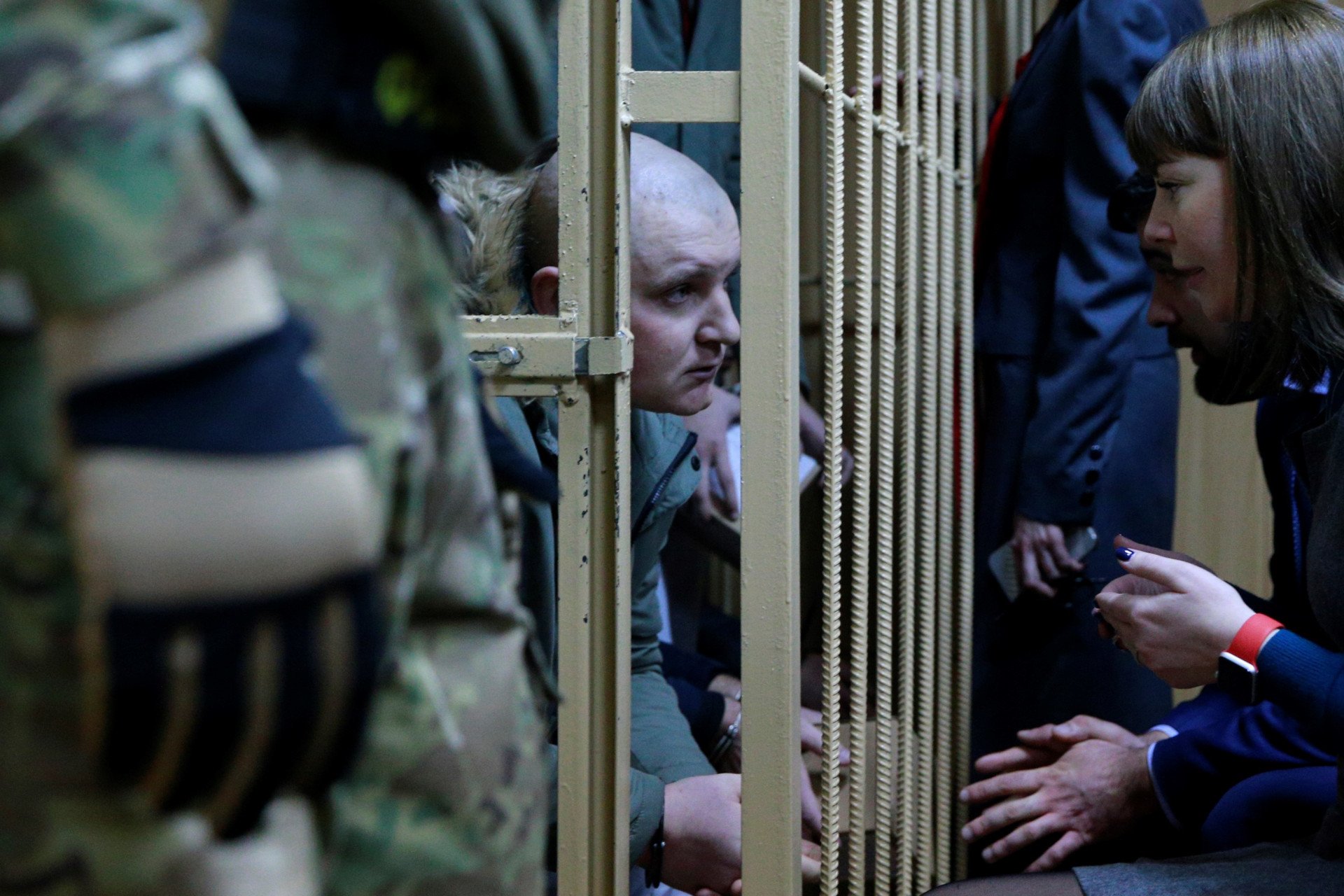
Russia has handed prison keys back to the FSB— the main successor agency to the Soviet Union's secret police KGB—reviving its Gulag system designed for abuse and torture. For Ukrainians held by Russia, the risks of long prison terms and fabricated court cases escalate.
 Prefer U24 Media on Google
- Authors

-46f6afa2f66d31ff3df8ea1a8f5524ec.jpg "Photo of Jess Daly")
The Russian State Duma passed a new law on July 8, 2025, restoring the FSB’s authority to run its own pre-trial detention facilities. Russian lawmakers are also considering two related bills, amending the Administrative Code, the Criminal Code, and the Criminal Procedure Code, all taking effect on January 1, 2026.
One of the bills suggests that inmates could be escorted by the FSB via special carriages, vessels, and aircraft. Another gives the FSB the power to investigate and punish in-house those who cause trouble within detention facilities.
“These clearly indicate preparations for repression on a scale beyond anything we’ve seen so far,” CEPA said.
Russia says that the FSB needs power over detention facilities due to the number of cases related to treason, espionage, terrorism, and extremism, which have tripled.
Experts at CEPA say that this move accelerates the expansion of Russia's security apparatus into a modern “gulag,” eroding oversight and increasing potential for abuse, and is another factor in Russia’s surveillance and internal control.
Putin may be hesitant to increase his war effort even further, apparently wary of torpedoing his economy, but his beloved security service shows no hesitation at all in returning to large-scale repression.
Soviet echoes in today’s Russia
The FSB’s prison authority traces its lineage back to the Stalin era, when the agency was known as the NKVD, later the KGB. These facilities were known as the most feared and brutal parts of the Soviet repressive system.
Prisoners were often held without access to lawyers or their families. Detainees were often imprisoned on fabricated crimes or those based on coerced testimonies.
Prisoners would often be subjected to beatings, mock executions, psychological torture, and forced standing for hours or days. These facilities were deliberately designed to dehumanize and destroy perceived enemies of the state.
Lefortovo, the old Tsarist military prison in eastern Moscow, “gained a horrible reputation in the 1930s, when executions were routinely carried out in its basement,” CEPA reported.
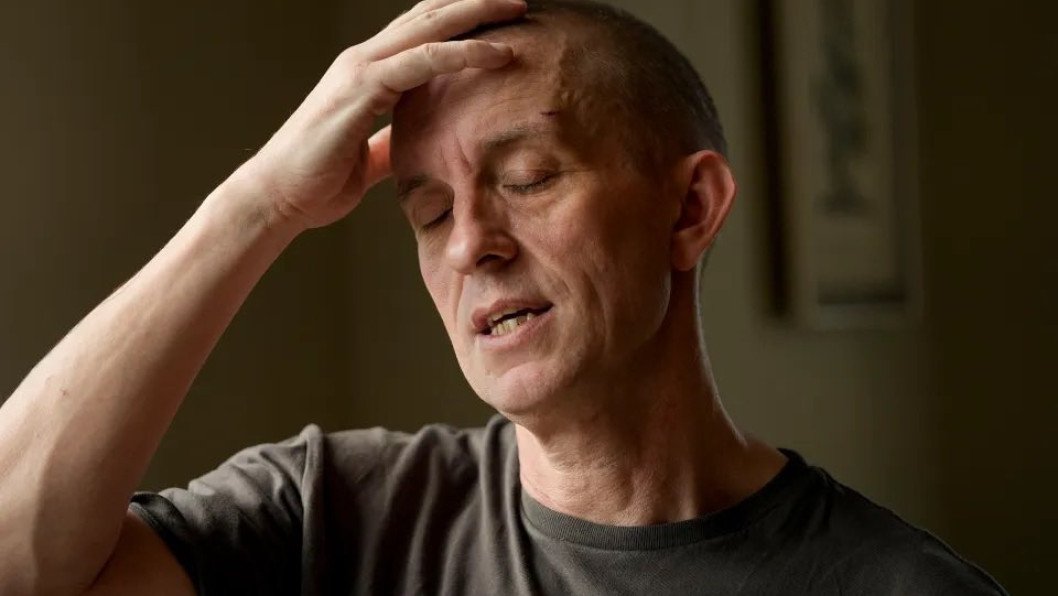
When Russia joined the Council of Europe in 1996, the Kremlin pledged to reform and to strip the FSB of the right to run pretrial detention centres. Europe insisted that no agency should investigate and imprison at the same time.
There was much resistance for years, even more so after Russia’s leader, Vladimir Putin, came into power in 2000. In 2005, Putin finally handed over his detention centers to the Ministry of Justice, even to the infamous Lefortovo.
Putin’s 2005 decree stated the transfer was “in order to create additional guarantees for the protection of the rights, freedoms, and lawful interests of persons suspected or accused of committing crimes.” Suggesting that re-instating FSB control, therefore, eliminates these guarantees.
Under the new law, the FSB wants to reclaim Lefortovo, establish new detention centers across the country, and run a dedicated in-house system to transport detainees between them, all beyond the reach of external oversight.
Implications for Ukrainians in occupied territories
Although the old Soviet style system has not been in place for several years, Russia’s pre-trial detention centres and its current penal colonies are often referred to as the “descendants of gulags”.
Systematic abuse, torture, as well as physical and sexual violence, have become commonplace there. Russia continues to illegally sentence Ukrainian civilians and prisoners of war to lengthy sentences and sometimes life imprisonment to some of the most notorious penal colonies in the world.
Thousands of Ukrainian civilians in Ukraine’s occupied territories have “vanished into thin air,” Forbidden Stories reported, adding that these “ghost prisoners” are taken by Russian occupying forces and “held outside any legal framework and tortured.”
With this new FSB run system, it’s likely to only get worse.
Memorial, an independent human rights project, has compiled a list, published in November 2024, of Ukrainian citizens who were captured and placed on illegal trial in Russia. The list consists only of trials that Memorial can cover; many more cases not listed here already exist, and more are constantly being added.
Which pre-trial detention centres will the FSB control?
While a full list has yet to be announced, the bill’s explanatory note names several pre-trial detention centers set to return to FSB control. Many of these facilities have already been used to hold Ukrainians, extract forced “confessions,” before being sent for sham trials behind closed doors, often ending in long prison sentences.
SIZO-1 (“Matrosskaya Tishina”) in Moscow
SIZO-1 stands where a house of correction once stood, opening in 1775. Now, this pre-trial detention centre is notorious for its systemic human rights abuses. Journalists who have been held there describe the conditions as "torture," overcrowded, and inhumane.
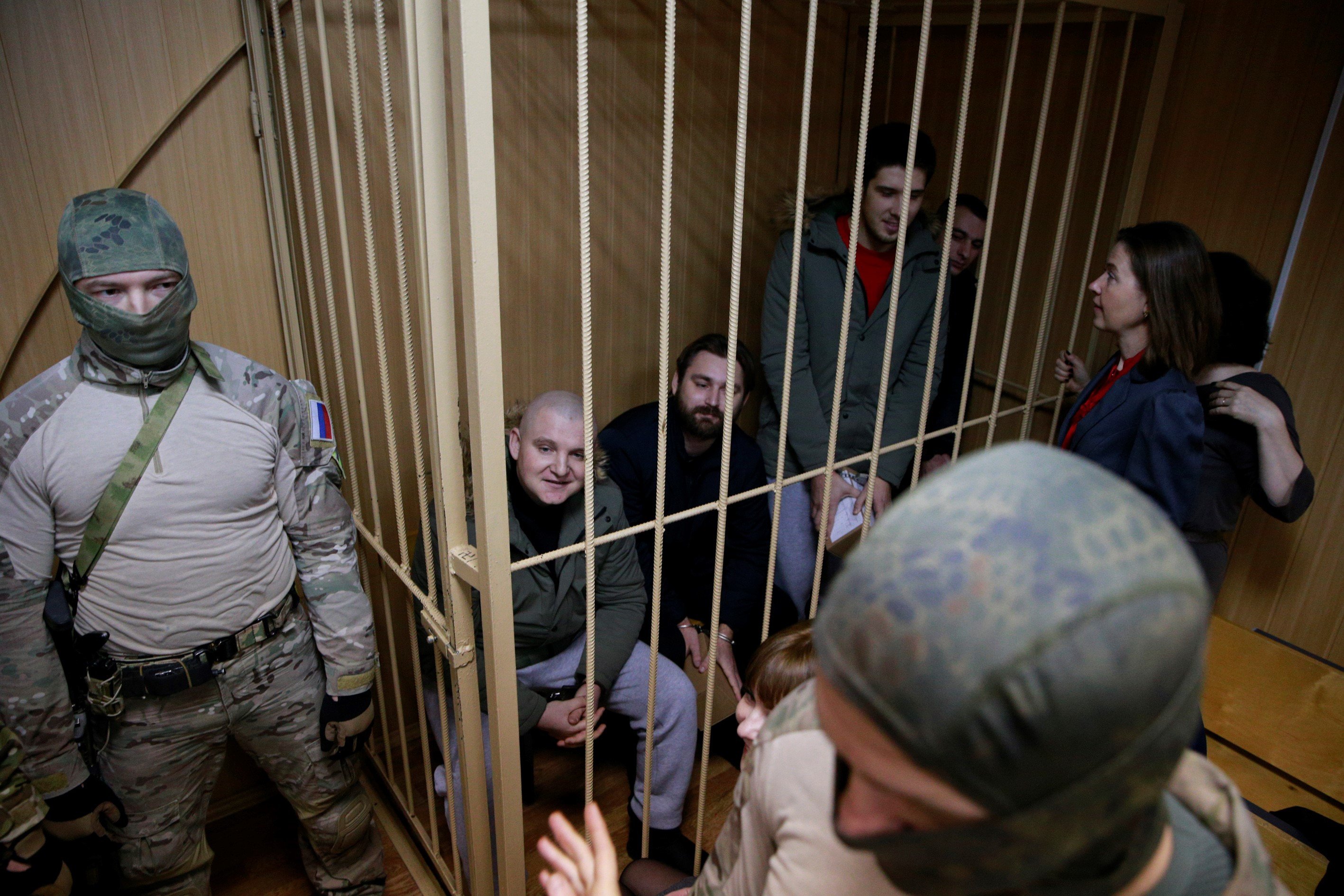
Russian forces rammed, fired on, and seized three Ukrainian naval vessels in international waters near Crimea on November 25, 2018, taking 24 sailors prisoner.
Russia’s prosecution claimed that they were in Russian waters around occupied Crimea. The Azov Sea is still Ukrainian. Bellingcat used Russian data to confirm that the attack happened in international waters.
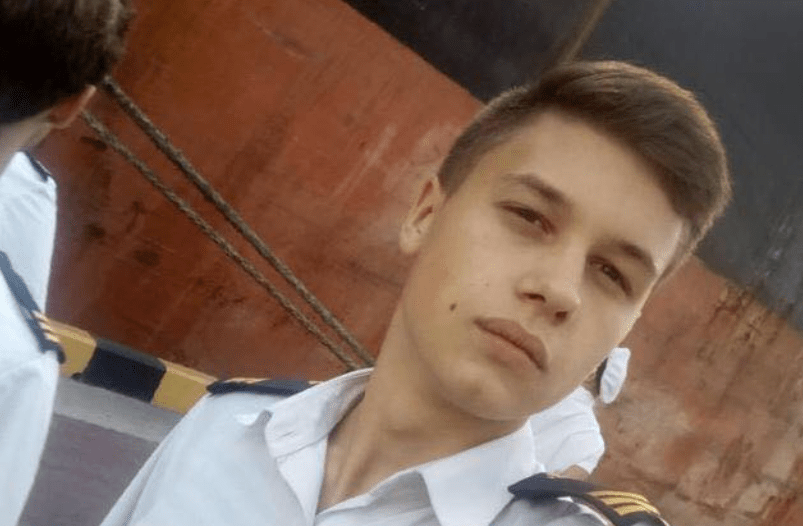
Three of the men, including 19-year-old Andriy Eider, were sent to Moscow’s notorious SIZO-1. Eider turned 20 in captivity and contracted Hepatitis B while imprisoned there. Later, all three—Eider, Andriy Artemenko, and Vasyl Soroka—were transferred to Lefortovo.
At the time, Kharkiv Human Rights Protection Group (KHPG) called their treatment a war crime.
SIZO-2 (“Lefortovo”) in Moscow
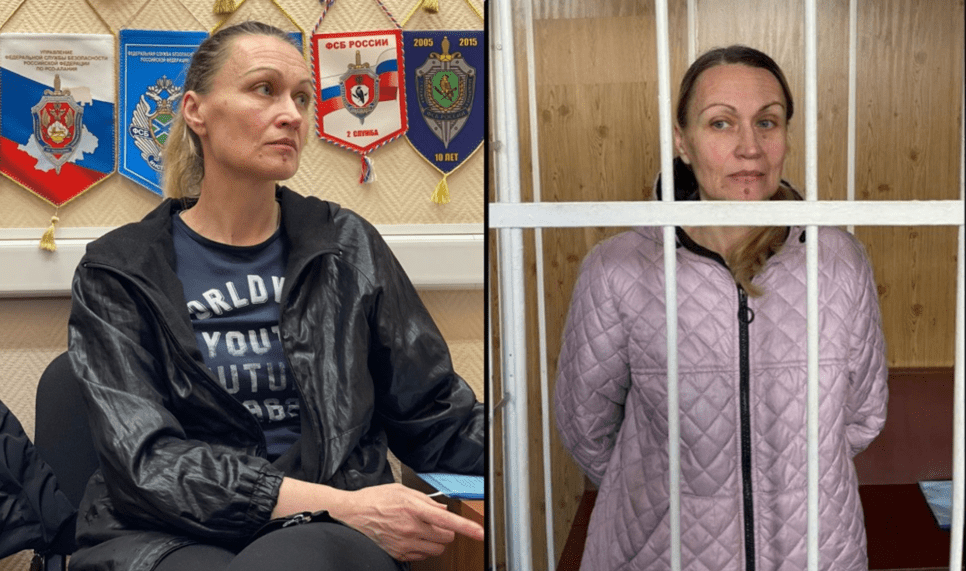
Oksana Fedorova is one of the vast number of women whom Russia has arrested and sentenced to long prison terms for “spying, treason, or terrorism charges”, KHPG reported. She was “abducted” by the Russians from her home in Russian-occupied Kherson on 15 November 2022.
Fedorova was taken to Lefortovo on or before 3 April 2024, but KHPG says that her formal charges were finally laid on the 3rd.
The supposed trial took place in May 2024, behind closed doors, and she was sentenced to ten and a half years’ imprisonment in a medium security prison colony.
“There is nothing to suggest that she had an independent lawyer, nor any other basic elements of a fair trial,” KHPG said, adding that an “unidentified court of appeal rejected her appeal in December 2024”. Fedorova is currently held in a Mordovian prison colony in eastern Russia.
SIZO-3 in St. Petersburg
SIZO-3, known as Shpalernaya, Lefortovo, and others, are some of the most secret prisons in Russia, and the FSB still has de facto control over them, researchers at the University of Helsinki reported.
SIZO-3 has a long history dating back to the Gulag, and researchers say these detention centres are next to FSB headquarters, which are connected by an underground tunnel.
SIZO-4 in Rostov-on-Don
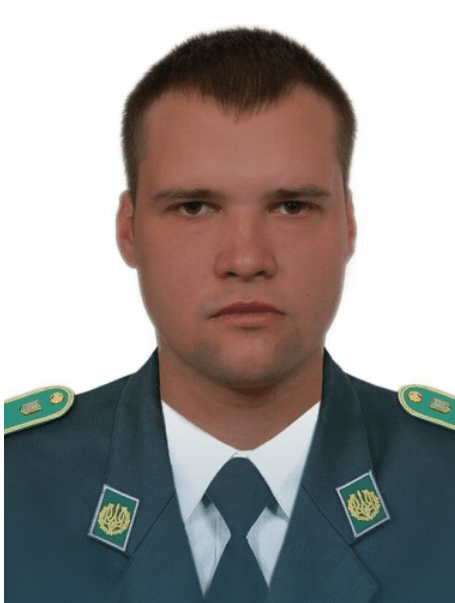
SIZO-4 is located in the building of the FSB’s regional department. Dmitry Lisovets, 30 years old at the time, fled the Ukrainian city of Mariupol when Russia began its full-scale invasion in 2022.
The city was already under siege and severe shelling, and together with his aunt, their only option was to go through Russia, the invading country, Mediazona reported.
He was caught at the Russian border, where he held this pro-Ukrainian stance and admitted that he was previously in Ukraine’s volunteer army, according to his lawyer, Grigory Kreshchenetsky, hired by the family.
He told them directly that he was a Ukrainian, that he loved his city and his country, Ukraine. That’s why they arrested him.
Grigory Kreshchenetsky
Dmitry Lisovets’ Lawyer
Authorities took Lisovets to several pre-trial detention centers, tortured and beat him, then sent him to SIZO-4. FSB led the investigation and charged Lisovets for “participation in an illegal armed formation, participation in the activities of an extremist group, and training for the purpose of carrying out terrorist activities,” Mediazona reported.
On December 7, 2023, he was sentenced to 16 years in a strict regime penal colony with the first three years served in prison.
Since his sentencing, none of his relatives have seen or spoken with him.
SIZO-5 in Krasnodar
SIZO-5, like SIZO-3 in St Petersberg, is one of the most secretive prisons and is considered to still be run by the FSB. SIZO-5 is also located directly in the FSB headquarters. This pre-trial centre is small, with just 13 cells.
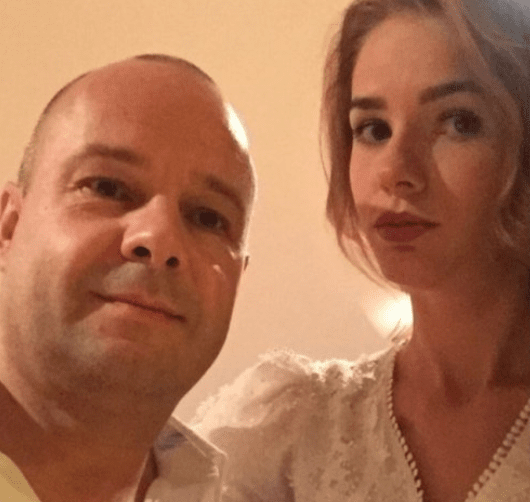
Alexander Marchenko, 53 years old from Dnipro, in December 2018 was travelling from Kyiv back to his home in Donetsk, occupied by Russian forces since 2014, when his family was forced to flee.
To get there, he took the fatal decision to travel through Russia. His family car had been seen being driven by one of the so-called “Donetsk People’s Republic” (DPR) ministers, KHPG reported.
While entering back into Russia, he was abducted by masked men and taken to a secret prison belonging to the “DNR” before being handed over to the FSB. From the first day of abduction, Marchenko was “subjected to torture and other ill-treatment, including electrocution, until he agreed to read out his self-incriminating 'confession’ on video,” Amnesty International reported.
Initially, he was accused of smuggling a radio wave device for Russia’s S-300 missile system. While being held, more accusations were being fabricated, and he was ultimately accused of espionage, sentenced to ten years’ imprisonment in a strict regime penal colony.
Since then, he’s been subject to brutal conditions, denied tests and vital medication he needed following the removal of his thyroid due to cancer.
Marchenko has been subject to physical violence, had death threats made against him, and was threatened with sexual violence. “Authorities have intermittently placed him in punishment or confinement cells on spurious grounds and deny him contact with his partner,” Amnesty International reported.
Memorial reported in January 2025 that Marchenko is still being held in SIZO-5, and calls for his release.
Ukrainians are facing increasingly brutal and arbitrary detention
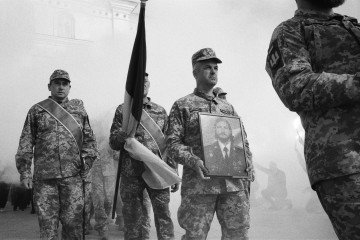
Over 16,000 Ukrainian civilians may be in Russian captivity, Dmytro Lubinets, the Ukrainian Parliament Commissioner for Human Rights, said. Lubinets says that the actual number could be significantly higher, as data from temporarily occupied territories is unavailable.
The exact number of Ukrainian civilians that Russia holds in captivity is difficult to determine.
The Ukrainian Internal Affairs Ministry estimated the current number of missing persons, including both prisoners of war and civilians, at 74,000. The International Committee of the Red Cross (ICRC) has documented around 50,000 cases of missing persons.
European Parliament's Committee on Legal Affairs and Human Rights considers Russia’s detention of Ukrainians without any legal grounds “unlawful, arbitrary, in violation of international humanitarian law, and amounts to war crimes and crimes against humanity.”
The new Russian law will enhance the already systemic abuse. Ukrainian detainees are likely to face harsher pre-trial conditions due to the lack of external scrutiny, independent monitoring, and limited legal access.
This transfer hands full control of detention and investigation to an agency with a legacy built on intimidation, repression, and decades of abuse.
Discuss this article:

-111f0e5095e02c02446ffed57bfb0ab1.jpeg "Photo of Roman Kohanets")

-7647a088f8ed2b81f52ab779f3a93cd0.png "Equipment and personal gear belonging to Ukrainian troops from the 425th Separate Assault Regiment “Skelya” are transported on a small wagon through an underground gas pipeline near Kupiansk. (Source: 425th Separate Assault Regiment “Skelya”)")
-72b63a4e0c8c475ad81fe3eed3f63729.jpeg "Photo of Cyril Barabaltchouk")