- Category
- Latest news
Russian AI-Controlled Lancet Drone Reportedly Reaches Kyiv’s City Center For The First Time
 Prefer U24 Media on Google
- Authors


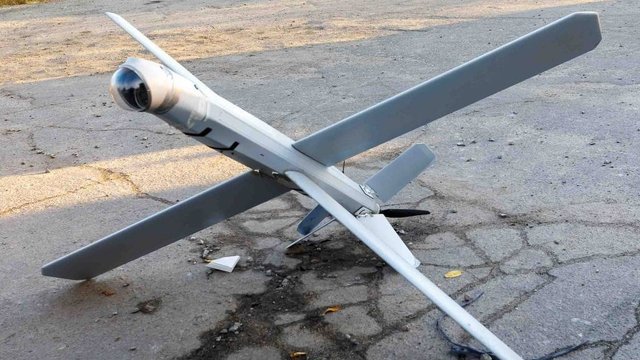
Update: Ukrainian military communications specialist and advisor to the Ministry of Defense, Serhii “Flash” Beskrestnov, said that a Lancet drone is unlikely to be capable of reaching Kyiv due to its technical limitations.
According to him, Lancet loitering munitions are designed primarily for frontline strikes and lack the battery capacity and radio-control range required to travel such distances.
Beskrestnov suggested that the debris found in Kyiv could have been intentionally dropped from a Shahed-type drone as part of a possible information operation, adding that specialists are continuing to analyze radio signals, radar data, and interceptor drone footage to determine what occurred.
Russia appears to have used an AI-enabled version of its Lancet loitering munition in an attempted strike on central Kyiv, with the drone crashing near the Independence Monument on Maidan Nezalezhnosti.
We bring you stories from the ground. Your support keeps our team in the field.
According to Defense Express on March 16, preliminary analysis of debris indicates that the drone was a Lancet equipped with autonomous navigation and target-search capabilities that may allow it to identify and attack targets without direct operator control.
The drone fell near Kyiv’s central Independence Monument during a morning attack involving multiple unmanned aerial vehicles. According to Defense Express, the incident could mark the first known case of a Lancet drone being used against the Ukrainian capital.
Fragments of a #Russian drone fell near the Independence Monument on Maidan in central #Kyiv.
— UkraineWorld (@ukraine_world) March 16, 2026
This morning, the capital once again woke up to the sound of explosions.
📽️: Telegram / Реальний Київ pic.twitter.com/jkbvo8scHa
Investigators are still determining whether the monument itself was the intended target or whether the drone was aiming for another object in the area.
Identification of the drone as a Lancet is based on characteristic fragments recovered at the site, including the weapon’s distinctive X-shaped tail section with a rear propeller. Images of the debris also show a wing component marked with an index beginning with “RF,” which analysts say corresponds to Russian military manufacturing markings.
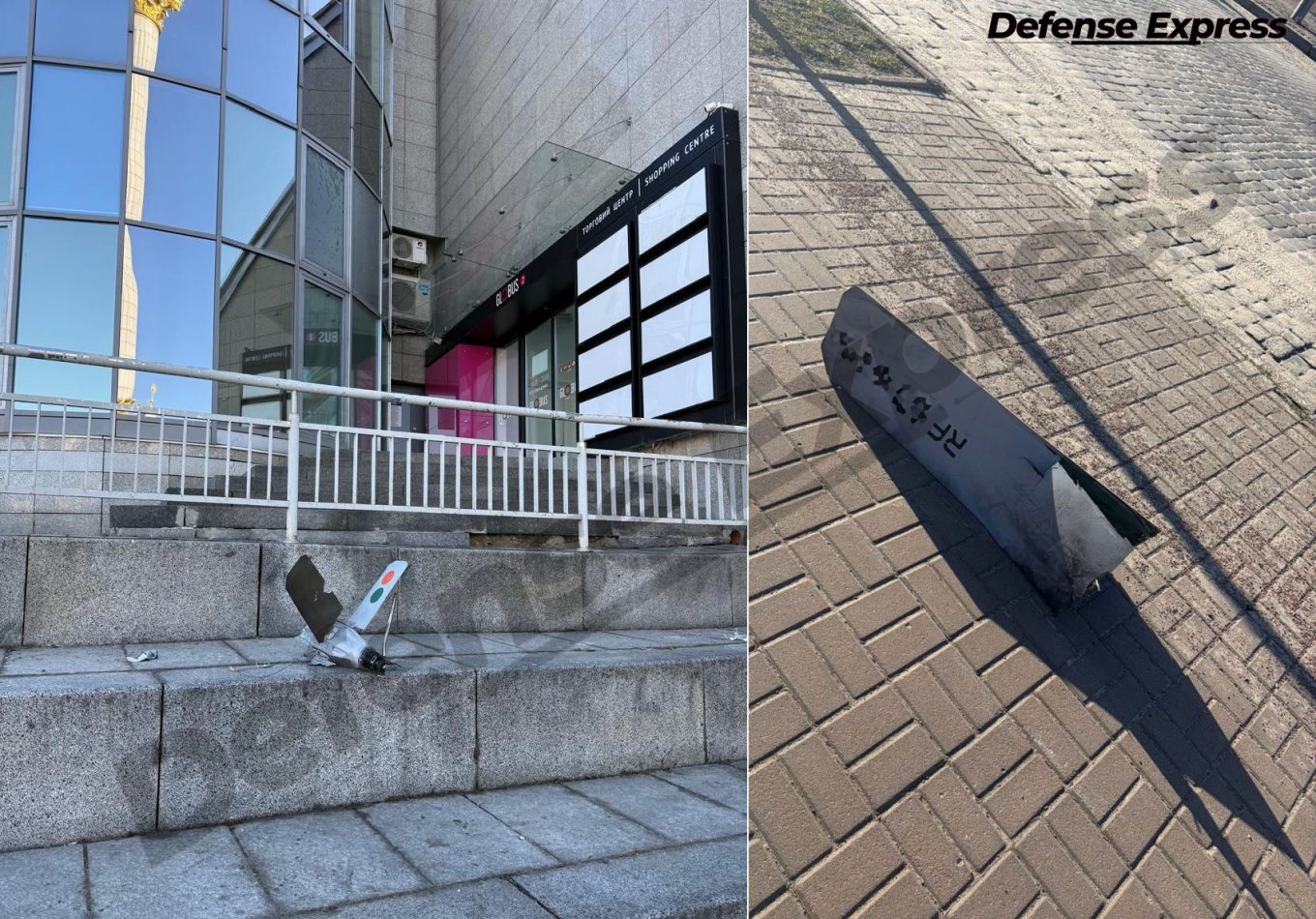
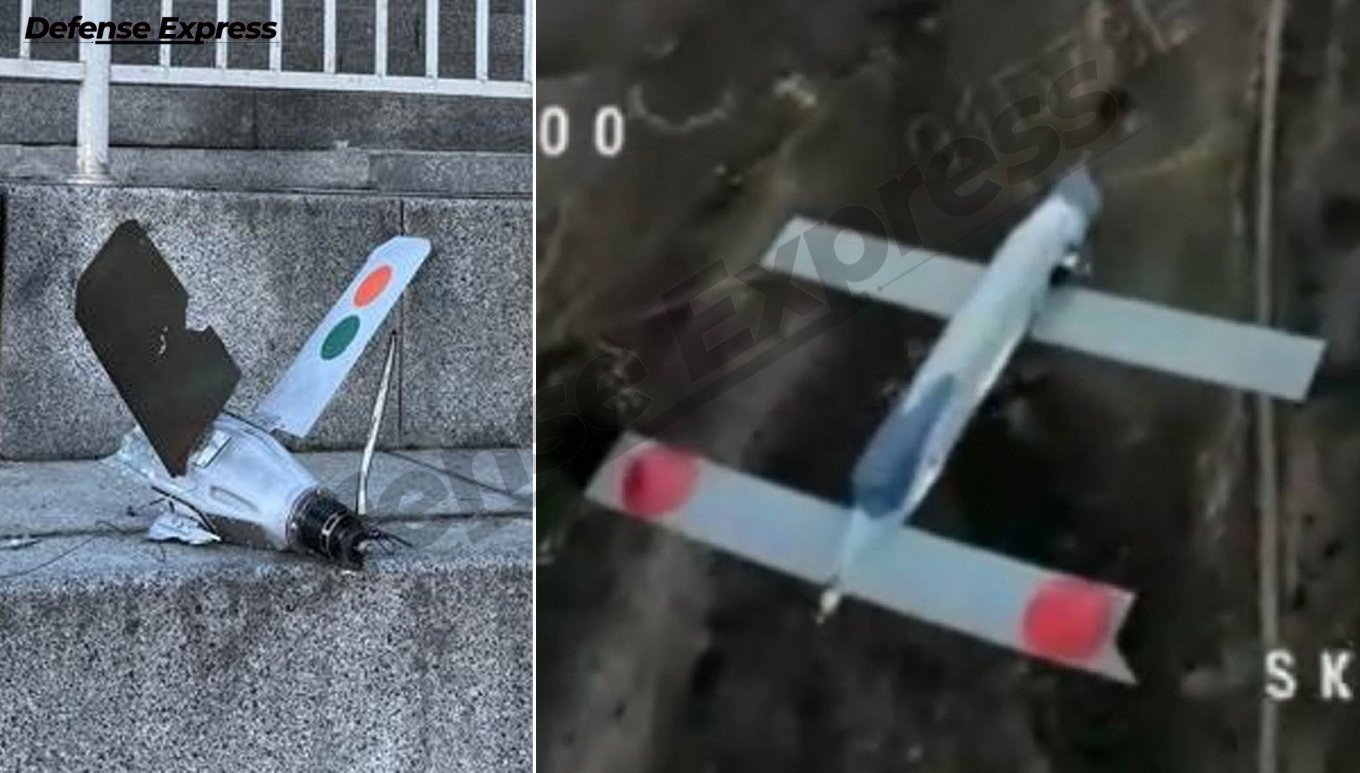
Several elements of the wreckage suggest the drone may have been configured for autonomous operation using artificial intelligence.
The outlet reported that unusual colored circle markings found on the drone resemble those seen on Russian V2U autonomous UAVs. Analysts believe such markings may help drones maintain formation when operating in groups or swarms.
The drone may have been designed to operate with autonomous navigation, target detection, and strike capability without maintaining constant communication with an operator. The outlet also noted that the drone could potentially use mesh networking systems or mobile communication links to coordinate with other UAVs during group attacks.
According to Defense Express, the typical operational range cited for the Lancet is about 50 kilometers, which primarily reflects the distance at which an operator can maintain communication with the drone.
Russian sources have previously claimed the drone can travel around 90 kilometers, with some reports suggesting a maximum distance of up to 136 kilometers.
Given that Kyiv lies more than 200 kilometers from the Russian border, Defense Express noted that a launch directly from Russian territory would raise questions about the drone’s range capability. The outlet said a launch from Belarus remains a possible scenario, as the distance from Belarusian territory to central Kyiv is approximately 90 kilometers.
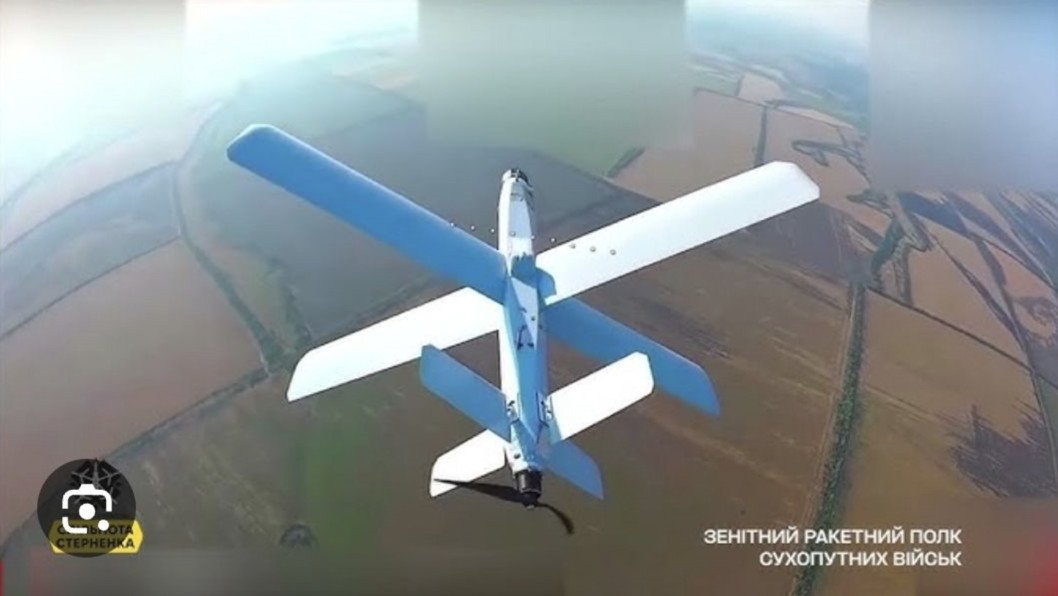
Lancet drones are widely used by Russian forces as loitering munitions designed to strike armored vehicles, artillery systems, and other battlefield targets. The weapon typically carries a warhead weighing up to three kilograms.
Earlier, Russia carried out one of its largest aerial assaults of the war, launching 498 drones and missiles across Ukraine overnight on March 14, according to the Ukrainian Air Force. Ukrainian air defenses intercepted most of the incoming threats, destroying or suppressing 460 aerial targets, though several missiles and drones still reached their targets.
Discuss this article:
-9a7b3a98ed5c506e0b77a6663f5727c5.png)