- Category
- Latest news
Russia’s Sanctioned Elite Still Enjoys Ferraris and Rolls-Royces—Here’s How
 Prefer U24 Media on Google
- Authors


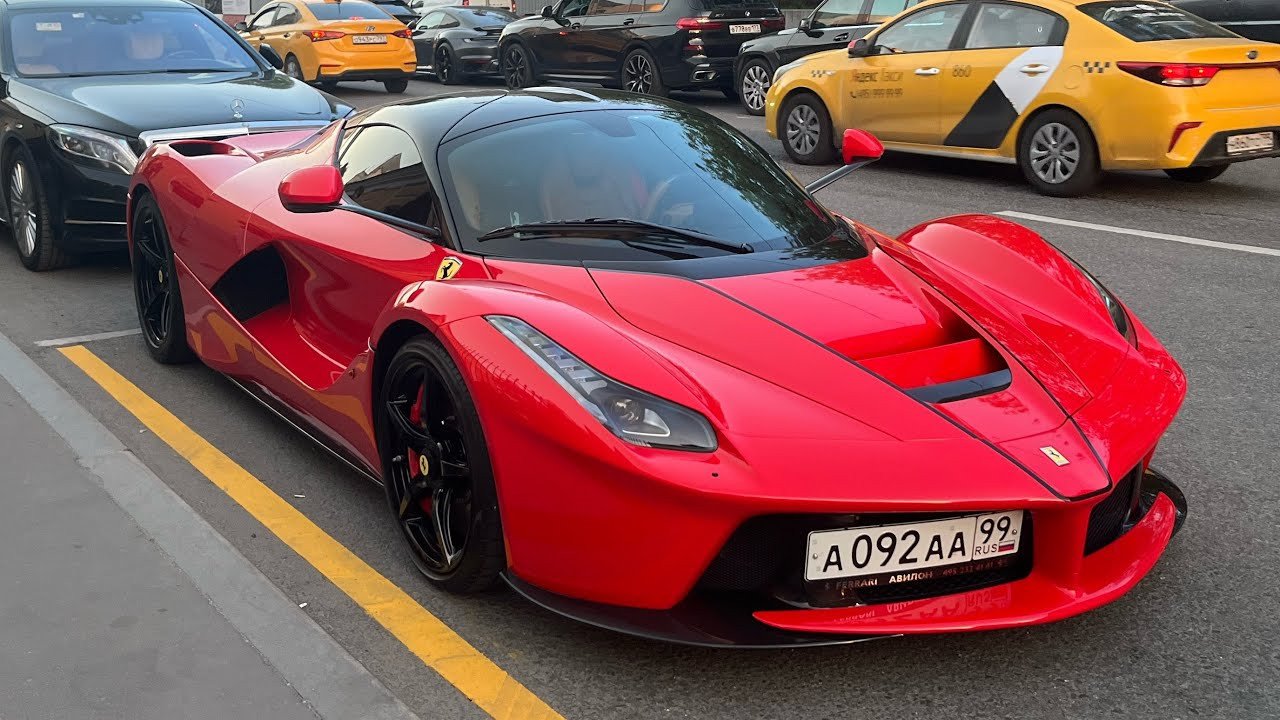
A new investigation by TriTrace Investigations has revealed that since March 2022, 214 luxury vehicles valued at approximately $75 million were imported into Russia in circumvention of European Union and United Kingdom sanctions.
According to the report, released on January 28, the vehicles included brands such as Bentley, Ferrari, Lamborghini, Maserati, and Rolls-Royce. Despite an official export ban on luxury goods to Russia, including high-end automobiles, the imports continued through parallel channels.
Using open-source intelligence techniques, as well as transport and financial transaction data, the investigators traced the imports to at least 15 countries. These included EU member states as well as Armenia, Belarus, Kazakhstan, Kyrgyzstan, Turkey, China, South Korea, and the United Arab Emirates.
Notably, about half of the import transactions were paid in euros or US dollars, indicating that the financial flows passed through Western banking systems. TriTrace Investigations noted that such transactions can potentially be monitored by regulators in the EU and United States.
The Russian car dealership “Avtodom” was identified as the largest recipient, accounting for nearly half of all shipments in the dataset. Other companies involved in the imports included “Shtern,” “Tochnye Postavki,” “Avtobuy,” and “Premium Source.”
Exporting firms were registered in Kazakhstan, Belarus, Armenia, Turkey, Hong Kong, and multiple EU countries.
-972b40303f2e57597e22987d16a593dd.jpg)
The report also documented direct exports from the EU to Russia that took place after sanctions were introduced—specifically citing shipments of Maserati vehicles—and several re-export cases involving third countries. One episode included Bentley cars delivered directly to Russian-occupied Crimea.
The continued flow of luxury vehicles into Russia comes despite tightening sanctions. The EU introduced the so-called “No Russia clause” in 2024, which requires exporters to explicitly prohibit resale of goods to Russia in contractual agreements.
If a product is later discovered on Russian territory, European authorities may trace the supply chain and take enforcement action against the original exporter.
Despite these provisions, TriTrace Investigations concluded that the Russian luxury car market remains active and continues to adapt to sanctions pressure.
Earlier, investigators reported that Russia had established a route for laundering stolen European vehicles by channeling them through Russian-occupied regions of Ukraine.
Cars taken from EU countries were first driven into Ukraine, then passed through areas in Donetsk and Luhansk where simplified vehicle registration rules allowed their foreign origin to be erased. Once registered to intermediaries using clean documents, the cars were moved to southern Russia and entered into national databases as if they were new imports.
Discuss this article:
-4a56a6b482ec132402c16ef6fcabf9a2.png)

-c439b7bd9030ecf9d5a4287dc361ba31.jpg "Photo of Katherina Popilnichenko")

-111f0e5095e02c02446ffed57bfb0ab1.jpeg "Photo of Roman Kohanets")