- Category
- Latest news
Russia’s Su-57 Program Hit as Fire Damages Critical Factory, Satellite Images Show
 Prefer U24 Media on Google
- Authors


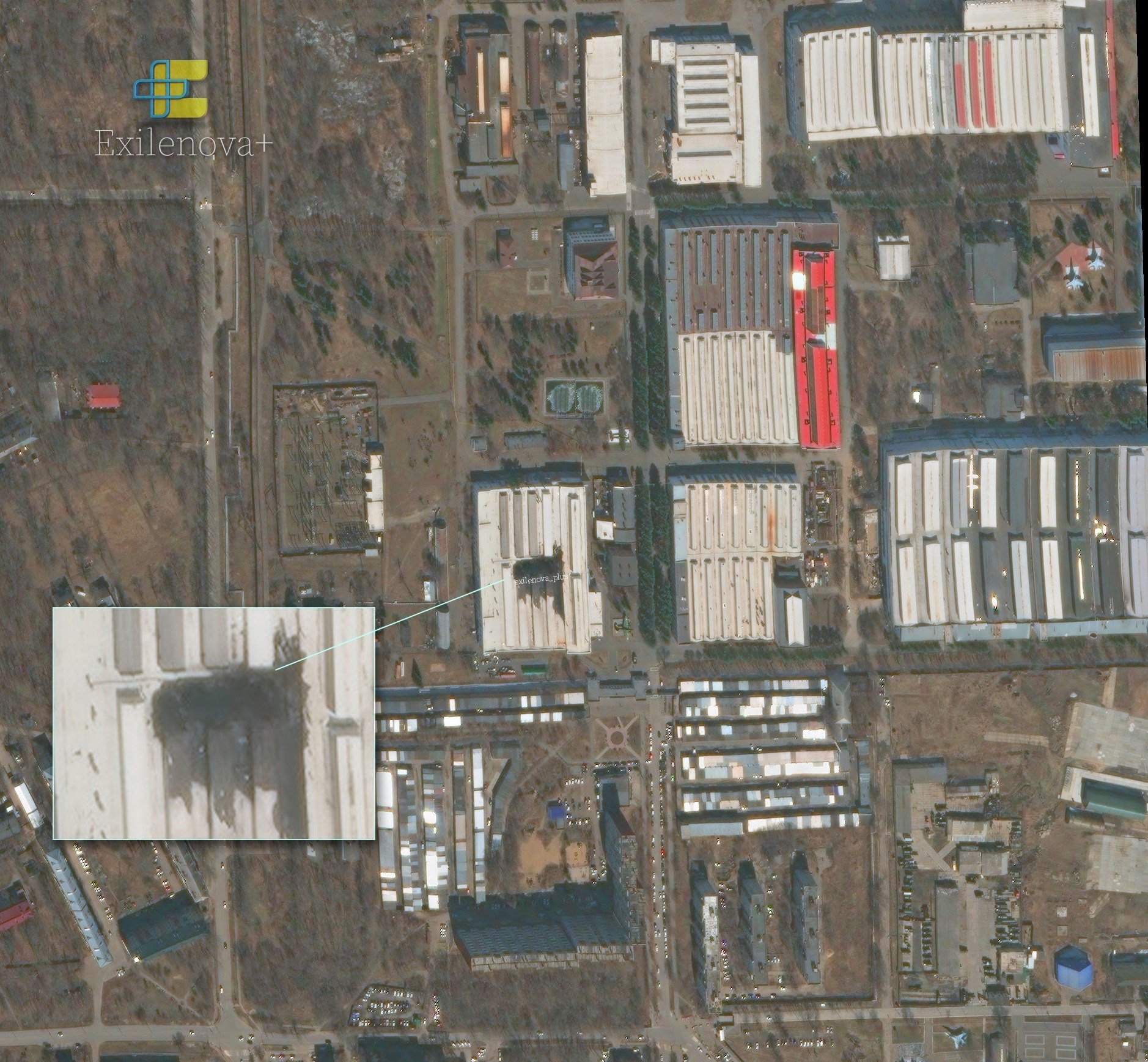
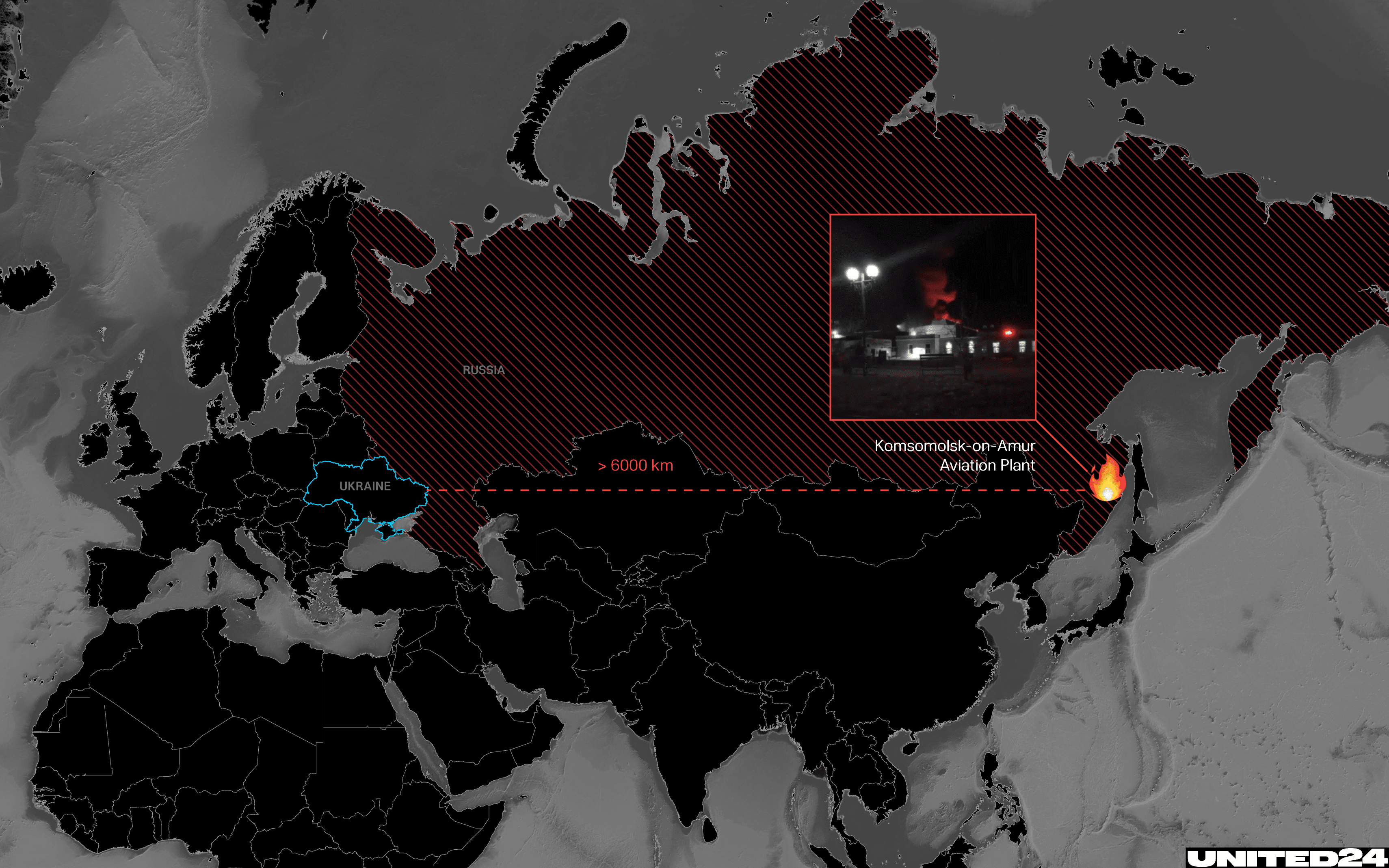
Satellite imagery published on April 14 indicates that a fire at Russia’s Komsomolsk-on-Amur Aviation Plant (KnAAZ) caused significant damage to a facility involved in the production of components for the Su-57 fighter jet.
We bring you stories from the ground. Your support keeps our team in the field.
According to Defence Blog on April 14, citing satellite images released by the OSINT group Exilenova+, multiple sections of the roof at Shop No. 46 collapsed following the April 11 fire. The outlet reported that the damage affects a workshop responsible for manufacturing polymer composite components used in the Su-57 airframe.
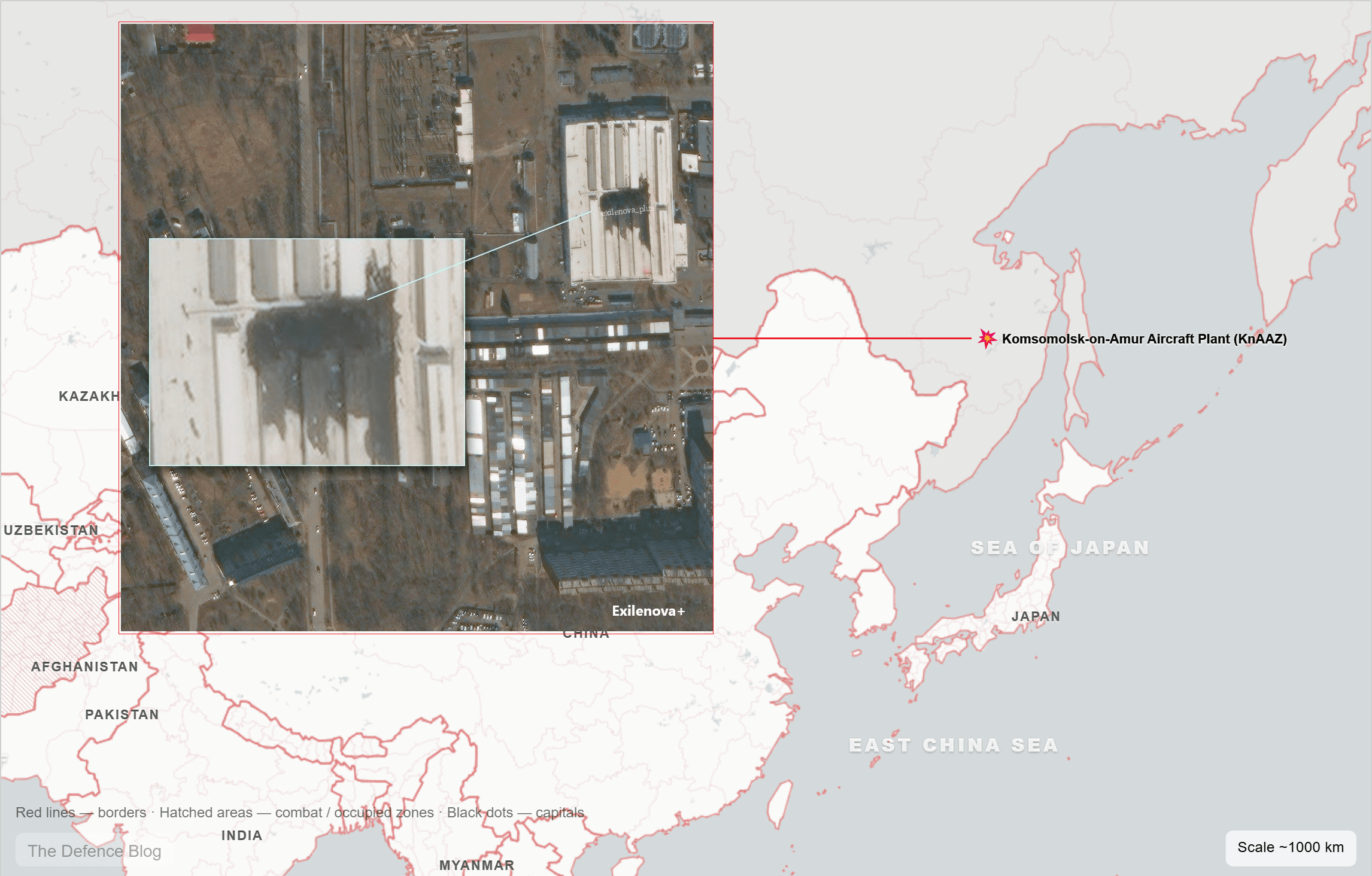
The images provide the first clear visual confirmation of the scale of the damage, which had previously been assessed using social media footage and ground-level videos. The collapsed roof structure across several sections suggests the fire impacted a large portion of the facility rather than a single localized area.
Shop No. 46 plays a central role in producing composite materials for the Su-57 program. According to analysis referenced by Defence Blog, the workshop manufactures approximately 300 types of components, including large structural elements such as wing tips, control surfaces, and air intake parts.
These materials are critical to the aircraft’s design, particularly its reduced radar visibility, and are not easily substituted with conventional metal alternatives.
The reliance on specialized composite production also limits short-term recovery options. According to Defence Blog, Russia does not have alternative domestic suppliers capable of replacing the output of this workshop in the near term.
In addition, production at the facility involves a significant degree of manual work and specialized tooling, which may complicate efforts to restore manufacturing capacity even if the structure is repaired.
-344963b1a1da1e4d67831cdd7050ec02.jpg)
KnAAZ operates under Western sanctions imposed in 2022, restricting access to foreign industrial equipment. As noted by Defence Blog, this limits the ability to replace damaged machinery through international procurement channels, potentially extending recovery timelines.
The Su-57 program had faced production challenges prior to the incident. According to Defence Blog, a 2019 contract calls for the delivery of 76 aircraft by 2027–2028, while estimates from late 2025 suggest that only around 20 to 25 units had been delivered. The plant reportedly produced two Su-57 aircraft in 2025, indicating a limited annual output.
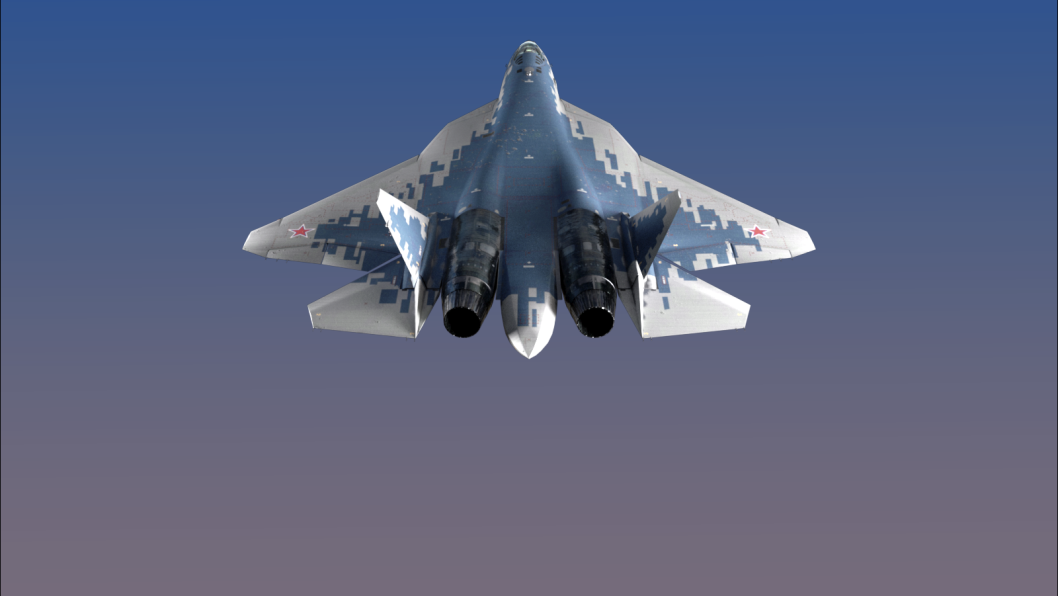
The affected workshop also contributes to the production of the Su-35S fighter, though the impact is expected to be more significant for the Su-57, which relies more heavily on composite materials.
Earlier, satellite imagery analyzed by the AviVector project showed Russia had concentrated most of its Su-57 fleet at the Dzyomgi airbase near China. Around 15 aircraft were observed at the site, with the total fleet estimated at 20–25 jets, likely reflecting both proximity to the production plant and efforts to protect them from Ukrainian strikes.
Discuss this article:
-9a7b3a98ed5c506e0b77a6663f5727c5.png)

-c439b7bd9030ecf9d5a4287dc361ba31.jpg "Photo of Katherina Popilnichenko")