- Category
- Latest news
Russia’s Top Private Oil Producer Lukoil Seeks State Aid as Russian Oil Sells at Nearly 50% Discount
 Prefer U24 Media on Google
- Authors

-72b63a4e0c8c475ad81fe3eed3f63729.jpeg "Photo of Cyril Barabaltchouk")
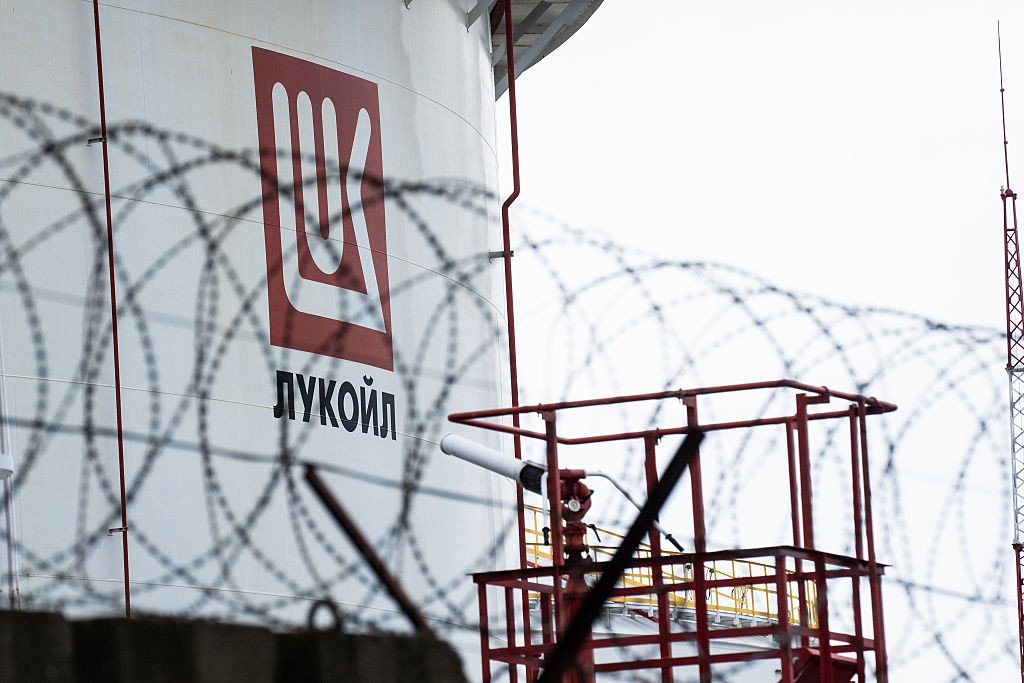
Russia’s largest private oil producer Lukoil has asked the government for budget support after a sharp fall in prices for Russian crude, which is now selling at discounts of nearly 50% to global benchmarks, The Moscow Times reported, citing Russian media on January 26.
Lukoil, which has been sanctioned by the US since October 22, 2025, has sent a letter to the cabinet requesting changes to the tax treatment of oil companies so it can qualify for payments from the federal budget. The company is reportedly seeking revisions to the so-called damping mechanism, introduced in 2018 to stabilize domestic fuel prices.
We bring you stories from the ground. Your support keeps our team in the field.
Under the mechanism, the Russian state compensates oil companies when domestic fuel prices are kept below export parity. When domestic prices exceed global levels, producers instead pay additional taxes. With discounts on Russian Urals crude now exceeding $20 per barrel, oil companies are expected to pay about $145 million into the budget under the scheme in December alone, according to The Moscow Times.
Russia’s oil production in 2025 amounted to 512 million tons, and oil extraction has dropped for the third consecutive year: 516 million tons in 2024, 530 million tons in 2023, and 535 million tons in 2022.
This has resulted in the lowest production levels since 2009, when Russia produced 494.2 million tons. Even during the pandemic in 2020, production was slightly higher, at 512.7 million tons.
Ukrainian drone strikes on Russian refineries and fuel infrastructure have reduced Russia’s refining capacity, particularly in western regions. This both reduces Russia’s ability to refine and store oil and increases pressure to export crude quickly—often at lower prices—because there is insufficient domestic storage and refining capacity.
-17753cdeceefed101825738abba6e0d4.jpg)
Lukoil has proposed capping the discount used for tax calculations at $10–15 per barrel, which would eliminate those payments and potentially allow producers to receive budget compensation instead.
In previous years, the state paid oil companies $11.5 billion in 2024 and $23 billion in 2023 under the mechanism. Now, companies may have to transfer an estimated $616 million to the budget in December–January, according to The Moscow Times, citing Russian media.
Russia has built a so-called shadow fleet of older or non-Western-insured tankers to evade sanctions, but recent sanctions targeting these vessels and related insurance/trading networks have raised shipping costs and complicated exports, effectively contributing to wider discounts as Russia struggles to get crude to buyers, Reuters wrote.
The pressure comes as oil producers face steep declines in profits. Lukoil’s net profit in the first half of 2025 fell by nearly half year-on-year to $3.7 billion. State-controlled Rosneft reported a threefold drop in profit for January–September, to $3.6 billion.
Falling crude prices have worsened the outlook. Urals averaged about $39 per barrel in December and dropped to $35–37 in January, its lowest level since the pandemic. At prices below $40, roughly half of Russia’s oil production projects become unprofitable, industry sources told Reuters, with losses of around $5 per barrel.
Only fields benefiting from reduced mineral extraction tax rates remain profitable, underscoring the growing strain on a sector that provides more than 90% of Russia’s oil and gas budget revenues.
Previously, it was reported that India’s state-run Bharat Petroleum Corp (BPCL) has awarded one-year import tenders for Iraqi Basrah Medium crude and Oman crude to Trafigura as Indian refiners adjust feedstock purchases away from Russia and toward the Middle East.
Discuss this article:



-c439b7bd9030ecf9d5a4287dc361ba31.jpg "Photo of Katherina Popilnichenko")