- Category
- Latest news
These Ukrainian Vehicles Can Swim and Climb—Now They’re Heading to Greenland
 Prefer U24 Media on Google
- Authors


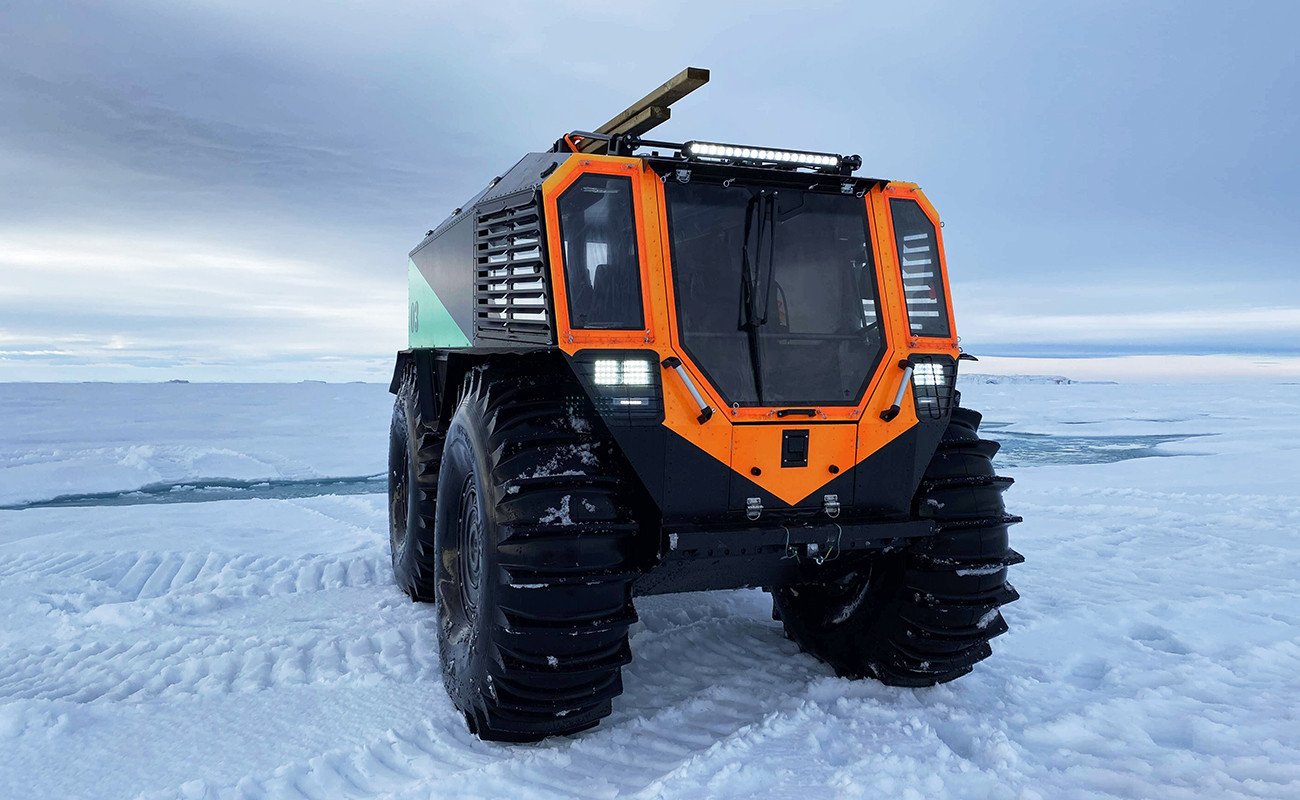
Ukrainian-made SHERP all-terrain vehicles are set to be demonstrated in Greenland for military and emergency response use, as interest in Arctic operations continues to grow, according to Danmarks Radio on April 6.
The demonstration will showcase the vehicles to Arctic Command and local rescue services, highlighting their performance in extreme environments.
We bring you stories from the ground. Your support keeps our team in the field.
“We want to show how this machine operates under extreme conditions. The environment here is exactly what it was designed for,” said Jakob Skoustrup, director of Apollotech Systems, a SHERP dealer.
The move comes as companies increasingly look to Greenland as a strategic market, with billions already allocated for Arctic rearmament and infrastructure development.
The vehicles used in the demonstration belong to Arctic Capacity, a company specializing in logistics operations across Greenland and the broader Arctic region.
Defense spending in the region has surged in recent years. Agreements worth approximately $6.5 billion were signed last year to strengthen capabilities in the Arctic and North Atlantic. In February, NATO also launched the Arctic Sentry mission to increase its presence in the region.
“I think everyone now understands how important it is to protect and control the Arctic. What we are seeing now will continue in the future,” Skoustrup said.
SHERP vehicles, manufactured by Kyiv-based company Quadro International, are already exported to multiple countries. While assembly facilities exist in Turkey and India, the core production, engineering, and component manufacturing remain in Ukraine.
The vehicles are designed specifically for extreme terrain. Built around a watertight hull, SHERP machines are fully amphibious and can continue moving in water at speeds of up to 6 kilometers per hour.
The sealed cabin protects the crew, while an onboard pumping system provides additional safety in case of water ingress.
Their unique steering system allows them to turn similarly to tracked vehicles, with wheels on one side moving independently.
Earlier, Kyiv-based company Novitehnet Laboratory, a member of the Association of Ukrainian Engineers, upgraded its “Ursula” line of river drones with support from the Brave1 innovation cluster.
According to the developers, after all upgrades, it can transport up to 500 kilograms of payload over distances of around 10 kilometers, making it suitable for resupplying isolated units, including Ukrainian forces holding positions along the Dnipro River near Kherson.
Discuss this article:
-9bd5e1532102621f8fb1c4ba871a3171.png)