- Category
- Latest news
US and Israel Launch “Roar of the Lion” Combined Strike Operation Against Iran
 Prefer U24 Media on Google
- Authors


The United States and Israel have launched a coordinated large-scale military campaign inside Iran. According to The War Zone (TWZ), a US official confirmed that the American military is actively attacking Iranian targets from both air and sea.
We bring you stories from the ground. Your support keeps our team in the field.
The operation, which Israeli media outlet N12 identifies by the codename “Roar of the Lion,” has seen strikes across multiple regions of the country.
Reports from Reuters and The Associated Press indicate that the opening salvos targeted government symbols and security apparatuses in Tehran, including areas near the offices of Supreme Leader Ayatollah Ali Khamenei.
BREAKING: Israel says it launched a preemptive strike against Iran and declares a nationwide state of emergency. Reports of explosions across the Iranian capital, Tehran. pic.twitter.com/mRXNHj3Yy8
— Ariel Oseran أريئل أوسيران (@ariel_oseran) February 28, 2026
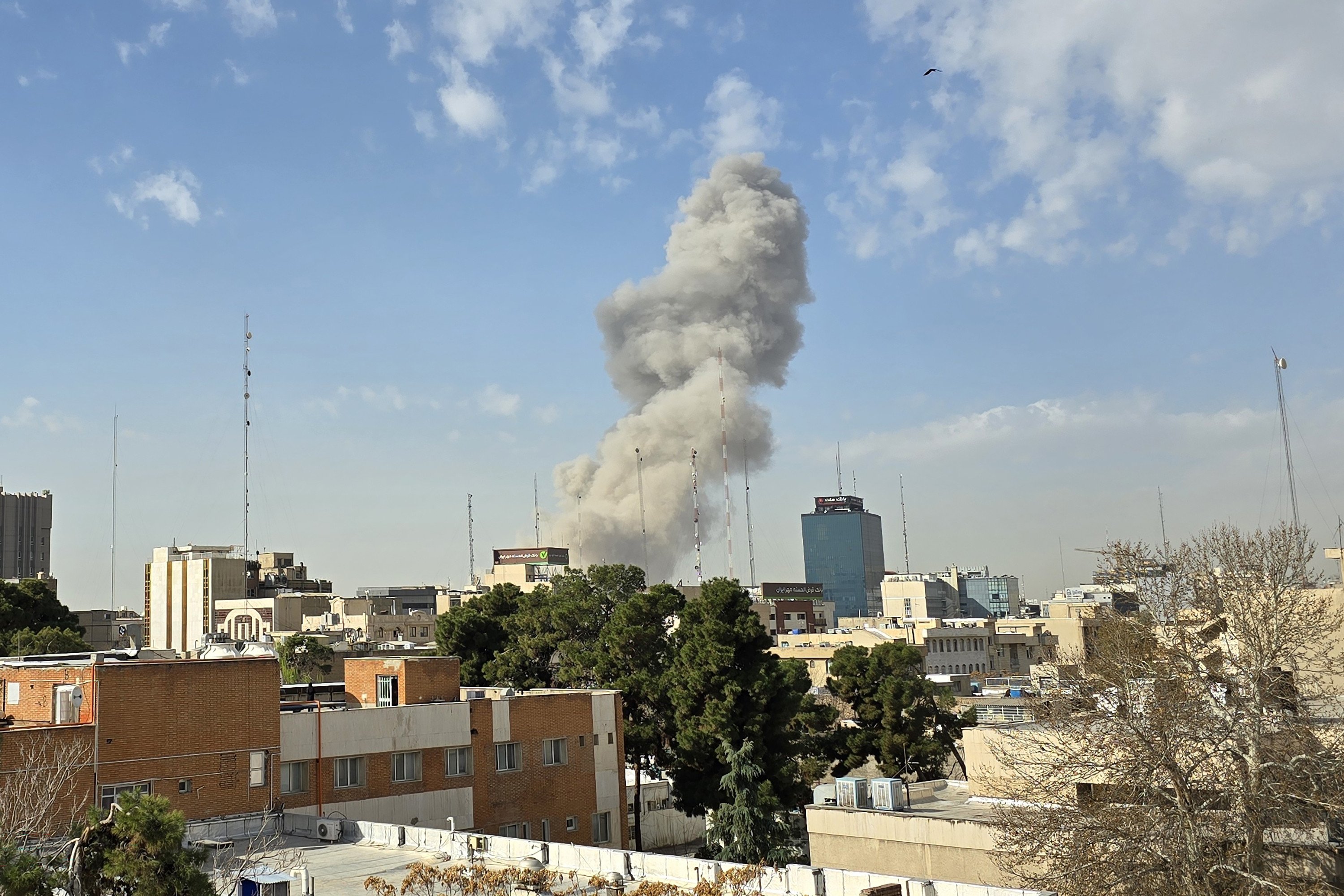
While geolocation data is still being processed, images from the Iranian capital show significant smoke plumes rising from urban centers and military installations.
Trump confirms major combat operations
President Donald Trump addressed the nation and the world via Truth Social, officially confirming that the United States has initiated “major combat operations” within Iran.
Trump framed the intervention as a necessity to prevent Iran from ever obtaining a nuclear weapon and to “annihilate” its missile industry and naval capabilities.
President Donald J. Trump on the United States military combat operations in Iran: pic.twitter.com/LimJmpLkgZ
— The White House (@WhiteHouse) February 28, 2026
In his eight-minute address, the President signaled a zero-tolerance policy for Iran’s long history of “nefarious operations” and support for regional proxies.
He specifically warned Iranian security forces that they would face “certain death” unless they laid down their arms, while simultaneously telling the Iranian people that “bombs will be dropping everywhere” and suggesting they stay home to take back their government once the strikes conclude.
Strategic targets and airspace closures
The technical scope of the attack appears designed to prepare the battlefield for prolonged operations. According to TWZ and Clash Report, the initial waves focused on degrading Iran’s remaining air defense systems to allow strike aircraft to operate safely under the cover of darkness.
The person behind the camera says Saturday strikes near Khamenei’s residence / office in Tehran pic.twitter.com/rgohz42k10
— Fazel Hawramy (@FazelHawramy) February 28, 2026
Beyond the capital, major Iranian Navy and IRGC Navy bases along the Persian Gulf and the Arabian Sea were hit to preempt any attempts by Tehran to mine the Strait of Hormuz or force its closure.
Simultaneously, the IDF confirmed strikes against Hezbollah infrastructure in Southern Lebanon, hitting underground shafts and launch positions in response to what they termed repeated ceasefire violations.
As the strikes progressed, Iran officially closed its national airspace, and international flights began diverting away from the entire region.
Iran just attacked the U.S. Navy's Naval Support Activity (NSA) Bahrain, with explosions and a large smoke plume reported within Mina Salman port. pic.twitter.com/eqqu3WZUvt
— OSINTtechnical (@Osinttechnical) February 28, 2026
CNN reported that while the US may have acted in direct kinetic coordination, the Trump administration had long favored a strategy where Israel strikes first to provide a catalyst for American intervention.
Emergency measures and international exodus
Following the start of the strikes, Israeli Defense Minister Israel Katz declared a special and immediate state of emergency across the country.
According to The Times of Israel, sirens and proactive cellular alerts have been activated nationwide to prepare the public for imminent retaliatory missile and drone launches from Iran. Only critical services are currently authorized to operate in Israel.
Possible TLAM raid reported in northern Iraq pic.twitter.com/JhgOwd7D09
— OSINTtechnical (@Osinttechnical) February 28, 2026
The international community has reacted with immediate alarm. According to Reuters and Al Jazeera, a long list of countries—including Germany, India, Sweden, Australia, Finland, and Brazil—have issued urgent directives for their citizens and diplomatic staff to evacuate Iran immediately.
Meanwhile, a “shelter in place” order was broadcast in Qatar, which houses the largest US military installation in the region, as it is presumed to be a primary target for Iranian retaliation.
Status of the Iranian leadership
Conflicting reports surround the current status of the Iranian leadership. While unconfirmed reports cited by TWZ suggested the possible assassination of Iran’s Defense Minister, Reuters noted that Supreme Leader Ali Khamenei was reportedly not in Tehran at the time of the strikes, having been transferred to a high-security “hideout.”
-3d828e5c5516bcde365c57e0cd1dd194.jpg)
These operations come just a day after Iranian Foreign Minister Badr Albusaidi told CBS that Tehran had agreed not to accumulate enriched uranium, a claim that evidently failed to deter the joint military action.
Earlier, Ukrainian President Volodymyr Zelenskyy said he would support a US operation directed against Iran’s regime, not its people. In an interview with Sky News, cited by the Office of the President, Zelenskyy stated: “I would support an operation aimed at the regime, not at the people. It’s a big difference,” adding that negotiations are preferable but questioning whether Iran’s current leadership genuinely supports that path.
Discuss this article:
-4a56a6b482ec132402c16ef6fcabf9a2.png)