- Category
- Latest news
US Army C-RAM Air Defenses Neutralize Iranian-Backed Drone Attack on US Embassy in Iraq
 Prefer U24 Media on Google
- Authors

-72b63a4e0c8c475ad81fe3eed3f63729.jpeg "Photo of Cyril Barabaltchouk")
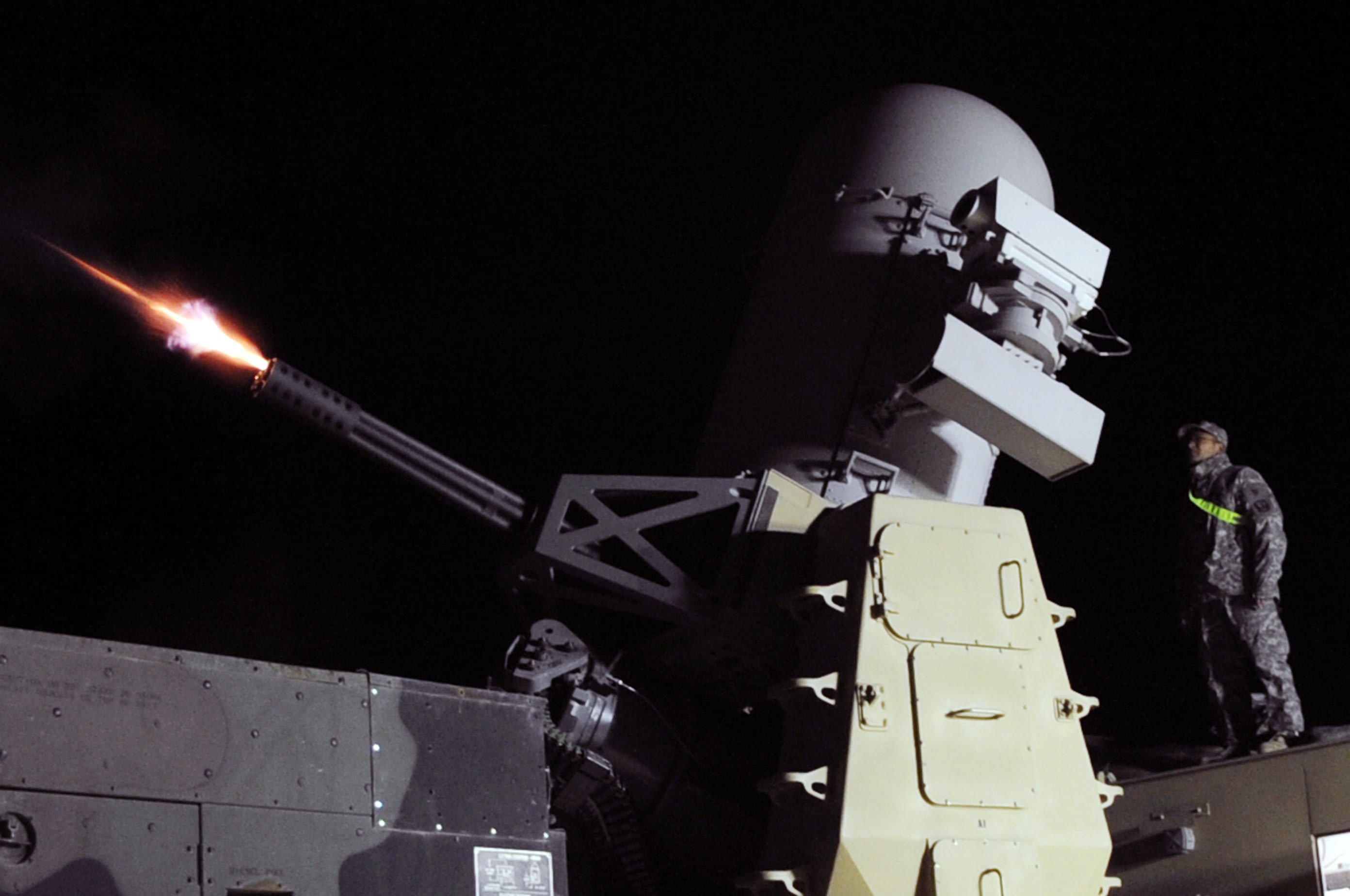
The US Army’s C-RAM air defense system successfully intercepted a wave of Iranian-backed drones targeting the US Embassy in Baghdad, Iraq, Army Recognition reported on March 18.
Iranian-aligned militias increasingly rely on small, low-signature drones and loitering munitions to evade air defenses and strike within Baghdad’s heavily fortified Green Zone. To counter these asymmetric attacks, US forces deploy the land-based Counter-Rocket, Artillery, and Mortar (C-RAM) system as a critical last line of defense.
We bring you stories from the ground. Your support keeps our team in the field.
Defense officials confirmed the system successfully tracked and neutralized the incoming aerial threats before they could impact the embassy perimeter, Army Recognition wrote.
Adapted from the Navy’s Phalanx Close-In Weapon System, the C-RAM combines AN/TPQ-36 or AN/TPQ-53 tracking radars with a 20mm cannon capable of firing up to 4,500 rounds per minute. The system utilizes M940 High Explosive Incendiary Tracer rounds alongside an electro-optical sensor suite to autonomously detect, track, and destroy short-range targets within seconds.
This rapid engagement cycle provides a crucial protective shield in dense urban environments where reaction time and minimizing collateral damage are vital.
The gun-based C-RAM provides a highly cost-effective kinetic solution against cheap, disposable drone swarms compared to expensive missile interceptors.
-9a1a8aa6bb981b0fb9d7186857f4a470.jpg)
By neutralizing low-altitude UAVs that slip through outer defenses, the system effectively plugs the operational gap between long-range Patriot batteries and short-range missile systems like the NASAMS, securing fixed US installations across the Middle East, according to Army Recognition.
Iranian-backed militias across the Middle East stepped up their use of suicide drones against US installations over the past few months. Following a series of near-misses and coordinated swarm attacks, the Pentagon rapidly reinforced its forward operating bases with additional close-in weapon systems and is now exploring low-cost interceptors to counter the threat.
Currently, as Russia actively aids Iran with satellite intel and drone upgrades, American troops rely heavily on layered defensive grids to protect diplomatic and military zones from daily low-altitude bombardments.
Discuss this article:
-9a7b3a98ed5c506e0b77a6663f5727c5.png)







-111f0e5095e02c02446ffed57bfb0ab1.jpeg "Photo of Roman Kohanets")