- Category
- Latest news
What US Fighters Really Carry Into Combat Over Iran—And How It Compares to Ukraine
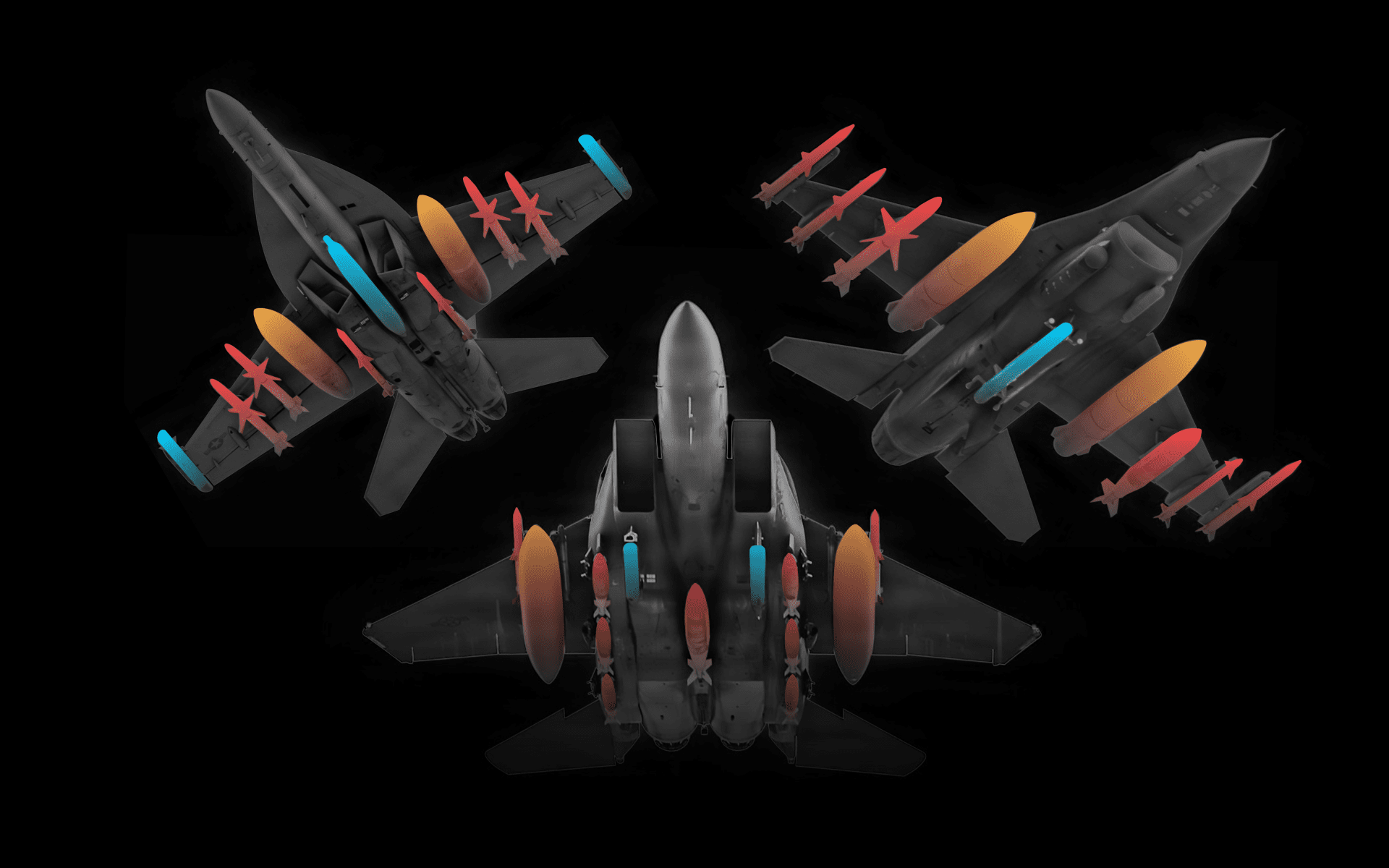
What US fighter jets actually carry into combat over Iran looks very different from textbook loadouts—and increasingly mirrors the real-world configurations Ukraine is using in its own war.
 Prefer U24 Media on Google
- Authors


Recent images released by the US military during strikes on Iran under Operation Epic Fury offer a rare glimpse into how American fighter jets are actually armed in combat—and the configurations look very different from what is typically seen in exercises, according to Defense Express on March 18.
We bring you stories from the ground. Your support keeps our team in the field.
These real-world loadouts reveal unusual combinations, asymmetry, and mission-specific setups that reflect the realities of modern air warfare.
F-15E: workhorse still leading strikes
The F-15E Strike Eagle remains a core platform for US air-to-ground missions, a role it has held since the Gulf War.
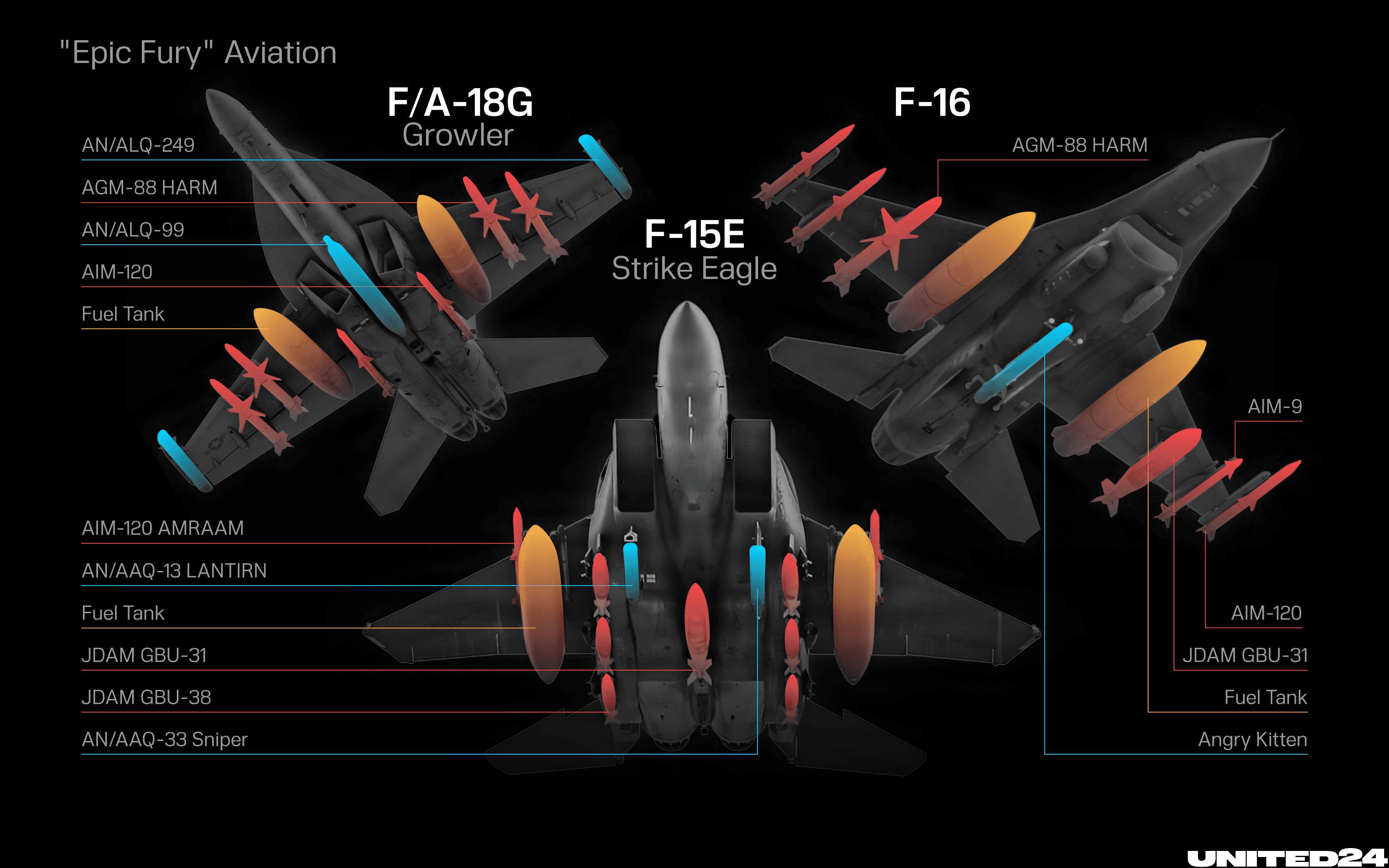
In recent images, the aircraft is seen carrying a heavy mix of precision-guided munitions, including multiple JDAM bombs. These include 500-pound GBU-38 bombs mounted under the fuselage, alongside a larger 2,000-pound GBU-31.
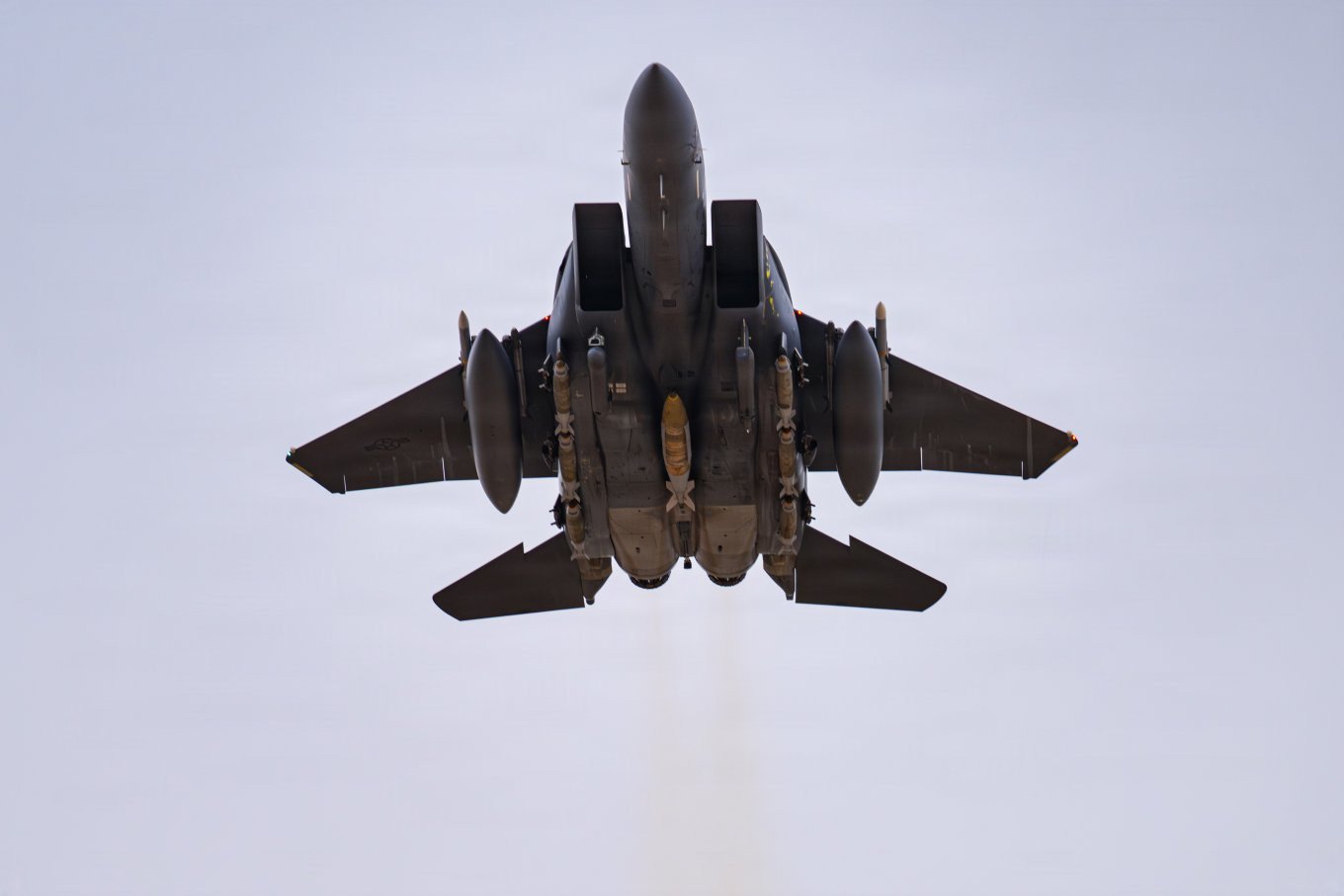
The jet also carries AIM-120 AMRAAM air-to-air missiles for self-defense and external fuel tanks for extended range.
Two targeting pods are mounted simultaneously—a standard configuration. One is the AN/AAQ-13 LANTIRN, used for low-altitude navigation and night operations, while the other is the AN/AAQ-33 Sniper, which enables precision targeting of ground threats.
A U.S. Air Force F-15E Strike Eagle aircraft takes off for a mission during Operation Epic Fury, March 9, 2026. (U.S. Air Force photo)
— Alex 🌻 (@alexgarcialonso) March 13, 2026
5x Shahed killmarks (?) pic.twitter.com/fluCdiBGpJ
F-16: asymmetry and multi-role flexibility
Images of F-16 fighters highlight just how flexible the platform is.
One aircraft tasked with strike missions features a clearly asymmetrical loadout, combining different bomb racks: GBU-38 bombs on one side and GBU-39 Small Diameter Bombs (SDB) on the other.
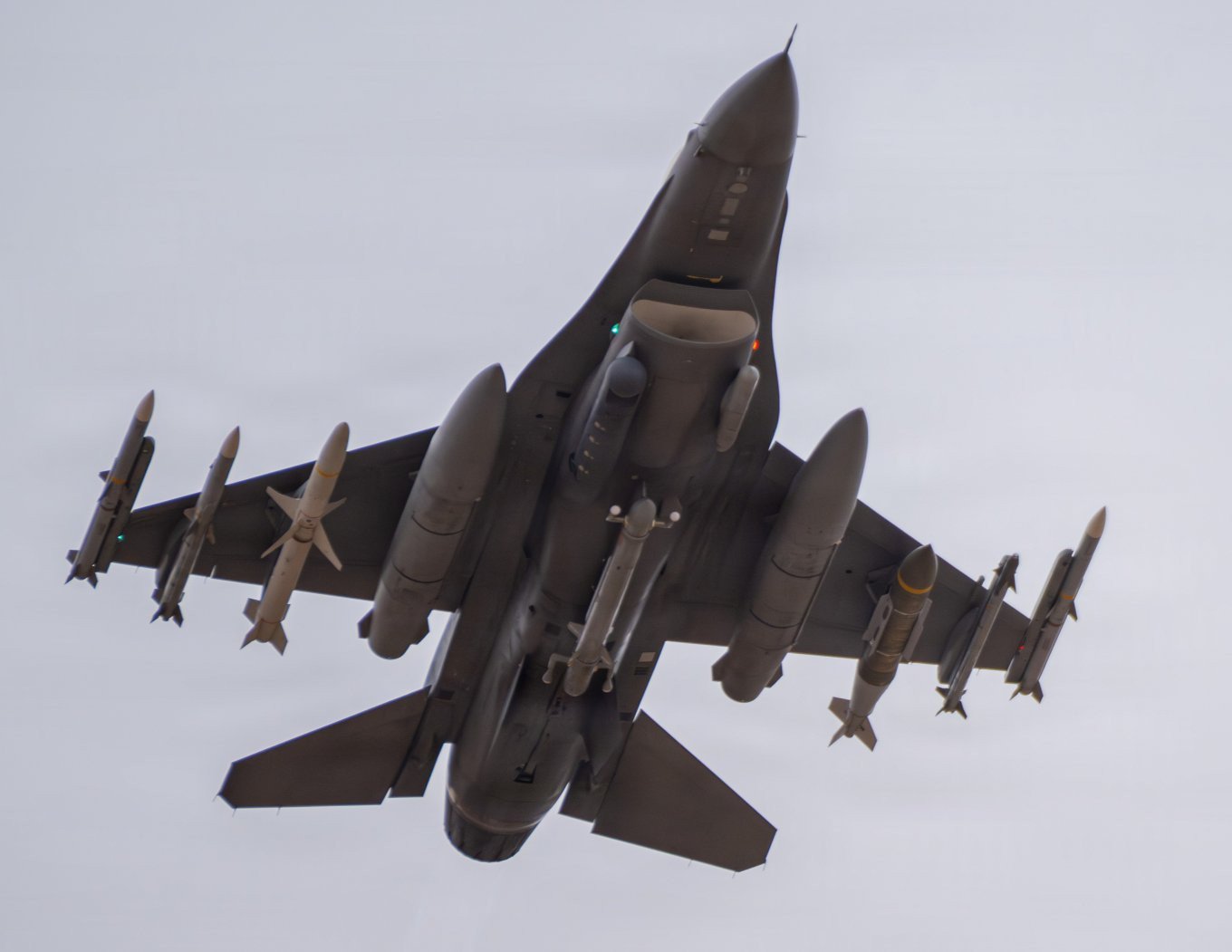
Another F-16 appears configured for a more complex mission. It carries an “Angry Kitten” electronic warfare pod, an AGM-88 HARM anti-radiation missile, a 2,000-pound JDAM, as well as a mix of air-to-air missiles.
The exact role of this configuration is unclear, but it demonstrates the aircraft’s ability to combine strike, suppression of air defenses, and air combat capabilities in a single sortie.
Hundreds of U.S. fighter jets are part of the largest regional concentration of American military firepower in a generation. pic.twitter.com/lkkpqQOZmr
— U.S. Central Command (@CENTCOM) March 16, 2026
F/A-18: from jamming to strike missions
US Navy aircraft show even more specialized roles.
The F/A-18G Growler, designed for electronic warfare, is equipped with multiple jamming pods, including the AN/ALQ-99 and newer AN/ALQ-249 systems. It also carries AGM-88 HARM missiles to target enemy radar systems and AIM-120 missiles for air defense.
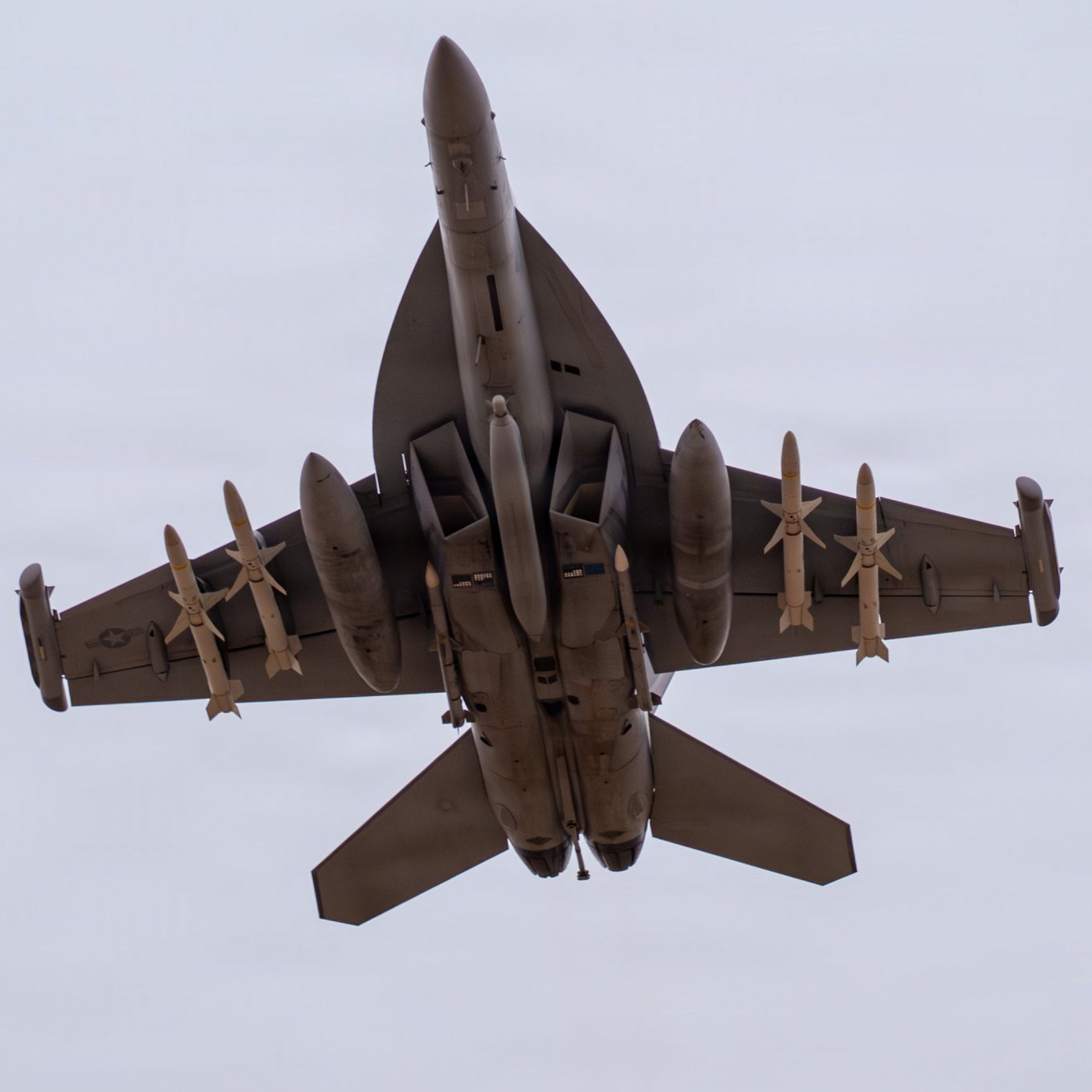
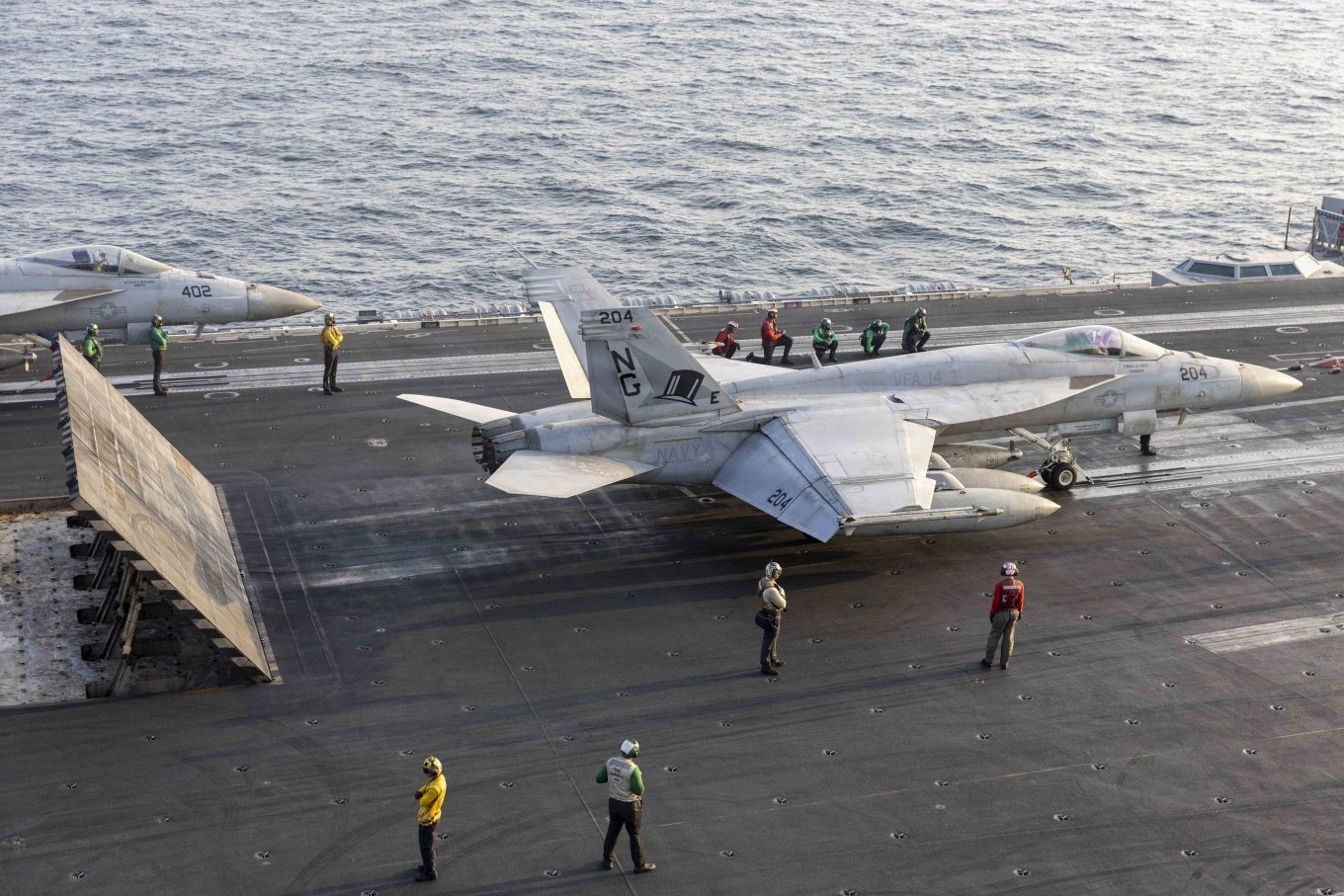
Meanwhile, other F/A-18E/F Super Hornets are used for strike missions, deploying both JDAM bombs and longer-range glide weapons such as the AGM-154 JSOW.
In some cases, these aircraft are configured with up to five external fuel tanks, carrying minimal weapons. In this role, they effectively act as airborne refueling platforms, extending the operational range of other aircraft.
A U.S. Air Force KC-135 Stratotanker refuels a U.S. Navy F/A-18F Super Hornet over the middle east during Operation Epic Fury. pic.twitter.com/3z9UzXyLt9
— U.S. Central Command (@CENTCOM) March 12, 2026
How it compares to Ukraine
According to Defense Express, much of the US arsenal used in these operations overlaps with what Ukraine already employs—particularly JDAM-guided bombs and HARM missiles.
However, key differences remain, especially in advanced electronic warfare systems like Angry Kitten and longer-range munitions such as the JSOW, which have been discussed but not widely supplied.
The images ultimately highlight a key reality of modern air warfare: effectiveness depends not just on the weapons themselves, but on how flexibly they can be combined for each mission.
And in that sense, the gap between US and Ukrainian air operations may be narrower than it first appears.
Earlier, Ukraine’s F-16 fighter jets were spotted equipped with advanced targeting pods that allow the integration of laser-guided weapons—including the US-made APKWS II precision rocket system, which enables far more cost-effective engagements against drones.
Discuss this article:
-9bd5e1532102621f8fb1c4ba871a3171.png)