- Category
- Latest news
Wooden Armor: Russia’s DIY Desperate Tactics to Survive Ukrainian Drone Attacks
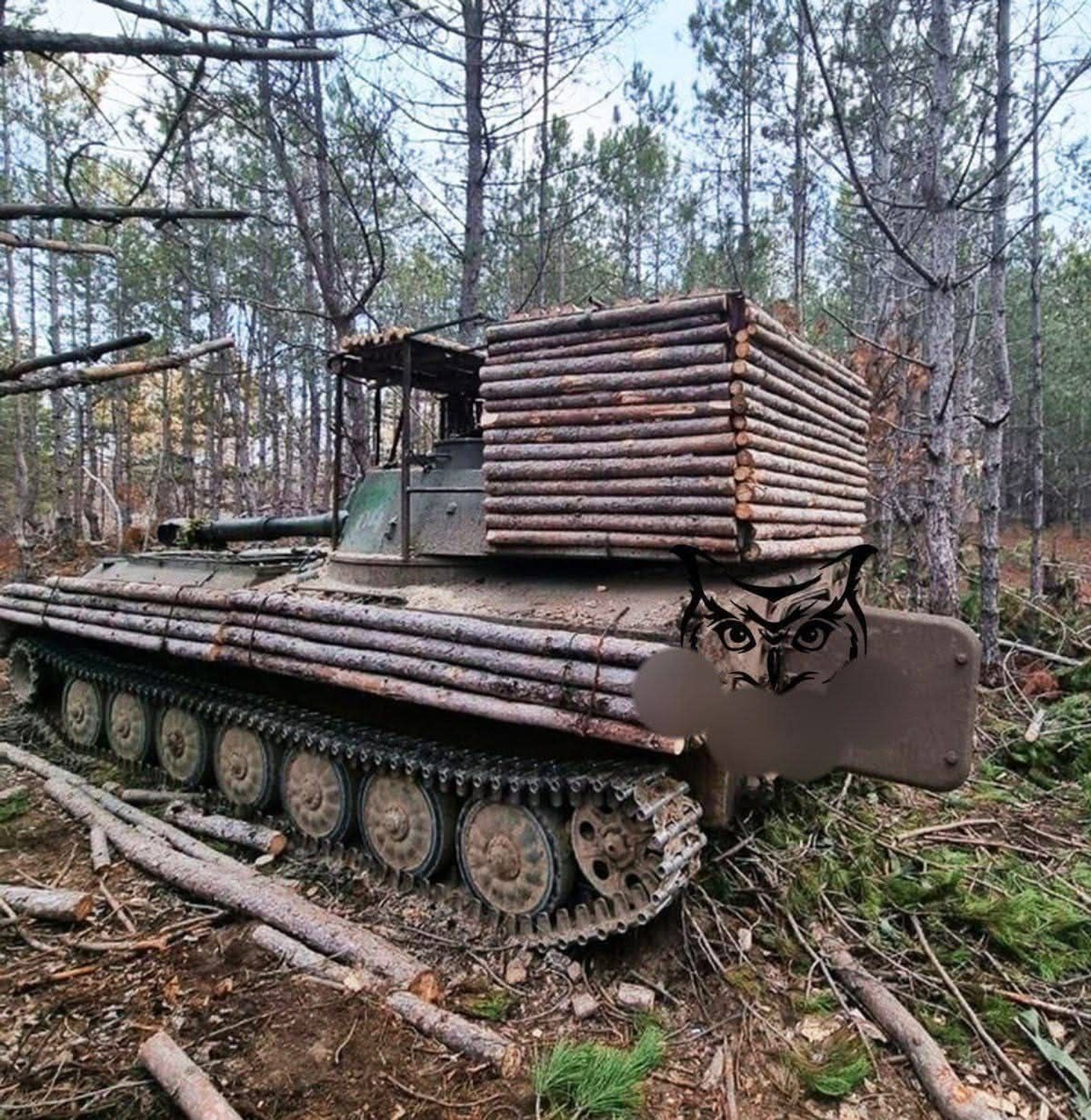
Facing mounting battlefield losses from Ukrainian drones, Russian forces are resorting to increasingly desperate—and primitive—measures to keep their aging armored vehicles and artillery systems intact.
 Prefer U24 Media on Google
- Authors


Russian troops on the front lines are once again relying on improvised battlefield modifications to shield their aging equipment from Ukraine’s increasingly lethal drone strikes, defense media outlet Defence Blog reported on July 18.
New images from the battlefield show 2S19 Msta-S self-propelled howitzers clad in makeshift wooden armor—logs stacked along the sides of the vehicles—in a clear attempt to reduce the damage from explosive-laden FPV drones and precision-guided artillery.
Heavily up-armored Rusian MT-LB pic.twitter.com/l3DhUBqJTC
— Special Kherson Cat 🐈🇺🇦 (@bayraktar_1love) December 29, 2024
From wrapping self-propelled howitzers in wooden logs to reinforcing old Soviet-era MT-LBs with makeshift timber shielding, these battlefield hacks speak volumes about the growing effectiveness of Ukraine’s drone warfare—and Russia’s struggle to keep up.
The wooden reinforcements echo similar efforts seen early in Russia’s full-scale invasion of Ukraine in 2022, when log armor became a common sight on Russian vehicles that lacked modern protective systems.
📷Ukrainian forces captured Russian T-72A from 239th Guards Tank Regiment #Ukraine #UkraineRussiaWar pic.twitter.com/zoQPfJqbDx
— MilitaryLand.net (@Militarylandnet) March 2, 2022
“This isn’t the first time Russian units have turned to wooden reinforcements,” a Ukrainian military official told Defence Blog on condition of anonymity.
“We’ve seen them use logs to reinforce engineering vehicles and light armored platforms earlier in the war. Now, they’re trying the same with heavy artillery.”
Soviet-era hardware meets drone-age threats
The 2S19 Msta-S is a Soviet-designed 152mm self-propelled howitzer, and a staple of Russia’s artillery force.
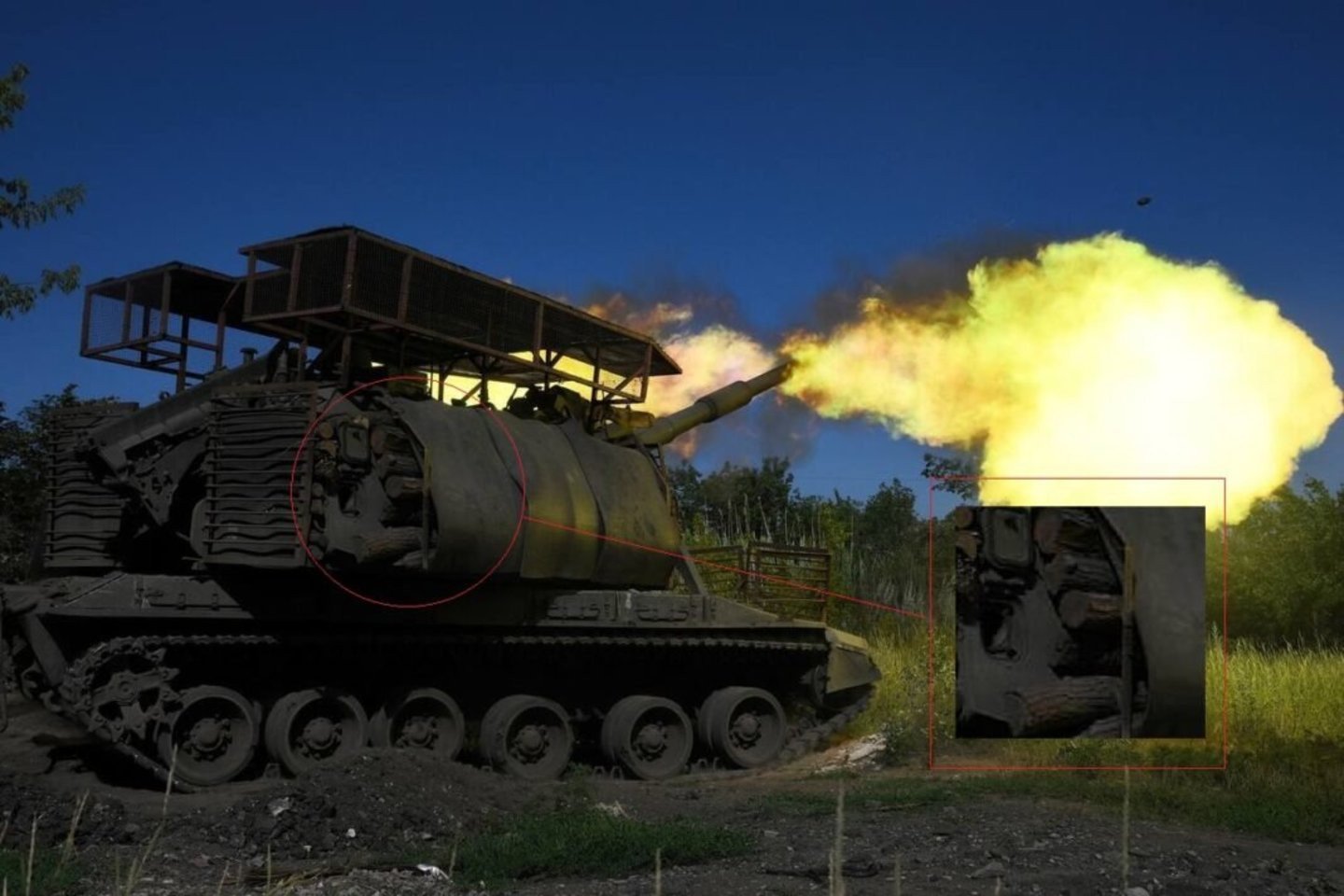
Known for its high rate of fire, it plays a critical role in supporting Russian ground operations—but it’s increasingly vulnerable to Ukraine’s growing arsenal of drone-delivered munitions and counter-battery radar systems.
To bolster survivability, Russian crews have also mounted so-called “cope cages”—steel mesh frameworks intended to deflect drone explosives. But experts warn that these DIY defenses are largely ineffective against modern weapons.
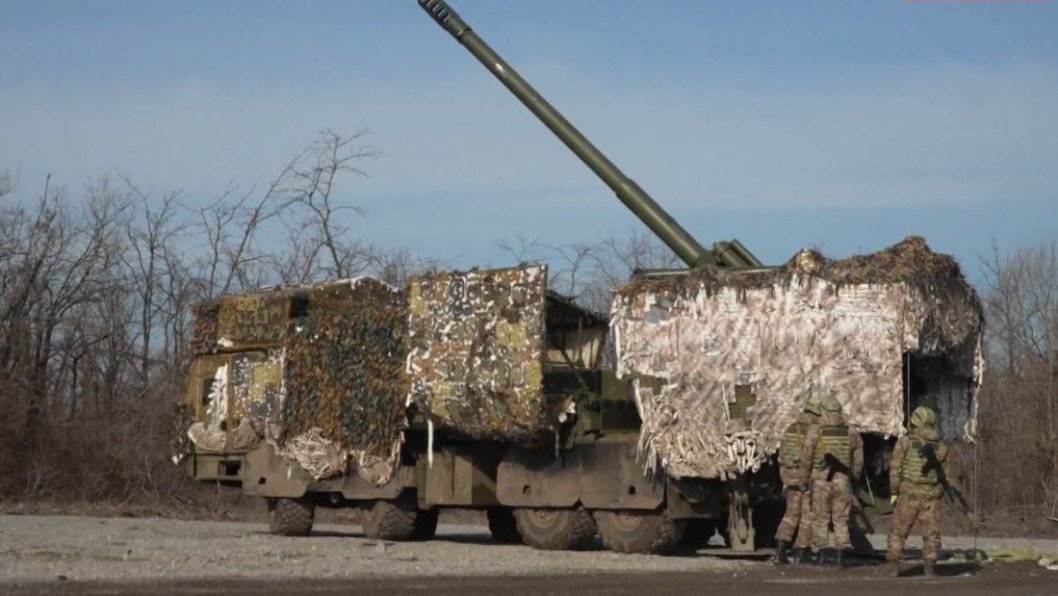
Wooden logs may offer some protection against shrapnel or small drones, but they’re unlikely to withstand direct hits from anti-armor missiles or loitering munitions like Ukraine’s homegrown strike drones.
When I said the Russians were starting to take rear area security a bit more seriously this is not what I had in mind pic.twitter.com/tpVo6JR5BH
— OSINTtechnical (@Osinttechnical) March 5, 2022
MT-LBs also reinforced with wooden logs
It’s not just artillery units improvising with wood—Russia’s aging MT-LB armored personnel carriers are also being “up-armored” with timber. These vehicles, first deployed in the 1960s, are versatile but lightly armored and extremely vulnerable to modern anti-tank weapons, military media Bulgarianmilitary reported.
In a bid to compensate for their weak defenses, Russian troops have begun placing wooden logs atop MT-LB hulls to protect against threats like FPV drones, shrapnel, and possibly even small-caliber fire.
Damaged BM-21 Grad with improvised wooden armor pic.twitter.com/dtJ2aNkmch
— OSINTtechnical (@Osinttechnical) April 3, 2022
But military analysts are skeptical of the tactical value.
“These wooden panels may provide limited protection against shrapnel and small arms,” one Ukrainian defense analyst said, “but they are essentially useless against modern anti-tank guided missiles or high-explosive anti-tank (HEAT) rounds.”
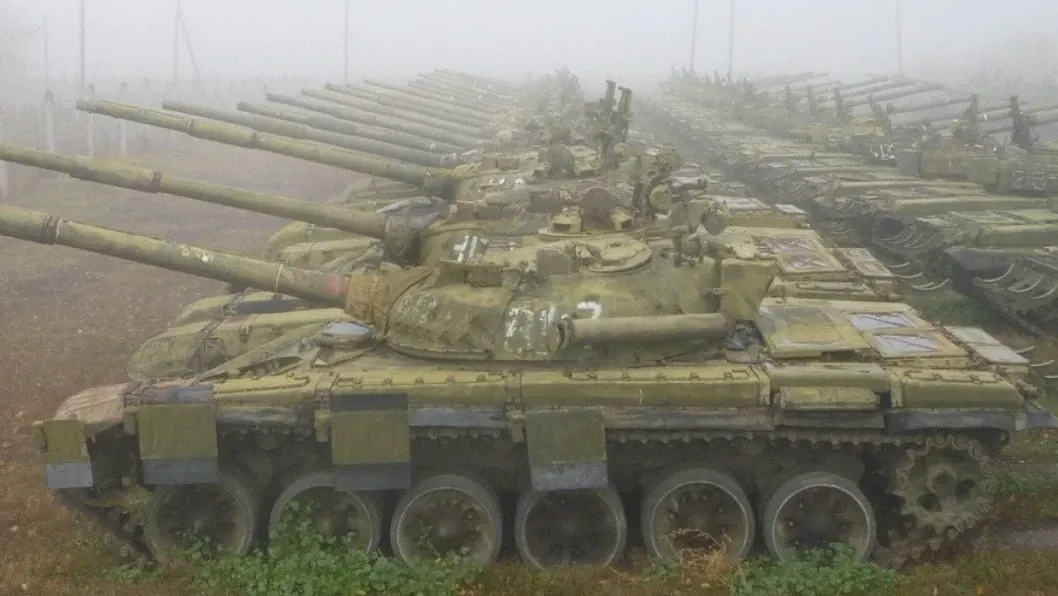
Psychological shield or tactical folly?
Some argue that the wooden armor may serve more as a psychological crutch than a battlefield solution, giving crews a false sense of protection. But any morale boost is likely to be short-lived.
Adding weight to these already-strained vehicles also poses a logistical problem. The MT-LB’s mobility is one of its few remaining advantages. Every extra log compromises that, increasing fuel consumption and wear on mechanical components like the engine and transmission.

Despite these downsides, Russia continues to deploy these makeshift solutions—an indication, some analysts say, of supply shortages and poor access to modern armor technology.
Improvisation exposes a deeper problem
Ultimately, Russia’s turn to wooden logs and steel cages exposes deeper cracks in its war machine. The increasing reliance on improvised battlefield fixes reflects not just a resource crunch but a strategic lag behind Ukraine’s evolving drone warfare capabilities.
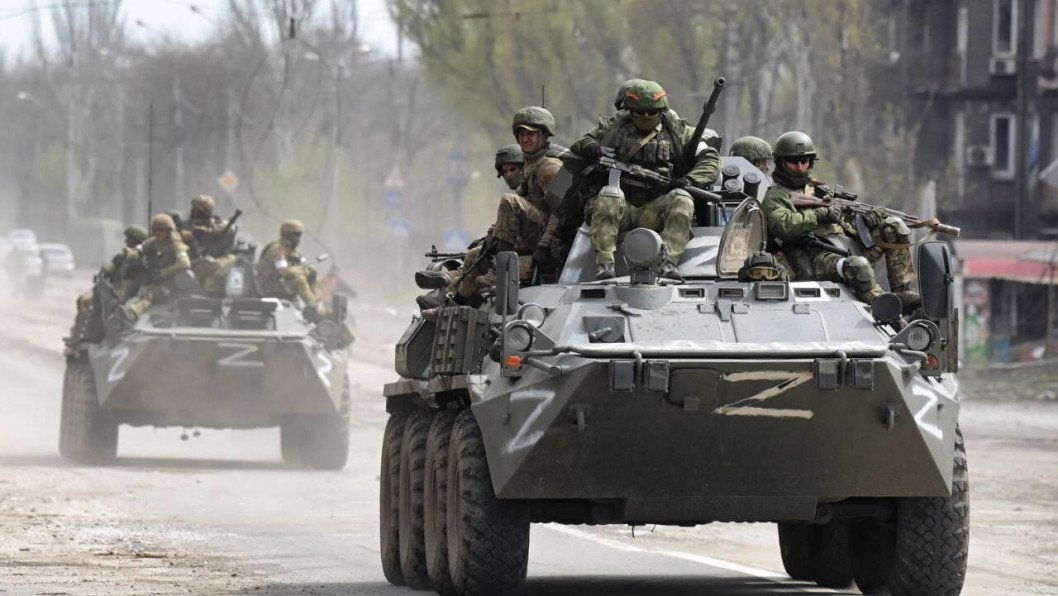
As Ukraine continues to innovate—deploying faster, smarter, and more precise drones—Russia appears to be stuck in a cycle of reactive and increasingly archaic defenses.
Earlier, the independent military analysis group Oryx reported that Russia has lost more than 4,000 tanks in its war against Ukraine. The figure includes tanks that were destroyed, abandoned, or captured, and is based solely on photo and video documentation.
Discuss this article:


-c439b7bd9030ecf9d5a4287dc361ba31.jpg "Photo of Katherina Popilnichenko")

-113f4f5be3c4077a325f1385448e5e5e.jpg "Memorial in Chertkovo, Rostov region, listing Yakov Maiboroda, who left prison to join Russia’s war against Ukraine. (Source: Social media)")
-72b63a4e0c8c475ad81fe3eed3f63729.jpeg "Photo of Cyril Barabaltchouk")