- Category
- War in Ukraine
Chinese Firm Smuggles Military Drone Components to Russia as Tractor Parts
 Prefer U24 Media on Google
- Authors

-72b63a4e0c8c475ad81fe3eed3f63729.jpeg "Photo of Cyril Barabaltchouk")
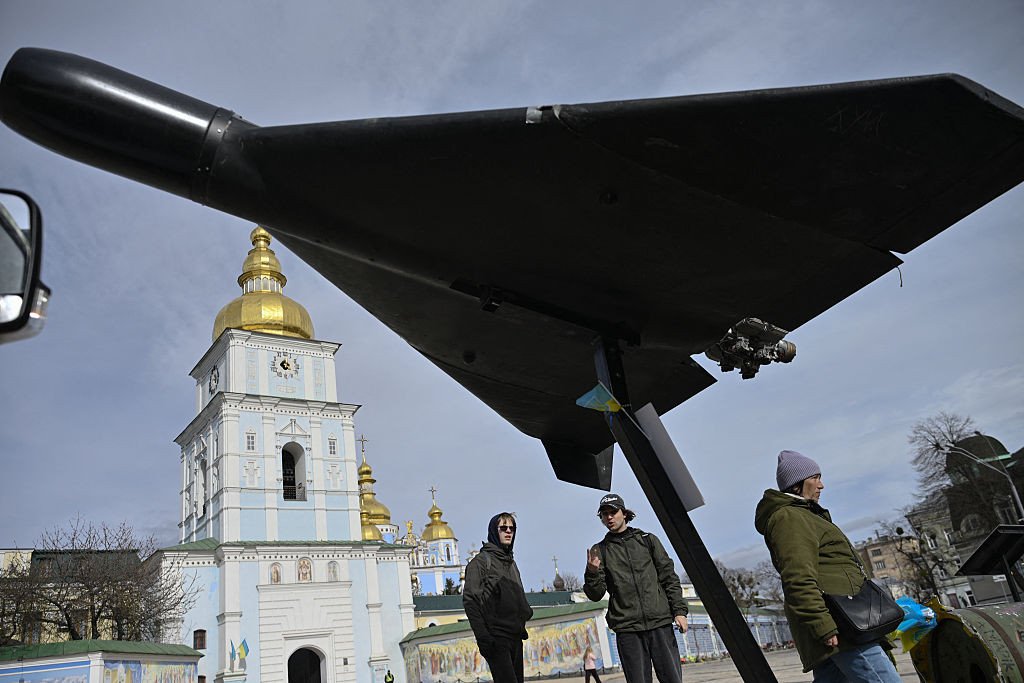
Chinese suppliers are circumventing Beijing’s export bans to provide Russia with critical anti-jamming antennas for its Iranian-designed Geran drone fleet, passing the military hardware off as agricultural equipment, a joint investigation by The Insider and Nordsint revealed on May 8.
Posing as Russian military contractors, investigators contacted Harxon Corporation, a large Chinese navigation equipment supplier. A company representative openly acknowledged cooperation with Russia’s Alabuga plant—the primary production facility for Geran and Gerbera drones—and accepted a bulk order for military-grade antennas routed through a shell company.
We bring you stories from the ground. Your support keeps our team in the field.
Russian forces rely heavily on Geran drones—localized versions of the Iranian Shahed—to strike deep into Ukrainian territory. To survive Ukraine’s extensive Electronic Warfare (EW) systems, which jam and spoof GPS signals, the drones are equipped with Controlled Reception Pattern Antennas (CRPAs).
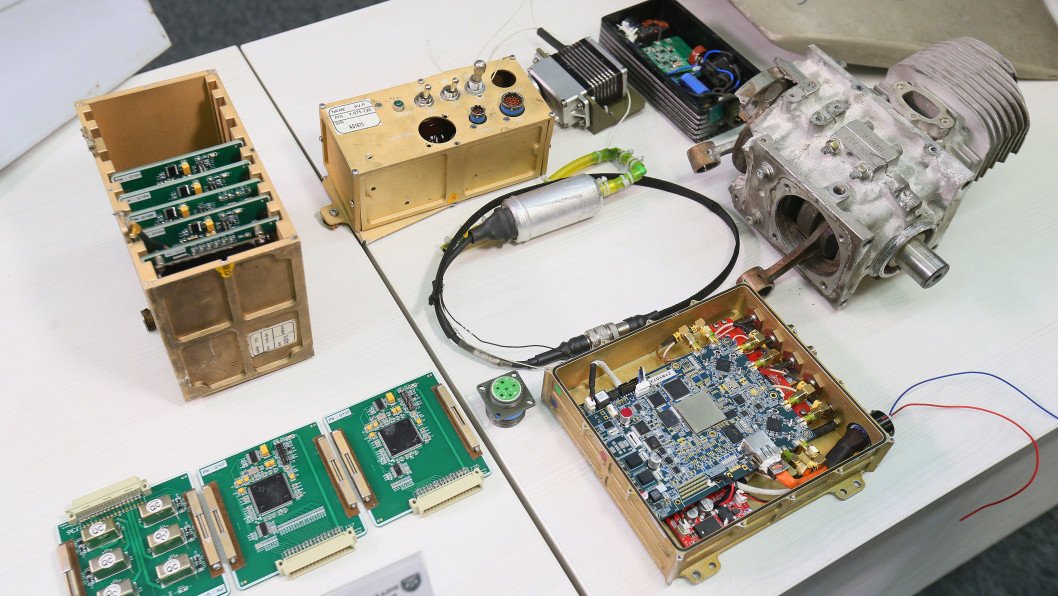
These specialized antennas contain multiple elements that identify the direction of incoming jamming and create blind spots to block interference, allowing the drone to maintain its course. Without CRPAs, Geran drones are largely incapable of accurately striking coordinates. Investigators note that Harxon products constitute the majority of satellite antennas recovered by Ukraine from downed Geran wreckage, according to an investigation.
When investigators approached Harxon to purchase CRPAs, a representative identified as Masha Wu redirected the sale, stating the transaction was “sensitive.” The deal was handed over to Anthony Zheng, operating under a newly incorporated entity called NavX Technology Co., Ltd.
Zheng offered 7, 8, and 16-channel antennas exclusively manufactured for military clients. NavX instructed the undercover buyers to wire payments to a VTB Bank account—a major Russian financial institution previously identified as a hub for Chinese firms supplying Russia’s defense sector.
The investigators placed a bulk order for 200 units, totaling roughly €738,000 ($797,188). According to the invoice:
7-channel variant: €6,650 ($7,176) per unit;
8-channel variant: €7,480 ($8,079) per unit;
16-channel variant: €14,750 ($15,934) per unit.
Images of the antennas provided by NavX perfectly matched components documented by Nordsint in the debris of downed Shahed drones in Ukraine. The captured components retained Chinese product stickers designating them as an “agricultural machinery navigation antenna,” a false classification used to bypass Chinese customs restrictions on dual-use military goods.
While Zheng claimed NavX operates independently, investigators found extensive digital evidence linking him directly to Harxon, including his presence at international trade shows representing the parent company.
Russian trade data further indicates that between August and September 2024, an Alabuga-based company imported more than €925,000 ($1,000,000) worth of Harxon antennas. The shipments were facilitated by Chinese and Turkish shell companies, with some listed explicitly as “not for military use.”
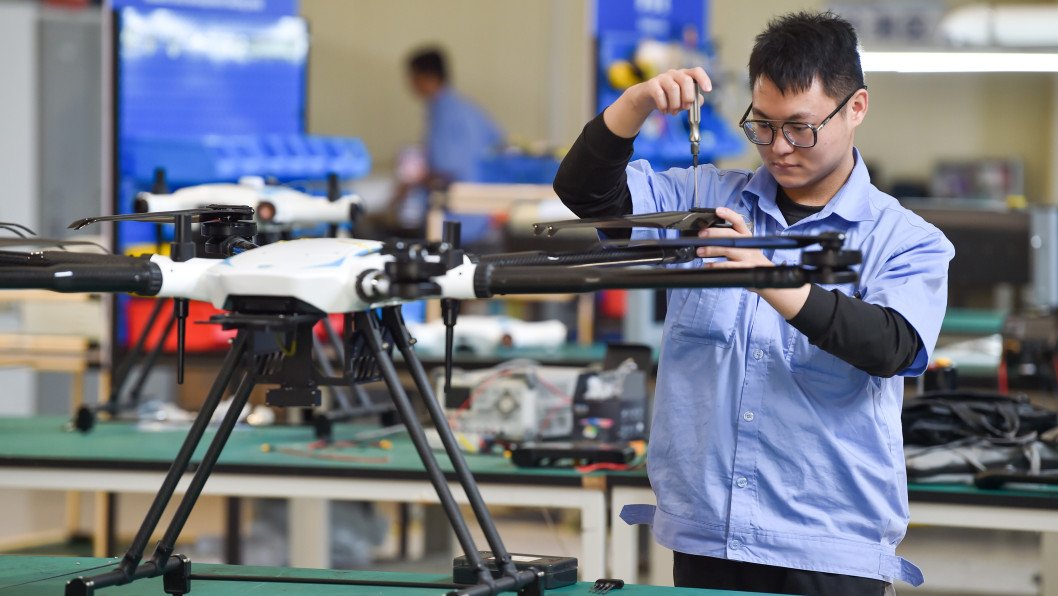
Despite supplying critical technology for Russia’s war effort, Harxon continues to operate freely in Western markets. The company maintains authorized distributors in 27 countries, including the United States, France, the United Kingdom, and Australia, and recently exhibited at a March 2026 trade fair in Germany, The Insider notes.
Following requests for comment from The Insider, the NavX representative cleared all communication logs with the undercover buyer. The Chinese Embassy in Latvia responded with a statement asserting that China “strictly controls the exports of dual-use items.”
The Harxon investigation highlights how heavily Moscow now relies on Beijing to keep its war machine running. According to previous reports, Russia imports more than 90% of its sanctioned technology through China—up from 80% last year. The surge follows a European Union crackdown on alternative evasion routes. This flow of restricted goods, including semiconductors and specialized electronics, has allowed Russia to expand its domestic drone and missile production.
While the EU has penalized a handful of Chinese and Hong Kong entities, member states remain reluctant to impose harsher sanctions for fear of economic retaliation. Beijing continues to dismiss international restrictions, insisting it simply maintains “normal trading relations” with Russia while reportedly supplying Moscow with military-grade satellite imagery.
Discuss this article:
-9a7b3a98ed5c506e0b77a6663f5727c5.png)


-c439b7bd9030ecf9d5a4287dc361ba31.jpg "Photo of Katherina Popilnichenko")