- Category
- War in Ukraine
Drone Strike Sparks Fire at One of Russia’s Largest Petrochemical Plants 800 Miles From Ukraine
 Prefer U24 Media on Google
- Authors


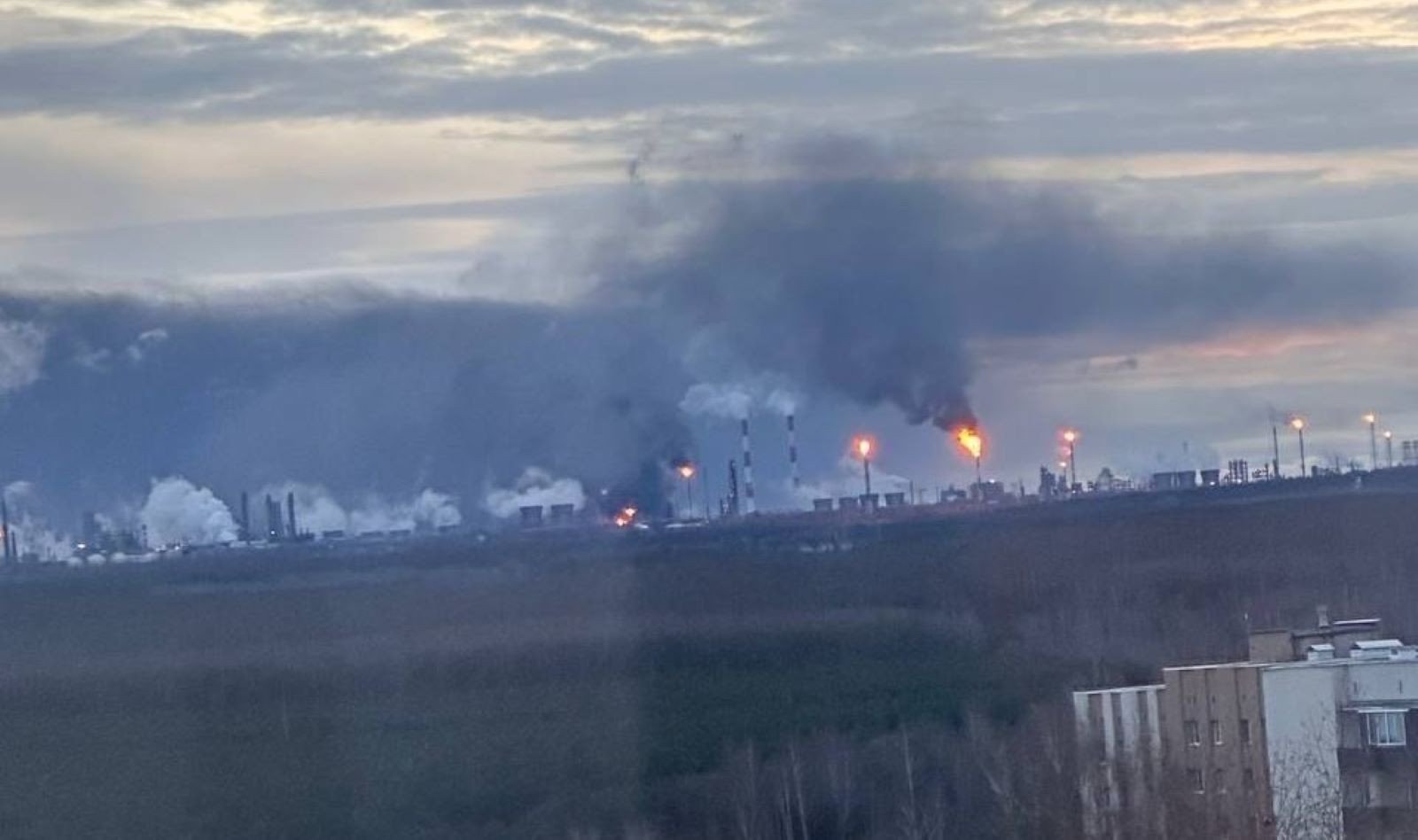
A drone attack reportedly struck one of Russia’s largest petrochemical facilities in Nizhnekamsk, Tatarstan, on November 15, triggering a fire at the industrial complex approximately 1,200–1,300 kilometers (750–810 miles) from the Ukrainian border.
We bring you stories from the ground. Your support keeps our team in the field.
Local residents reported explosions and a fire at an industrial facility believed to be Nizhnekamskneftekhim, a major petrochemical producer owned by Russian energy and chemicals group Sibur.
💥 Drones struck Russia’s Tatarstan and Taganrog overnight, reportedly damaging a major petrochemical plant and two power substations. pic.twitter.com/kOTyg13CVx
— UNITED24 Media (@United24media) November 15, 2026
Footage circulated by OSINT monitoring channels showed flames rising from the facility. Witnesses reported that drone activity continued after the initial strike.
Analysis of footage published by the Exilenova+ monitoring channel on November 15 suggests that the attack may have targeted the plant’s ethylene production facilities and other parts of the industrial complex.
The exact extent of the damage remains unclear, and Russian authorities have not released an official assessment of the reported strike.
Nizhnekamskneftekhim is among Russia’s largest petrochemical manufacturers and a major producer of synthetic rubber, plastics, and industrial chemicals.
Nizhnekamsk, Tatarstan. Locals report an attack on one of the city’s plants, most likely Nizhnekamskneftekhim (SIBUR).
— Exilenova+ (@Exilenova_plus) November 15, 2026
The petrochemical complex produced 3 million tonnes of products in 2025. Its new EP-600 ethylene unit alone has an annual production capacity of 600,000 tonnes. pic.twitter.com/Tdya8qxzdy
The facility is particularly significant for its production of isoprene rubber, alongside butyl, halobutyl, and butadiene rubber. Its industrial operations also include the production of ethylene, propylene, benzene, synthetic lubricants, and propylene glycol.
In 2025, the company produced approximately 3 million metric tons of petrochemical products. Its newer EP-600 production complex has an annual ethylene capacity of up to 600,000 metric tons.
Earlier, on November 11, Ukrainian long-range drones struck Russia’s largest oil refinery in Omsk, approximately 3,000 kilometers from Ukraine, triggering a major fire at the facility, which processes more than 21 million metric tons of crude oil annually.
Discuss this article: