- Category
- War in Ukraine
Kyrgyzstan’s Economic Boom Runs on Helping Aggressor State Russia Skirt Sanctions
One of Central Asia’s smallest economies is posting extraordinary numbers despite the absence of major reforms. The main reason for these “successes” is Russia’s ability to circumvent sanctions with Kyrgyzstan’s help—a factor that remains largely overlooked by the international community.
 Prefer U24 Media on Google
- Authors

-206008aed5f329e86c52788e3e423f23.jpg "Photo of Oleksandr Moiseienko")
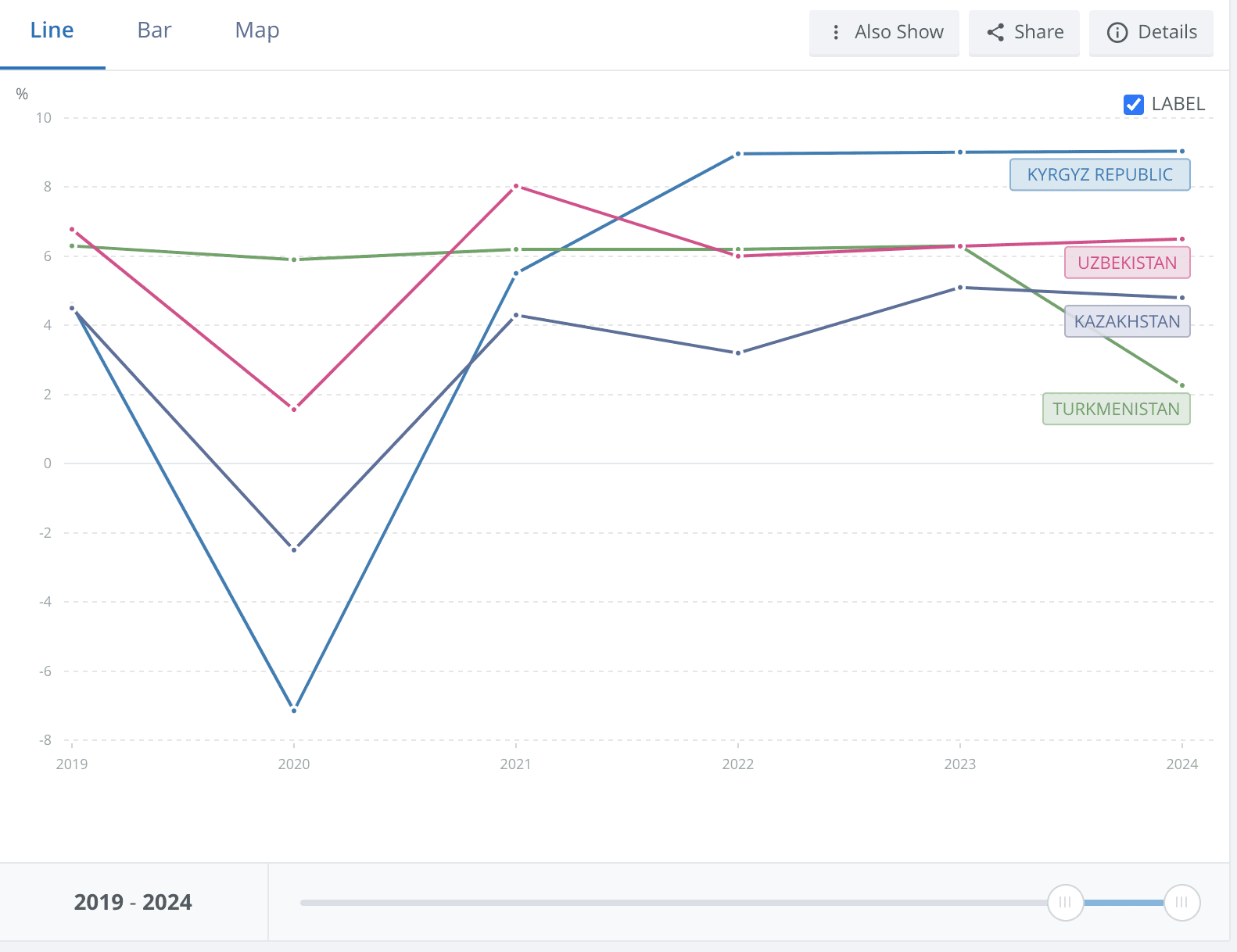
Since 2022, when more than 30% of Kyrgyzstan’s GDP was already made up of remittances from migrant workers, the country has surged ahead of its regional peers in economic growth. In 2024, Kyrgyzstan recorded a 9% GDP increase—well above the global average and even higher than its neighbors.
Kyrgyzstan’s growing re-export trade is actively helping Russia evade sanctions. This has allowed Kyrgyzstan to expand its role on Central Asia’s economic map and reap clear profits from its role as a middleman.
Ukraine’s allies imposed targeted sanctions on Kyrgyz entities in 2023–2024, but the Kyrgyz case demonstrates that such measures are not enough. The problem cannot be solved piecemeal—it requires a comprehensive approach.
Kyrgyzstan’s economic shift
Traditionally a raw-material and agrarian economy that produces virtually no finished goods and maintains a relatively low standard of living, Kyrgyzstan has posted remarkable growth in trade with the outside world, especially with the European Union, since 2022.
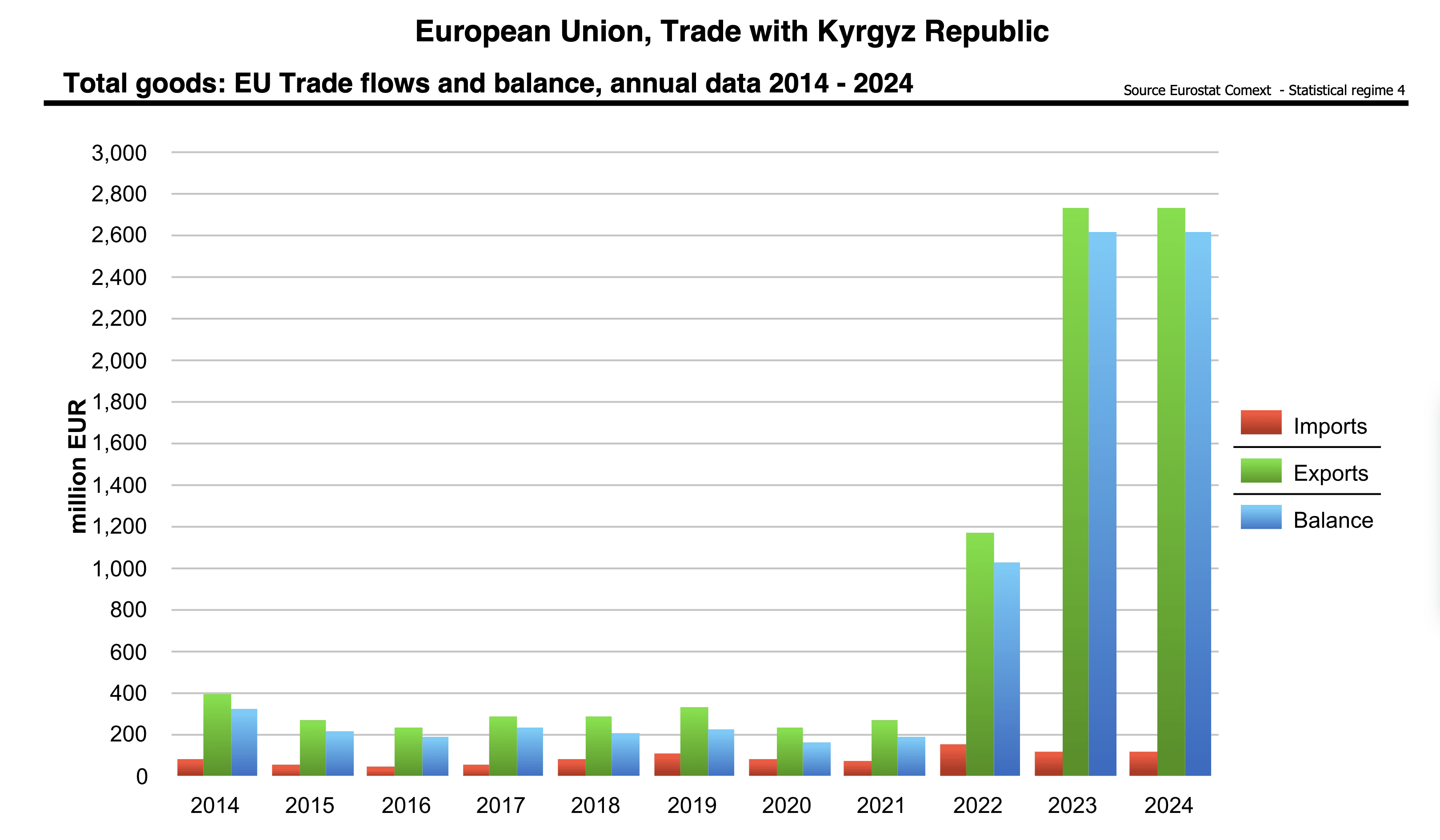
In 2021, Kyrgyzstan imported just €230 million worth of goods from EU countries. By 2022, that number had quintupled to €1.2 billion. The trend continued, with imports nearly reaching €2.8 billion in 2024. Meanwhile, Kyrgyzstan’s exports to the EU remain more than 20 times smaller, barely surpassing €100 million.
The country imports cars, spare parts, medical equipment, and many other high-quality goods from the EU—products far beyond the reach of ordinary Kyrgyz citizens. Since direct shipments are blocked by sanctions, the vast majority of these imports are then re-exported to Russia.
Facilitating re-exports to Russia
The intent of the sanctions against Russia was to remind the Russian citizens that unprovoked aggression against other countries and the killing of tens of thousands of people carry consequences, and that normal life would not resume until the war ends. Yet for Russia, finding loopholes has often proven surprisingly easy.
Goods first arrive in Kyrgyzstan, where documents are issued to facilitate re-export. Shipments to Russia are often discreetly carried out, with little risk to suppliers of sanctioned goods. Companies knowingly supplying technology to Russia’s military-industrial complex frequently rely on intermediaries to conduct so-called “customs clearance”—a maneuver designed to shield the original supplier from possible sanctions imposed by Western countries.
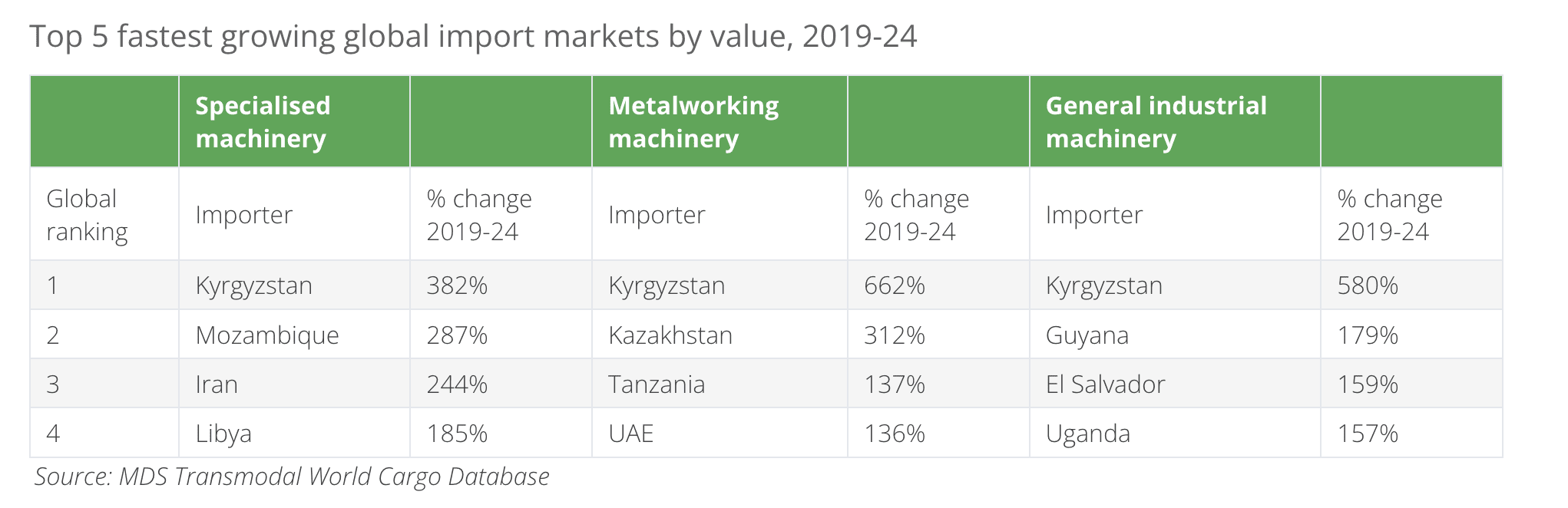
Analysis of international trade data from the MDS Transmodal World Cargo Database shows that between 2019 and 2024, Kyrgyzstan’s imports of three categories of machinery—specialized equipment, metalworking machines, and general industrial technology—grew faster than in any other country in the world.
Need for a comprehensive strategy
Kyrgyzstan’s growing re-export trade is actively helping Russia evade sanctions. This has allowed Kyrgyzstan to expand its role on Central Asia’s economic map and reap clear profits from its role as a middleman.
Ukraine’s allies imposed targeted sanctions on Kyrgyz entities in 2023–2024, but the Kyrgyz case demonstrates that such measures are not enough. The problem cannot be solved piecemeal—it requires a comprehensive approach. This case shows that only sectoral sanctions can remedy the situation.
Discuss this article:



-72b63a4e0c8c475ad81fe3eed3f63729.jpeg "Photo of Cyril Barabaltchouk")