- Category
- War in Ukraine
Mission One: Survive. A First-Grader’s Life in Ukraine Under Russian Air Attacks
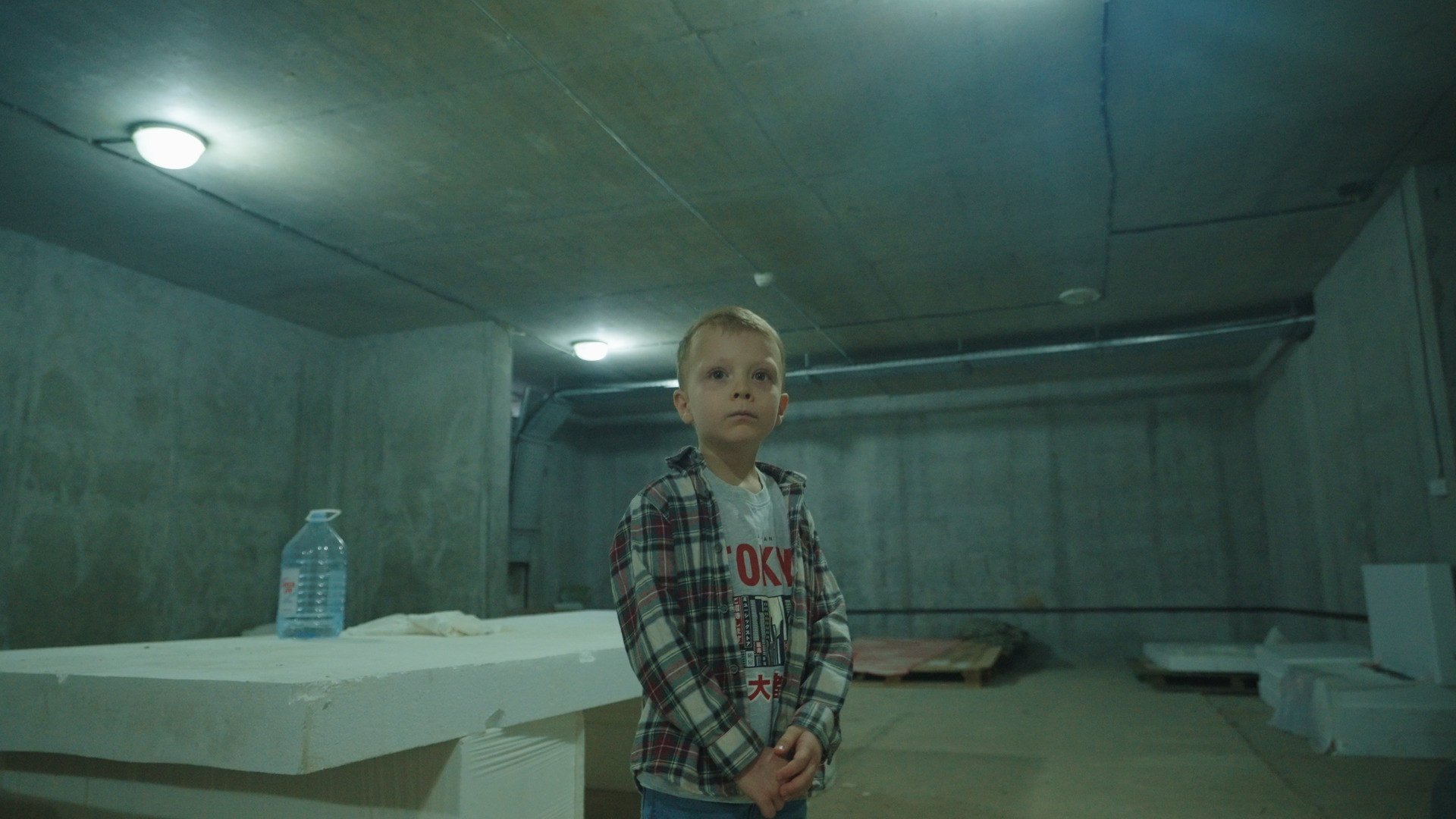
For the past week, Kyiv has faced almost nonstop attacks, with Shahed drones flying over the city and missiles striking at times. Still, life goes on. And that means children, too, have to keep living through what is supposed to be an ordinary part of childhood—going to school. One of them is a six-year-old Robert from Kyiv.
 Prefer U24 Media on Google
- Authors


September 1 traditionally marks the start of the school year in Ukraine. For generations, the day has been tied to childhood, warm memories, and a familiar set of rituals: waking up early after the summer break, having breakfast, putting on a freshly ironed school uniform, and, of course, bringing a bouquet of flowers for the teacher.
The first day of school is a big deal for Ukrainian families, especially for first-graders and their parents. Schools usually celebrate it with songs, dances, poems, and other performances. For children starting first grade, it also kicks off an 11-year journey through school. Traditionally, one of them rings a bell to signal the start of the new school year.
But Russia’s war against Ukraine, which began in 2014 and escalated into a full-scale invasion in 2022, has taken that experience away from hundreds of thousands, if not millions, of Ukrainian children. Russia has systematically destroyed Ukrainian schools, while in temporarily occupied territories, schools have been turned into tools of Russian propaganda, where children are taught a completely different set of values.
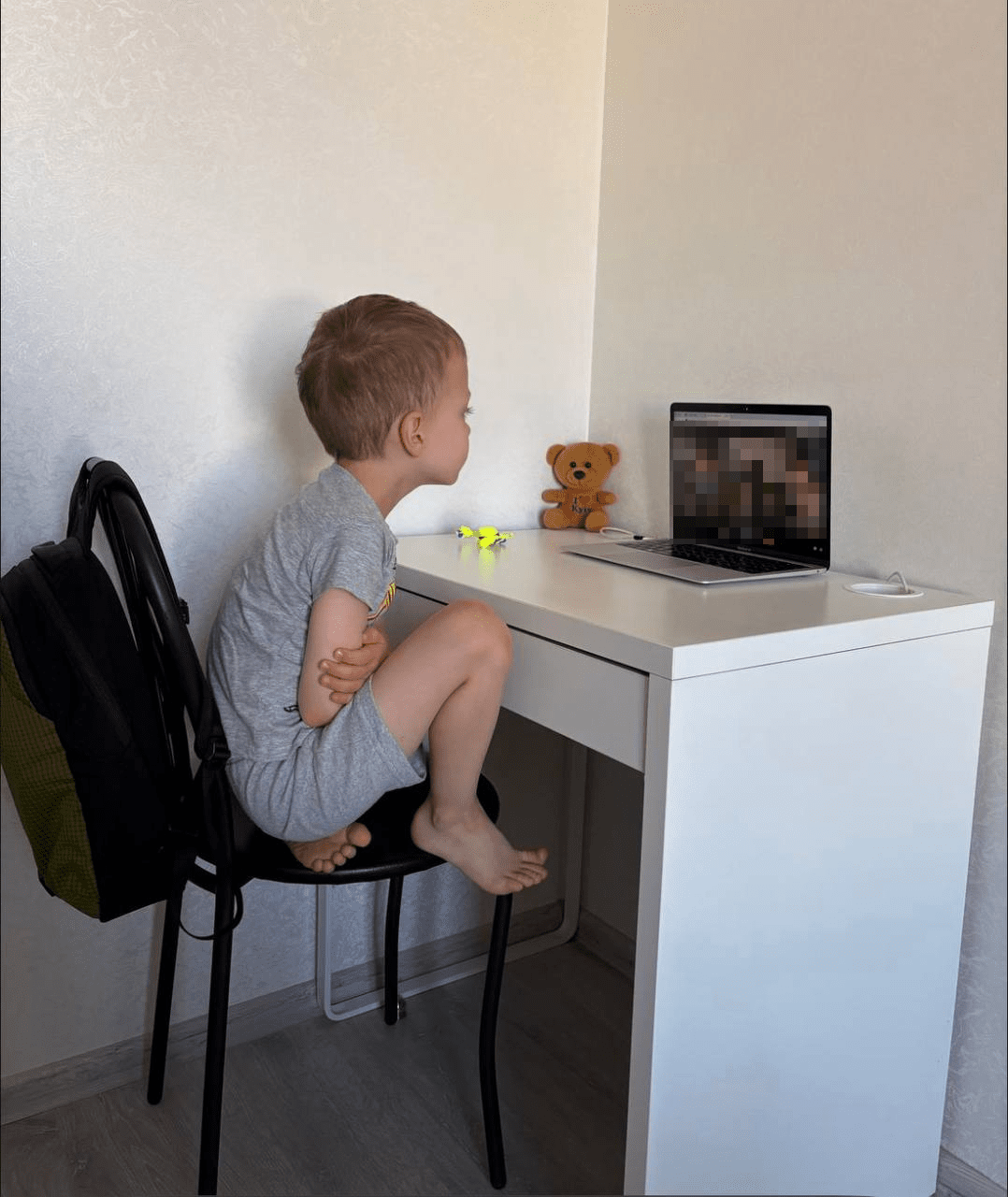
This year, some Ukrainian children, including those in Kyiv, spent September 1 in front of a laptop at home or in a shelter because of Russian attacks. Among them was six-year-old Robert from Kyiv.
How Russian air attacks are disrupting school life in Ukraine
We arranged to meet Robert and his father, Denys, after the boy’s lessons. He was supposed to have three classes that morning. But by the time we met, Kyiv had already been under four air-raid alerts.
When an alert is underway, even online classes are suspended so children can move to a safe place. That day, Russian drones were once again attacking Kyiv and the surrounding region. By the time we headed to meet the family, a fifth alert had begun. It was only 11 a.m.
That is how we met Robert and his family—on their way to the nearest shelter.
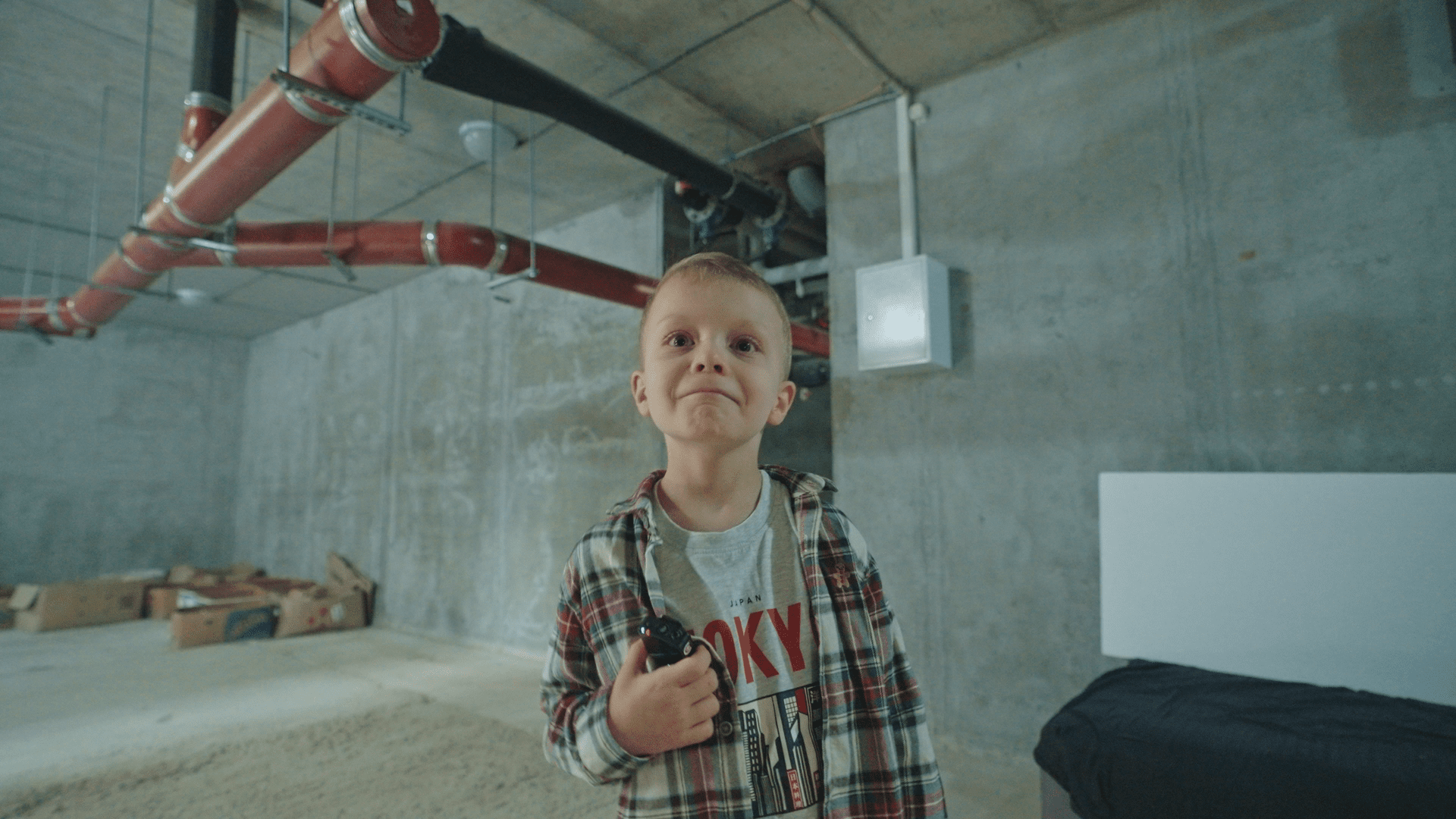
“We’re going to show you everything that’s here,” Robert says enthusiastically. From the outside, the entrance looks ordinary, like that of any other apartment building. But behind the door is a narrow passage and a staircase leading underground.
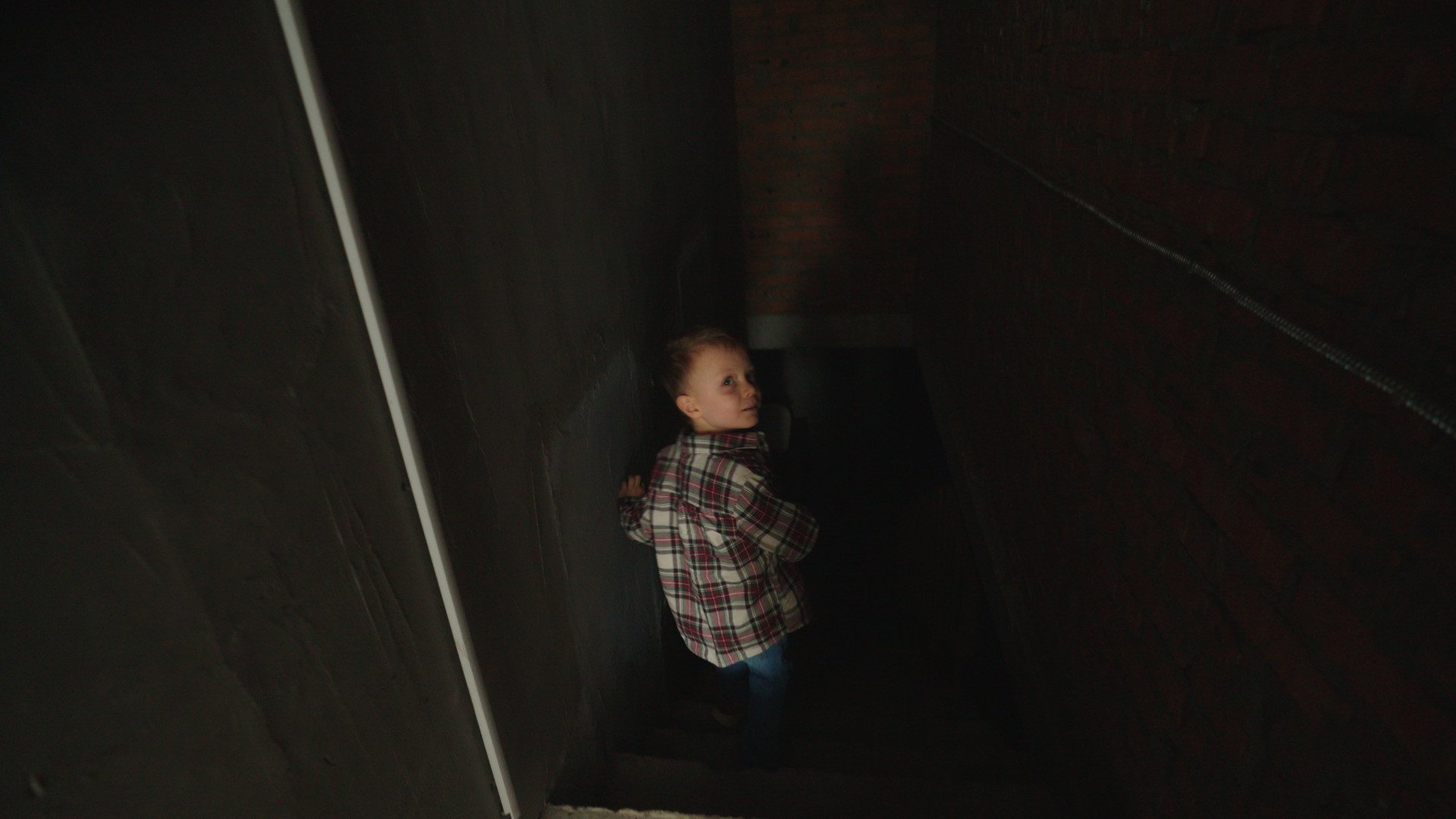
“Watch your step,” Robert says, looking out for us. “Careful, hold on,” he adds.
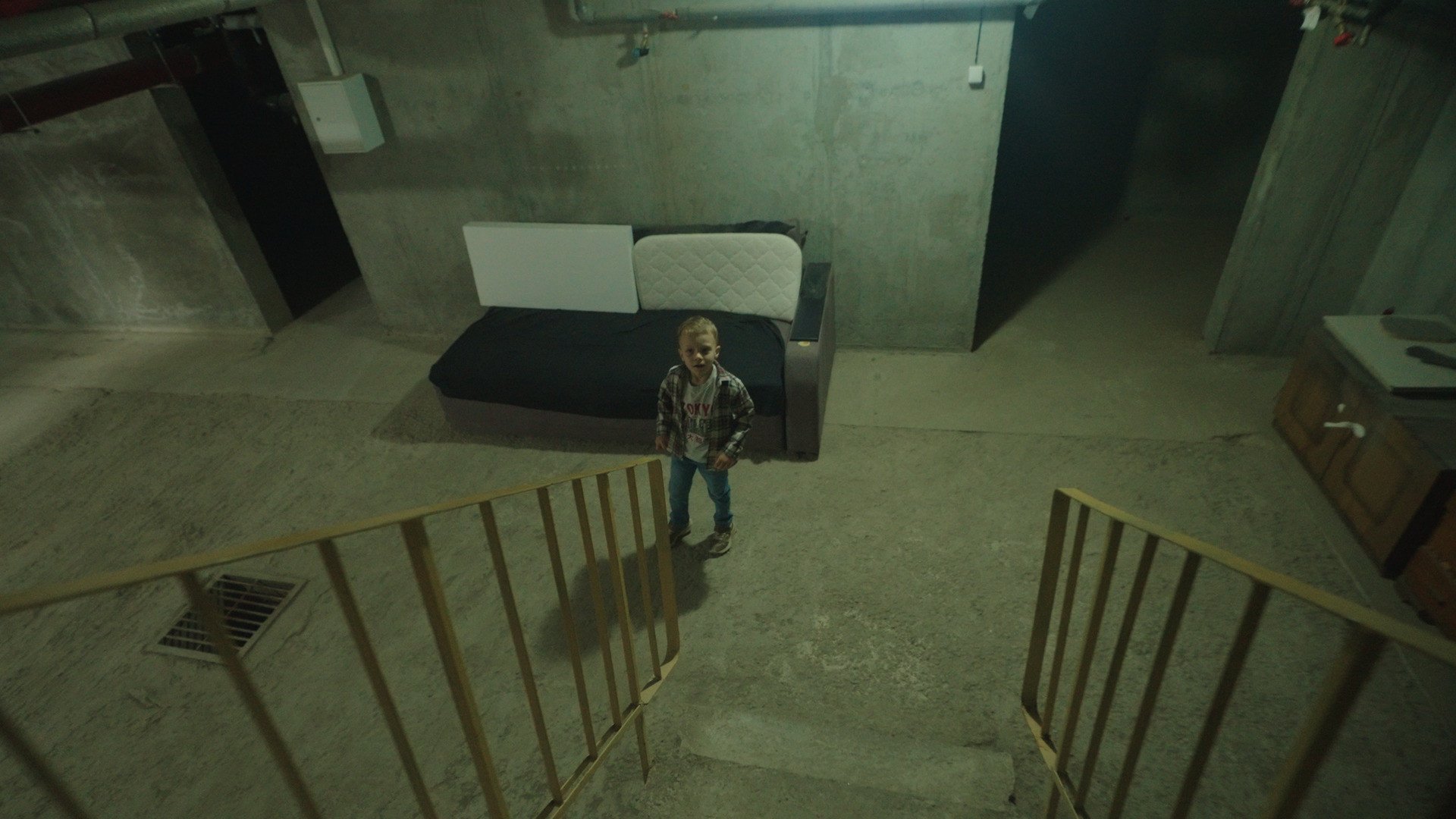
The shelter is large, with several spacious rooms separated by open passages. Each room has several beds or mattresses laid out on the floor. Everything is gray and made of concrete. The air is damp, and daylight barely reaches the rooms through a small barred window.
“This is where we slept,” Robert says, pointing to one of the mattresses laid across wooden beams on the floor.
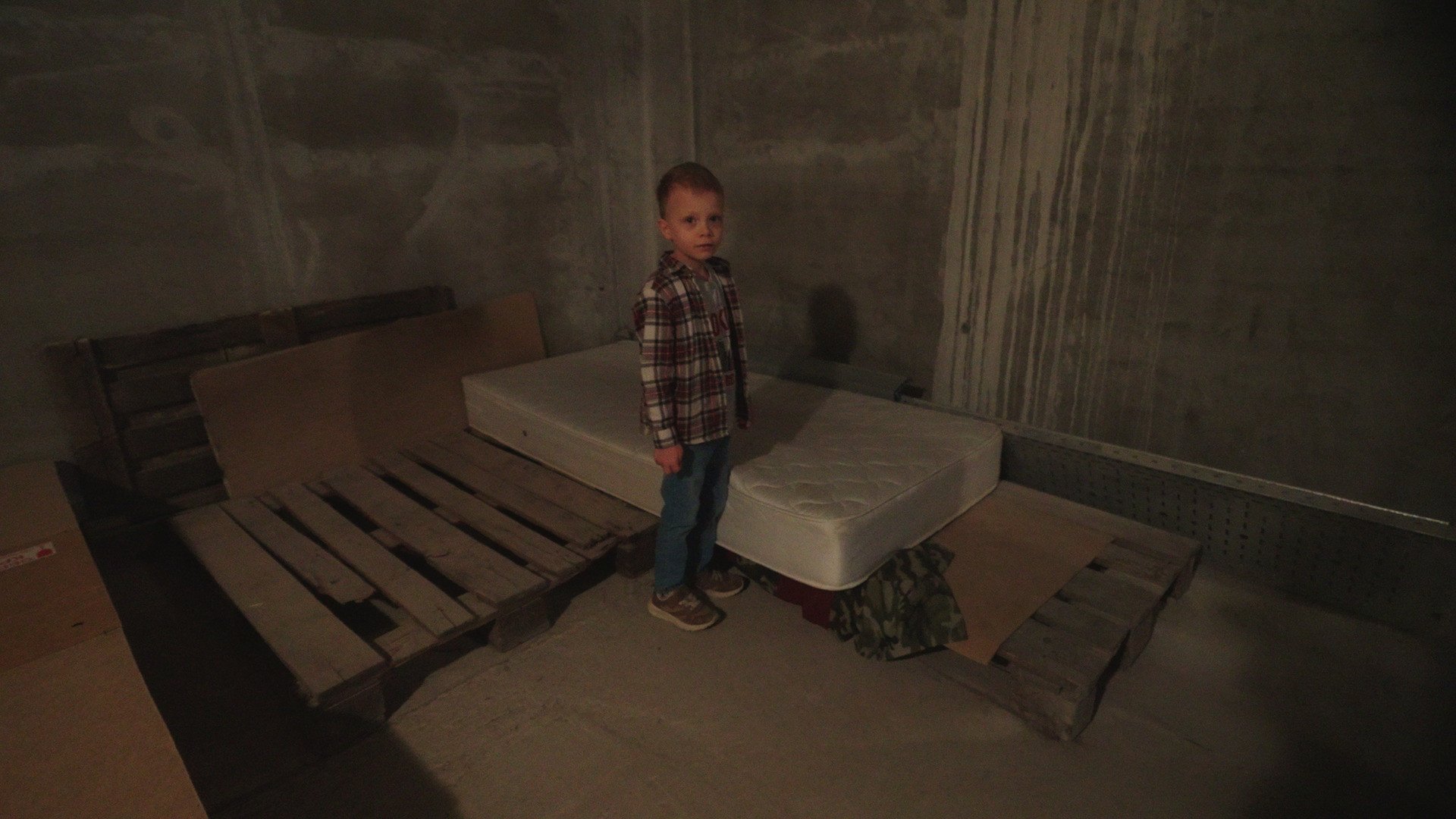
“There’s also this sofa. And this bed,” he says, walking around the room.
A toy lion stands next to one of the beds. It is a small detail, but enough to show that children spend a lot of time here. Robert confirms it. “Yes, we play here with our friends,” he says.
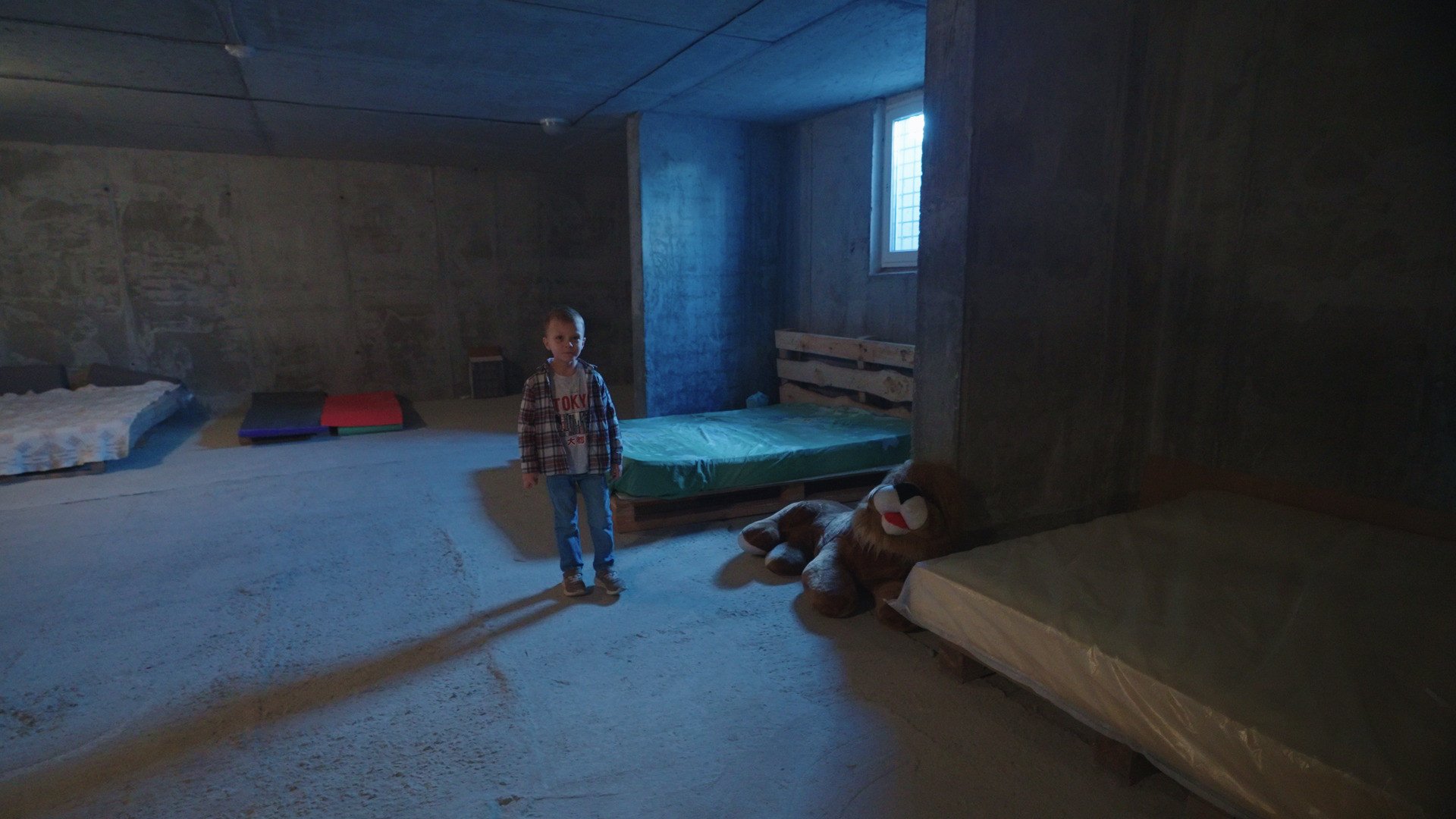
One of the rooms has a large white table where children can study during air-raid alerts.
Robert knows the shelter by heart. He knows all its entrances and exits. “It’s a little scary there. I’ll show you, but it’s dark. I was scared of it when I was little too,” the six-year-old says seriously.
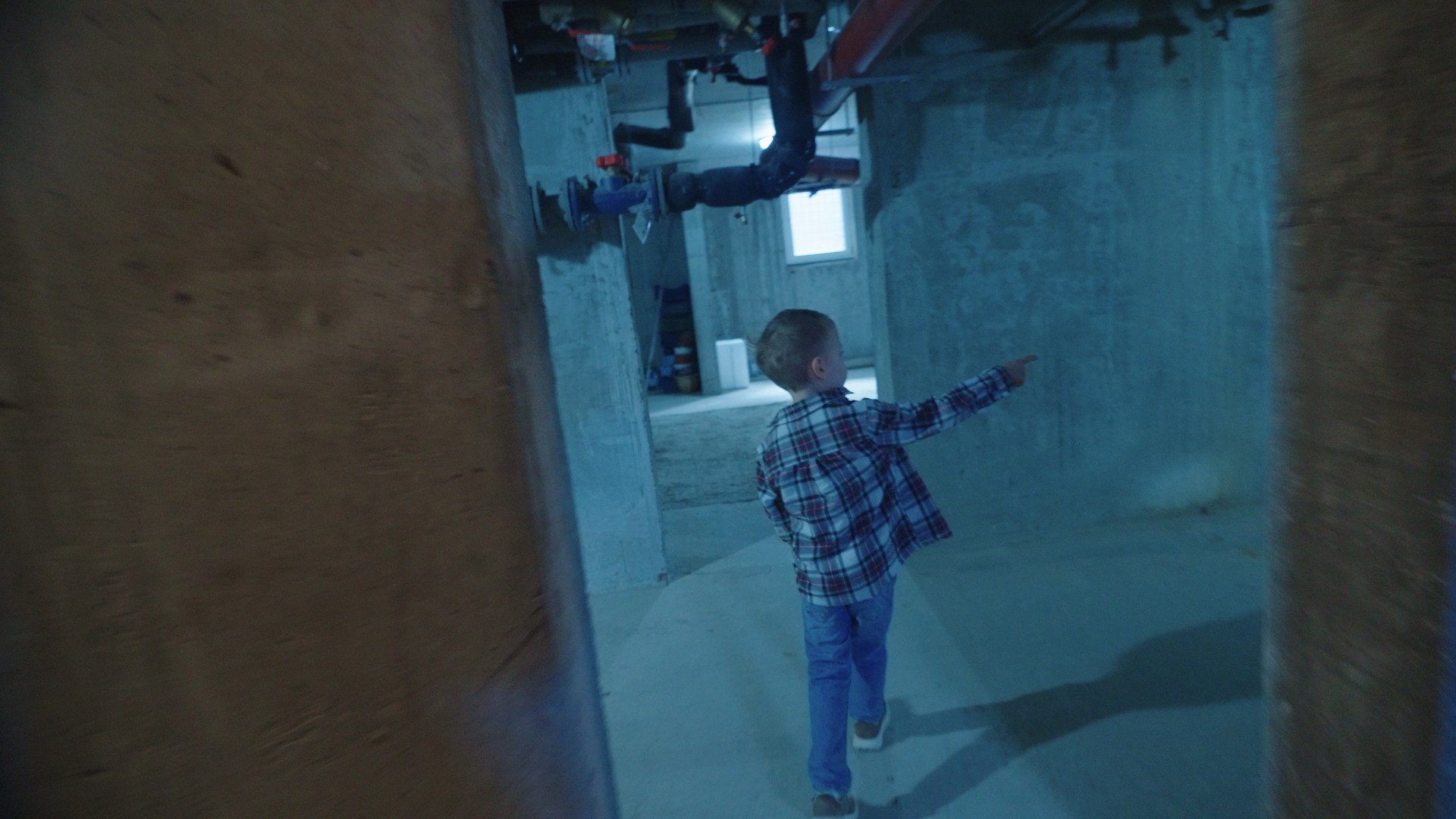
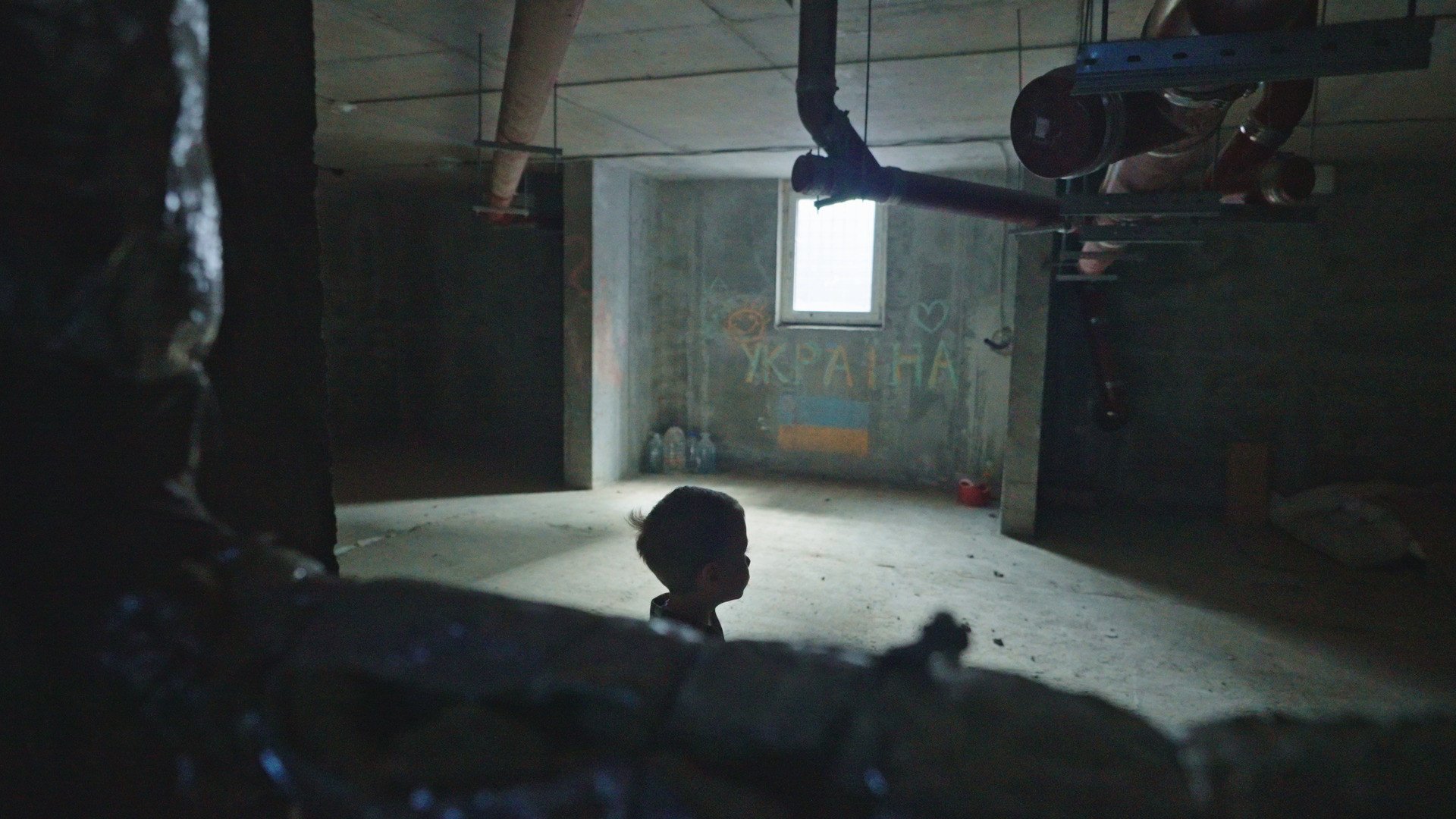
Every so often, we hear running water. Sewer pipes run across the ceiling above us.
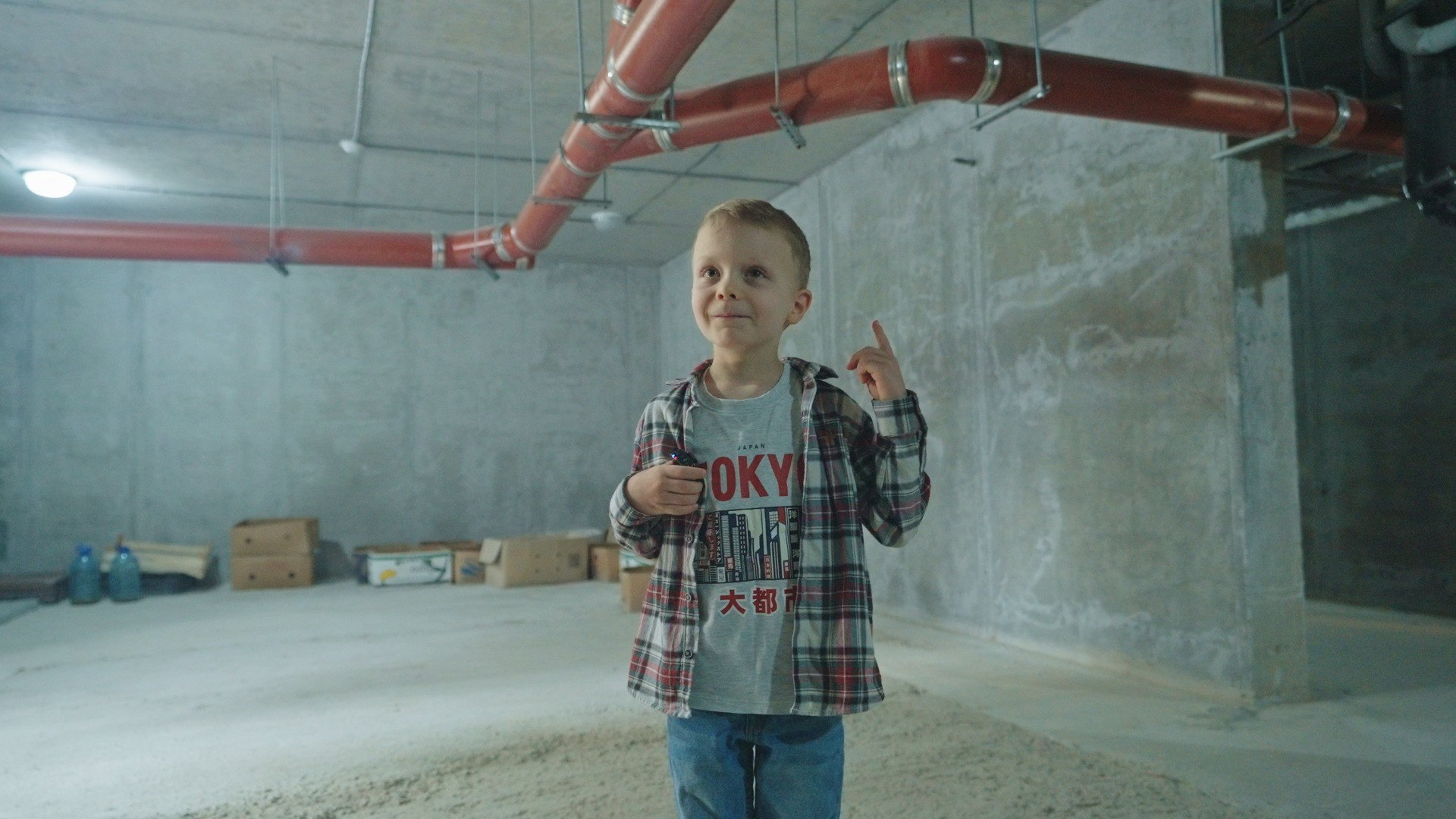
“Do you like the shelter?” Robert asks my cameraman and me. We hesitate before saying yes, not wanting to upset him. Shouldn’t children be growing up in bright, colorful, and cozy rooms rather than behind cold, gray concrete walls?
Ukraine’s first day of school during the war
“Robert, did you want to go to school?”
“No…” he says shyly, then smiles and adds: “I wanted to be a normal person who doesn’t have to study… and scream like dinosaurs.” I think many adults can relate to that last part.
But once the jokes are put aside, Robert admits that he did want to spend his first day of school in a classroom. His father, Denys, had hoped for the same.
“On August 31, I went to the school and met the principal,” said Denys. “He said, ‘Tomorrow will be online.’ My heart just sank as a father. I said, ‘How can it be online?? He’s a first-grader!! It’s September 1. It’s his first one ever.’”
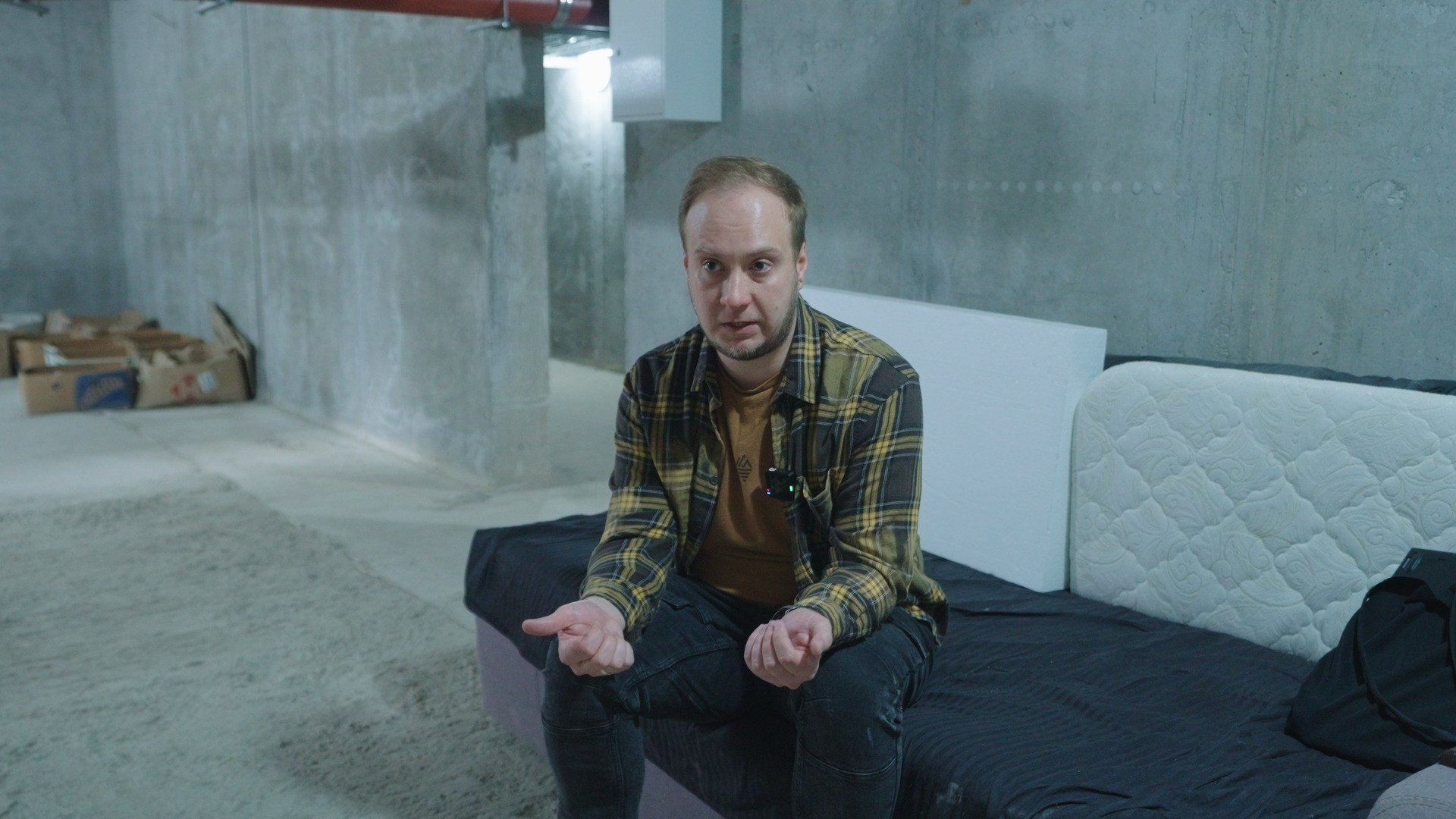
Instead of a school assembly, balloons and his first lesson in a classroom, Robert spent Knowledge Day in front of a laptop.
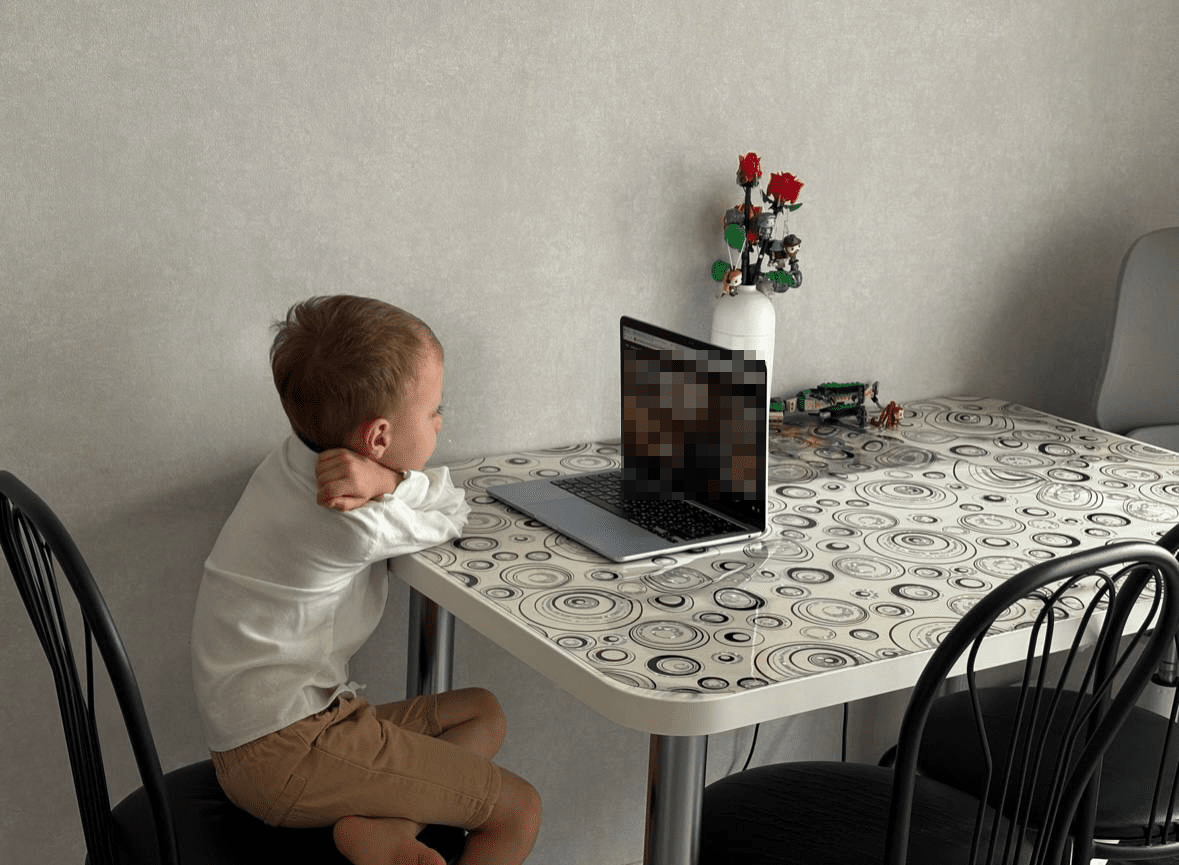
Denys says that as soon as the air-raid alert ended, the parents messaged the teacher in the group chat, and everyone quickly joined an online meeting.
“Good afternoon, children. Today is September 1,” Denys recalls the teacher saying. “Today we have one lesson. I’m your teacher. We’re going to learn together. Introduce yourselves and tell us your names.”
It quickly became clear that, although this was not the celebration they had imagined, moving the first day of school online had been the right decision. “Twenty minutes before our first lesson—before our school assembly was supposed to begin—Shaheds started flying over our heads,” Denys says. “We heard explosions as some of them were shot down.”
First lessons, just not as they should be
“It’s all because of the air-raid alerts,” little Robert explains. “Russia is attacking everything on a massive scale—Nova Poshta, Avrorrrra warehouses. It’s very, very dangerous.”
Denys says his life and his wife’s have changed in almost every way.
When Robert was in kindergarten, they could pick him up at 5 or even 6 p.m. and arrange their schedules around it. Now that he has started school—and attends classes online—Robert has to stay at home. That means one of his parents needs to be around to help him and make sure he is safe. So they had to make a difficult decision.
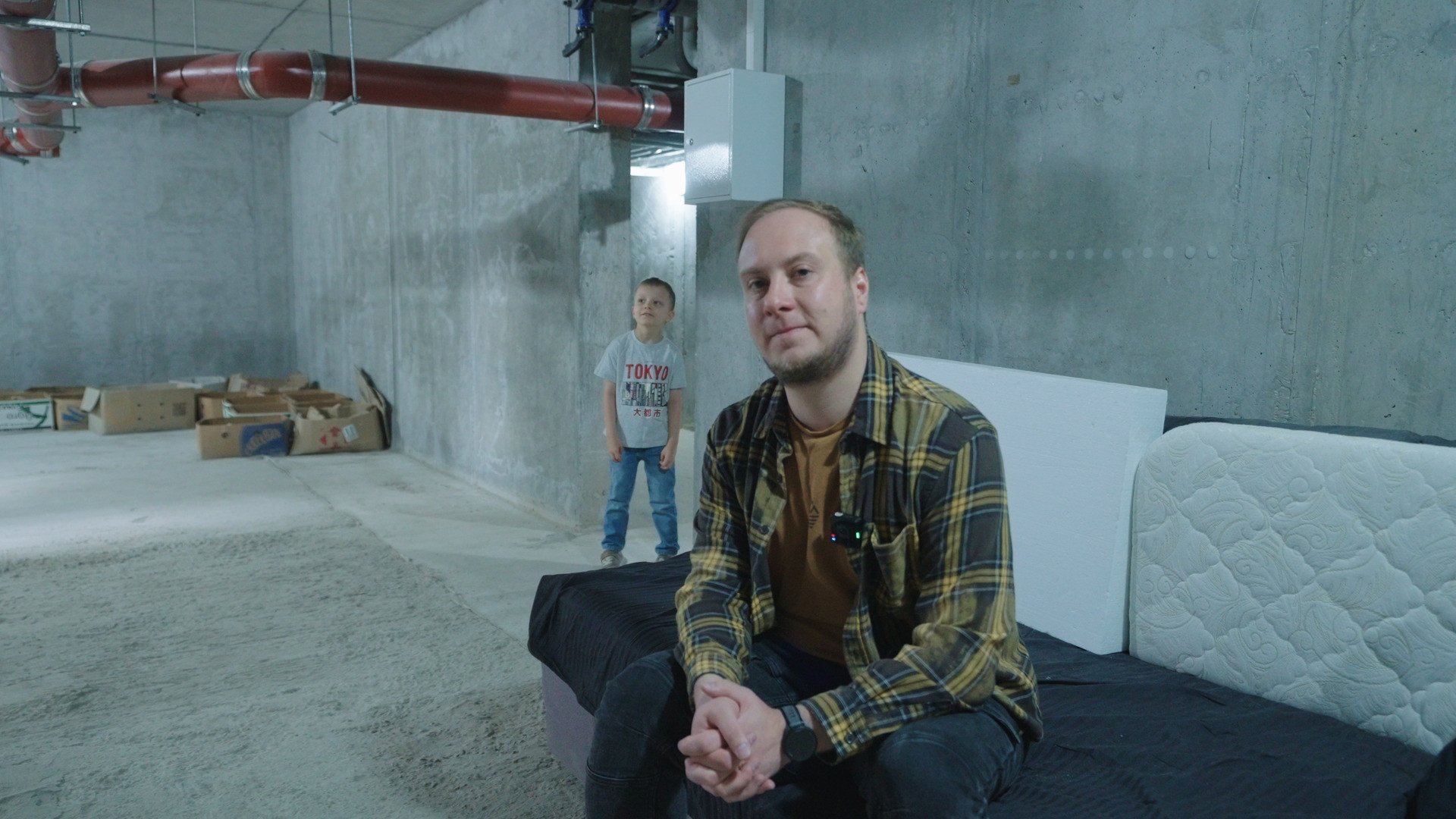
“There was only one way out. Someone had to give up their ambitions, their interests…”
“Quit!” Robert suddenly shouts.
“And quit their job,” Denys repeats.
Despite the teachers’ professionalism, Denys says teaching young children online remains difficult.
“Children forget to lower their hands, and forget to mute their microphones,” he says. “Especially when there are 20 of them and they’re all children. And they actually don’t really want to sit there because they don’t feel like they’re at school.”
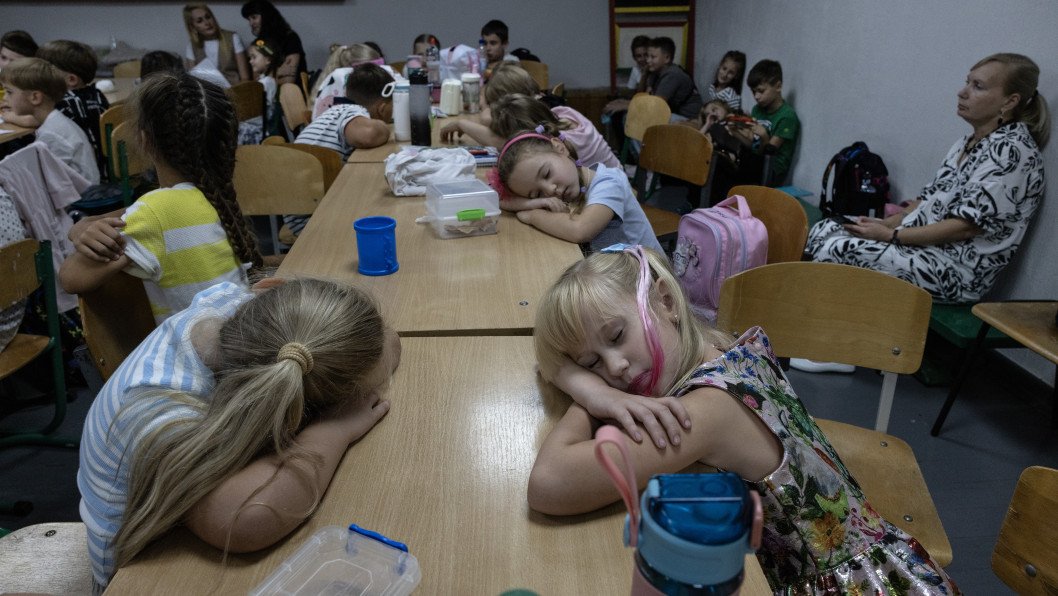
What worries him most as a father is the lack of socialization. He believes that at this age, children need direct contact with one another and with their teacher. “They want to run around, they want to tell each other things,” Denys says. “During the break, Robert runs off, grabs a toy, and says, ‘I want to tell you about it. I want to show it to you.’ When they come back with the toy, everyone’s cameras are turned off.”
A childhood interrupted by war
As we walk through the shelter, Robert tells us more about himself. His biggest passion, as might be expected, is dinosaurs. He seems to know every dinosaur from the Jurassic period. “Do you know what I’m going to call myself?” he asks with a smile. “A Velociraptor!”
He also loves the Ukrainian language and says he wants to become a teacher so he can teach it to other children. For now, Robert’s parents do not know what format his schooling will take.
On the day we met Robert and Denys, Kyiv experienced seven air-raid alerts. The last one lasted for more than four hours.
Discuss this article:

-c439b7bd9030ecf9d5a4287dc361ba31.jpg "Photo of Katherina Popilnichenko")


-2386d89295678553e91e27f1a0d592e3.png "Ukraine Just Wrapped Up a Four-Season Military Operation: 277 km² Cleared, 8,000 Russian Troops Eliminated")
-29a1a43aba23f9bb779a1ac8b98d2121.jpeg "Photo of Illia Kabachynskyi")