- Category
- War in Ukraine
North Korean Missile Unit Moves Into Russia—120 Ballistic Missiles Could Soon Target Ukraine
 Prefer U24 Media on Google
- Authors


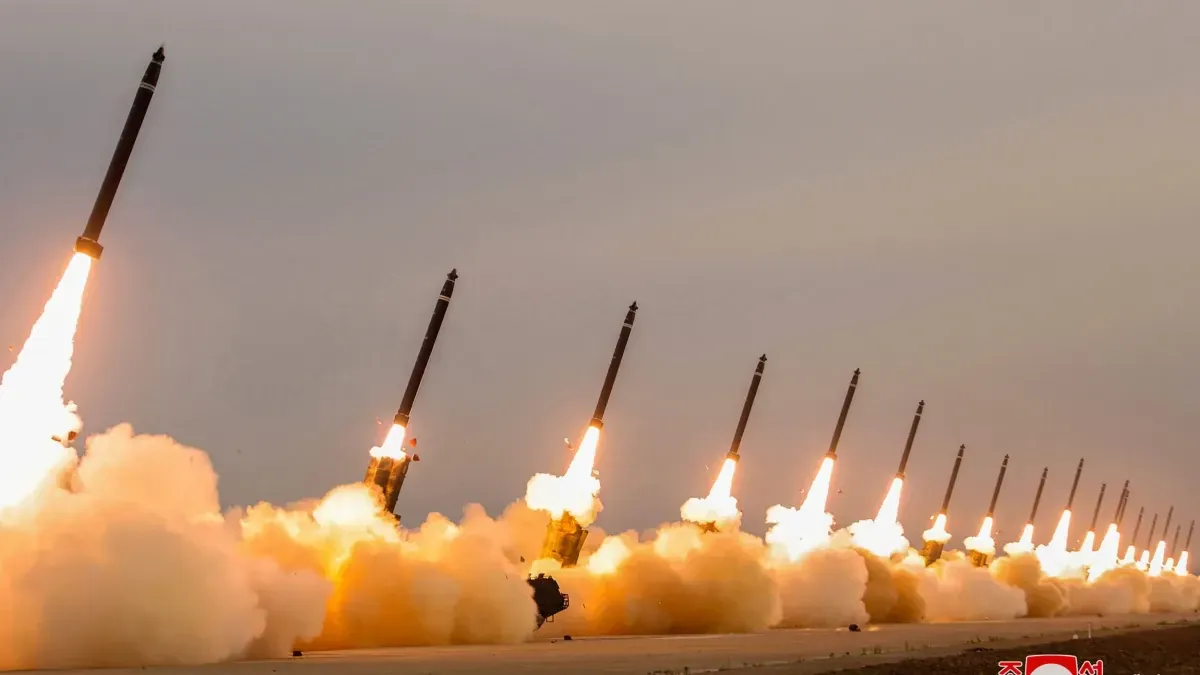
A North Korean missile unit has begun deploying to western Russia, where Moscow plans to build a force of up to 120 ballistic missiles and six launchers for attacks on Ukraine, a Ukrainian military intelligence official told Reuters on August 5.
Andrii Cherniak, a spokesperson for Ukraine’s Main Directorate of Intelligence, said Russia intends to station roughly 90 North Korean personnel in the Voronezh region and integrate the unit into its 112th Missile Brigade.
We bring you stories from the ground. Your support keeps our team in the field.
Voronezh lies about 95 miles from Ukraine and has become an important logistics and staging hub for Russia’s war of aggression. Its rail and road networks connect to Belgorod, Rostov, and Kursk, where North Korean troops previously fought Ukrainian forces.
North Korea has already delivered a new batch of 40 KN-23 and KN-24 ballistic missiles to Russia, along with personnel trained to operate them, Cherniak said.
🚀 Found the wreckage of the second North Korean ballistic missile KN-23, which Russia used during the shelling of Ukraine on July 30
— MAKS 26 🇺🇦👀 (@Maks_NAFO_FELLA) July 31, 2026
🕯The first missile of this type hit a private house in Radushne, killing six people, including three children, and five minors are considered… pic.twitter.com/mMeVKSMhst
The final size and structure of the deployment are expected to be settled during high-level talks between Moscow and Pyongyang next month. Russia ultimately wants the force to include 120 missiles and six launchers, according to the intelligence assessment.
It remains unclear whether North Korean crews would launch the missiles themselves or provide technical and operational support to Russian units.
The deployment would mark another major expansion of military cooperation between Russia and North Korea. Pyongyang has already supplied Moscow with millions of artillery shells, ballistic missiles, and thousands of troops.
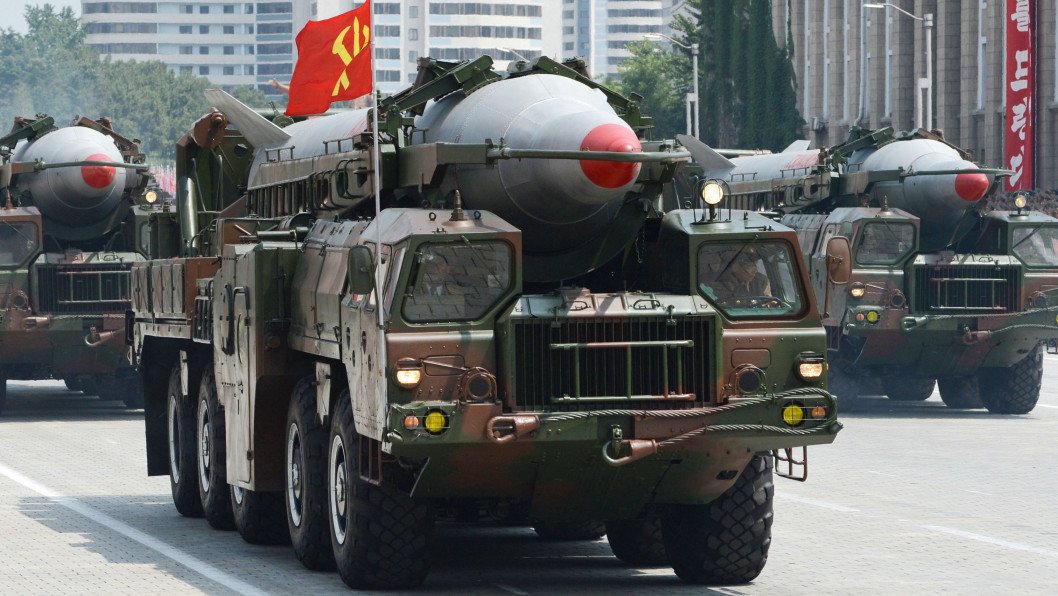
Russia began using KN-23 and KN-24 missiles against Ukraine in late 2023. Cherniak said North Korea delivered approximately 150 of the weapons between the end of 2023 and August 2025.
Russia reportedly resumed firing North Korean missiles at Ukraine last week after a pause lasting nearly a year. Two missiles from the newly delivered batch of 40 were reportedly used.
One struck a home in the village of Radushne near Kryvyi Rih, killing several members of the same family, including children. Ukrainian investigators later found another KN-23 impact crater roughly 2.2 miles away in an open field with no apparent military target nearby.
The KN-23 is a road-mobile, nuclear-capable short-range ballistic missile that closely resembles Russia’s Iskander-M. The KN-24 is another solid-fuel tactical ballistic missile developed by North Korea.
North Korea state media indicate KN-23 series SRBM launch to 800km as part of simulated nuclear counter attack exercise. Claim detonation at 800m (to simulate nuclear airburst) pic.twitter.com/uRbQF2Dtmn
— Joseph Dempsey (@JosephHDempsey) March 19, 2023
Ukrainian military sources say the North Korean missiles carry larger payloads and can fly farther than the Iskander, but remain less accurate. Their precision has reportedly improved since Russia began providing Pyongyang with data from their combat use in Ukraine.
Investigators have also identified foreign-made electronic components inside North Korean missiles, highlighting the international supply networks used to circumvent sanctions.
The additional weapons would arrive as Ukraine faces a critical shortage of systems capable of intercepting ballistic missiles. Most short-range air defenses cannot defeat targets moving at such high speeds, leaving Ukraine heavily dependent on limited stocks of US-made Patriot interceptors.
“Ballistic missile defence is one of Ukraine’s greatest vulnerabilities so any increase in the quantities of ballistic missiles they face will pose a greater challenge,” said Rob Lee, a senior fellow at the Foreign Policy Research Institute.
Lee warned that Ukraine’s air defenses could face particular pressure during the winter if Russia again launches sustained attacks on the country’s power grid.
North Korea has also sent large numbers of troops to Russia. Ukrainian officials previously estimated that approximately 14,000 North Korean personnel had been deployed to the Kursk region, while Cherniak said around 9,500 remain there but are not currently participating directly in combat.
President Volodymyr Zelenskyy said in July that Moscow was seeking another 30,000 North Korean troops and was preparing facilities in Voronezh to receive them.
Russia used a North Korean-made KN-23 ballistic missile during the July 31 strike on Ukraine. The missile failed to reach its target - Defense Express
— Anton Gerashchenko (@Gerashchenko_en) August 6, 2024
The launch was made from Russian territory in the direction of Bila Tserkva, but the missile exploded in the air in Kyiv… pic.twitter.com/9WO2bXTDRH
If those reinforcements arrive alongside the missile unit, Voronezh could become the central base for North Korea’s expanding military presence in Russia rather than simply a temporary transit point.
Previously, it was reported that North Korea secretly supplied Russia with between 8 million and 11 million artillery shells over a two-and-a-half-year period to support its full-scale invasion of Ukraine.
Operating through a covert maritime supply chain, four Russian cargo ships completed at least 112 voyages between North Korea and the Russian Far East to bypass international sanctions.
These deliveries provided Moscow with up to 350,000 shells per month—accounting for as much as half of Russia’s artillery fire in some combat zones—before maritime shipments slowed significantly in early 2026 due to rising Russian domestic production and depleted North Korean stockpiles.
Discuss this article:
-9a7b3a98ed5c506e0b77a6663f5727c5.png)


-c439b7bd9030ecf9d5a4287dc361ba31.jpg "Photo of Katherina Popilnichenko")