- Category
- War in Ukraine
Russia Brought Back a Giant 1950s Radar. Ukraine Hit It Days Later
 Prefer U24 Media on Google
- Authors


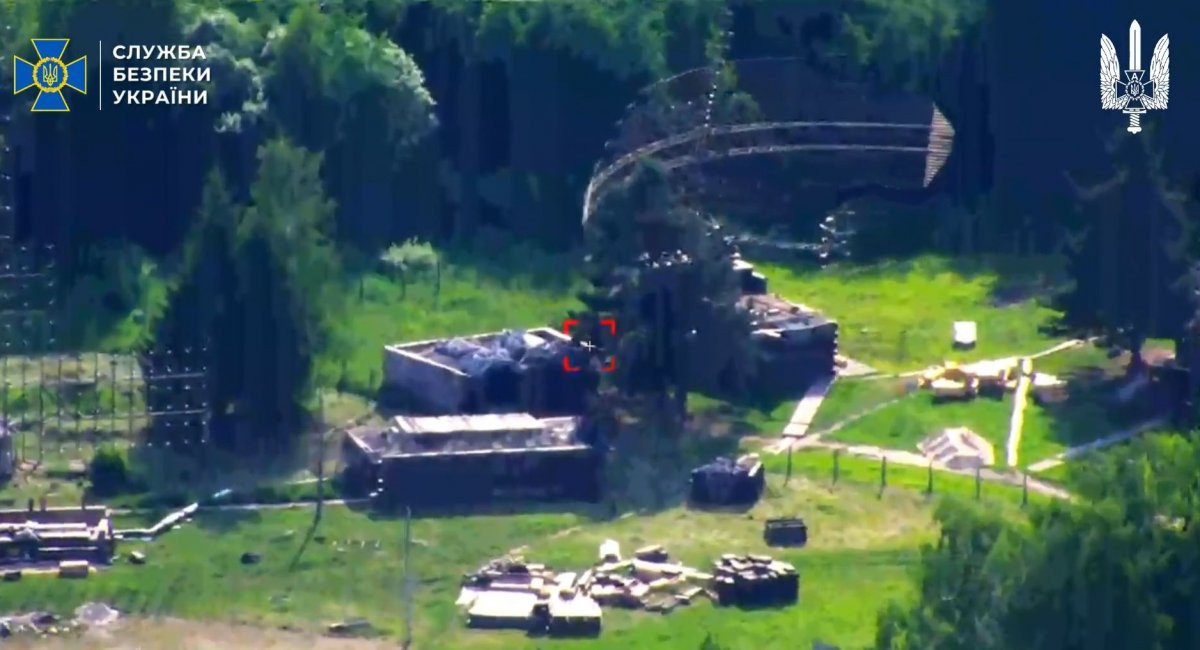
A rare Soviet-era radar system struck by an SBU drone may say more about the state of Russia’s air defense than Moscow would like, Defense Express reported on July 10.
In footage released by Ukraine’s Security Service showing the work of its Alpha unit, analysts noticed an unusual Russian radar hit by a drone. The system stood out because of its enormous size, with an antenna roughly 30 meters wide.
We bring you stories from the ground. Your support keeps our team in the field.
According to Defense Express, identifying the radar initially confused several specialized monitoring channels because the target was not a modern Russian system. It was a genuine Cold War-era rarity from the P-14 family of surveillance radars, first developed in the late 1950s.
The final version of the system, unlike earlier models, was mobile and received the designation 5N84A Oborona-14. It appeared in the 1970s.
RAM-2X loitering munition strike on the Russian P-14 radar system https://t.co/ggkNXl2Dov pic.twitter.com/YJwS5Z3iMl
— Special Kherson Cat 🐈🇺🇦 (@bayraktar_1love) July 9, 2026
The P-14 is a meter-band surveillance radar designed to detect targets at ranges of up to 600 kilometers, but its accuracy is poor by modern standards. Its range error can reach around 1,500 meters, while its azimuth error is about 1.5 degrees. At maximum range, that can translate into an error of roughly 16 kilometers, Defense Express noted.
The radar also has low resolution. Targets flying several kilometers apart may appear as a single object. It is also a two-coordinate radar, meaning it provides only range and azimuth, but not altitude.
All of that comes with massive dimensions. The antenna array measures about 32 by 11 meters, while the full structure is around 25 meters high and must rotate during operation.
Destroyed Iraqi P-14 Tall King radar, 1991. pic.twitter.com/KuXOSo5rLy
— Iron Heart (@saturn74954) January 15, 2026
Defense Express reported that Russia officially retired its last P-14 radars in 2003. However, Moscow now appears to be bringing them back to air defense duty.
This is already the second known strike on such a radar. In March 2026, Ukraine’s Special Operations Forces hit a 5N84A Oborona-14 radar in occupied Crimea.
According to Defense Express, the likely reason Russia is returning these “monstrous archaic structures” to service is the shortage of modern surveillance radars, especially systems from the Nebo family, which Ukraine’s Defense Forces have been actively destroying.
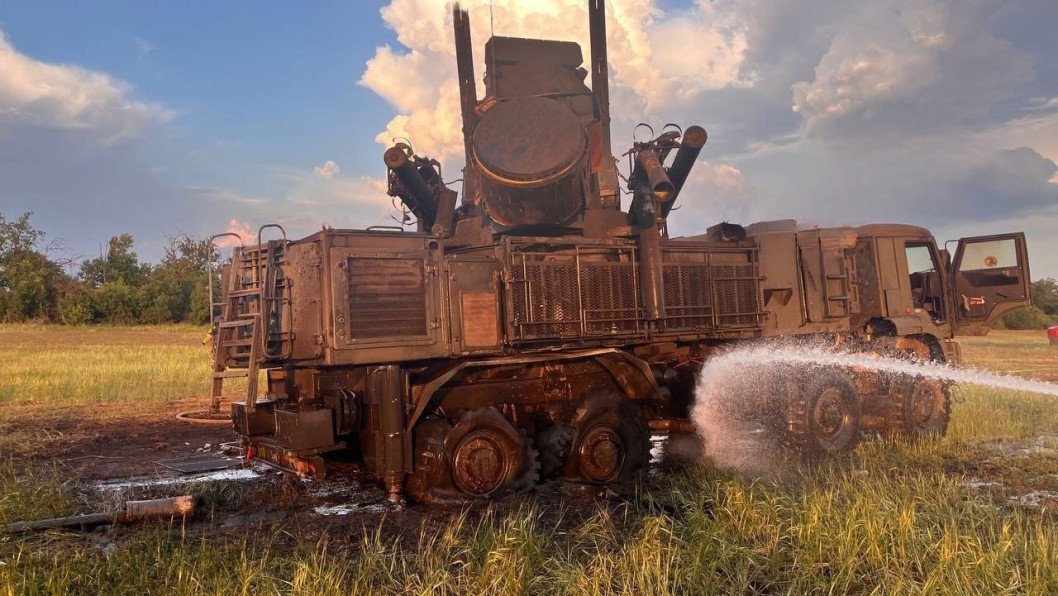
The same SBU video reportedly shows a Nebo radar standing near the P-14. The fact that the SBU targeted the P-14 may suggest that the newer radar had already been disabled earlier—or that it was a decoy recognized by Ukrainian operators.
Either way, the strike points to a growing problem for Russia: as Ukraine keeps destroying modern radars, Moscow is being forced to fill gaps in its air defense network with older, bulkier, less capable systems that are easier to spot and harder to protect.
Earlier, drone pilots from Ukraine’s Spartan Brigade destroyed two Russian S-300 air defense launchers near temporarily occupied Volnovakha. Spartan estimated the value of the destroyed Russian equipment at around $50 million.
Discuss this article:



-c439b7bd9030ecf9d5a4287dc361ba31.jpg "Photo of Katherina Popilnichenko")



-29a1a43aba23f9bb779a1ac8b98d2121.jpeg "Photo of Illia Kabachynskyi")