- Category
- War in Ukraine
Russians Are Starving Ukrainians: What Is Happening in Occupied Oleshky
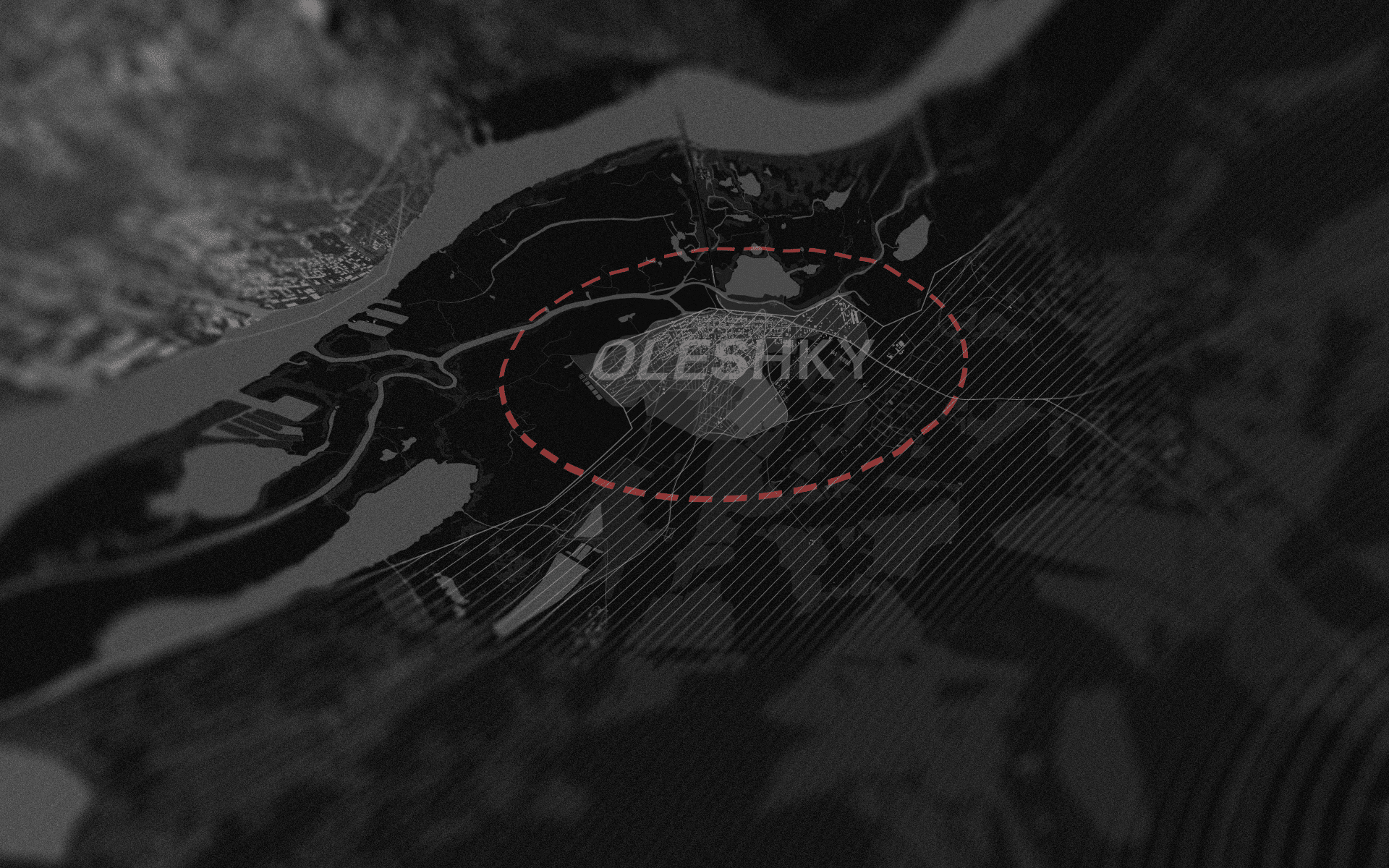
“There is no food for the dogs. There is no food for me either.” Alina used to feed stray dogs in Oleshky. Now, she says, she survives on water mixed with honey. This is what life looks like on the Russian-occupied left bank of Ukraine’s Kherson region.
 Prefer U24 Media on Google
- Authors

-fa1aeac410c0de61f5e930bf78a96b8c.jpg "Photo of Zarina Zabrisky")
Russia has occupied Oleshky since 2022. Civilians, including children and elderly people, are now trapped as food, medicine, and other necessities disappear.
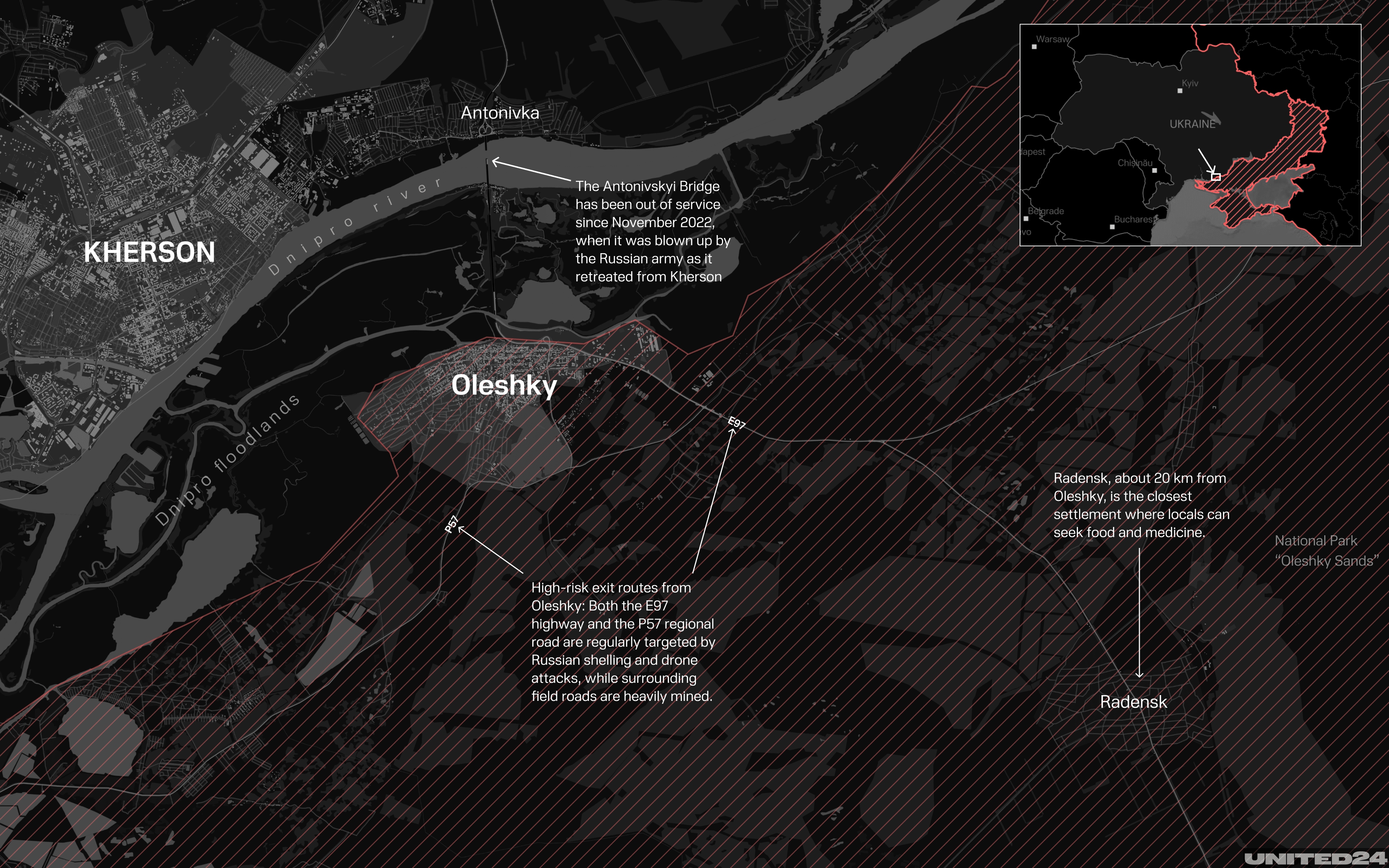
The city is the most acute example of the crisis gripping the wider Kherson region. Nearly 70,000 civilians across Ukraine’s Kherson region are living through a severe humanitarian and security crisis on both sides of the Dnipro River. In Oleshky, about 2,000 remaining residents began facing starvation in winter 2026, after Russian forces mined roads around the city in December 2025. By September, survivors who managed to leave described severe food shortages, with a kilogram of flour reportedly selling for about 5,000 Russian rubles ($59), or roughly 2,500 hryvnias.
One of those who left, Pavlo, said people were leaving because they had nothing left to eat.
Russia’s drone-and-mine siege of Oleshky
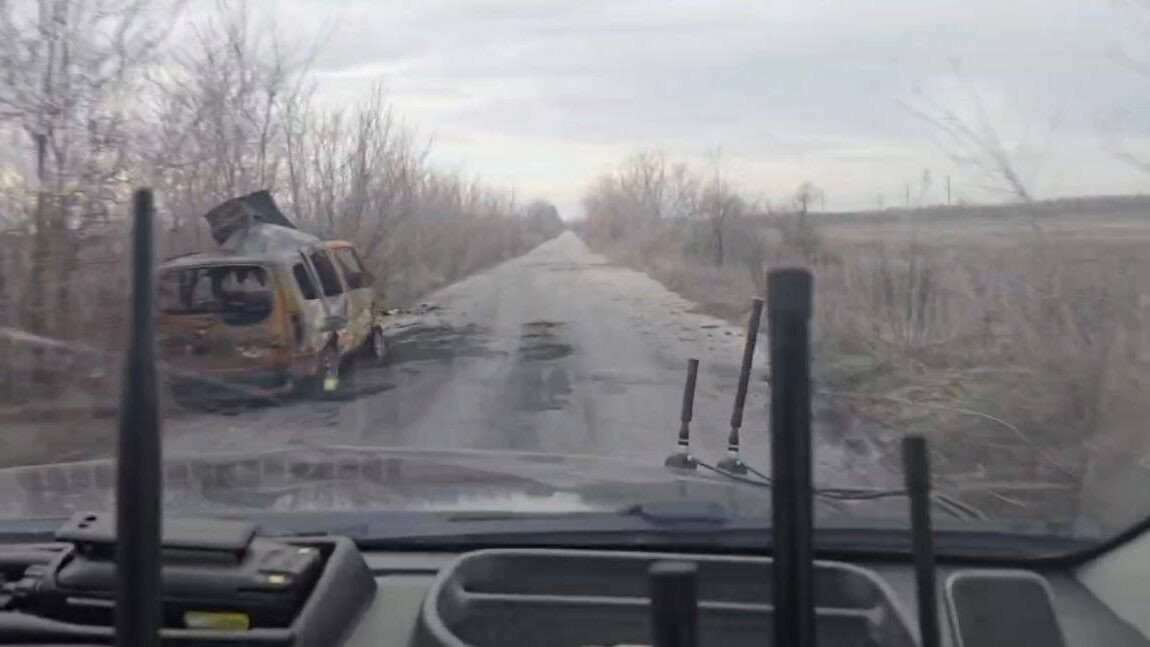
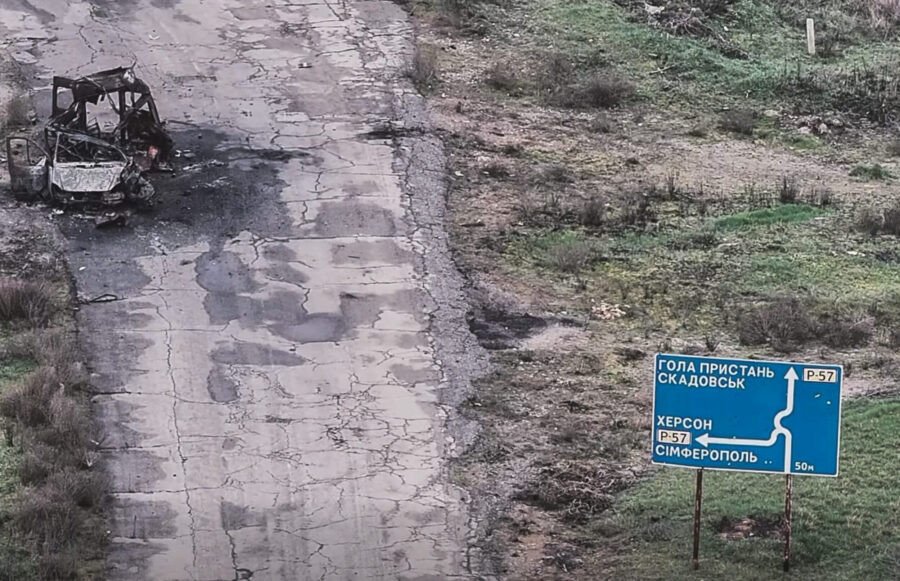
The drone-and-mine siege put an end to humanitarian access. Convoys carrying food and humanitarian aid to Oleshky and other villages have hit landmines and come under Russian drone attacks, with many civilians killed and injured. The exact numbers are unknown as the Russian authorities do not share statistics.
"The humanitarian situation is hell," said Iryna-Ester Vratarova, author and spokesperson for the NGO Humanity, which began as an underground volunteer movement on the left bank of the Kherson region during the first days of the full-scale invasion.
Regular food supplies to Oleshky had effectively stopped by January 2026, according to interviews with residents and local officials, although sporadic deliveries continued to reach the city in the following months. The last known vehicle carrying food reached the city in May. Transport stopped entirely, and the banking system and access to cash collapsed, Vratarova said.
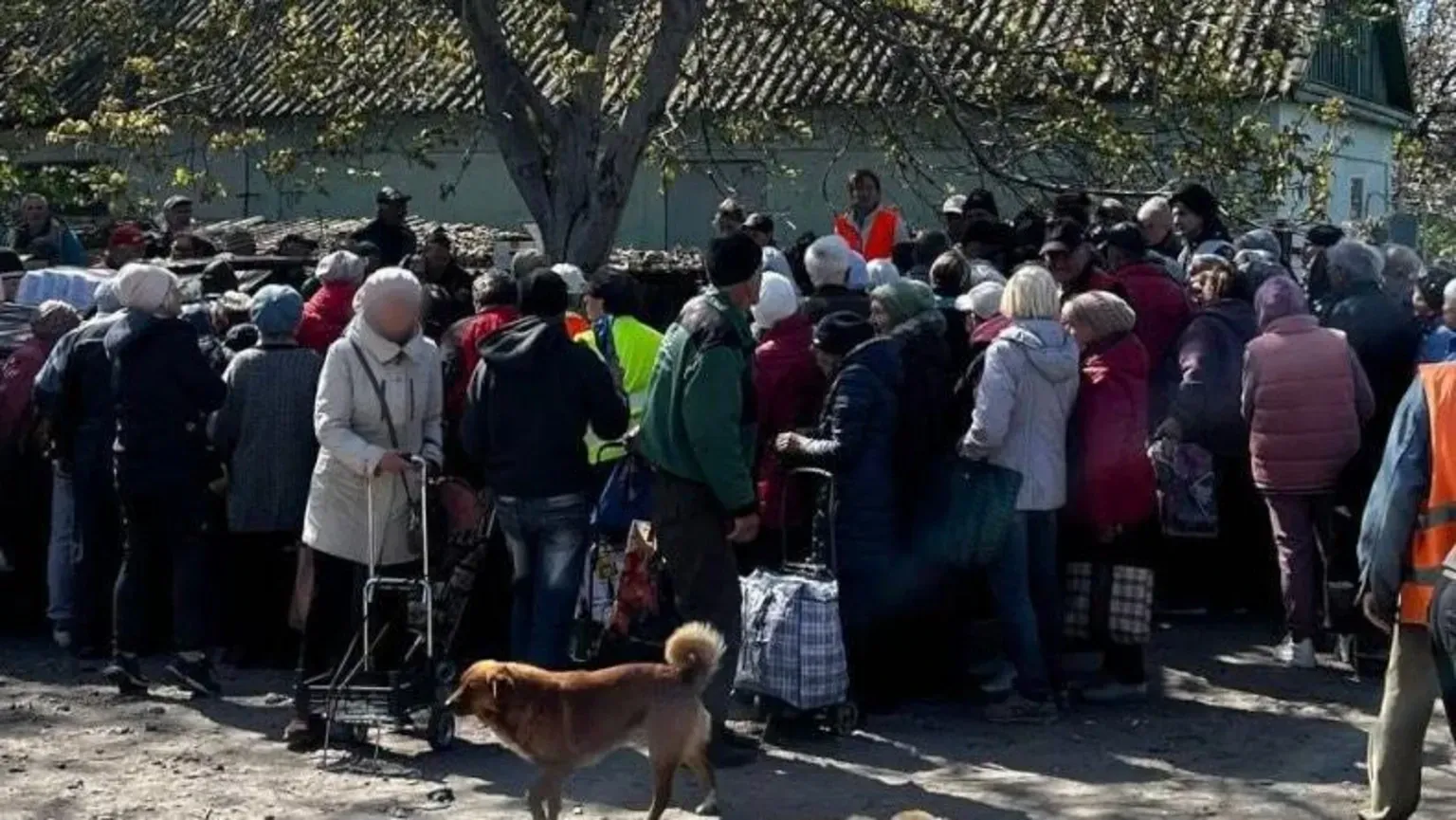
"There is a huge deficit in food products and in drinking water," said Pavlo Drohal, of the 30th Marine Corps of the Ukrainian Navy. Russian troops are blocking humanitarian deliveries into the town and preventing residents from leaving freely, he said.
Some residents walk to the nearby village of Radensk, which has not been cut off from the supply routes, to buy food and find provisions. A few managed to return with scarce food provisions, but many have died, killed by drones or mines.
Hunger and the lack of necessities such as power, gas, water, heating, and communication are not the only life-threatening issues in Oleshky and other towns. Locals report escalating physical violence against Ukrainian civilians by the Russian military. Several residents have recently died or disappeared in isolated areas of the city.
In the Vinrozsadnyk area, three people living on the same block were reported to have been killed within about a week. On Zaporizhska Street, a retired railway worker was still living, sharing an inflatable mattress with his dog, Chapa. Both were found dead with gunshot wounds.
Near Arkticheska Street, a couple in their 50s remained in the city. Vitaly, a former sailor, had been injured by a drone in 2025 and had difficulty walking. His wife made jewelry and sold it at the local market. About two weeks ago, they stopped answering their phones. When neighbors dared to walk over to check on them, they found the bodies outside. They had been shot dead.
Another man who was still living in the area was severely beaten about a month ago, according to people familiar with the situation. The circumstances surrounding the reported killings and disappearances have not been independently established.
Locals say bodies are frequently left lying in the streets of Oleshky, with stray dogs sometimes feeding on them.
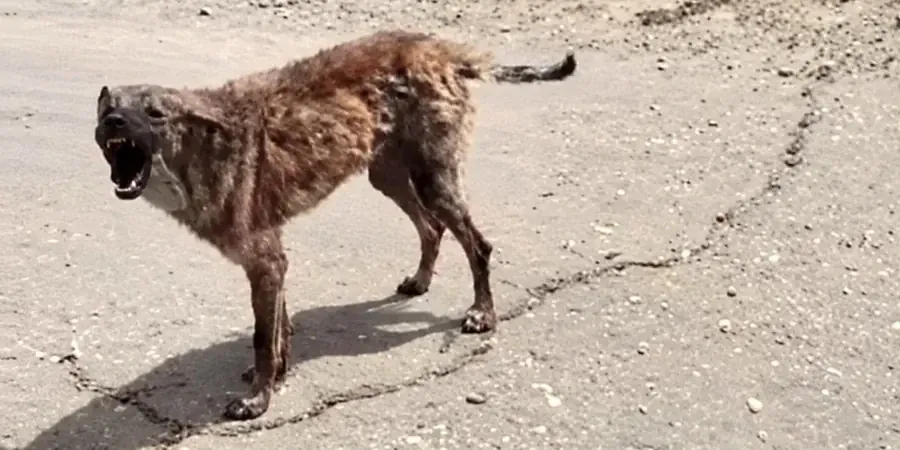
Why evacuation from Oleshky is nearly impossible
Ukrainians who stayed because they could not afford to leave, had nowhere to go, or feared Russian checkpoints are now trying to escape as food and medicine run out and winter is coming.
With no functioning humanitarian evacuation corridor, the only option for escaping the drone siege is to leave independently or with help from volunteers. When Ukrainian civilians attempt to walk out of Oleshky and other towns, they have to move through areas where Russian drones are active.
Shrapnel covers the road, making driving almost impossible as it punctures tires. Vehicles burned by drones line the routes and sometimes block them entirely, leaving no way through by car. People with limited mobility have particular difficulty making the journey. Serhiy, whose name has been changed for security reasons, pushed his 90-year-old grandmother in a wheelbarrow.
Elderly, sick and children already sitting in the vehicles and vans ready to evacuate from Oleshky but Russians blocking their way out pic.twitter.com/oqooEswFlk
— Hope For Ukraine (@hopeforukraine) September 24, 2026
Tetiana, who was involved in evacuating members of her family, said she was concerned that when the leaves fall and snow arrives, mines and damaged sections of road will become harder to see.
The destruction of the Kakhovka Dam and the resulting flooding severely affected people's ability to evacuate. Vratarova began helping people in Oleshky after the Russian army destroyed the hydroelectric power plant.
“The flooding caused civilian deaths and destroyed homes, property, passports, and money,” she said. “Losing documents made independent evacuation even more difficult.”
Russia's passportization policy further complicated the evacuation. Russian passports are required to access healthcare, pensions, social benefits, and employment. Those who refused could face intensified questioning and searches at checkpoints. For men and teenage boys, obtaining a Russian passport could also result in mobilization and forced fighting against their own country. The combination of lost Ukrainian documents and pressure to obtain Russian passports made leaving the occupied territories even more difficult.
How the crisis in Oleshky connects to Russian attacks on Kherson
Nearly 70,000 civilians across Ukraine’s Kherson region are living through a severe crisis. Kherson and the occupied part of the Kherson region, including Oleshky, are separated by the river, which also serves as the front line. Bridges have been destroyed, and crossing the river is impossible due to the ongoing fire and mining.
On the Russian-occupied left bank, approximately 6,000 civilians remain in the coastal areas, including Oleshky, Hola Prystan, Stara Zburivka, and Nova Zburivka. Residents face starvation, lack of water, medicine, and medical care, and the loss of electricity, gas, heating, and communications. Russian drones mine roads and have restricted all movement. There is no functioning safe evacuation route or humanitarian access.
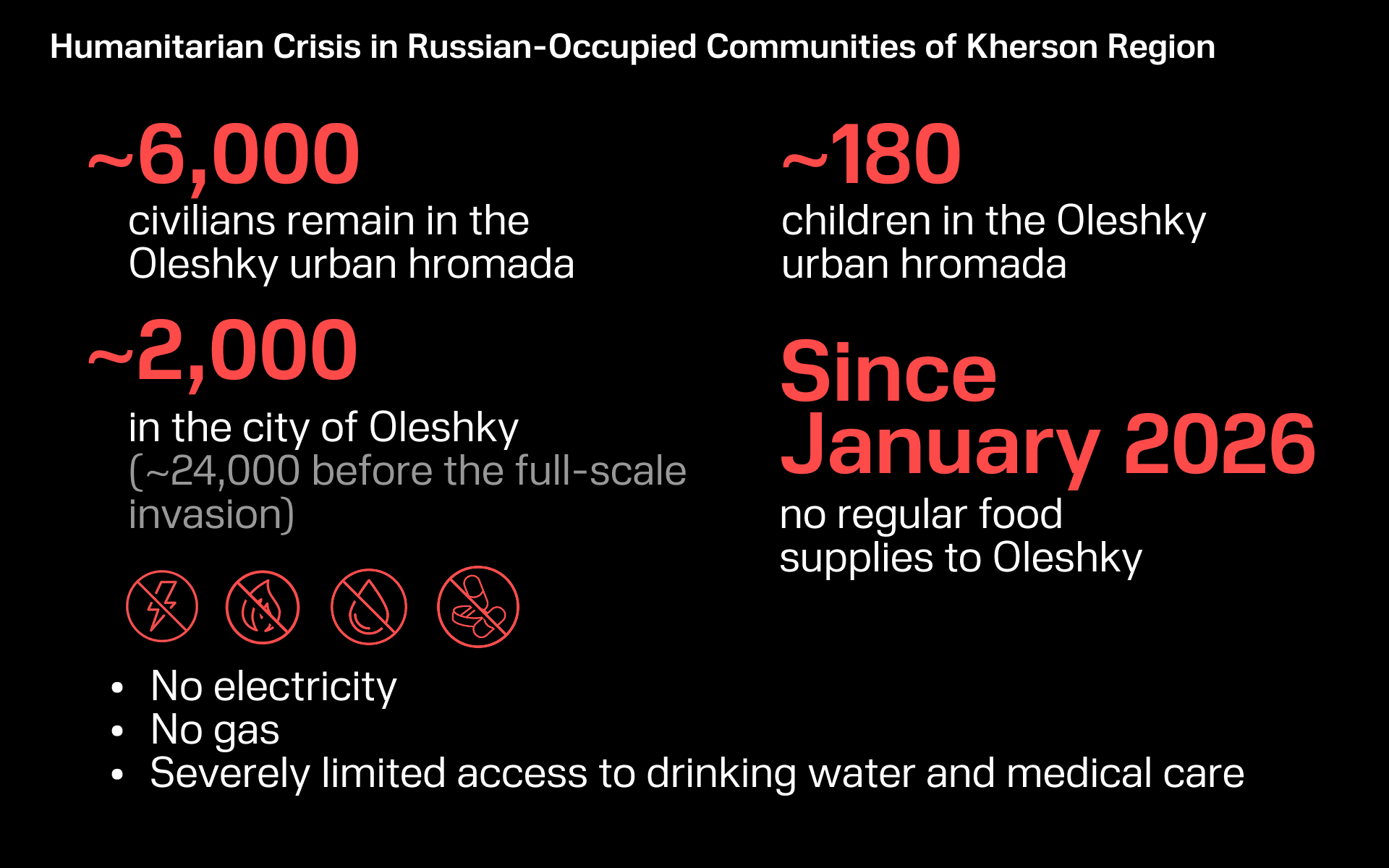
On the Ukrainian-controlled right bank, including Kherson city and surrounding communities, approximately 60,000 civilians remain exposed to daily Russian attacks from positions on the occupied left bank. Russian drones, artillery, mortars, missiles and guided bombs strike residential areas and civilian infrastructure. “Human safari”, which is a Russian tactic of using FPV drones to hunt civilians, is raging. Russian attacks kill and injure civilians, destroy homes, repeatedly damage water infrastructure, and target emergency responders carrying out their work.
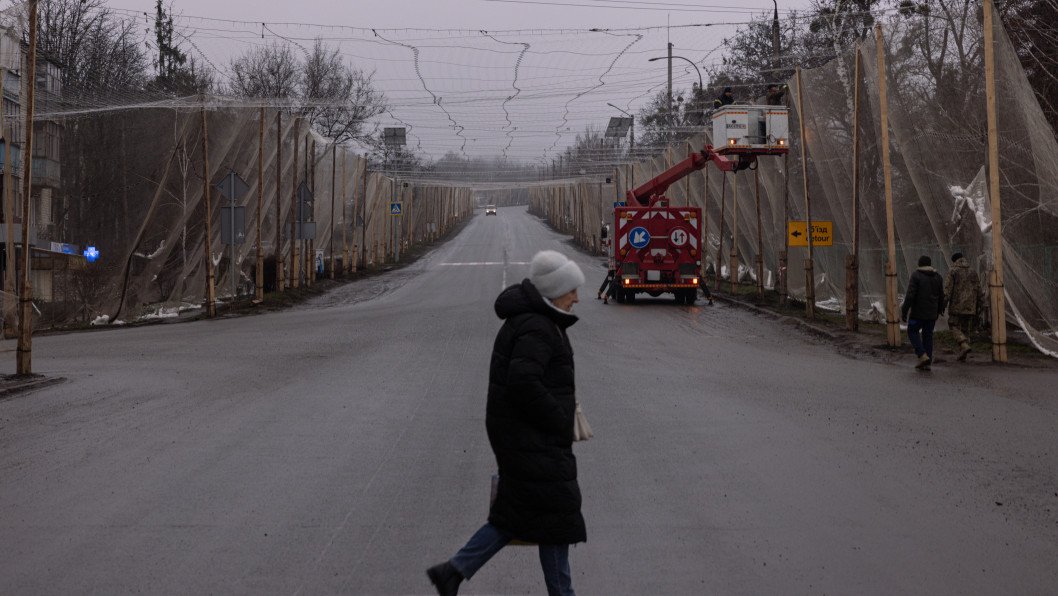
The two crises are directly connected. The occupied left bank is used by Russian forces as a launch area for attacks on Kherson and other settlements on the right bank. Civilians on the left bank are trapped under occupation, surrounded by mines and exposed to Russian drone surveillance and attacks.
Ukrainian officials and human rights organizations have described civilians remaining in Oleshky as deliberately trapped by a drone siege and used as human shields around Russian positions used by drone operators and artillery units. According to the Ukrainian military, Russia is using civilians as leverage, as they complicate Ukrainian military operations. The use of civilians to shield military objectives is prohibited under international humanitarian law.
Oleshky and the rest of the coastal area of the Kherson region therefore, cannot be treated as an isolated humanitarian emergency. The starvation of its residents, restricted movement, lack of medical access, and blocked evacuation need to be covered as a part of the wider terror campaign the Russians are carrying out against civilians across the Kherson region.
The situation has been documented by the Ukrainian MFA, the Office of the Ukrainian Parliament Commissioner for Human Rights, the United Nations, and Human Rights Watch. These organizations have documented severe food shortages, no food deliveries, restricted movement, drone attacks, landmines, and the collapse of essential medical access in Oleshky and surrounding communities. Residents described mines along roads and inside the city, as well as persistent drone activity.
Ukraine calls for humanitarian access to Oleshky
Ukraine has experienced deliberate starvation before. During the Holodomor of 1932–33, Soviet authorities deprived Ukrainians of food and prevented starving people from leaving in a man-made famine that killed millions. Ukraine’s National Museum of the Holodomor-Genocide has now raised alarm over Oleshky, pointing to the deprivation of food, water and medical care and the obstruction of civilian evacuation by the Russian forces.
A global rally, Save Oleshky/Stop Drone Siege, is being organized on October 3-4 by the same international network behind the Stop Human Safari/Save Kherson campaign, which brought international attention to Russian drone attacks on civilians in Kherson in December 2025. Its organizers have since expanded the network to public actions, film screenings, advocacy, and practical support. The campaign now links the situation in Oleshky to the wider threat facing civilians across the Kherson region.
Lizka Crofts, one of the leaders of the movement and a volunteer involved in the anti-Human Safari campaign, said the aim was to connect people around the issue of drone attacks and threats to civilians, with a particular focus on the Kherson region. Crofts’ relatives evacuated from Kherson in 2025. She described Oleshky as an extreme situation.
“The idea is to make people louder by having a shared movement, shared platform, and empowering them with collaboration and resources and ideas on what they can do about this,” she said.
Oleksandra Kniga, a native of Oleshky, a fashion designer, and an activist who has led the campaign in the past, said, “A global rally in support of Oleshky and international media attention are needed to break the city's information blockade and ensure its residents' voices are heard worldwide.”
Kniga, who is based in Kherson and can see Oleshky from across the river, said, “Silence leaves people to face occupation and hunger alone. Public awareness must spur governments and international organizations to take concrete action: securing humanitarian access, establishing a safe mechanism for civilian evacuation, and properly addressing human rights violations. That is why we call on people in cities and countries everywhere to rally in support of Oleshky and speak out on its behalf.”
The immediate demand of the campaign is to allow humanitarian access and provide a safe route for civilians to leave. The time available to save thousands in Oleshky and the surrounding area is becoming shorter.
With winter approaching, residents face the risk of freezing or dying without adequate food and water, while snow could make the mined evacuation routes even more dangerous.
Discuss this article: