- Category
- World
Why Moscow Pilots Sounded Alarm Over Russia’s Use of Airports
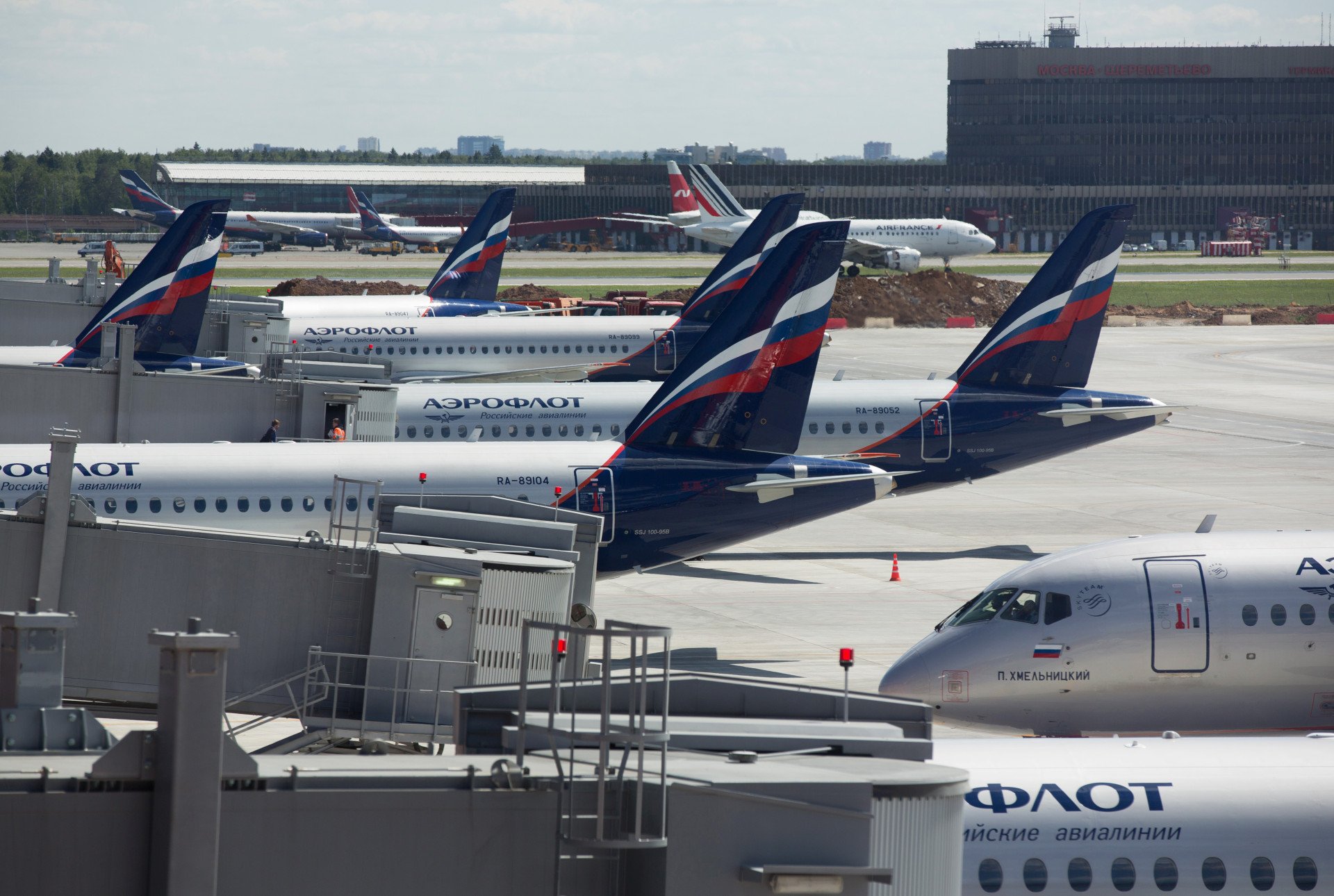
For a long time, Russian civil aviation and airport infrastructure tried to maintain the illusion of normalcy and insulation from the war. But the mass use of commercial flights to move troops has begun to spark resistance, while Russia’s war has now reached Russian airports themselves.
 Prefer U24 Media on Google
- Authors


An “urgent appeal” appeared on May 11 on the website of the pilots’ union at Sheremetyevo, a major Moscow airport. The authors of the post claimed that Russia’s Federal Security Service had “turned pilots into service personnel,” “humiliated them with endless inspections,” and “forced them to take part in the illegal inspection of baggage and personal belongings.”
We bring you stories from the ground. Your support keeps our team in the field.
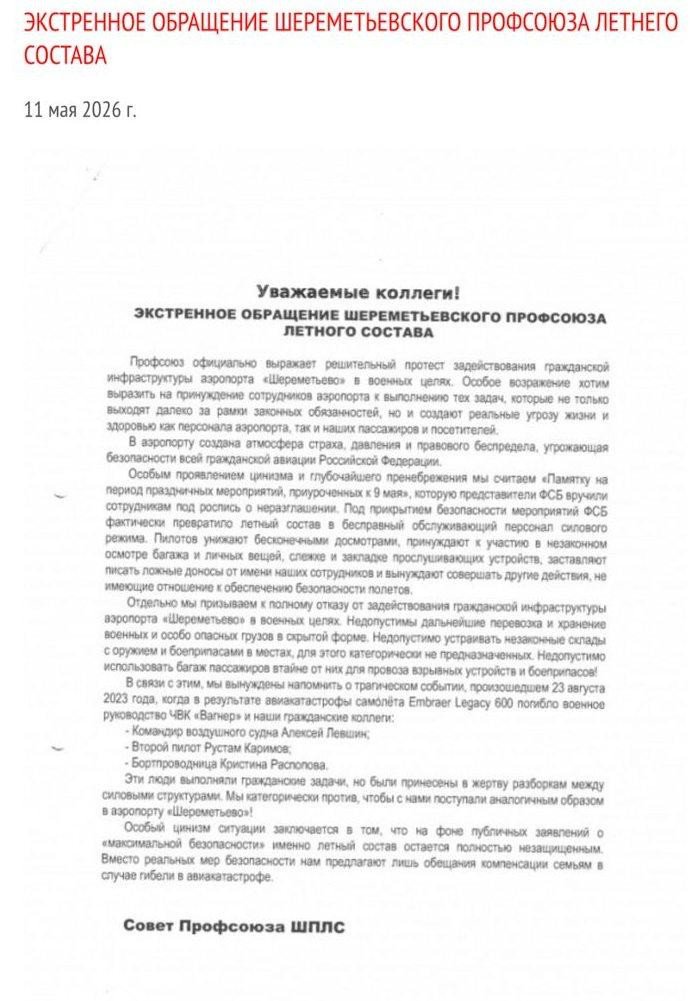
The appeal also called for an end to “the use of the airport’s civilian infrastructure for military purposes,” including the transport and open storage of highly dangerous cargo, the deployment of weapons depots, and the covert use of passenger luggage “to transport explosive devices.”
Comments under the post only corroborated the claims made in the appeal. But by the next day, the website was no longer accessible, and the union claimed the site had been hacked and that the information was untrue.
The appeal followed Russia’s suspended takeoffs and landings across its southern region.
Why were airports across southern Russia forced to shut down?
The fact that Russia’s aviation infrastructure is no longer a safe rear area was confirmed by a drone attack on May 8. A drone struck an administrative building belonging to the state-owned company Aeronavigation of Southern Russia in Rostov Region. The agency coordinates all air traffic in the region.
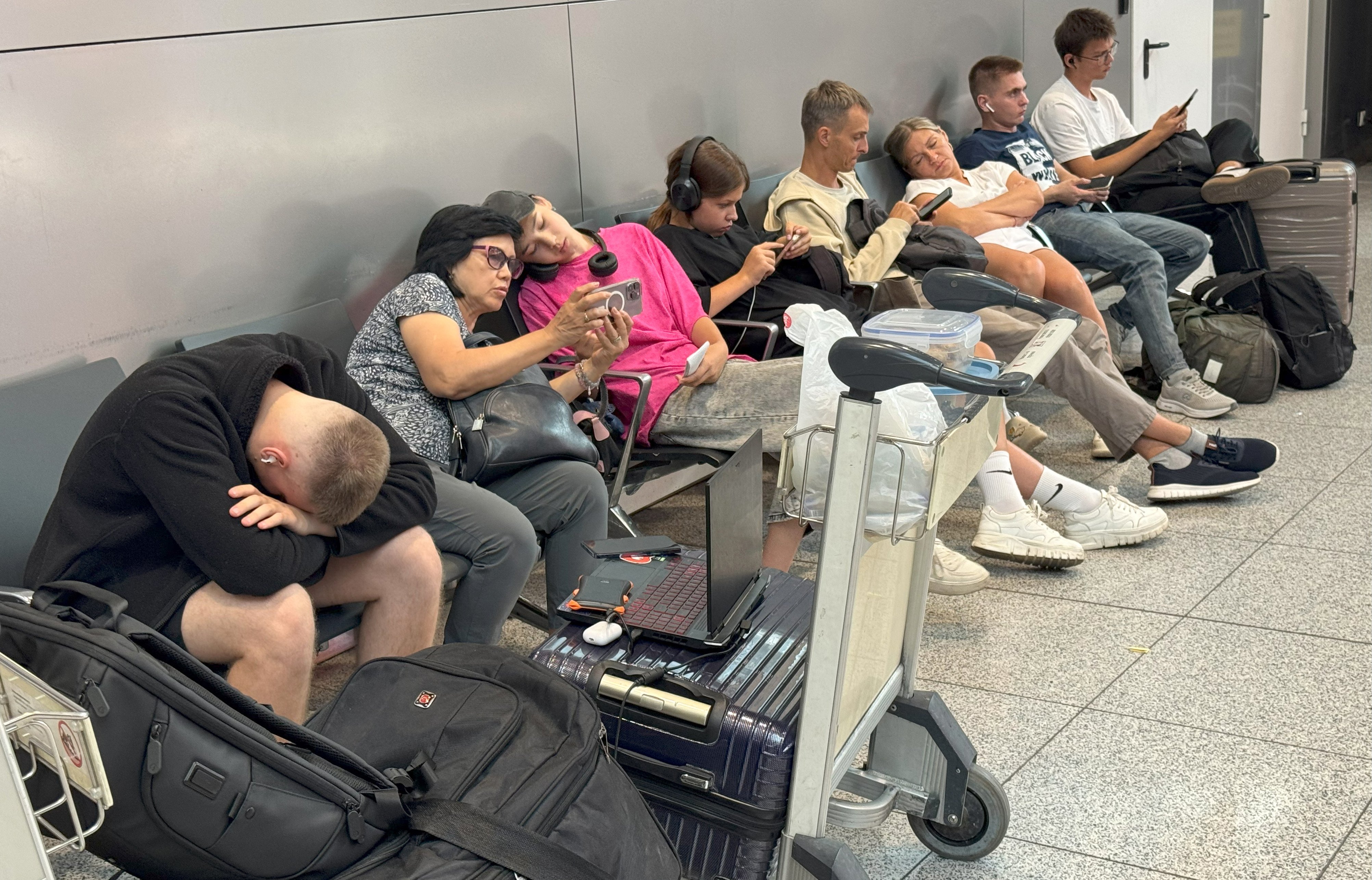
The consequences were immediate and far-reaching: 13 airports in southern Russia, including Sochi, Volgograd, Krasnodar, Mineralnye Vody, Grozny, and Makhachkala, were forced to urgently suspend takeoffs and landings. More than 80 flights were delayed or canceled. At least 14,000 civilian passengers were stranded without departures.
Rostov’s airport itself has been closed to civilian traffic since February 24, 2022. Modern military aviation depends on the same airspace management, routing, radar coordination, and navigation infrastructure used by civilian aircraft. Disrupting those systems can slow flight operations, complicate logistics, and reduce the efficiency of military air activity across an entire region.
The incident highlighted a broader vulnerability: when civilian airspace systems, military logistics, and centralized navigation networks become deeply interconnected, disruption at a single node can ripple across an entire region.
Is Russia using civilian flights to transport troops?
Open-source materials show that Russia systematically uses civilian aviation to transport soldiers to the front. Photos and videos are appearing online with increasing frequency, showing Russian soldiers in full gear aboard regular flights alongside ordinary passengers.
In closed groups on Russia’s VK social network, including “Overheard at the Special Military Operation,” the soldiers themselves openly discuss this logistics system. Users share their experiences, saying they are flown on commercial airlines through major hubs such as Novosibirsk or St. Petersburg’s Pulkovo Airport to border regions.
According to Russian serviceman Andrey Bakshayev: “We flew on an ordinary civilian plane from an ordinary airport. With duffel bags and body armor. We were flying to war. To Rostov, then by bus… From Ulan-Ude to Novosibirsk with civilians; in Novosibirsk, the civilians were transferred off, more soldiers were added to us, and then we flew on to Rostov. There, we landed at the closed Platov airport.”
It is the Platov Airport in Rostov-on-Don, near the border with Ukraine, like most airports in southern Russia, that has officially been closed to civilian flights. The Russian soldiers themselves say that it continues to operate actively in a closed mode as a military logistics hub, where civilian aircraft bring in manpower.
A user named Anatoly Kotov also shared photos of himself and other soldiers using civilian flights. There is no doubt about his affiliation with the Russian army. A year ago, he posted photos on social media showing himself in a Russian military uniform. In early February, he was searching for another contract soldier, Alexander Yakovlev, who went missing on the front near Novopavlivka in the Donetsk Region.
From the standpoint of international humanitarian law, the use of civilian aircraft and airports for military transport automatically turns them into dual-use objects—and therefore legitimate military targets. In effect, the Kremlin is using its own civilians as “human shields,” exposing passengers to mortal danger without their knowledge.
Ukraine has proposed one way to reduce the risks facing airports.
What is the “airport truce”?
The effectiveness of Ukraine’s long-range drone and missile strikes is increasing. Even so, Kyiv has proposed a compromise. On May 11, Ukrainian Foreign Minister Andrii Sybiha proposed an “airport truce” initiative—a limited agreement under which the sides would refrain from attacking each other’s airfields.
Russia, however, did not accept the proposal.
Ukrainian President Volodymyr Zelenskyy had previously said that Moscow was seeking only a temporary pause, as it did around its Victory Day parade.
When Moscow declared a “three-day ceasefire” while seeking assurances from Ukraine to avoid attacking Red Square, Ukraine provided the assurances. Yet, Russia’s attacks continued. The Ukrainian side recorded hundreds of ceasefire violations along the front line.
The pause also allowed Russia to accumulate drones and missiles. Russia prepared the largest assault of the war and launched it immediately after the so-called ceasefire ended. Civilian areas were hit, with casualties and damage to residential buildings.
Russia’s attempt to save resources and accelerate military logistics has turned passenger airports into wartime infrastructure, bringing air-raid sirens, flight cancellations, and disruption to its citizens.
Discuss this article:
-457ad7ae19a951ebdca94e9b6bf6309d.png)





-111f0e5095e02c02446ffed57bfb0ab1.jpeg "Photo of Roman Kohanets")