- Category
- World
China Sends Missile-Carrying Bomber Toward Manila, Turns Back Just 170 Kilometers From Capital
 Prefer U24 Media on Google
- Authors


A Chinese H-6 bomber capable of carrying long-range cruise missiles approached the Philippine capital, Manila, before turning back approximately 170 kilometers (106 miles) from the city, raising speculation that the aircraft may have been rehearsing a missile strike.
We bring you stories from the ground. Your support keeps our team in the field.
According to Defence Blog on November 21, the Chinese military aircraft was briefly detected on the public flight-tracking platform ADS-B Exchange while operating over the South China Sea, between the disputed Scarborough Shoal and the Philippine island of Luzon.
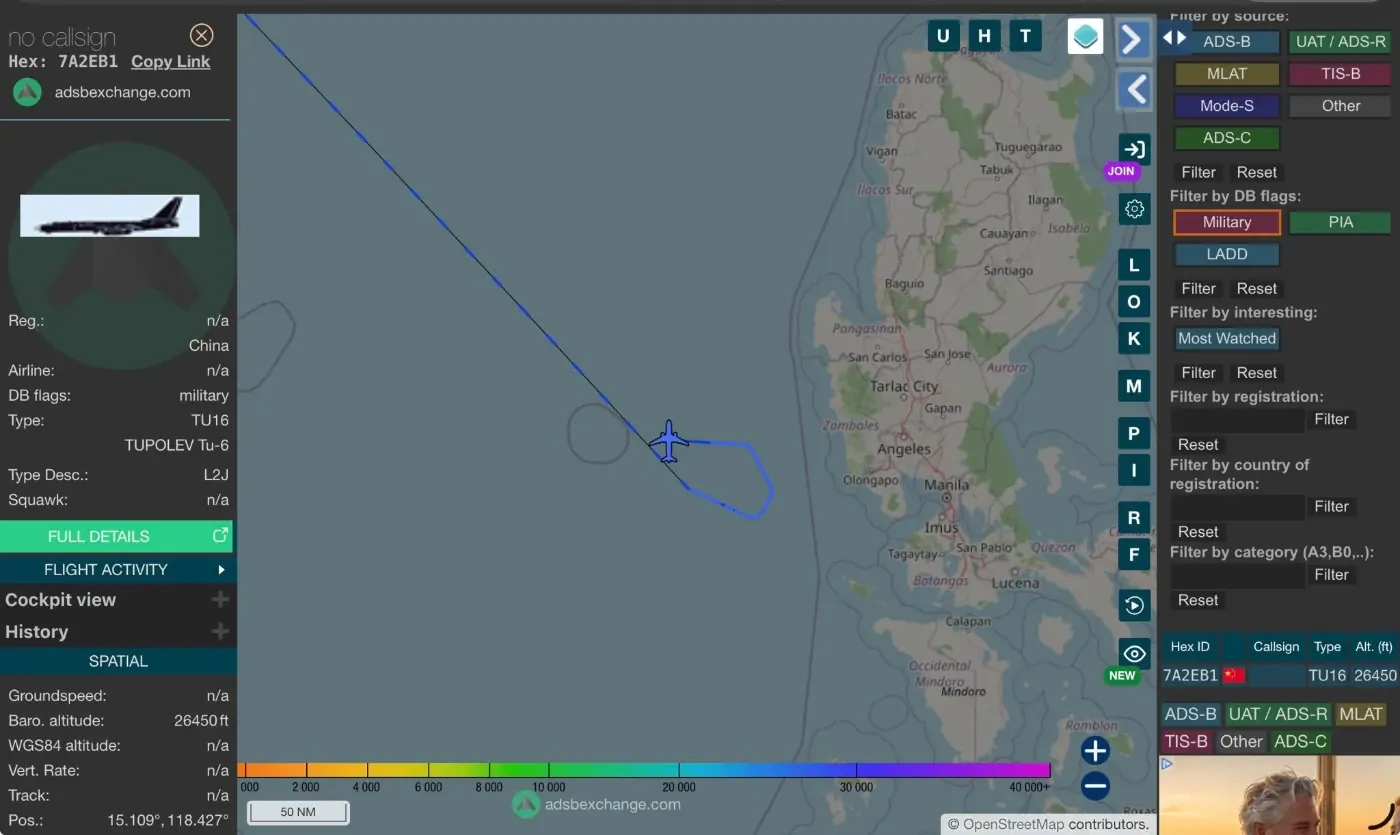
Defense journalist Mike Yeo shared a screenshot of the aircraft’s flight path, noting that the bomber “popped up for a minute” on the tracking platform.
The aircraft was identified on the service as a Tupolev Tu-16, the Soviet-designed bomber that served as the basis for China’s modern H-6 family. Flight data indicated that it was operating at approximately 8,000 meters (26,450 feet), without a publicly displayed call sign.
The recorded route showed the bomber approaching from the northwest before turning east toward the Philippine coast. It then performed a tight loop and returned along its original route.
An X user known as Dianbo, who follows Chinese military developments, claimed the aircraft turned approximately 170 kilometers from Manila, suggesting the maneuver could have simulated the launch of an AKD-63B air-to-surface missile.
The missile reportedly has a range of approximately 240 kilometers (149 miles), placing Manila within its theoretical striking distance from the bomber’s reported turning point.
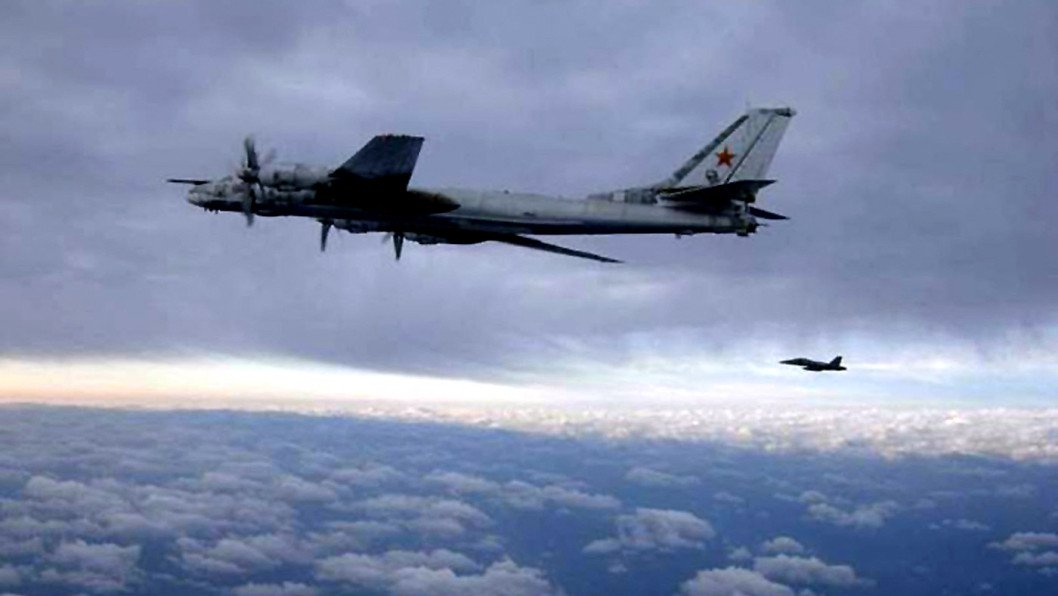
The flight took place near Scarborough Shoal, a disputed reef in the South China Sea claimed by both China and the Philippines. The area has become a recurring location for Chinese military aviation and naval operations.
China operates approximately 219 H-6-family bombers, according to Defence Blog. The aircraft originated from the Soviet Tu-16 design but has undergone extensive modernization, including upgraded engines, expanded weapons capabilities, and aerial refueling equipment on certain variants.
The Philippines is a US treaty ally, and its northern military facilities could become strategically important in a potential Taiwan conflict. That makes Chinese military pressure on the Philippines relevant not only to the South China Sea dispute but also to the wider US-China military balance in the region.
Earlier, in April 2026, China deployed two H-6 anti-ship bombers escorted by J-16 fighter jets over Scarborough Shoal during US-Philippine military exercises involving approximately 17,000 personnel.
Discuss this article: