- Category
- World
Europe Is “Not at Peace”—NATO Deploys Digital Tools Against Russian Hybrid Threats
 Prefer U24 Media on Google
- Authors


NATO is deploying new digital tools, including real-time maritime surveillance systems, to counter Russia’s escalating hybrid attacks against allied countries, UK Defence Journal reported on November 19.
Speaking at the NATO Edge 2026 conference in İzmir, Türkiye, Jean-Charles Ellermann-Kingombe, NATO’s Assistant Secretary General for Cyber and Digital Transformation, linked the increase in hybrid attacks to Russia’s full-scale invasion of Ukraine.
We bring you stories from the ground. Your support keeps our team in the field.
He explained that Moscow seeks to discourage allies from supporting Ukraine through cyberattacks targeting critical infrastructure and efforts to undermine social cohesion.
Following damage to undersea cables in the Baltic Sea, NATO strengthened its military presence through Operation Baltic Sentry. Its Allied Command Transformation also developed Task Force X to provide real-time maritime situational awareness.
Admiral Pierre Vandier, NATO’s Supreme Allied Commander Transformation, explained that digital technologies would enable all 32 member states to share intelligence and coordinate military and civilian responses more rapidly.

Air Chief Marshal Sir Johnny Stringer, NATO’s Deputy Supreme Allied Commander Europe, described Europe as “not at war, but it’s not at peace either.”
Stringer stressed that allies could counter hybrid threats through diplomatic, economic, and information measures alongside military action.
Russia's hybrid pressure on Europe has reached well beyond undersea infrastructure.
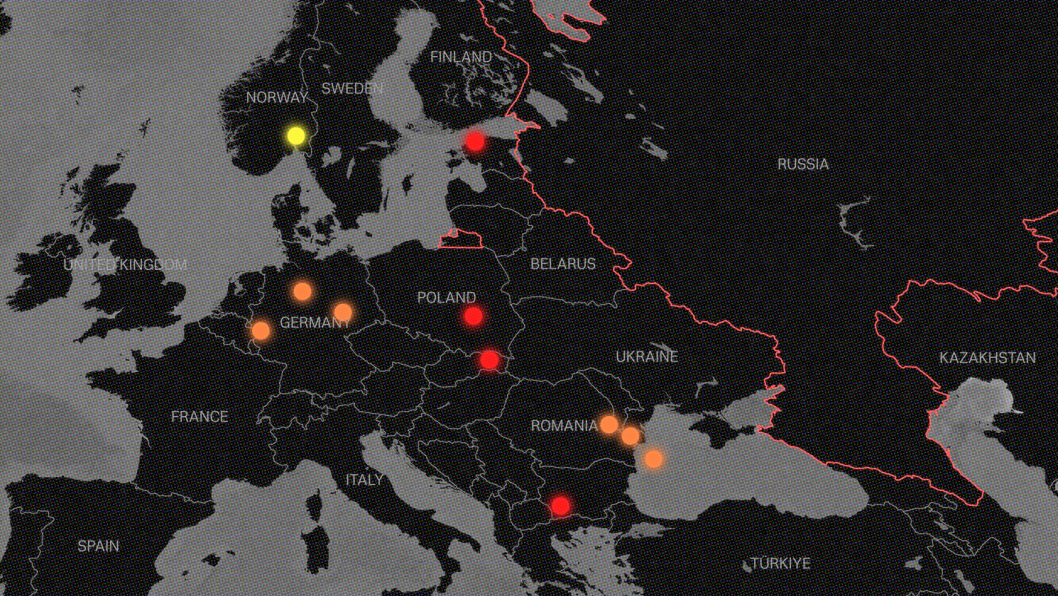
On November 2, cyberattacks disrupted supermarket refrigeration and freezer systems in nine EU countries, including Belgium, Germany, Sweden, Estonia, and Romania, weeks after similar incidents hit French supermarkets on October 11–12.
Researchers traced the attack infrastructure to servers previously used by Russian groups, although authorities have not formally assigned responsibility. In October, Putin reportedly ordered an escalation of sabotage against NATO member states, a decision linked to Russia's limited battlefield progress and Ukraine's mounting strikes inside Russia.
Discuss this article: