- Category
- World
What Russia’s Baltic Cable Sabotage Tells Us About Its Shadow Fleet
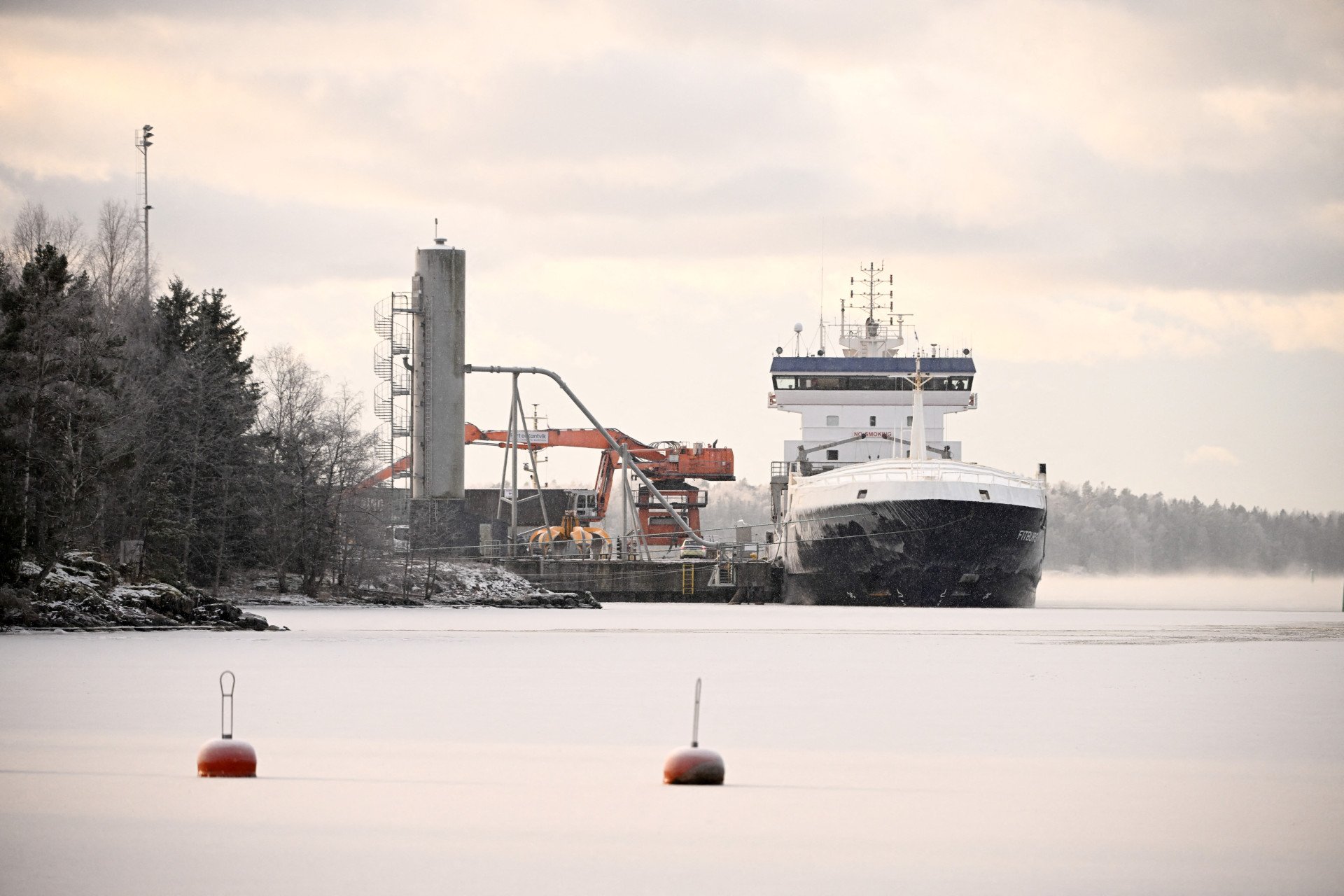
Russia’s oil tanker “shadow fleet” doesn’t just dodge sanctions. It ships weapons, supports covert operations, and cuts undersea cables. The Fitburg case on New Year’s Eve 2025 shows how these tankers can be used to wage a hybrid war across the Baltic and beyond.
 Prefer U24 Media on Google
- Authors

-605be766de04ba3d21b67fb76a76786a.jpg "Joseph Place")
A cargo ship was suspected of damaging an undersea cable in Estonia's exclusive economic zone in the Baltic Sea on December 31, 2025, and the ship was detained by Finnish authorities. There was a 10km drag mark in the sea from the anchor. The ship was found not only to have sanctioned Russian steel but also to have been identified as shipping military goods between Russia and Iran, as reported to the OSINT team at Toronto TV . The ship has since been escorted out of Finland.
This ship is part of Russia’s “shadow fleet,” ships that evade sanctions, fail to properly declare information, fly under other countries' flags, use GPS jamming or other methods to avoid detection to ship goods such as oil, weapons, and more to and from Russia. While some ships pretend to be registered in certain nations, they are often actually registered in places like the Cook Islands, where ship registration is easy (you don’t even need to physically visit the islands).
Some of these ships have even been accompanied by submarines and warships. This shadow fleet has been involved in many high-profile acts of sabotage and other incidents at sea, particularly in the Baltic Sea. Finland has warned that Russia will target more undersea cables.
Russian undersea cable attacks
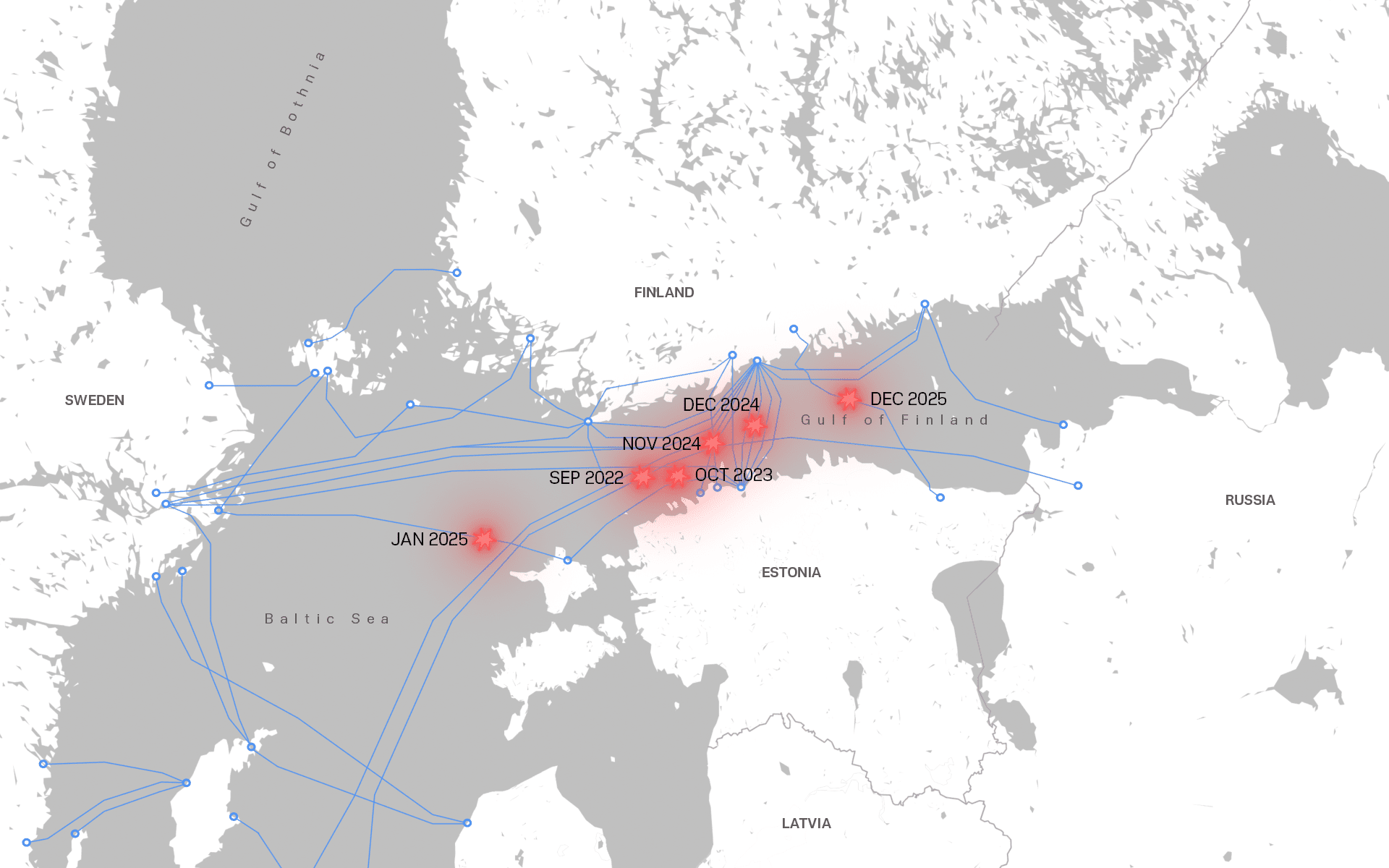
The shadow fleet has been a crucial tool for Russia in disrupting undersea cables, which are essential for data transmission. They have all taken place in the Baltic region. By 2025, 11 incidents had been reported.
In November, two cables were cut in the Baltic, one of which connected Sweden and Lithuania, and the other Finland and Germany, and a Chinese-registered ship was suspected.
On December 25, 2024, a Cook Islands-registered ship was suspected of damaging undersea cables between Finland and Estonia, and one between Finland and Germany, and was boarded by Finnish authorities.
We can see that the Baltic region has been targeted, and the presence of shadow fleet ships corresponds with the attacks we have seen so far. This makes sense given the geographical proximity to Russia and the fact that Russia will be interested in testing NATO's resolve and resilience on its eastern flank.
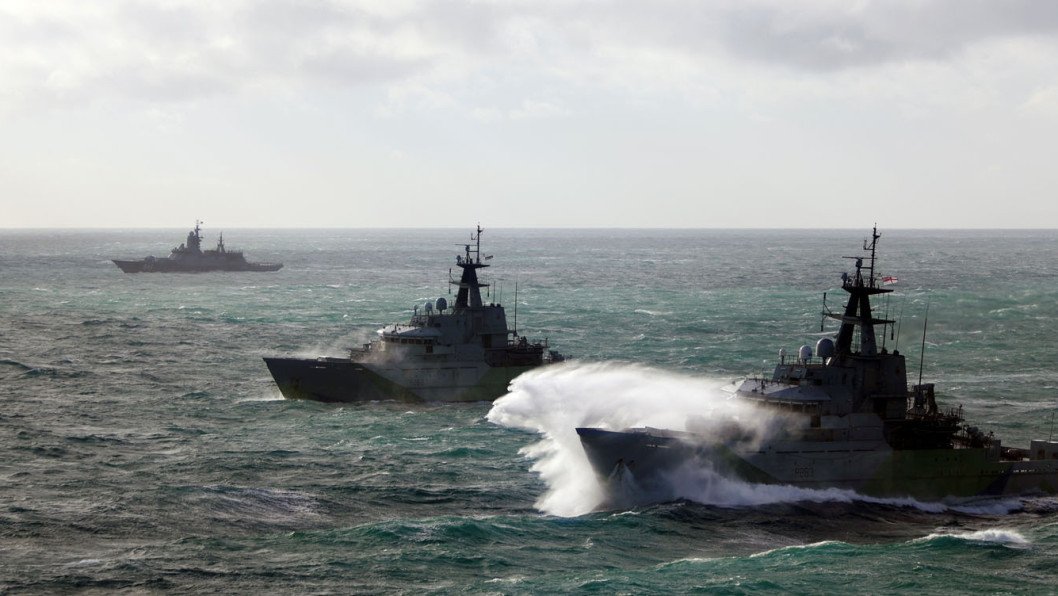
Responses to the shadow fleet have generally become stronger, with French, USA, and British naval forces boarding, intercepting, and tracking.
The wider threat of Russia against Europe
These attacks fit into Russia’s wider hybrid war against Europe. German authorities have expressed strong suspicions that the shadow fleet played a role in the deployment of drones into Europe. While proof was not established, drones are easy to hide and deploy quickly. In addition, there have been reports of spies and military staff on these ships, potentially aiding Russian intelligence, such as in Denmark.
In addition to the risk of weapons shipments, drone attacks, espionage, and infrastructure damage, there are environmental risks. Because these shops often fail to use transponders, they are at greater risk of collision. The older ships may not withstand harsh conditions and can sink, spilling oil, as was the case in December 2024, when one ship broke up, and another was in distress. Shadow fleet ships have also been dumping oil into Europe’s seas.
Russia’s hybrid war against Europe: the big picture
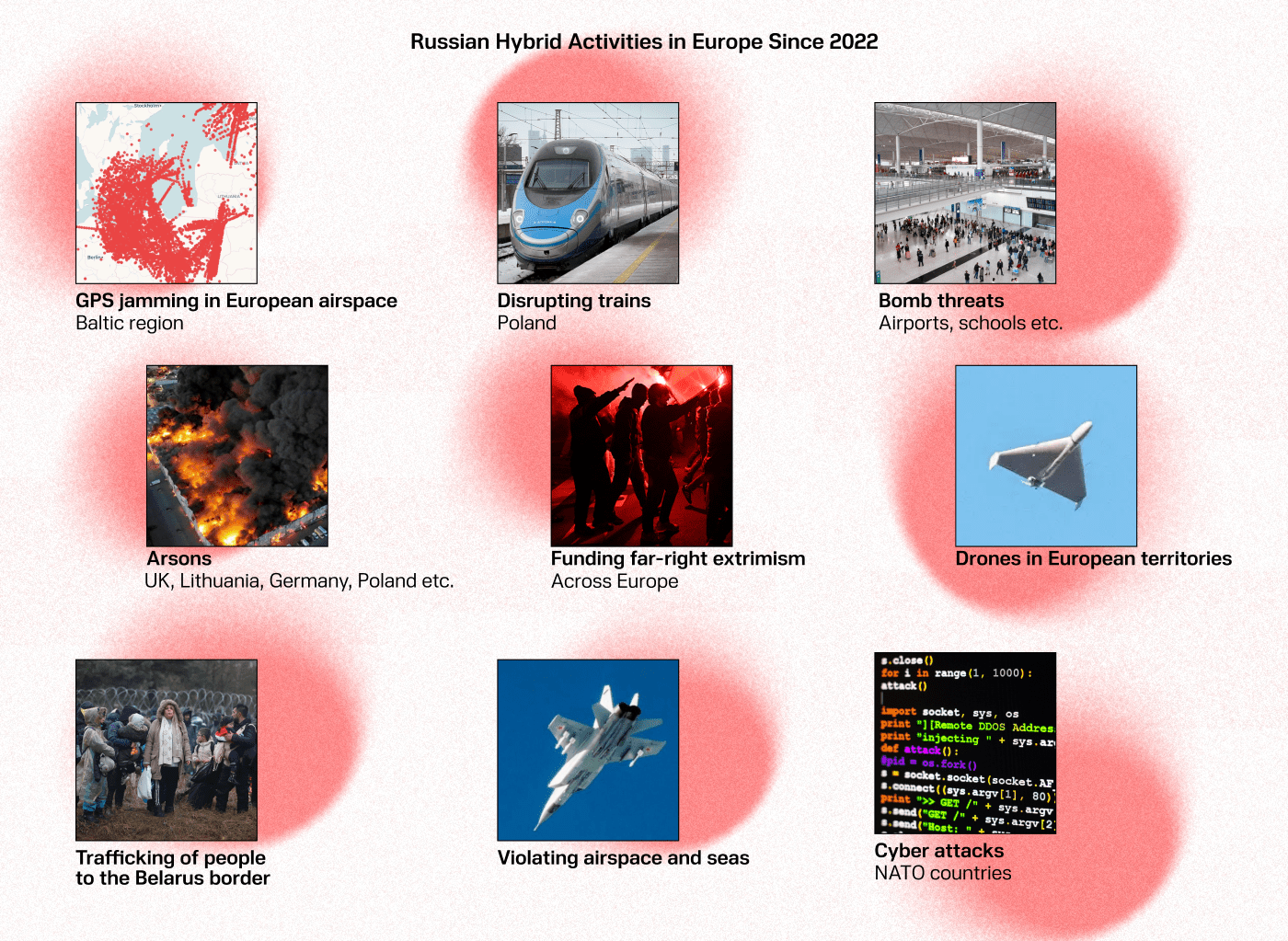
Hybrid war in general refers to warfare that uses multiple components, i.e., conventional, cyber, political, disinformation, covert sabotage, to destabilize a country, and was defined by Frank Hoffman in 2007, although there are competing uses. Regarding Russia, "hybrid war" typically refers to the sorts of activities Russia has been conducting in Europe. The term was used regarding its initial invasion of Ukraine in 2014, with the “little green men” arriving in Crimea and later Donetsk and Luhansk without insignia, and it was used regarding suspected Russian-backed disinformation campaigns in the UK and the USA.
Since 2022, the hybrid activities have included:
GPS jamming in the airspace over the Baltic region
Disrupting trains in Poland going to Ukraine
Bomb threats to disrupt the function of transport and public services, such as airports and schools
Cyber attacks on NATO nations
Paying Europeans to cause arson, in Lithuania, the UK, Germany, and elsewhere
Funding far-right extremism
Drone’s in European territories
Trafficking of people to the Belarus border, including women and children, to create a refugee crisis
We can see the massive scale of Russian interference across the continent. The shadow fleet is one part of it; however, it must be understood as part of Russia’s destabilizing efforts in Europe.
Discuss this article:


-c439b7bd9030ecf9d5a4287dc361ba31.jpg "Photo of Katherina Popilnichenko")