- Category
- Investigations
Sanctions Ignored? Western Tech Found in Iranian Shahed Drones that Reached Cyprus, Dubai, and Beyond
 Prefer U24 Media on Google
- Authors

-206008aed5f329e86c52788e3e423f23.jpg "Photo of Oleksandr Moiseienko")
The best way to stop Iranian and Russian Shahed drones is not in the sky but on the supply chain. Their production is impossible without Western components.
An Iranian-made Shahed-type drone struck Dubai’s Burj Al Arab hotel, a symbol of global tourism. Yet Russia and Iran can produce these drones in the tens of thousands each month, using Western components routed through intermediary countries—one of which is the United Arab Emirates itself.
Despite being among the most heavily sanctioned countries in the world, Russia and Iran have ramped up Shahed production to an industrial scale through close cooperation.
The growing use of these drones once again underscores a key point: sanctions exist, but their effectiveness depends directly on control over supply chains and loopholes. Without cutting off access to critical components, production of Shahed drones and other weapons that Russia and Iran use to strike civilian and military targets will only continue to expand.
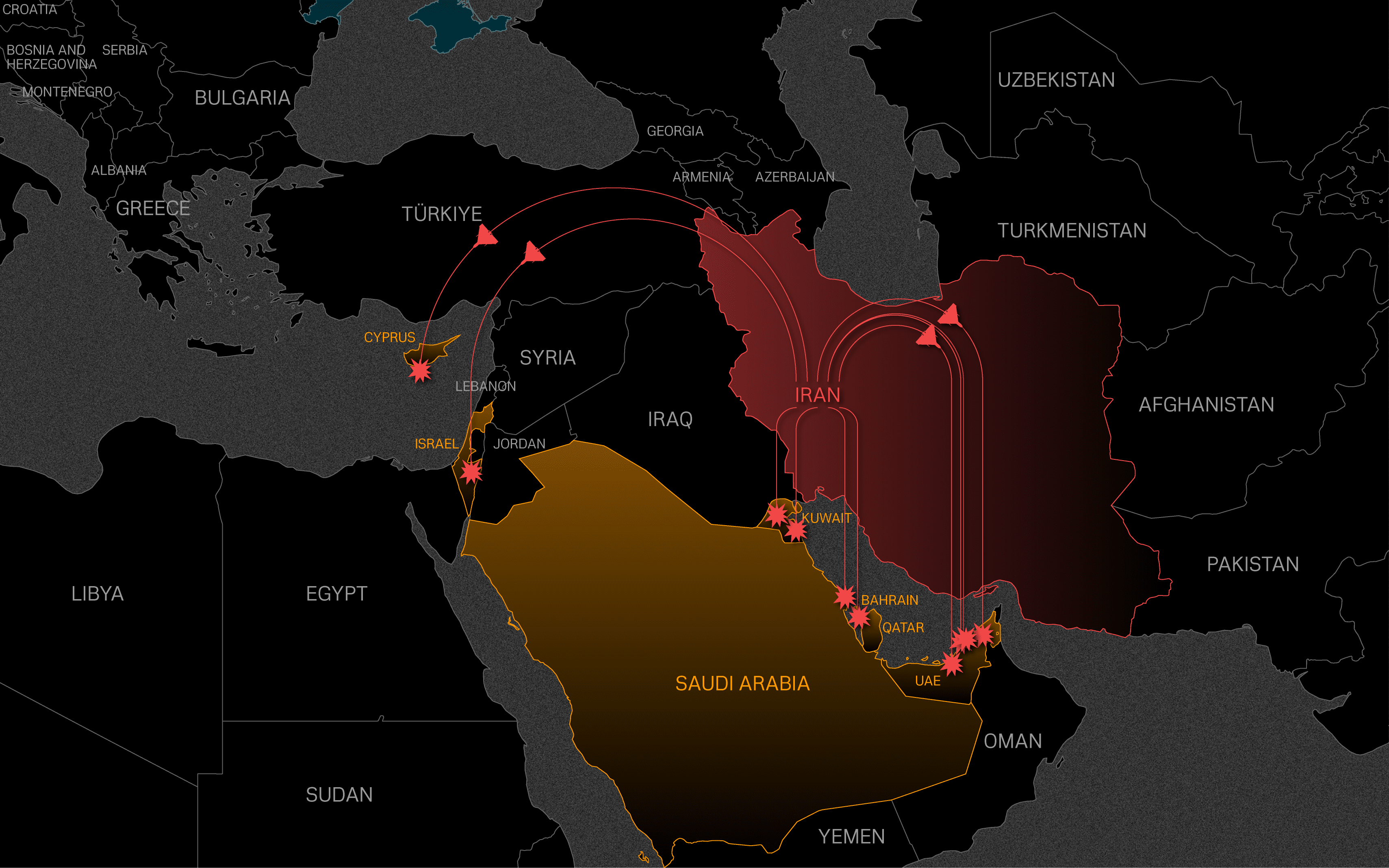
They indiscriminately attack both civilian and military infrastructure—now not only in Ukraine. From the first hours, the escalating events in the Persian Gulf quickly extended far beyond the region. In Cyprus, the UK airbase RAF Akrotiri came under attack. The military drones that terrorized Ukrainian cities for years are now striking targets thousands of kilometers from the front lines.
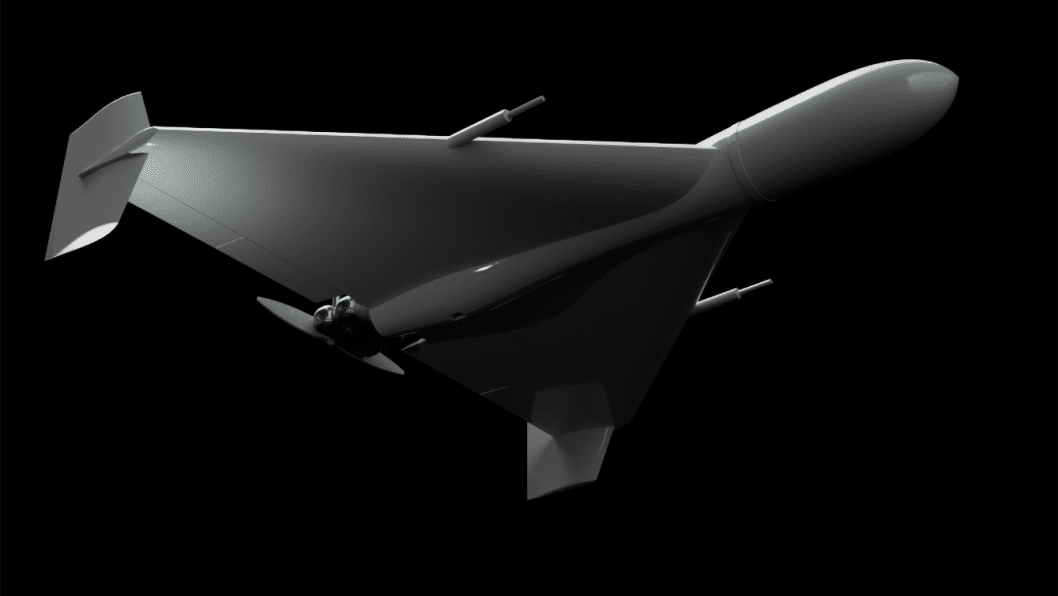
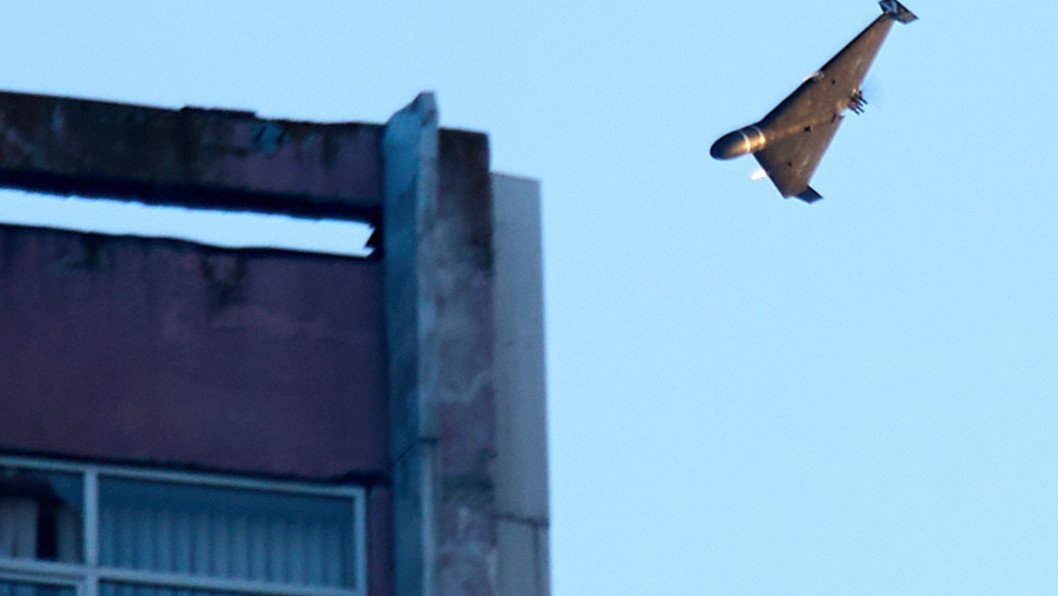
The Iranian Shahed-136 is a relatively simple loitering munition with a delta wing, a piston engine, and satellite navigation. Its main advantage is not technological sophistication but mass production and low cost.
After launching its full-scale invasion, Russia not only imported ready-made Iranian UAVs (unmanned aerial vehicles) but also localized their production. In the Russian version, they were renamed “Geran-2.” The key production hub became a plant in the Alabuga Special Economic Zone in Tatarstan. It is there that Russia established large-scale drone assembly based on Iranian technology, gradually adapting it to its own manufacturing capabilities.
Ukrainian and Western estimates suggest that production has gradually scaled to industrial volumes—thousands of units per month, with potential for further growth. To sustain this output, the facility operates at full capacity, employing both local workers and foreign labor migrants and students.
At the same time, the drone’s outward simplicity does not mean technological independence. At least 31 foreign electronic components have been identified in the Shahed-107 drone (the Russian version is “Geran-1”), according to the open database of Ukraine’s Defense Intelligence Directorate.
These include microcontrollers, memory chips, programmable logic devices (FPGA/PLD), digital signal processors (DSP), satellite navigation modules (GNSS), inertial sensors, power converters, and interface transceivers. The largest share of components comes from US manufacturers—including Texas Instruments, Analog Devices, Xilinx (AMD), Maxim Integrated, and others. Products from companies in Switzerland, Taiwan, China, and Germany have also been identified in the drone’s design.
The improved model—Geran-2” (Shahed-136) — contains at least 75 identified foreign components, according to the same database. Again, the largest share of parts originates from US manufacturers. Components from Switzerland (STMicroelectronics, U-blox), Taiwan, China, and Germany have also been documented.
This confirms the systemic dependence of Iranian and Russian drones—even basic variants—on the global supply chain of high-tech civilian electronics. As long as these supply chains remain open, both production volumes and the geography of strikes will continue to expand.
Despite sanctions, the supply chain for these components is rarely direct. In most cases, it consists of several stages.
First, microchips and electronics found in Shaheds are legally manufactured in the United States, Europe, or Asia as civilian or dual-use products. They are then sold through international distributors or traders. At this stage, the products have no direct link to military use.
The next step is re-export through intermediary countries. Shell companies in Turkey, the United Arab Emirates, Central Asian states, or the South Caucasus purchase the components as “general-purpose electronics,” after which they resell them further. Formally, this appears to be a standard commercial transaction.
From these jurisdictions, the electronics ultimately reach Russia or Iran, where they are centrally directed to assembly facilities — including the production site in Alabuga. Some shipments move through networks of small trading firms, allowing orders to be split into smaller batches and making it harder to trace the end user.
The use of civilian, mass-produced electronics makes such schemes possible: most of these components are not classified as prohibited military goods and therefore do not require stricter end-use controls.
Ukraine has learned to shoot down Shahed drones more effectively. But interception is a reaction, not a solution. As long as global supply chains remain open to re-exports, production of these drones will continue to grow. Today, the question of international security is not only about developing air defense systems but also about democratic states' ability to strengthen export controls, shut down gray supply routes, and turn sanctions into a real instrument of deterrence rather than mere declarations.
Discuss this article:
-9a7b3a98ed5c506e0b77a6663f5727c5.png)