- Category
- Opinion
Why Ukrainians Are Suing American Tech Giants Over Russian Weapons

When a Russian drone obliterated a Ukrainian school dorm in the dead of night, the wreckage held a surprise: American microchips. A group of Ukrainian victims is now suing some of the biggest names in Silicon Valley and Texas tech, accusing them of enabling Russian and Iranian weapons with their components—despite global sanctions and export controls.
 Prefer U24 Media on Google
- Authors

-7e242083f5785997129e0d20886add10.jpg "Photo of Victoria Vyshnivska")
US-based lawyers, on behalf of Ukrainian citizens, have filed lawsuits against American manufacturers and distributors of microelectronics, Bloomberg recently reported. At first glance, this might seem like just another story for the “Companies & Markets” section. But the implications are far more global: American attorneys have stepped in to protect Ukrainians—from missiles and other Russian weaponry.

Which US tech firms are linked to Russian weapons?
The lawsuits target companies based in Texas and California that manufacture microchips—components used not only in computers but also in far more dangerous technologies. These microchips, via convoluted and opaque supply chains that circumvent sanctions and export controls, are finding their way into Russian missiles and Shahed drones that rain down on Ukrainians by the hundreds each day.
The companies named in the lawsuits are Texas Instruments, AMD, Intel, and Mouser Electronics. The first three are manufacturers of electronic components; Mouser Electronics is a distributor. Notably, Intel, AMD, and Texas Instruments have previously stated they are in full compliance with sanctions and ceased all operations in Russia following the start of the full-scale invasion.
The plaintiffs allege that these companies engaged in “internal corporate negligence,” allowing their microchips, processors, and programmable devices to be funneled into Russia and Iran. The lawsuits, filed on behalf of Ukrainian victims, were initiated by attorney Mikal Watts and the law firm Baker & Hostetler. Experts from the State Capture Accountability Project, International Partnership for Human Rights (IPHR), and the human rights group Protea also contributed to preparing the case files.
The lawsuits detail five Russian attacks between 2023 and 2025, which resulted in dozens of Ukrainian casualties. One such case was previously investigated by Ukraine’s Independent Anti-Corruption Commission (NAKO) and IPHR in a joint report titled TERROR IN THE DETAILS: Western-made Components in Russia’s Shahed-136 Attacks. It refers to a drone strike on the night of March 22, 2023, in Rzhyshchiv, Kyiv region. Drones hit a school and two adjacent dormitories, killing nine people and injuring 29.
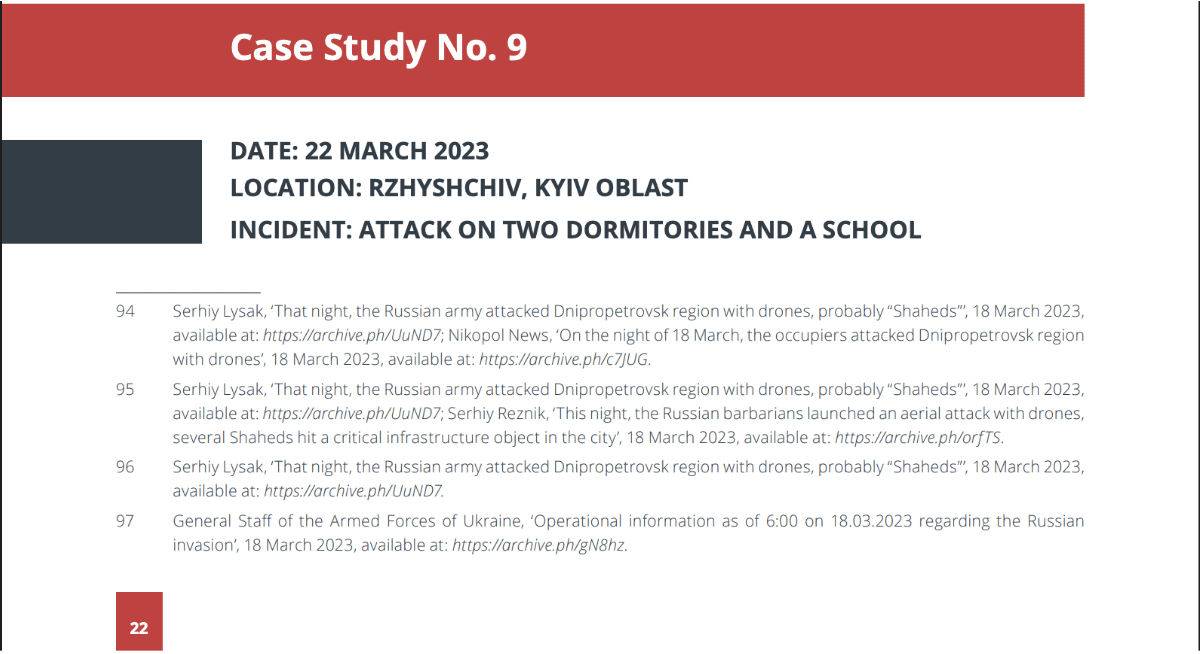
Why these lawsuits matter—and why the US?
American-made electronics account for 60-80% of the components in various types of Russian weaponry and military equipment. That’s because Russia—and Iran—lack high-quality domestic alternatives to Western microchips.
In just one NAKO report titled GLOBALIZATION, WEAPONIZED: FOREIGN COMPONENTS IN WEAPONS AND EQUIPMENT USED BY THE RUSSIAN ARMY, researchers identified at least 57 American companies whose components were found in 21 weapons systems, totaling 293 foreign parts. Key US companies include:
Texas Instruments
Analog Devices
Maxim Integrated
Atmel Corporation
Vishay Intertechnology
Xilinx
![]()
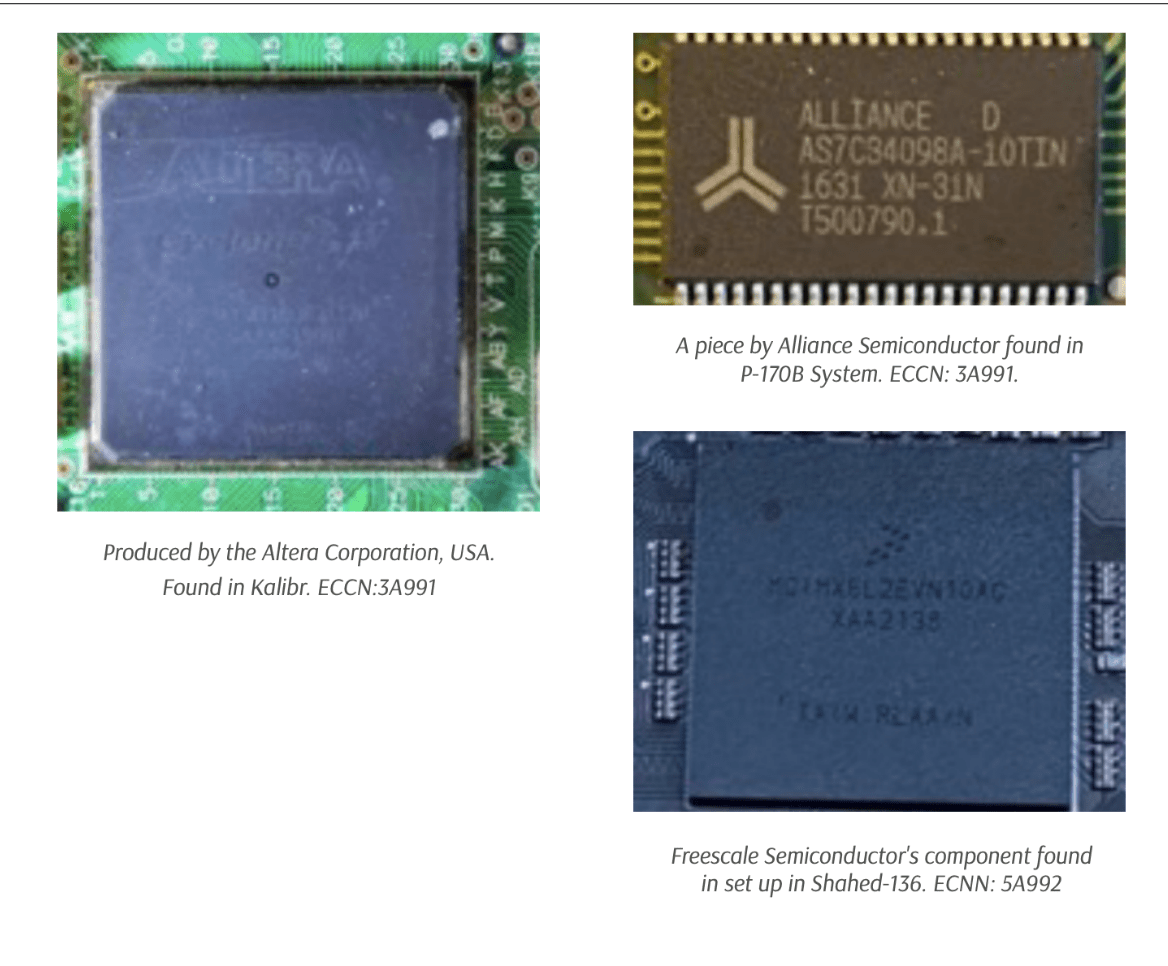
US components are also essential for keeping Russian aviation—such as Su-34 fighter jets—operational.
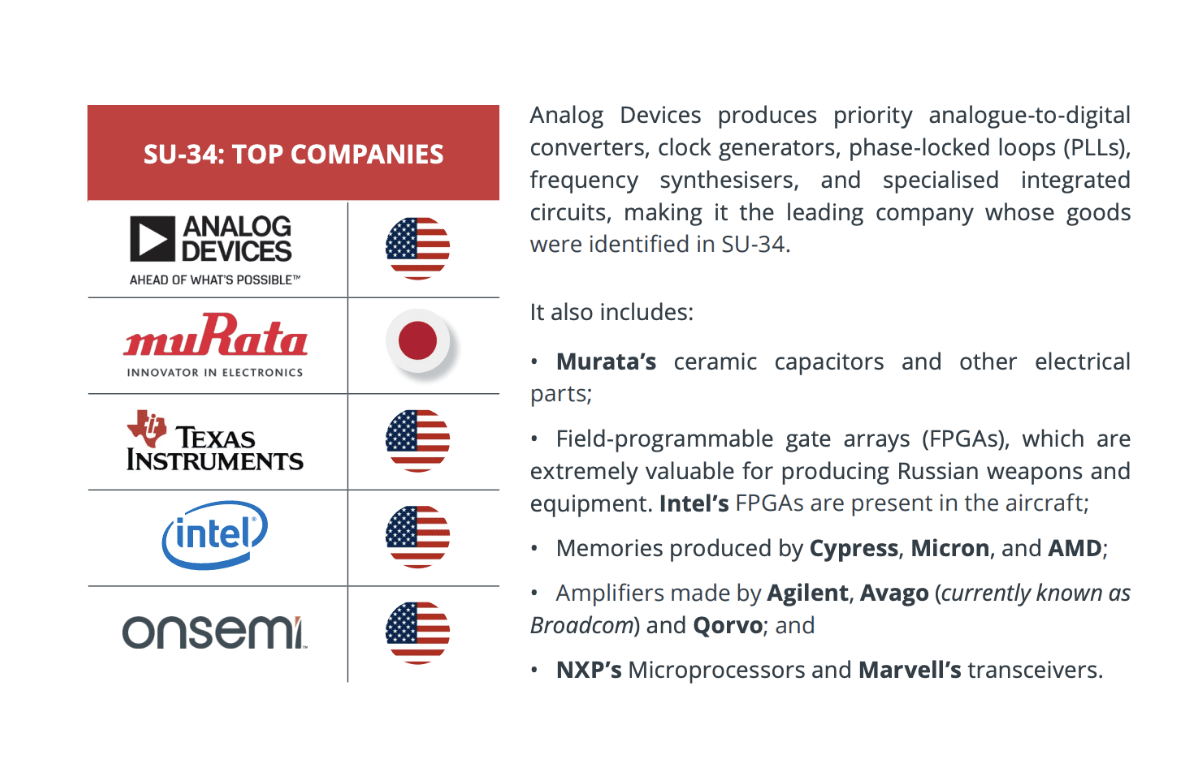
US tech in North Korean missiles
American microelectronics have even been discovered in North Korean weaponry, such as the KN-23 missile—a near replica of Russia’s Iskander.
How do these components end up in weapons? In response to research inquiries, manufacturers typically offered terse or formal replies. They pointed to old inventory shipped prior to the full-scale invasion, claimed the parts found in weapons were counterfeit, or cited indirect distribution chains beyond their control.
Every microchip—especially the programmable logic devices highlighted in the lawsuits—is critically important to Russian, Iranian, or North Korean forces. Without them, a missile or drone is little more than packaged explosives.
Despite sanctions, export controls, and corporate compliance programs, dual-use microelectronics continue to flow into the hands of adversaries through various means. These lawsuits aim to compel major microelectronics firms to demonstrate whether they are taking all necessary steps to minimize and eliminate these risks.
Discuss this article:


-206008aed5f329e86c52788e3e423f23.jpg "Photo of Oleksandr Moiseienko")

-f3430f0449615e9897dff835086ac204.jpg "Ukraine Broke With a Soviet-Era Military System and Rebuilt It Around the Soldier")
-e126c16a85d580738cf2d57e760b80a3.jpeg "Photo of Vladyslav Greziev")