- Category
- World
Putin’s Sanctioned Daughters Continue to Publish in Western Scientific Journals
 Prefer U24 Media on Google
- Authors


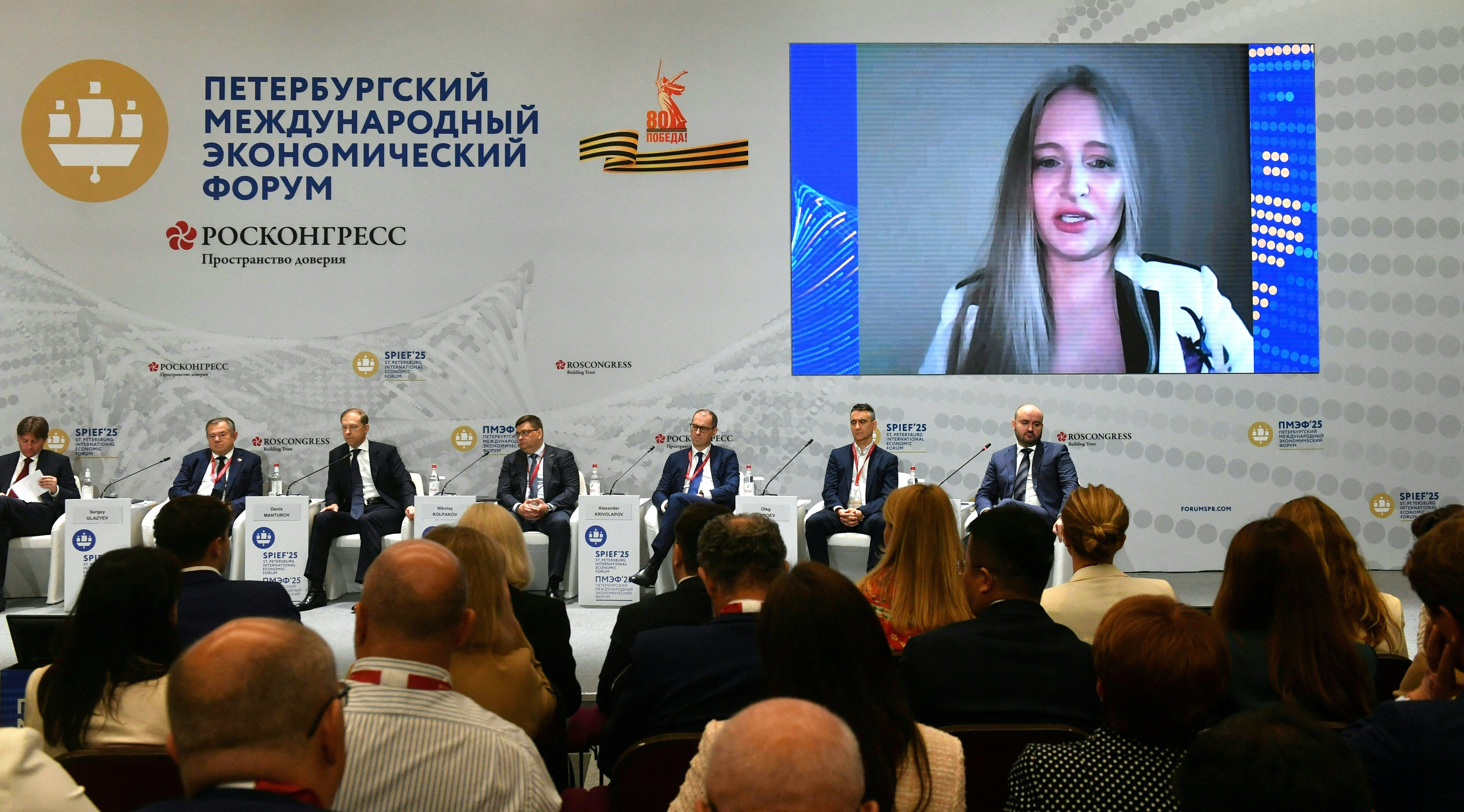
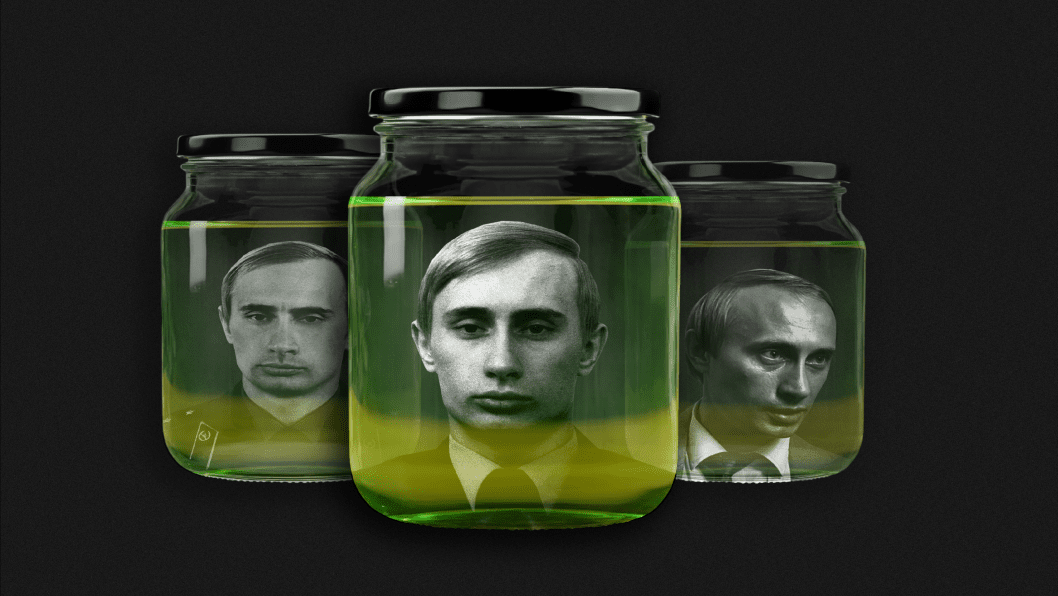
Eight sanctioned Russian figures, including Russian leader Vladimir Putin’s two daughters, have published 76 scientific articles in Western academic journals since 2022 despite sweeping international sanctions, as reported by ZN.UA on November 3.
Research was conducted by the Center for Researching Fakes and Propaganda in Russian Science at Ukrainian Sumy State University. It shows that prominent Western publishers based in the United States, the United Kingdom, Switzerland, Germany, and the Netherlands have continued to host studies authored by individuals under direct personal sanctions.
We bring you stories from the ground. Your support keeps our team in the field.
The findings indicate that 57% of these post-2022 publications were produced under publishers based in the US, followed by Switzerland at 19% and the UK at 15%.
Both of Putin’s daughters, Maria Vorontsova and Katerina Tikhonova, remain under sanctions imposed by the US, the EU, and Switzerland. Vorontsova, an endocrinologist and geneticist who oversees state-funded research initiatives linked to genetics and anti-aging research, has had articles published by Springer Nature and the Swiss open-access publisher MDPI.
Tikhonova, who leads the Innopraktika fund and the Artificial Intelligence Center at Moscow State University—a center receiving state funding for dual-use technologies including drone algorithms and electronic warfare—was sanctioned by the US Treasury in April 2022 as a tech executive supporting Russia’s government and defense sector.
Her papers have nevertheless been released by the US-based publisher Allerton Press, ZN.UA reported.
Other high-profile figures identified in the study include Mikhail Kovalchuk, head of the Kurchatov Institute, who is sanctioned by the UK for his role in strategic economic sectors and direct support of the Russian regime.
Kovalchuk continues to serve as editor-in-chief for two scientific journals distributed by Springer Nature: Crystallography Reports and Nanobiotechnology Reports. Additionally, his research has been published by the UK-based IOP Publishing and the International Union of Crystallography.
The group of eight sanctioned individuals also includes key figures involved in Russia's defense sector, energy research, and occupied territory integration. Vladimir Litvinenko, rector of Saint Petersburg Mining University and subject to US sanctions, published a study in Antarctic Science via Cambridge University Press in 2025, as reported by the Center for Researching Fakes and Propaganda in Russian Science at Sumy State University.
Vladimir Bespalov, head of the Russian Science Foundation specializing in microelectronics for the military, published papers with Pleiades Publishing and MDPI after being sanctioned.

Andrei Polyakov, director of the Institute for the History of Material Culture, who is sanctioned by the EU for activities supporting the occupation of Ukrainian territories, had an article published in Nature Communications in July 2026.
Kirill Sipalo, director of the Central Aerohydrodynamic Institute (TsAGI), and Nikolai Rogalev, rector of the Moscow Power Engineering Institute, both had works published by major Western entities, including Elsevier and the American Physical Society.
The publication process often involves processing fees, particularly for open-access articles, where fees start at $2,500 per paper. The researchers noted that if payments for these fees originated from sanctioned individuals, state entities, or Russian grants, and passed through Western banking systems, it may constitute a violation of financial sanctions, ZN.UA reported.
Furthermore, substantive peer review services provided by US-based entities or subsidiaries of European publishers could raise additional regulatory issues.
In response to these findings, the research team, alongside the Ministry of Education and Science of Ukraine, is sending formal inquiries to the publishers and preparing official complaints for submission to international sanction enforcement bodies, including OFAC in the US, OFSI in the UK, the European Commission, and SECO in Switzerland.
Previously, an investigation by Trap Aggressor exposed how families tied to Russia’s defense sector owned billions in villas, yachts, aircraft, and corporate assets across Europe and the US while remaining connected to the production of military hardware used against Ukraine.
For instance, Tatyana Yevtushenkova, daughter of billionaire Vladimir Yevtushenkov whose conglomerate invested heavily in Russian UAV and defense manufacturing, maintained substantial international holdings, including properties in London and France.
Similarly, family members of Alexander Zakharov, creator of the ZALA Lancet drone, acquired high-end real estate in London while their companies actively supplied the Russian military.
Discuss this article: