- Category
- World
Putin’s Secret Mountain Bunker Is Key Node in Russia’s “Dead Hand” Nuclear System
 Prefer U24 Media on Google
- Authors

-111f0e5095e02c02446ffed57bfb0ab1.jpeg "Photo of Roman Kohanets")
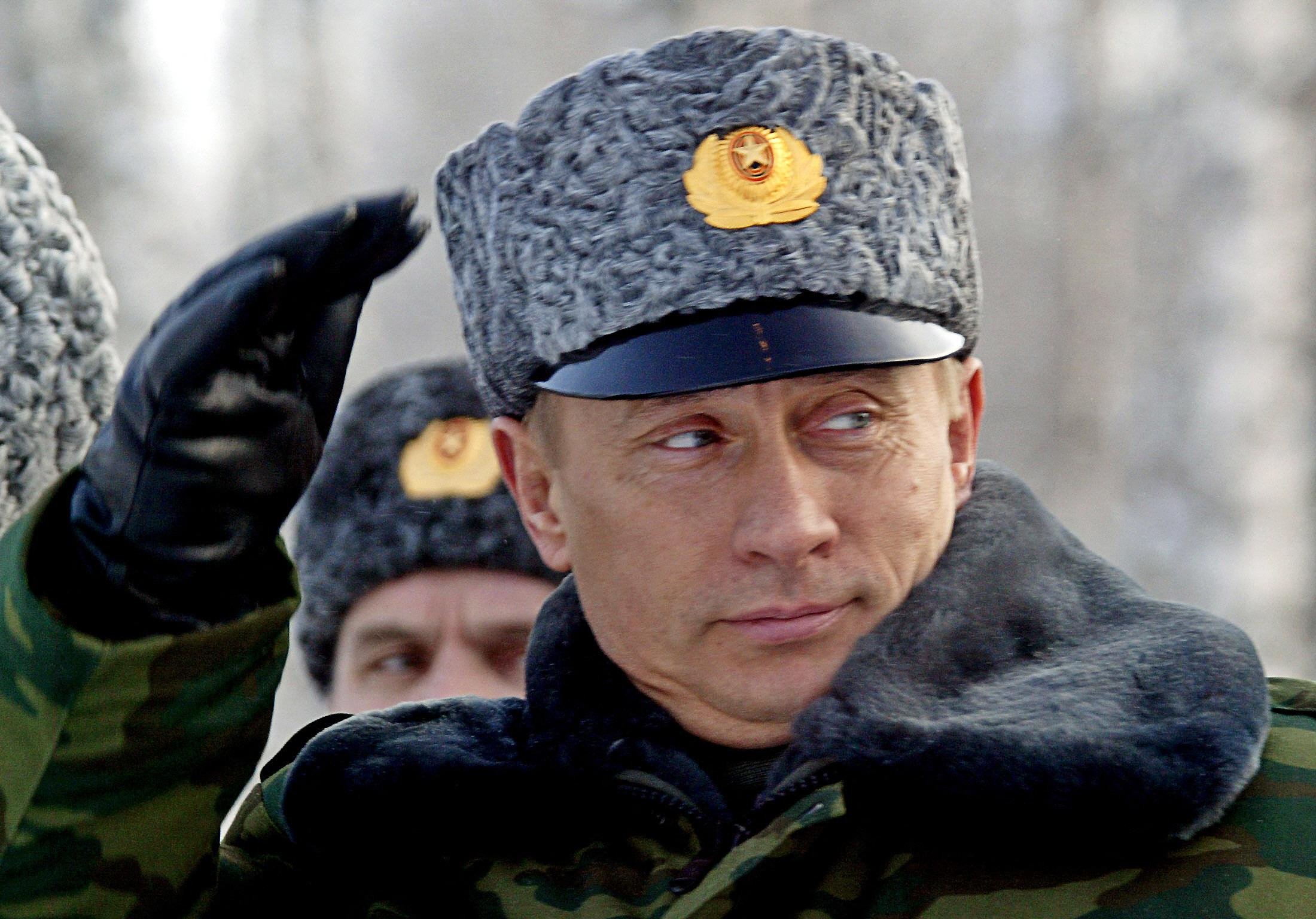
A joint investigation published on September 26 identified a secret bunker inside Mount Kosvinsky Kamen in Russia’s Sverdlovsk region as a key node in the modernized Perimetr nuclear command system.
The system, known in the West as Dead Hand, is designed to enable automated nuclear retaliation if the country's leadership is destroyed. This was reported by The Moscow Times on the same day.
We bring you stories from the ground. Your support keeps our team in the field.
The outlet cited research by the Dossier Center, Danwatch, and The Sunday Times, whose teams studied construction and equipment documents, open-source data, and accounts from people connected to the facility.
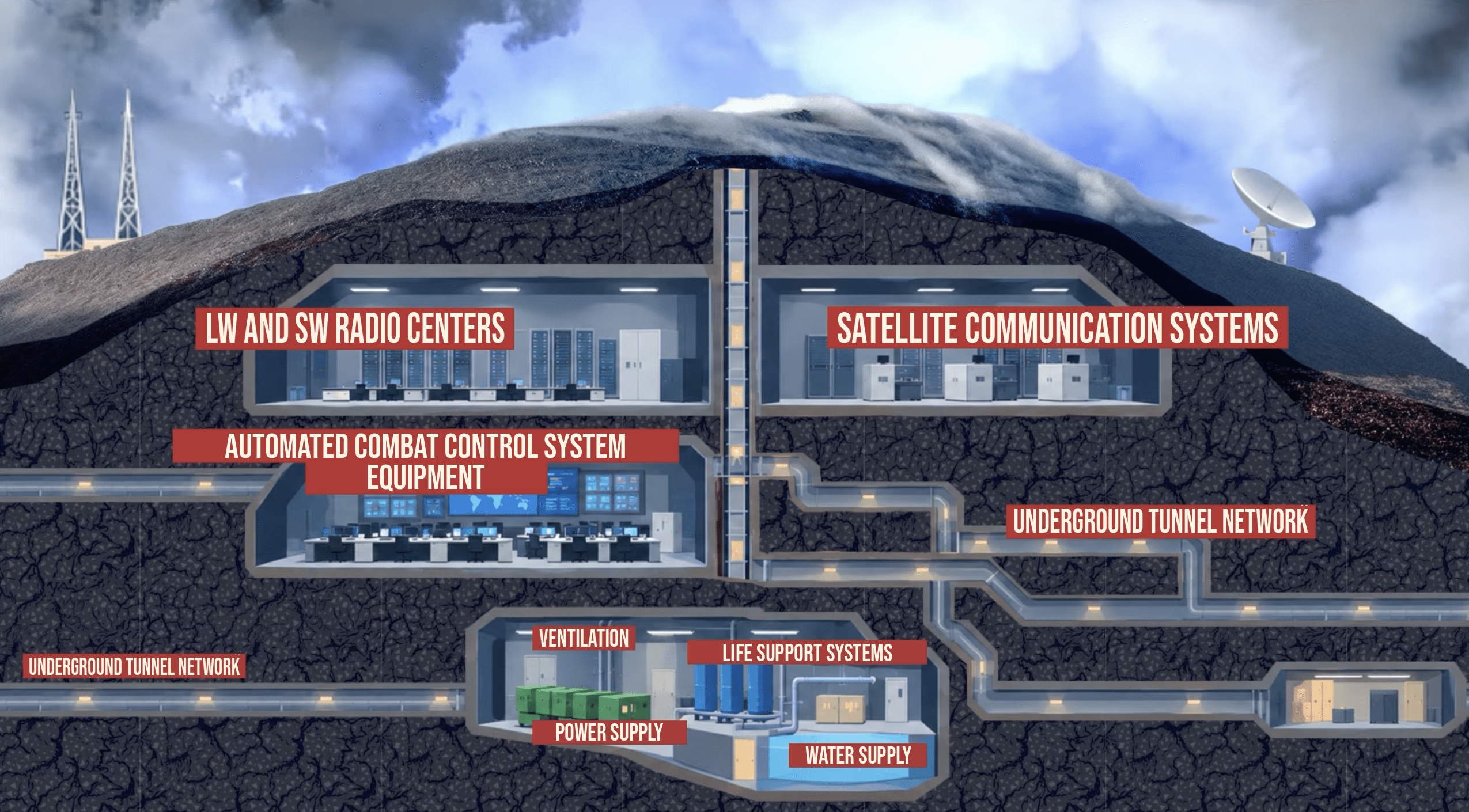
The site, code-named Grot and designated Object 1335, is hidden inside a mountain whose rock allows radio waves of specific frequencies needed for communication to pass through, the report noted.
It contains underground chambers and tunnels, radio centers, communication and life-support systems, and the equipment that controls strategic nuclear forces.
Retired Major General Viktor Khalin took part in the creation of Perimeter in the 1970s and led its modernization from 2005 to 2010. He stated that the Russian leader, Vladimir Putin, signed a secret decree in May 2005 to build a new control element for the system.
By 2010, the new system had been tested and delivered to Grot, the report added, and a military town called Kytlym was built near the mountain by 2020.
Khalin explained that Object 1335 gave Russian leaders a tool for "implementation of retribution in both an automated and an automatic mode." The report clarified that this means a final decision without human participation.
In the Soviet Perimeter, by comparison, duty officers rather than a machine retained the final press of the button. The examined documents, however, provide no evidence that the current system has operated in fully automatic mode.
Public procurement documents show that 22,000 tons of steel and 56,000 tons of cement were supplied to the facility, where construction began in 1982, the investigators indicated.
By their calculations, that volume of materials could yield enough concrete to build two large modern Moscow Metro stations along with adjacent tunnels.
Jeffrey Lewis, a Stanford University professor and US nuclear nonproliferation expert, argued that the Kremlin regards Grot as a "stabilizing element" that gives Russian leaders "more confidence and time."
"They do this not because they are some cartoonish villains," he declared. "They do it because deep down they feel insecure. That the US could do to Putin what it did to Iran's leader."
The Grot upgrade is part of a broader overhaul of Russia's nuclear command infrastructure.
-689076dcf5f357589547d1dbf6facd41.png)
Earlier reports indicated that a large-scale work at Object 1335 began in 2018, with procurement orders covering roughly 600 kilometers of electrical cables, ventilation systems, and filtration equipment designed to protect against chemical, biological, and radioactive contamination.
Procurement records also refer to at least 24 underground chambers, and the distance between the main and emergency exits is about 2.5 kilometers.
The facility is believed to have been placed on combat duty in 2023. Moscow has meanwhile continued to exercise other components of its strategic forces: on April 2, crews of mobile RS-24 Yars intercontinental ballistic missile systems practiced dispersal, combat duty, and operations under radioactive contamination in Siberia.
Discuss this article:


-c439b7bd9030ecf9d5a4287dc361ba31.jpg "Photo of Katherina Popilnichenko")

-72b63a4e0c8c475ad81fe3eed3f63729.jpeg "Photo of Cyril Barabaltchouk")