- Category
- World
Russia Sends Two Military Flotillas Into Mediterranean. Here’s What We Know
 Prefer U24 Media on Google
- Authors



Russia has moved two military-linked naval groups into the Mediterranean, with vessels carrying military cargo operating along routes toward the Syrian port of Tartus and European forces monitoring their movements.
We bring you stories from the ground. Your support keeps our team in the field.
According to The Maritime Executive on September 11, three separate groups of Russian vessels carrying military cargo are currently operating in the Mediterranean, including two formations associated with Russia’s military sealift operations.
EXCLUSIVE: In a joint investigation by @InsiderGeo × @SONARROW_OSINT , we identified Russian military equipment being transported toward the eastern Mediterranean aboard the ANASTASIIA and YURIY ARSHENEVSKIY.
— GeoInsider (@InsiderGeo) September 11, 2026
New imagery shows the vessels now underway in the Mediterranean,… pic.twitter.com/eeIDzbmz2h
The first group includes the Udaloy-class anti-submarine warfare destroyer Admiral Levchenko, the tanker General Skobelev, the roll-on/roll-off cargo ship Sparta, and the fleet oiler Akademik Pashin.
The vessels entered the Mediterranean through the Strait of Gibraltar on August 27. Earlier, while passing through the English Channel, they were monitored by a substantial Royal Navy presence that included the destroyer HMS Duncan, frigate HMS St Albans, patrol vessel HMS Severn, and a Merlin helicopter.
The Maritime Executive reported that the group is believed to have reached Tartus on September 7, where Sparta was observed unloading at the port.

Satellite imagery from September 11 also showed what appeared to be a Russian warship at Tartus alongside General Skobelev. The tanker may have been positioned there for refueling or alongside the warship on its seaward side.
A second Russian convoy is also believed to be heading toward Tartus. It is led by the Ropucha-class landing ship Aleksandr Shabalin and includes the cargo vessels Anastasiia and Yuriy Arshenevskiy. Both cargo ships are under sanctions and have previously been linked to the transportation of military equipment, according to The Maritime Executive.
Aleksandr Shabalin can transport vehicles and other cargo while also providing armed escort. The landing ship is equipped with a 76mm main gun and two 57mm AK-725 anti-aircraft gun systems.

The second convoy was detected between Sicily and Tunisia on September 10 after moving along the Algerian coast a day earlier. An Italian Air Force ATR P-72A maritime patrol aircraft was monitoring the ships at the time.
All three vessels in the convoy were traveling with their Automatic Identification System, or AIS, switched off. If they continue east toward Tartus, their route would take them through waters between Crete and Libya, an area where drone attacks on ships have previously occurred.
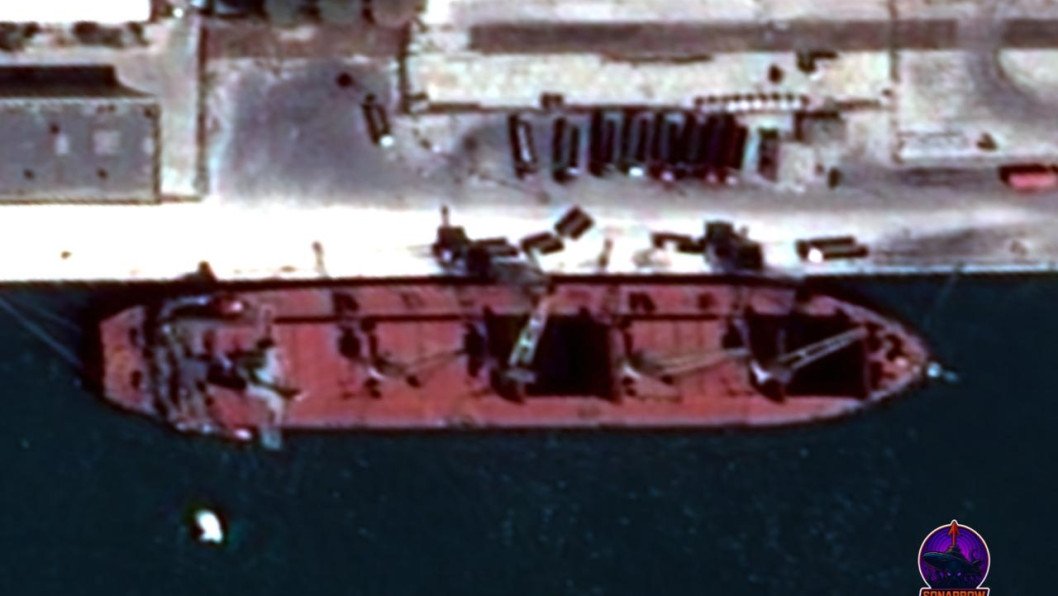
Separately, the sanctioned Russian-flagged cargo vessel Lady Mariia reached the Port Said anchorage near the northern entrance to the Suez Canal after being struck by multiple aerial drones in the central Mediterranean on September 7, according to The Maritime Executive.
The deployment marks a reversal from July, when Russia had no warships left in the Mediterranean for the first time since 2013. The withdrawal was linked to Turkey’s closure of the Bosporus and Dardanelles, reduced Russian access to Tartus, and the redeployment of vessels elsewhere.
Discuss this article:
-9a7b3a98ed5c506e0b77a6663f5727c5.png)


-c439b7bd9030ecf9d5a4287dc361ba31.jpg "Photo of Katherina Popilnichenko")