- Category
- World
Top NATO Commanders Demand Urgent Overhaul to Counter Russian Threat
 Prefer U24 Media on Google
- Authors

-72b63a4e0c8c475ad81fe3eed3f63729.jpeg "Photo of Cyril Barabaltchouk")
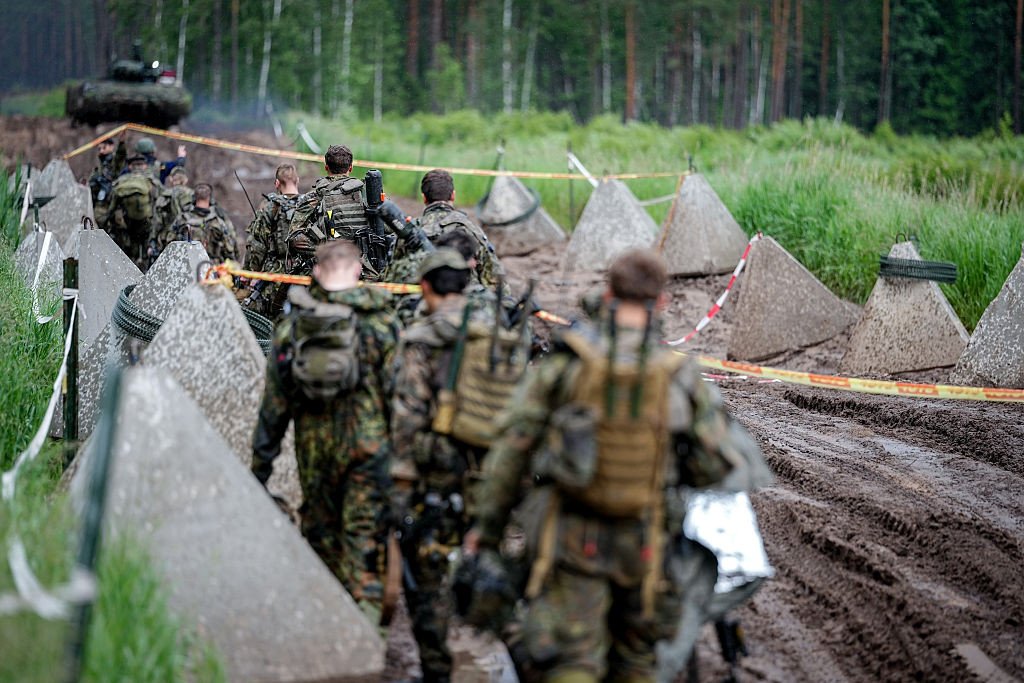
European allies need to overhaul their war-fighting capabilities to confront the military threat posed by Russia, Reuters reported on June 29.
Speaking at a defense conference in London, Air Chief Marshal Sir Johnny Stringer, NATO’s deputy supreme allied commander in Europe, emphasized a shift toward mass-produced, low-cost equipment like drones and interceptors.
We bring you stories from the ground. Your support keeps our team in the field.
He argued that European militaries must reduce their reliance on expensive, high-end platforms that require years to manufacture. Stringer identified deep precision strikes, electromagnetic warfare, and long-range air defenses as urgent priorities to counter weapons capable of striking across thousands of kilometers.
“The threat we face is at 360 degrees,” Stringer told the conference. “We need to be looking much further north now in terms of the ranges where we’re needing to deal with Russian long-range aviation and with a potent surface and subsurface threat, most obviously from the [Russian navy’s] Northern Fleet.”
This warning follows assessments from senior European officials indicating that Russia could sufficiently rebuild its military to threaten NATO territory within the next few years, Reuters wrote.
This military reassessment arrives amid changing political dynamics within the alliance. Reuters reports that the administration of US President Donald Trump has consistently accused European governments of underinvesting in defense and relying excessively on American protection. Following Washington’s announcement in May to withdraw 5,000 troops from Germany, alongside Trump’s repeated threats to exit the alliance, NATO leaders are preparing for a pivotal summit this July in Ankara.
Senior commanders note that the wars in Ukraine and the Middle East are driving the need for a sweeping overhaul. Lieutenant General Christian Freuding, commander of the German army, stated that land warfare is changing, adding that European forces “must fundamentally adapt how we will fight,” according to Reuters. Rather than waiting up to a decade for future military technologies, Freuding noted that the German army is prioritizing interim solutions available immediately to fill critical capability gaps.
Meanwhile, General Sir Roly Walker, the British Army’s chief of the general staff, highlighted the transformative impact of artificial intelligence on the battlefield. Walker noted that AI has accelerated data processing to the point where “a corps planning cycle that once took 72 hours can now take one,” allowing forces to tenfold their daily target prosecution.
In line with these restructuring efforts, Germany is establishing a new territorial defense division to protect critical infrastructure like ports, railways, and digital networks. The expansion introduces six new regiments totaling approximately 6,000 active and reserve personnel under a unified command, bringing the German Army to a total of four divisions to better secure domestic logistical hubs against potential threats.
Discuss this article:

-c439b7bd9030ecf9d5a4287dc361ba31.jpg "Photo of Katherina Popilnichenko")