- Category
- World
Why "Hiding in a Cave" Will Not Save Europe From Russia—Reinier van Lanschot, Dutch MEP
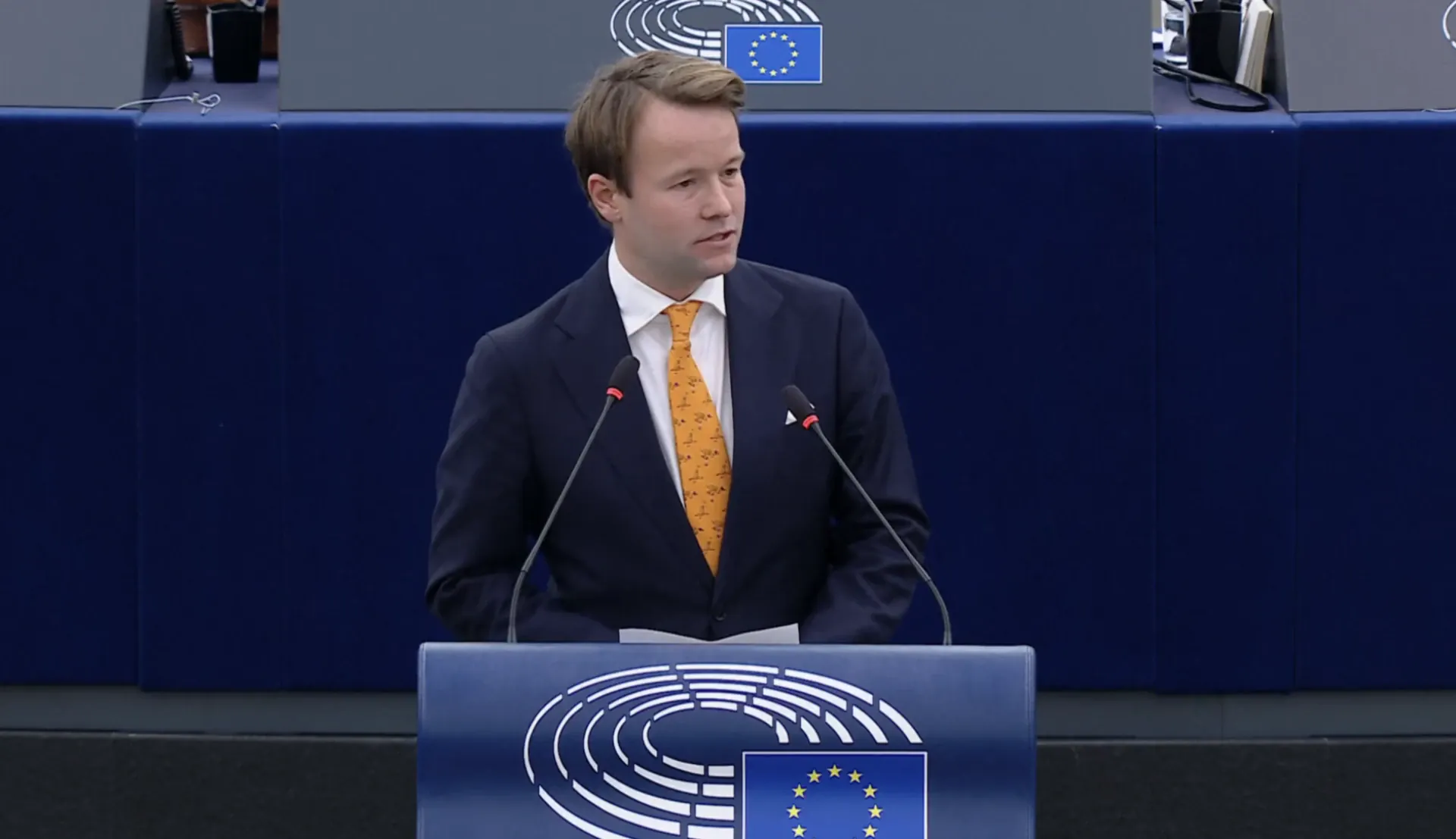
While air raid sirens have become a daily reality in Kyiv—a somber ritual of drone waves and rockets—a different kind of battle is being waged in the political corridors of the West. It is a war against isolationism, the "country-first" siren song that Reinier van Lanschot, a Dutch Member of the European Parliament and co-founder of the pan-European movement Volt, described as a lethal trap during a recent interview.
 Prefer U24 Media on Google
- Authors


The conversation began with a stark reminder of the reality on the ground: I thanked Reinier van Lanschot for meeting me just after a morning of air raid sirens in Kyiv. While many nights in the capital now involve hours of intermittent drone waves being launched at Ukraine from various points within Russia and Russian-held positions, van Lanschot noted that these events are no longer anomalies—they are the daily backdrop of a war that Europe can no longer afford to treat as a distant tragedy.
The Sovereignty Paradox: The Man in the Cave
Van Lanschot dismantled the isolationist worldview with a biting metaphor: the man in the cave.
You could say, 'In this cave, I have full sovereignty. I decide what's happening in this cave. But then if you fall ill, or if somebody decides to invade your cave, then all of a sudden you lose your sovereignty.
Reinier van Lanschot
Member of the European Parliament for Volt Netherlands
In the 21st century, the solitary nation-state is an endangered species. Van Lanschot argued that there are only two types of countries in the EU: "small countries, and countries that have not yet realized that they are small". For him, true agency is only possible through what he calls a “United States of Europe”—a democratic superpower capable of acting without perpetually leaning on a wavering US nuclear umbrella.
"Europeanizing" NATO: Beyond Defensive Aid
This collective approach is an immediate military necessity. Van Lanschot strongly defends the utility of NATO as the best bulwark against Russian aggression and hybrid warfare. However, he lays bare a critical vulnerability:
We should be able, as Europe, to defend ourselves autonomously. The best way to do that is to have two equal pillars inside NATO that are separable, so they can operate without each other, but not separate. We need to build that pillar with joint decision making, command and control capabilities and forces, and then in a way you could call it a European army.
Reinier van Lanschot
Member of the European Parliament for Volt Netherlands
By stepping up into core leadership roles, he believes that Europe can transform NATO into a balanced, dual-pillar alliance capable of independent operational execution.
Whatever It Takes: A Formula for Ukrainian Victory
Moving from structural frameworks to the immediate realities of the front line, van Lanschot levels a sharp critique at the current Western approach. He characterizes the support provided by EU countries so far as fundamentally insufficient.
If I look at what EU countries have done, it is not enough; it’s too little. It’s gone from an idea of “we need to make sure that Ukraine doesn't lose,” but what should have been done is we need to do whatever it takes to make Ukraine win. We should’ve done this four years ago, but we are [doing it] now.
Reinier van Lanschot
Member of the European Parliament for Volt Netherlands
In order to do whatever it takes to ensure Ukraine wins, he outlines four definitive military and economic actions:
Establishing a No-Fly Zone: Deploying European air forces to secure the skies over Western Ukraine.
Seizing Frozen Russian Assets: Confiscating the full €300 billion ($348,393,000,000) in frozen Russian state funds to finance Ukrainian defense and reconstruction.
Unlocking Strategic Weaponry: Eliminating political hesitation and immediately delivering long-range German Taurus cruise missiles to the battlefield.
Fast-Tracking European Integration: Accelerating Ukraine’s formal accession into the European Union.
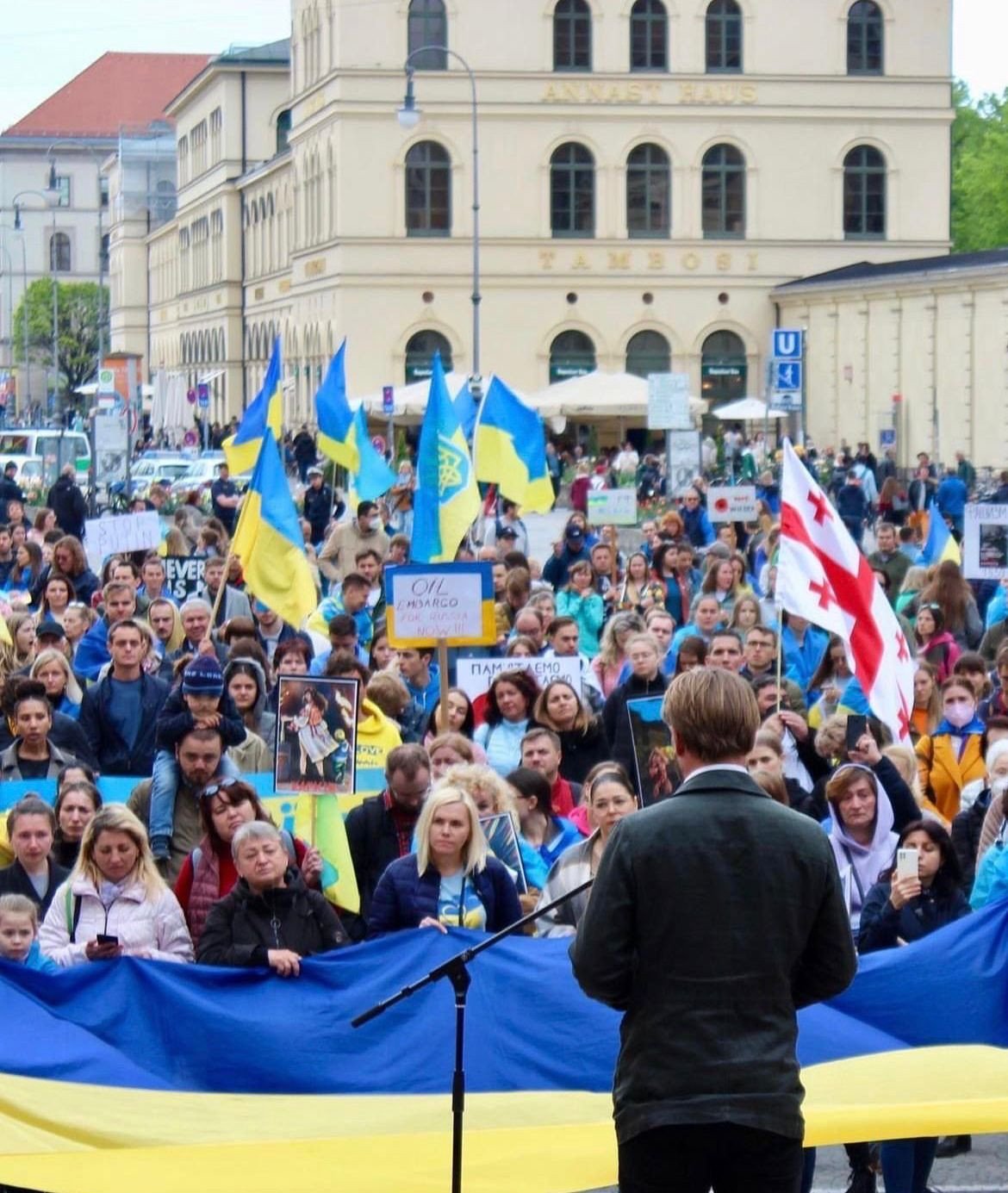
For Volt, backing Ukraine is both a profound moral obligation and a matter of raw European self-defense. Ensuring a definitive Ukrainian victory is the most effective way to protect the West, as it drastically decreases the likelihood of future Russian attacks on neighboring European nations.
Dismantling Populism and "Phantom Problems"
Van Lanschot views the rise of populist, anti-immigration "country first" politicians as a direct symptom of institutional failure.
Immigration control is a wrong priority. I think it’s a distraction—a phantom problem—that’s perceived as a significant problem in the heads of people, but it’s also been the consequence of politicians using it for political gain. It distracts us from the real things.
Reinier van Lanschot
Member of the European Parliament for Volt Netherlands
The reality, he notes, is that Europe’s aging population and contracting economy require steady migration to survive. True sovereign independence, he maintains, requires the continent to focus on massive, shared investments: abolishing the national veto within the European Council to prevent single states from stalling collective security, issuing collective European debt to fund strategic tech stacks, and aggressively transitioning into the world’s first climate-neutral economy to permanently break dependency on foreign energy. He also argues that increased immigration to the European Union actually makes European economies stronger.
We see in Spain, for example, the half a million migrant workers that received official documentation to become a part of the workforce. Because of this, there is a growing population, and in a sense, a lot of migration is needed to support the economy.
Reinier van Lanschot
Member of the European Parliament for Volt Netherlands
Beyond the Metrics: Translating Ukraine’s Lived Reality to the West
As the interview concluded, the conversation shifted back to the human element of Russia’s invasion. In the West, discussions about the war frequently get lost in sterile budget figures, legislative filibusters, and tactical analyses.
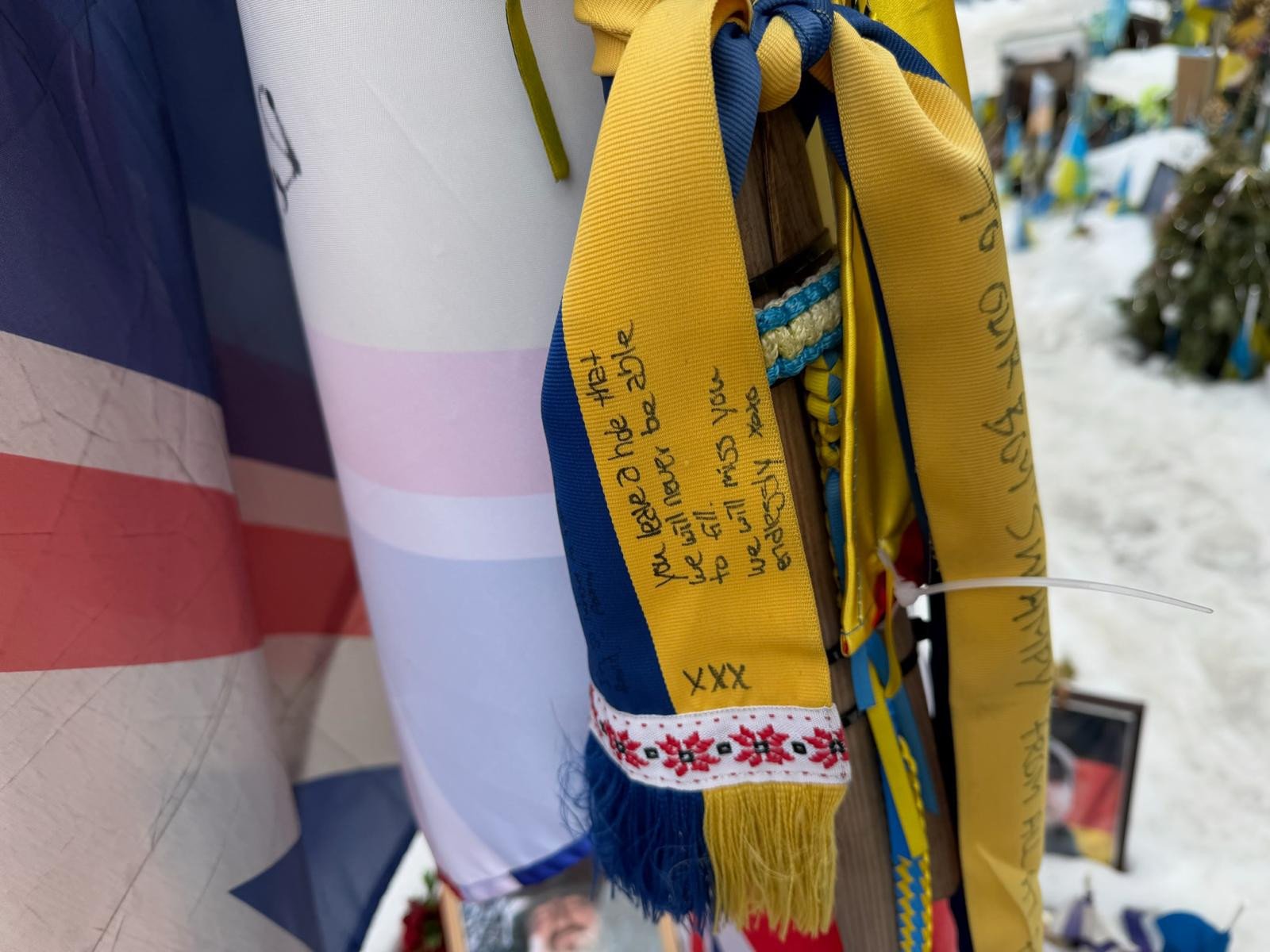
While people in the EU may not be able to directly empathize with the struggle Ukrainians are enduring, a clear majority—76%—agree that all of Europe needs to strengthen its unity to support Ukraine’s continued resistance. Whether this support comes in the form of championing continued aid measures or advocating for welcoming Ukrainian refugees into EU countries—a support figure that stands at 80%—as Mr. van Lanschot reminded me: “Europe is stronger when it’s together, and it can really tackle the challenges of the 21st century, create a much better future, and improve the quality of life for everyone inside it, when individual agency is used to meaningfully impact one’s surroundings.”
Discuss this article:
-9a7b3a98ed5c506e0b77a6663f5727c5.png)


-c439b7bd9030ecf9d5a4287dc361ba31.jpg "Photo of Katherina Popilnichenko")

-72b63a4e0c8c475ad81fe3eed3f63729.jpeg "Photo of Cyril Barabaltchouk")