- Category
- Anti-Fake
Kremlin Uses Secret Polling Network to Track War Support and Putin Approval
 Prefer U24 Media on Google
- Authors

-111f0e5095e02c02446ffed57bfb0ab1.jpeg "Photo of Roman Kohanets")
A network of closed Russian opinion surveys, run by state research centers and security agencies that include the Federal Protective Service, shapes how the Kremlin reads public mood during its war against Ukraine.
The findings were reported by the Russian independent outlet Verstka on June 22, drawing on sources inside the state pollster VTsIOM and others close to Russia's presidential administration.
We bring you stories from the ground. Your support keeps our team in the field.
The investigation followed a June 14 social-media post by Ukraine's president, Volodymyr Zelenskyy. He released two slides: one forecasting the approval rating of the Russian leader, Vladimir Putin and the other projecting the ruling United Russia party's result in the State Duma elections. Zelenskyy claimed Ukrainian intelligence had obtained the material and that it had been prepared for the Russian leadership.
Verstka confirmed the graphs were authentic but noted that the reality was more complicated. The slides amounted to a single stress-scenario forecast weighed ahead of the vote against the Kremlin's economic difficulties, the outlet reported.
A source close to the presidential administration explained that VTsIOM had prepared the material from closed polling data and presented it at internal round tables in late May. "Stress-scenario testing is standard practice," the source stated, disputing Zelenskyy's suggestion that the figures had reached Putin's own desk.
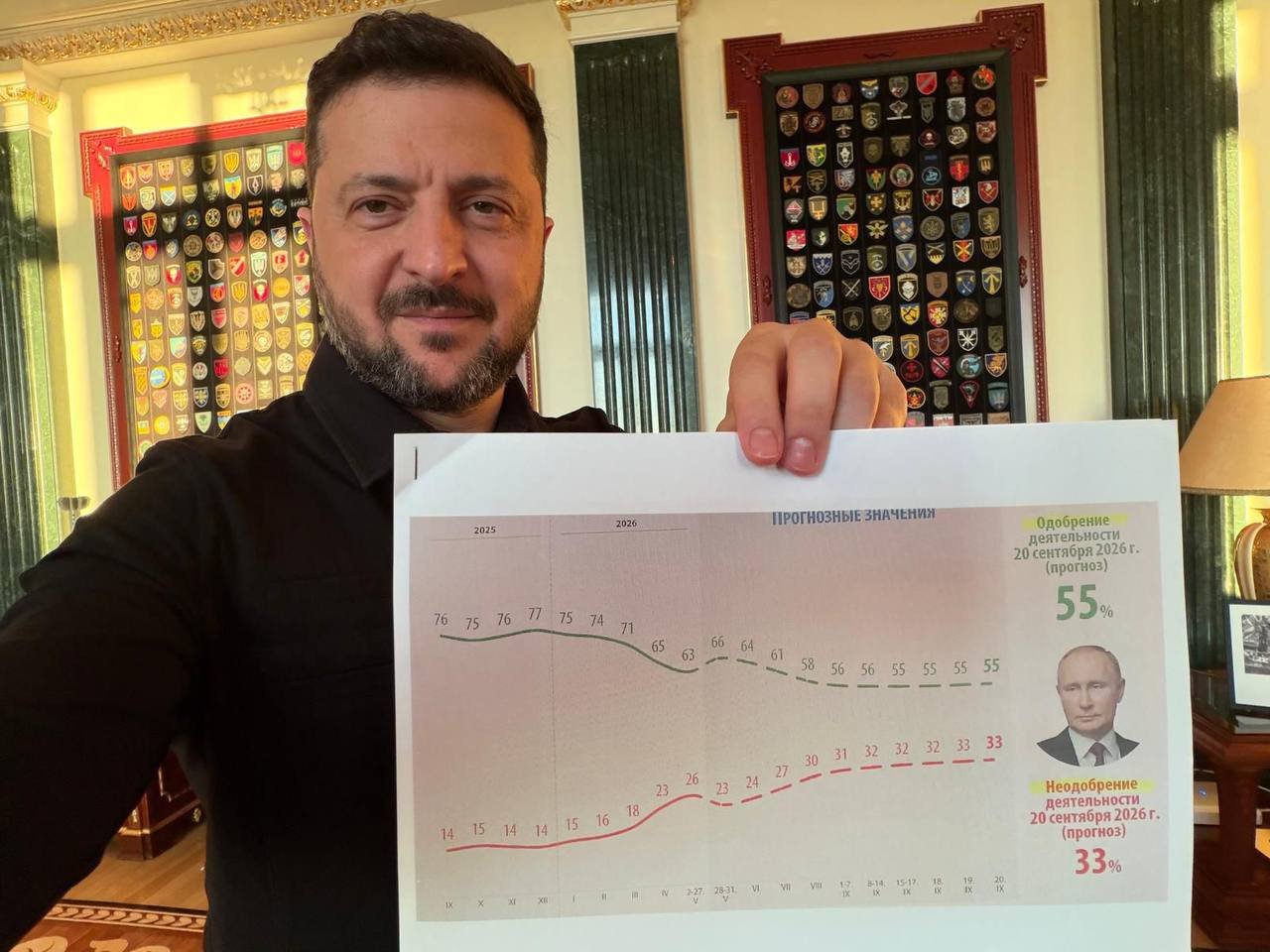
A contact at a Kremlin-aligned political consultancy characterized the leaked graphs as a conservative baseline. They showed neither sharp gains nor collapses, the contact indicated—the trajectory expected if no major shock, such as mobilization or an end to the war, intervened.
Much of this measurement is hidden from the public. According to Verstka, the Federal Protective Service, known as the FSO, maintains its own sociological service and had been set the same pre-election analysis as VTsIOM and the state pollster FOM.
The agency holds an advantage that commercial firms lack. When residents refuse to open the door or answer the phone, the FSO can cross-reference census records and the registered owners of phone numbers to adjust its samples.
A sociology lecturer, who asked not to be named, outlined the technique to Verstka. "Elderly women often open the doors, and young men hang up," the lecturer noted, explaining that analysts weigh their findings according to such patterns.
The FSO does not rely on numbers alone. A source at a Kremlin media structure that monitors politicians' social-media accounts told Verstka that its reports on online behavior reach the presidential administration and, in his words, "land on the desk of the sociologists."
Russians have long feared that critical responses might be passed to the authorities. In a 2023 study by the pollster Russian Field, 93% of those approached declined to take part, and 5% hung up the moment they heard the questions.
VTsIOM is now completing a study of how Russians are responding to a falling standard of living, according to a source at the center. Respondents are asked by phone whether they have noticed rising prices and whether they have felt the effect on their daily lives. They are also questioned on whether they approve of Putin and the start of the war, and whether they would join mass protests in their city.
The results rarely surface in full. Verstka reported that outright falsification is uncommon and that the real lever is selective disclosure—uncomfortable figures kept out of public view while still guiding decisions inside the system.
"When the people reach their breaking point, polls definitely won't be needed," a source in the leadership of a major Kremlin-aligned organization told Verstka.
The selective release of figures has already shown itself this month. The state pollster VTsIOM quietly stopped publishing its open-format trust ratings for Putin after fewer than one in three respondents named him as a trusted figure in March.
It’s closed polling, by contrast, still placed approval above 70%, and its weekly rating stood at 66.6% on May 31, down nearly ten points since the start of 2026.
Discuss this article:
-4a56a6b482ec132402c16ef6fcabf9a2.png)

-c439b7bd9030ecf9d5a4287dc361ba31.jpg "Photo of Katherina Popilnichenko")

-206008aed5f329e86c52788e3e423f23.jpg "Photo of Oleksandr Moiseienko")
-72b63a4e0c8c475ad81fe3eed3f63729.jpeg "Photo of Cyril Barabaltchouk")