- Category
- Culture
At Venice Biennale, “Invisible Pavilion” Memorializes Ukrainian Artists Killed by Russia
 Prefer U24 Media on Google
- Authors


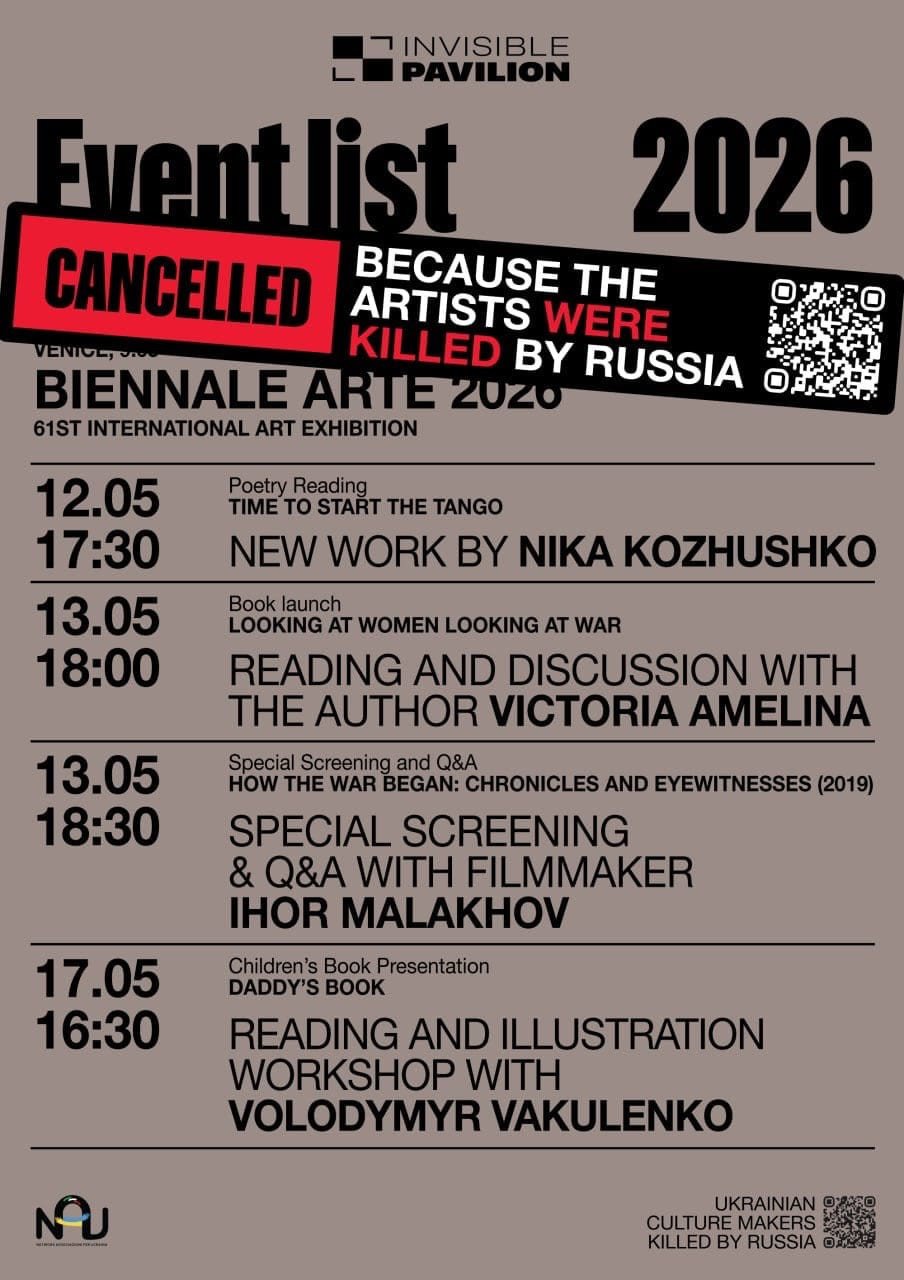
An unofficial artistic initiative taking place across Venice during the Venice Biennale is drawing attention to the human impact of Russia’s war against Ukraine by focusing on cultural figures whose work was cut short by Russian aggression..
The project, titled Invisible Pavilion, runs alongside the 61st edition of the Biennale, held from May 6 to November 22, 2026. Instead of a single exhibition space, it is spread throughout the city in the form of posters placed in public areas.
We bring you stories from the ground. Your support keeps our team in the field.
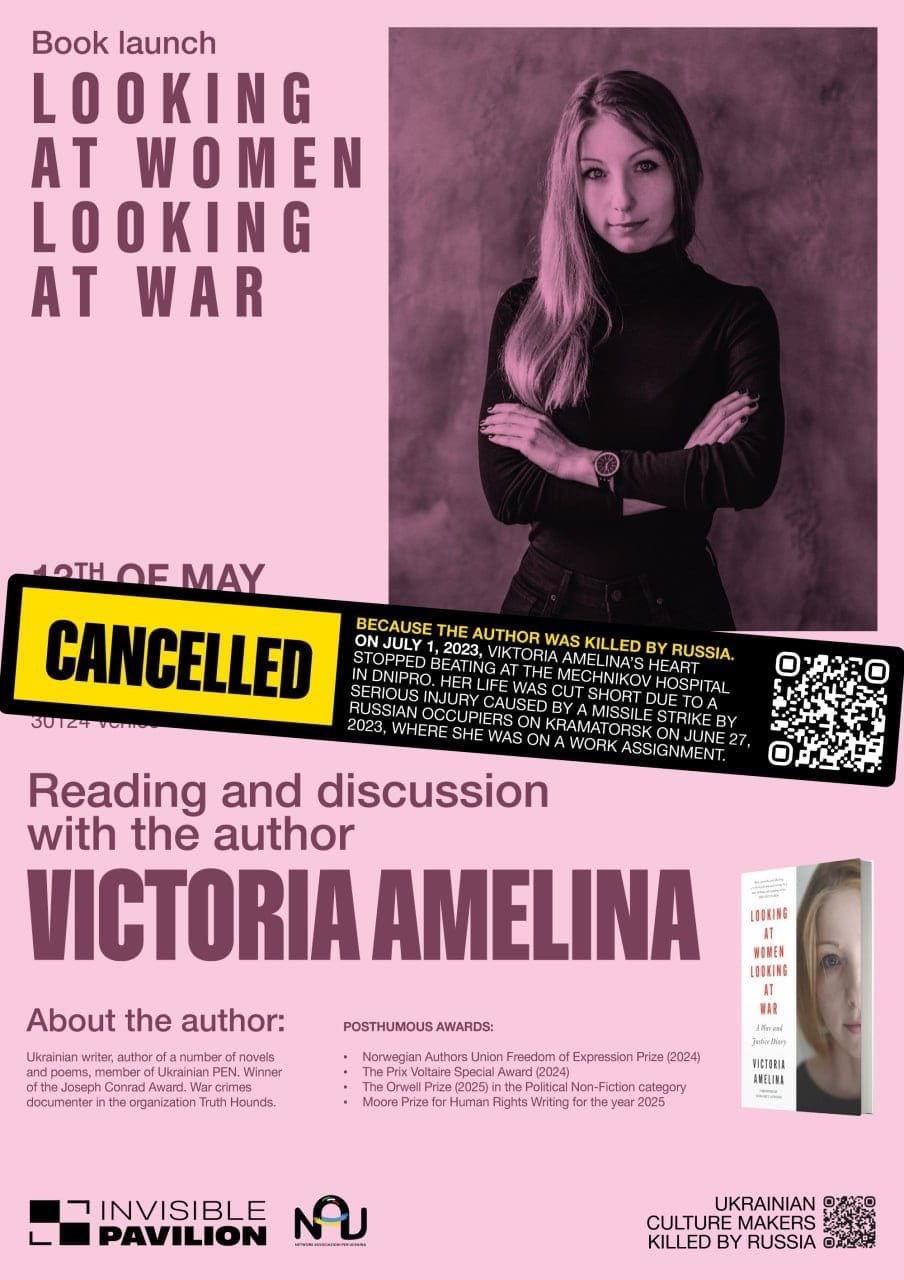
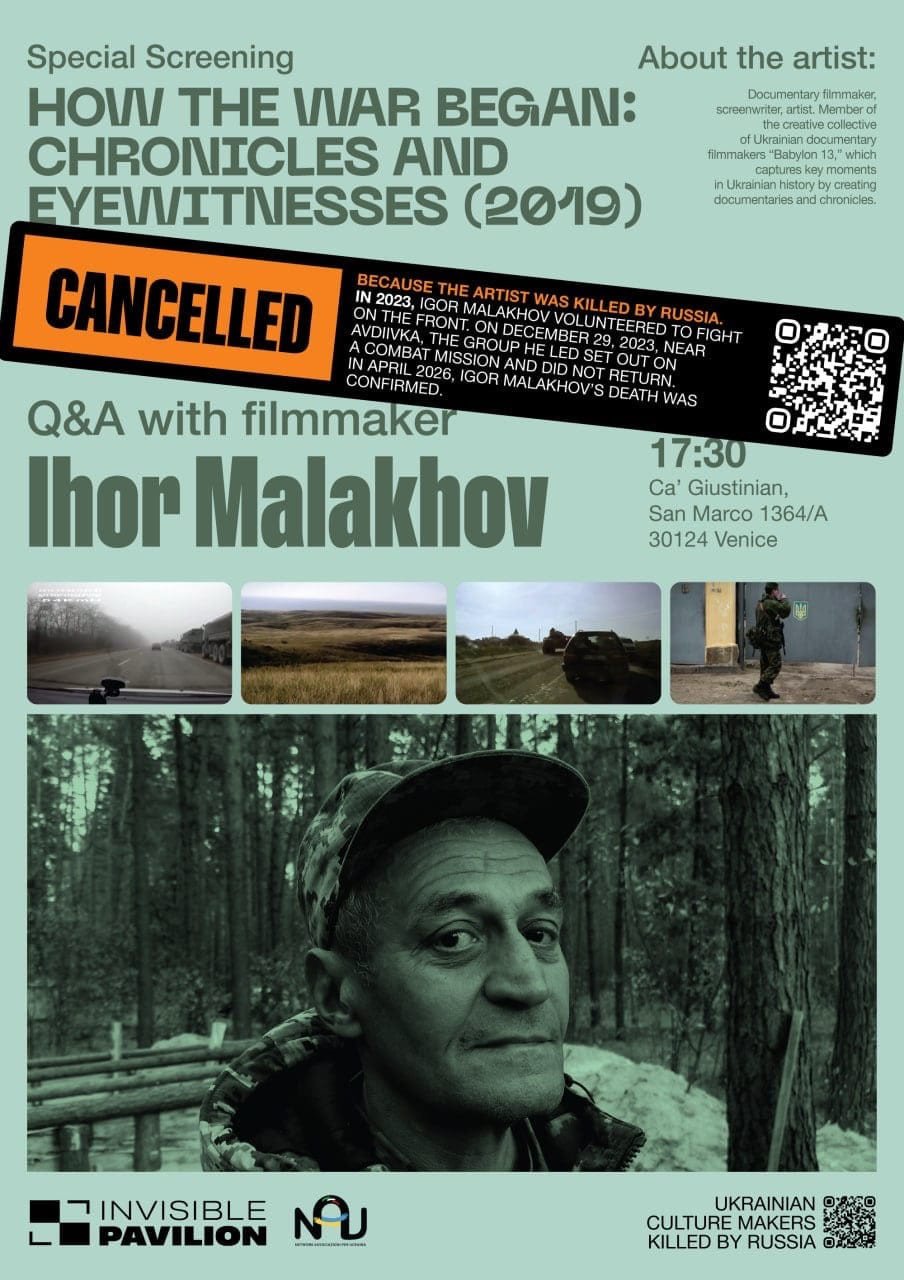
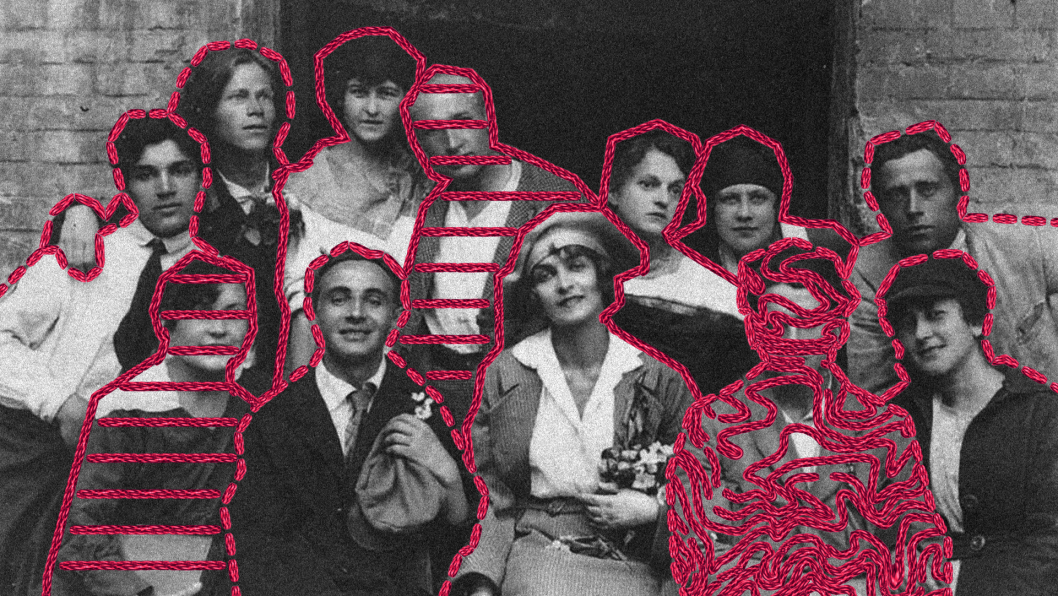
Each poster resembles a standard cultural event announcement—advertising book launches, film screenings or poetry readings—but is marked with the word “CANCELLED.” The explanation is the same across all posters, stating that the author was killed by Russia.
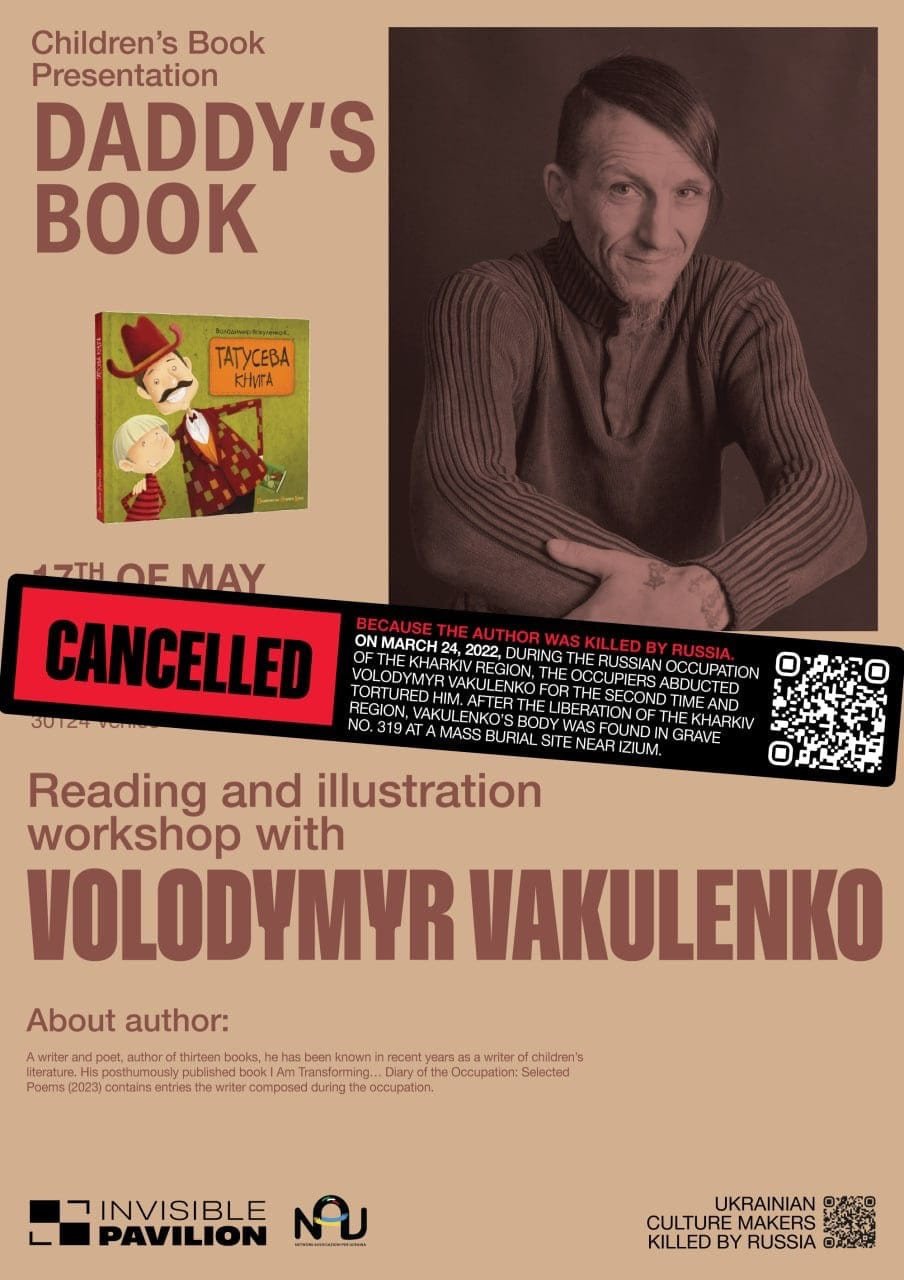
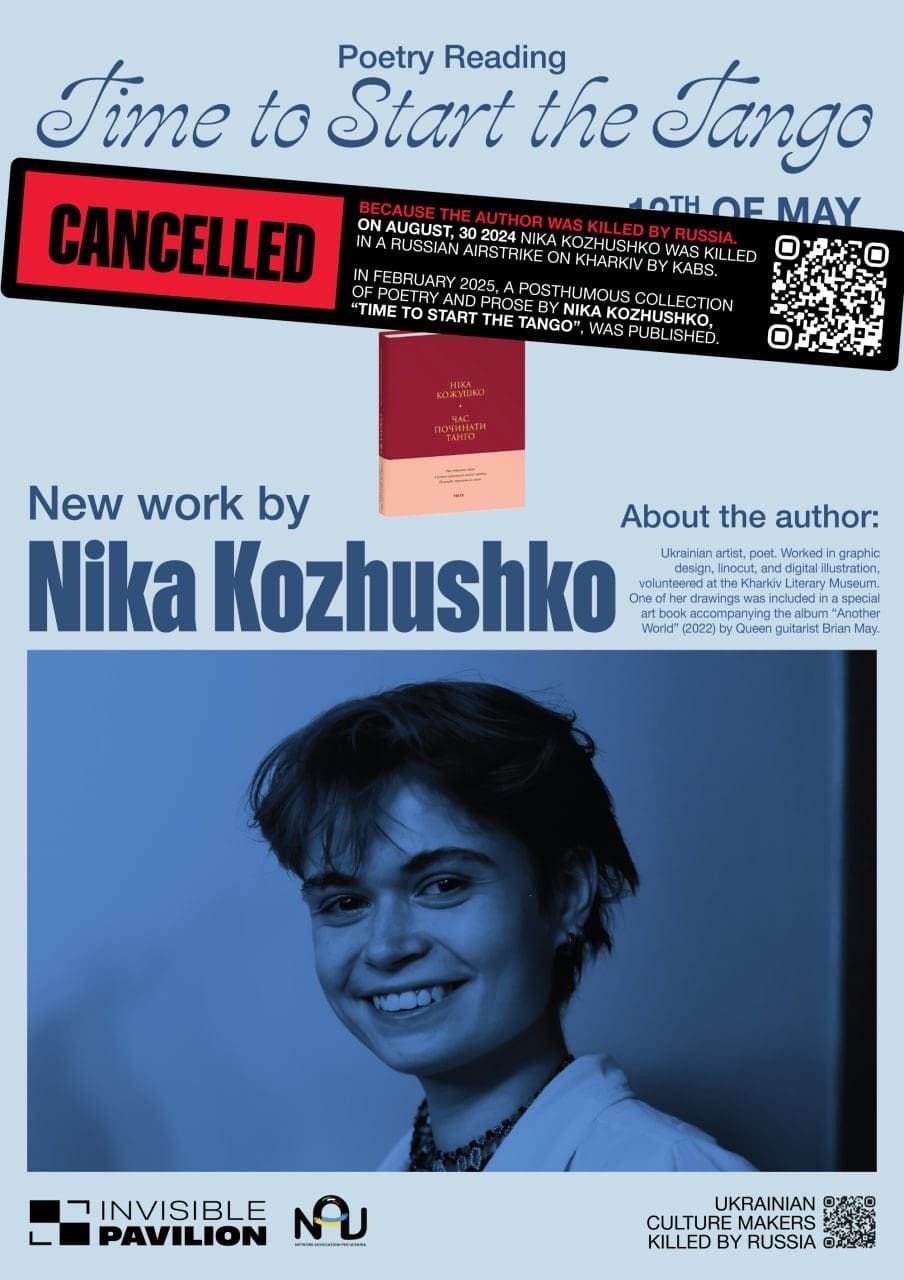
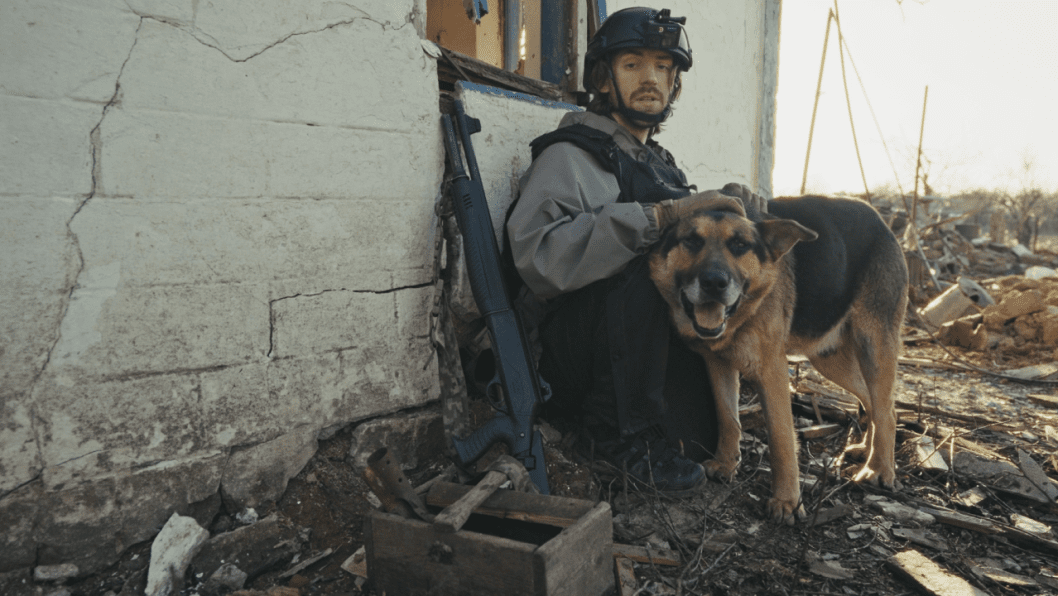
Those featured include Ukrainian writer Victoria Amelina, poet Nika Kozhushko, children’s author Volodymyr Vakulenko and filmmaker Ihor Malakhov. The posters present events that will not take place—such as book discussions or screenings—accompanied by notes stating that the individuals were killed during the war.
Each poster also includes a QR code linking to an online platform documenting Ukrainian artists and cultural figures who have died since the start of Russia’s full-scale invasion.
This initiative coincides with Russia's effort to maintain its cultural presence in Venice. On March 3, a senior cultural envoy for Russian leader Vladimir Putin Mikhail Shvydkoi announced that the Russian pavilion is scheduled to open in May 2026, stating that “Russia never left the Venice Biennale.”
“The very presence of our pavilion—regardless of what takes place there, whether exhibitions by our Latin American friends or the hosting of an educational centre for the entire Biennale—means the presence of our country in Venice's cultural space. Therefore, since we have not gone anywhere, we are not ‘returning’. We are simply seeking new forms of creative activity in the current circumstances,” he said.
However, this push has faced diplomatic resistance, as Latvia has declared Mikhail Shvydkoy, Anastasia Karneeva, and Ekaterina Vinokurova persona non grata and banned indefinitely. Latvia’s Foreign Ministry said the three are linked to Russia’s presence at the Biennale. Shvydkoy has been a key proponent of Russia’s participation.
Karneeva, the newly appointed commissioner of the Russian pavilion, is the daughter of a senior Rostec executive and a former FSB general. Vinokurova, daughter of Russian Foreign Minister Sergey Lavrov, works in the art sector as director of Christie’s Russia and co-founder of Smart Art, the official organizer of the Russian pavilion.
Discuss this article:

-480d70a36b9b34492b0b32ca04af4489.jpg "People attend the funeral ceremony of the famous Ukrainian writer Victoria Amelina at the Garrison Church, in Lviv, Ukraine, on July 5, 2023. (Source: Getty Images)")
-32d15505fc2972c43cc64011a4cf60cd.jpg "Sir Paul McCartney performs during a concert at Estadio BBVA on November 8, 2024 in Monterrey, Mexico. (Source: Getty Images)")
-58027ba3c731b844e3279bf1086a8d0b.jpg "Ukrainian DJ KOROLOVA. (Source: @korolova.dj/Instagram)")