- Category
- Culture
Can Photojournalism Survive the Age of TikTok Wars?
 Prefer U24 Media on Google
- Authors

-554f0711f15a880af68b2550a739eee4.jpg "Photo of Lucile Brizard")
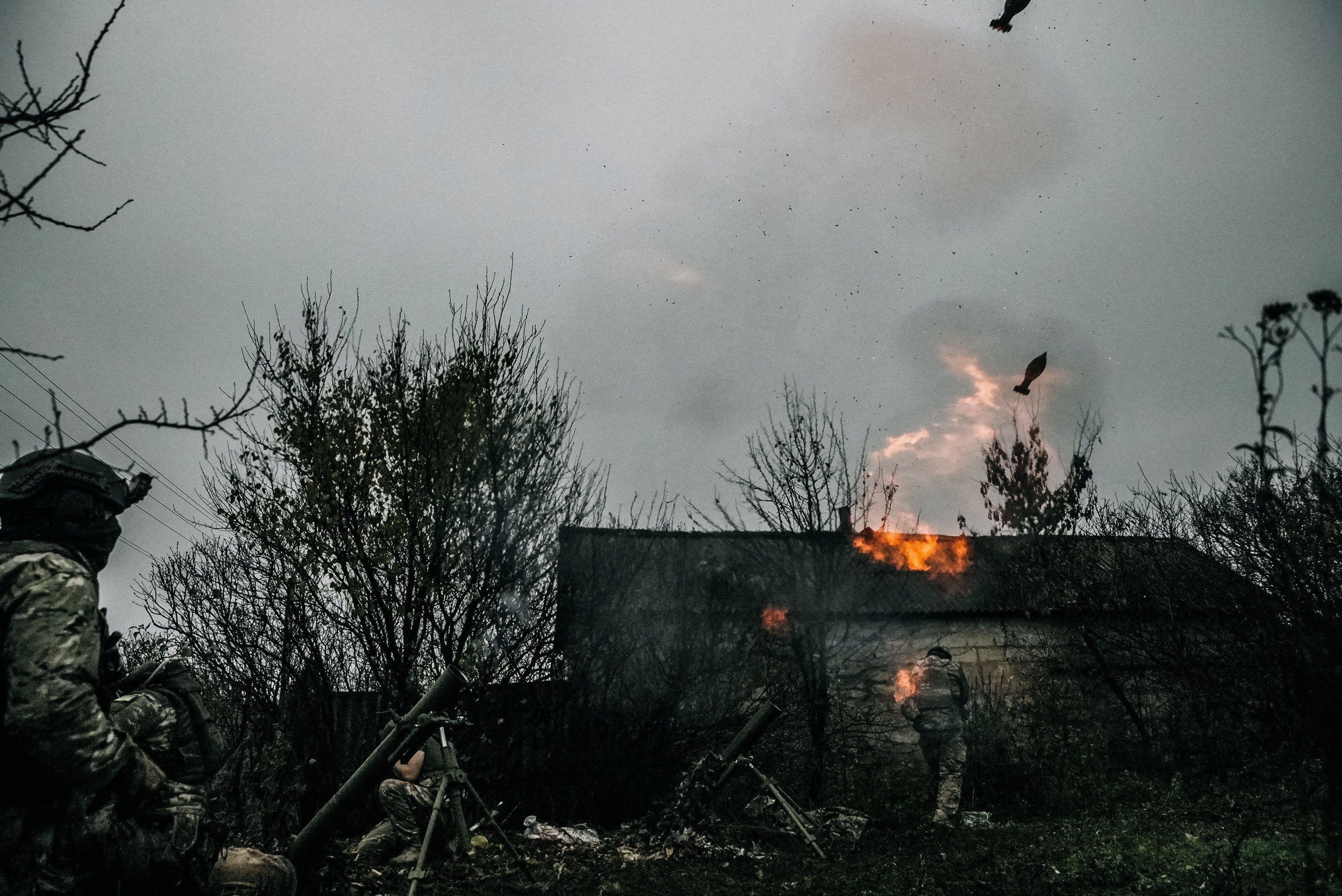
The Bayeux War Correspondents’ Award highlights the crucial role of photojournalism in a world dominated by social media, featuring powerful exhibitions and tributes to journalists like Antoni Lallican, killed by a Russian FPV drone on the Ukrainian frontline.
Ukrainian photographer Heorhiy Ivanchenko recently shared a photograph on Instagram: he had just been hit by a Russian FPV, and the hit would result in his leg being amputated. The photograph Heorhiy took was taken just minutes after the strike, and portrays “Ruslan,” a Ukrainian soldier about to “take me to the stabilization point,” as Ivanchenko writes.
Photojournalism, once a central medium of war reporting, is facing new questions of necessity and relevance. Social media platforms, instant video, and automated drone footage offer real-time images that compete with carefully composed photographs.
In this era of evolving media landscapes, the 32nd Bayeux Calvados-Normandy Award for War Correspondents opened in Bayeux, France, on October 6, 2025. For more than two decades, the town, in collaboration with the Calvados Department and the Normandy Region, has hosted this annual event to recognize journalists reporting from war zones.
Bayeux, the first French town liberated by the Allies in 1944, launched the award in 1994 during the 50th anniversary of D-Day. Its aim was to pay tribute to journalists working under fire and to provide the public with insight into conflicts beyond headlines.
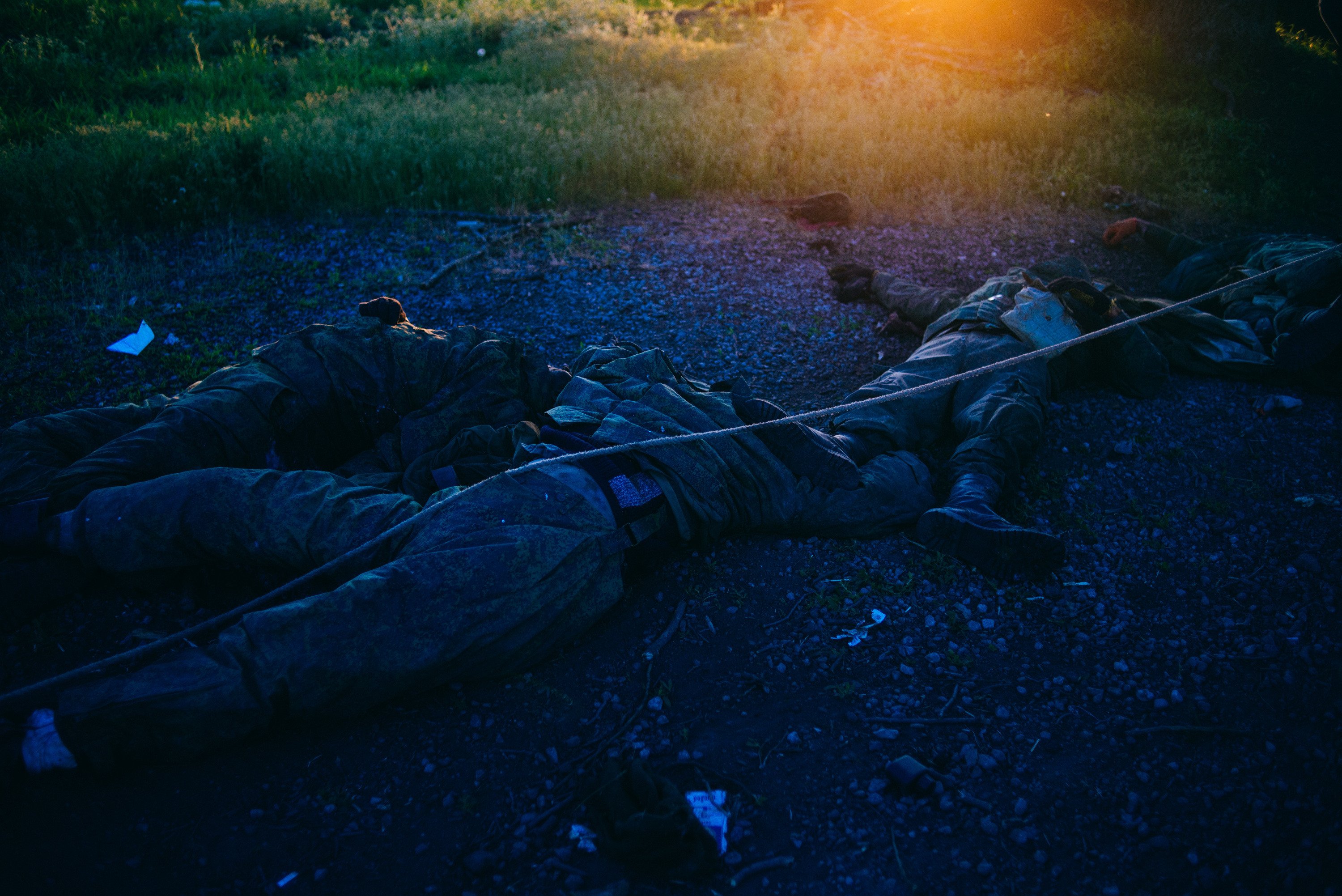
Photojournalism’s role in a changing media landscape
In the 2022 article Watching the World’s ‘First TikTok War,’ the American journalist Kyle Chayka notes in The New Yorker that what’s striking about the coverage of the war in Ukraine is how much TikTok-style content has shaped public perception, providing some of the first direct views of the Russian invasion.
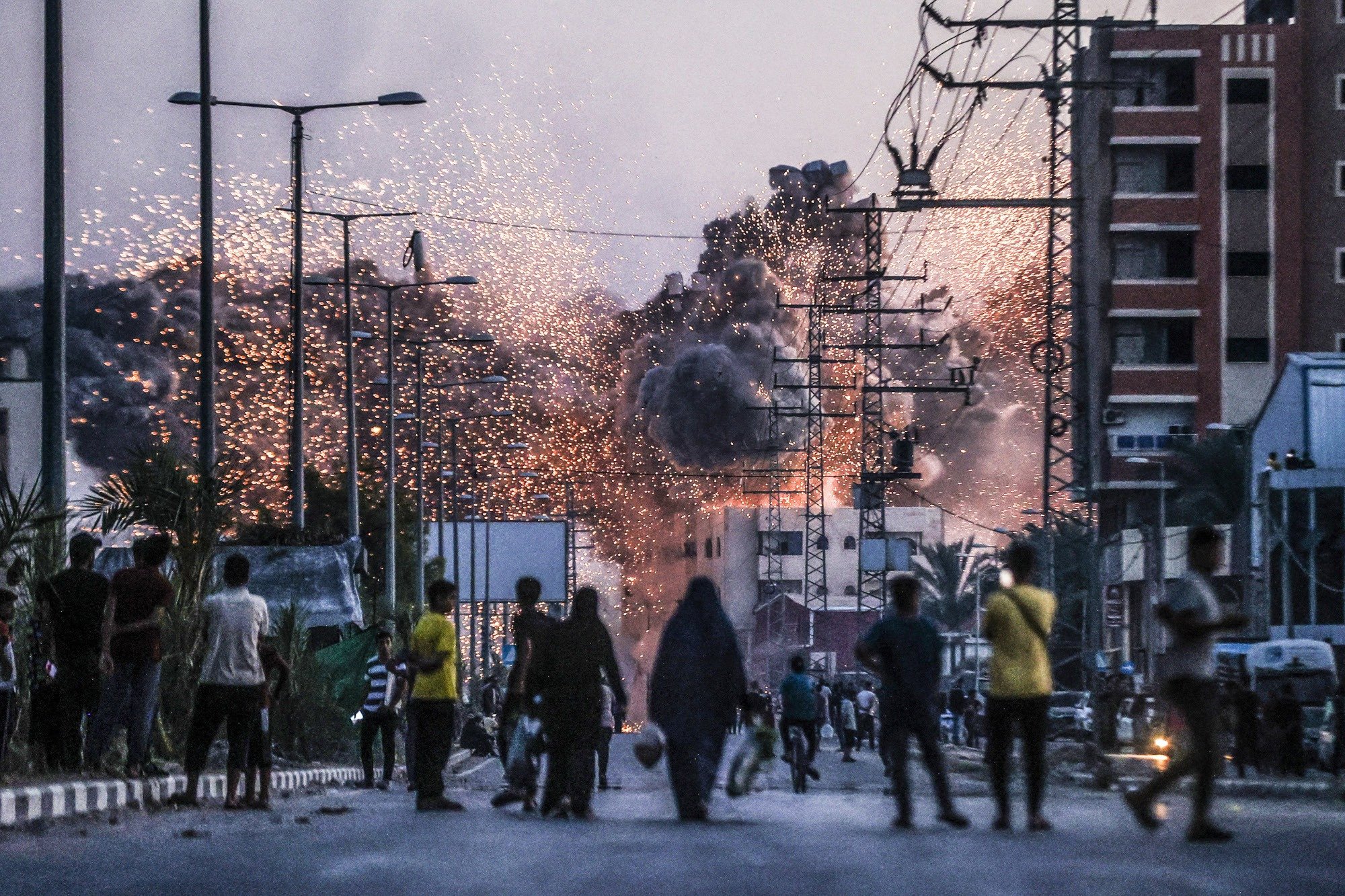
Some outlets dubbed Russia’s war against Ukraine the “first TikTok war,” while the war in Gaza saw many scrolling through horrific images of mutilated children, side by side with ads for plant-based protein.
It can be argued that social media offers a level of intimacy often missing in photojournalism. TikTok’s algorithm makes it easy to passively scroll through content without the editorial line of a particular news outlet shaping the information. While imperfect, it sometimes feels as though social media is the most reliable record of wartime.
In this case, the Bayeux Calvados-Normandy Award raises a question: In a world where images circulate instantly, does careful, deliberate photojournalism remain necessary? The event suggests that the answer is yes.
Over forty prominent reporters gathered in Bayeux on October 10-11, 2025, to award seven trophies in categories including photography, print journalism, radio, and television.
The international jury for the 32nd Bayeux Calvados-Normandy War Correspondents' Award, chaired by Jon Lee Anderson, an American investigative journalist and war correspondent known for his extensive conflict zone reporting, made its decisions. Anderson has been a staff writer for The New Yorker since 1998.
“Without a doubt, this is one of the most compelling journalistic offerings I have seen since my arrival at the Bayeux Prize,” Anderson said.
Bridging the gap between journalism and the public
On show was the Ukrainian journalist, Julia Kochetova’s “War Is Personal” a multimedia experience centering around the war in Ukraine. Documentary photography is combined with poetry, electronic music, sketches, and real war objects to make the war visible, audible, tangible, and felt. Speaking about the work Kochetova says: “People don’t remember trenches; they remember the people who were in them. I wanted to give a name and a face to this war. Because it is mine, too.”
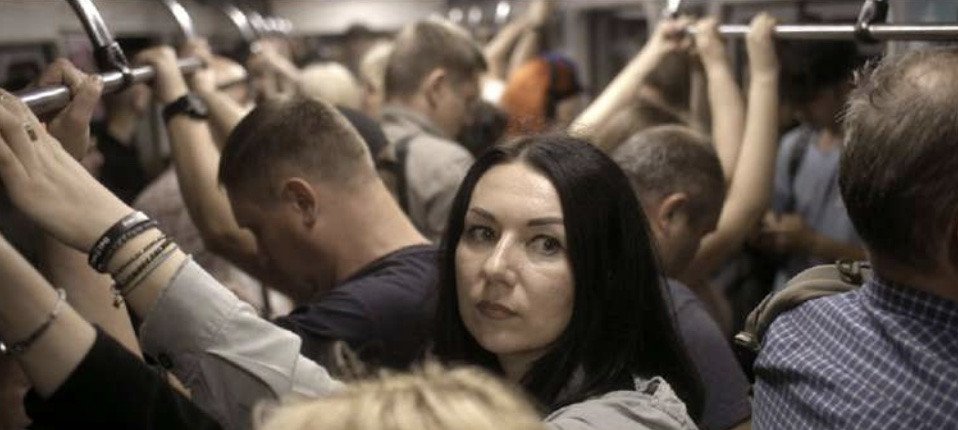
Another project focusing on Ukraine, The Ghosts of Ukraine, is the documentary by the French documentary filmmaker and journalist Anne Poiret. The film highlights the overlooked issue of the disappeared in the war—civilians captured by Russia in occupied territories and soldiers lost in combat. For two years, the documentary follows the struggles of three women, whose search for a partner, son, or sister continues to haunt them and Ukrainian society at large.
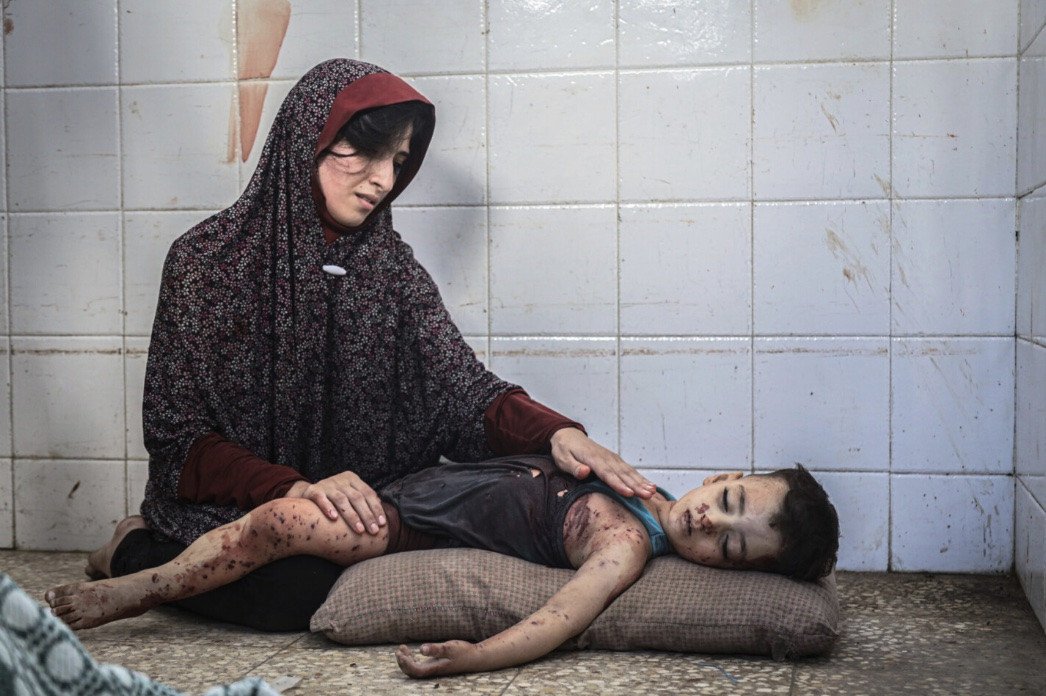
Saher Alghorra, a Palestinian photographer for Zuma Press, received the top photography award for his series Trapped in Gaza: Between Fire and Famine. One photograph captures a mother mourning her son in the morgue of Al-Aqsa Martyrs Hospital in Deir al-Balah, Gaza Strip, and remains one of the defining images of the conflict.
The series has already been recognized by international juries for its narrative depth, winning the 2025 Humanitarian Visa d’Or at the Visa pour l’Image festival in Perpignan.
“I remember a particular moment that happened in Rafah before we were forced to flee to the south,” says Alghorra. “At that time, journalists were being targeted more than ever before, and for the first time, I felt that my camera could cost me my life. We stopped carrying our cameras in public for a while, out of fear of being targeted.”
The documentary photographer, Edward Kaprov, born in the Soviet Union, won the 2025 Video Image Award for his reportage, Donbas: Between Life and Death, which captured the fate of people in the East of Ukraine. Kaprov, recognized for his documentary-artistic approach, is represented by the German photography gallery CLAIRbyKahn.
Visitors move from series on Gaza to Syria, Ukraine, Sudan, and Ethiopia. Each section demonstrates different approaches, from formal framing to embedded observation, but all insist on the photographer’s agency in shaping how stories are told.
The television award-winning work of France 24 journalists Julie Dungelhoeff, James André, and Sofia Amara on Syrian prisons under Bashar al-Assad is presented alongside stills, press photos, and interactive exhibits. The images operate as entry points into a broader narrative, contextualizing reporting and giving viewers the opportunity to engage with a story over time rather than instantaneously.
The role of the Bayeux memorial for journalists
Another important feature of the festival, the Bayeux Memorial for Journalists, is a space dedicated to those killed while reporting since 1944, which reinforces the stakes of this work. Ukraine is still processing the loss of the French photojournalist Lallican and the grave injuries Ivanchenko sustained while reporting in the Donetsk region. On the wall, engraved is also the Ukrainian journalist Viktoriia Roshchyna’s name, who was kidnapped, tortured, and killed in Russian captivity.
A Round Table was held, dubbed The Viktoriia Project on the 9 of October. The panel discussed the coordinated the efforts of 45 journalists worldwide, which continued her investigation, culminating in the publication of the Viktoriia Project on 29 April 2025.
White stones, engraved with the names of over 2,000 journalists, line a landscaped promenade designed by the French architect Samuel Craquelin.
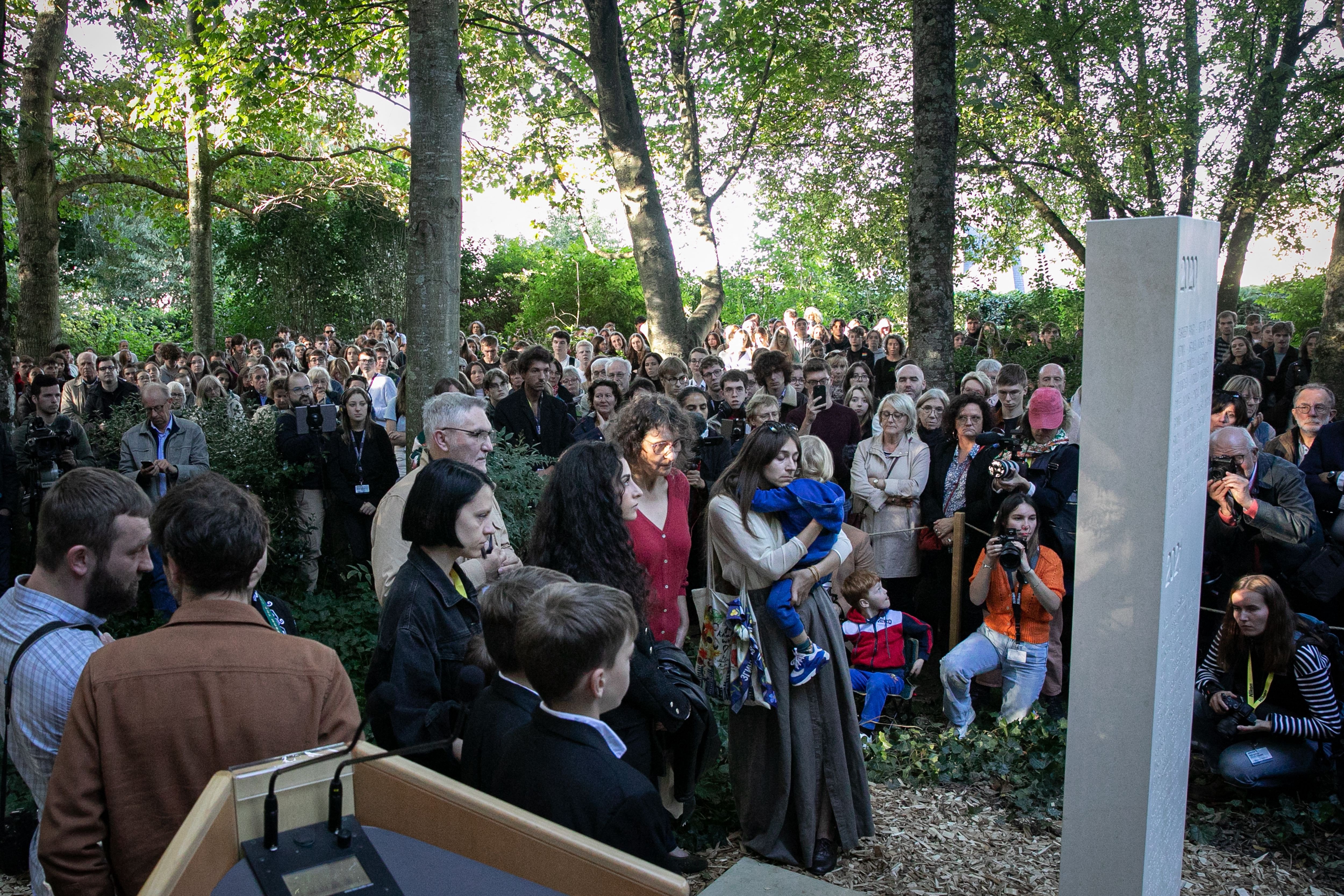
The memorial’s presence at Bayeux contextualizes the awards. Every photograph and every report emerges from an understanding of the risks involved.
This year’s winners, drawn from around the globe, represent different levels of experience and different approaches to framing conflict. Saher Alghorra was in Gaza when selected, continuing to document civilians under fire.
Ali Jadallah and Jehad Alshrafi focused on civilian life amid ongoing military campaigns. In radio and television, awards went to reports on Ukraine, Syria, and Ethiopia. The common thread is not style but a commitment to clarity, attention, and presence, something not necessarily there in a social media post.
Even in an era dominated by instant visual media, the event makes clear that photojournalism is far from obsolete. In an era of fake news, the vetting of information by independent media outlets is beyond necessary, but that doesn’t mean social media will go away.
The 2025 Bayeux exhibition will remain open to the public until November 9.
Discuss this article:
-9bd5e1532102621f8fb1c4ba871a3171.png)

-58027ba3c731b844e3279bf1086a8d0b.jpg "Ukrainian DJ KOROLOVA. (Source: @korolova.dj/Instagram)")

-7c04a9ec14c59f9c1e676742ac5bf021.png "Still from the documentary film “Children. How Russia Teaches to Fight.“ (Source: Ukraine War Archive)")