- Category
- Culture
“Reliquiae” by Italian Artist Walter Espedito Trento Brings Ukrainian War Artifacts to Biennale Streets
 Prefer U24 Media on Google
- Authors


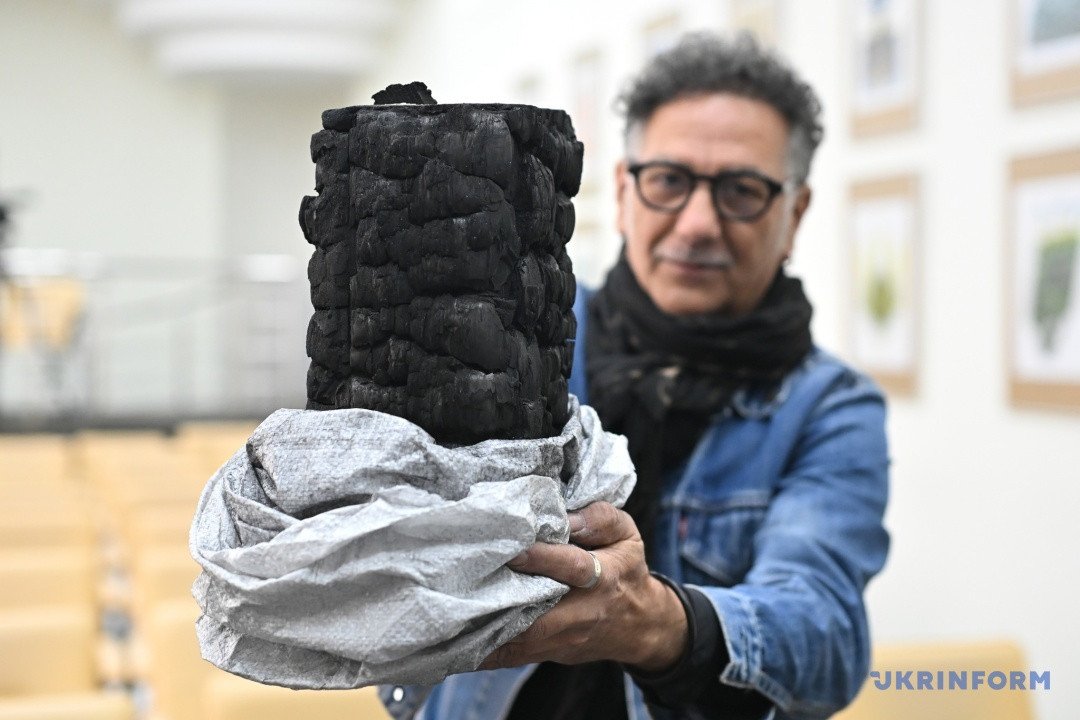
Italian artist and designer Walter Espedito Trento has launched an independent art project titled Reliquiae, which will present artifacts brought from Ukraine as testimony to the ongoing war.
The project will be unveiled in Venice on May 8–9, ahead of and on the opening day of the Venice Biennale, according to comments the artist gave to Ukrinform on May 5.
We bring you stories from the ground. Your support keeps our team in the field.
The presentation will take the form of a secular procession moving from Venice’s railway station through traditional tourist routes across the city. Each participant will carry a single “relic” placed on a red velvet cushion, including a scorched fragment from a damaged Russian drone strike on the Bernardine monastery in Lviv, a brick fragment from a bombed residential building in Odesa, a bullet-riddled city sign from Ukraine, and other symbolic artistic compositions.
Espedito Trento said the project emerged as a deliberately provocative response to the decision by Biennale organizers to reopen the Russian pavilion, justified by the argument that “culture is outside politics.”
“This idea arose as a somewhat provocative gesture in response to the decision to once again open the Russian pavilion at the Venice Biennale, arguing that ‘culture is outside politics.’ We therefore want to present our relics as consequences of what is referred to as ‘great Russian culture,’” he said.
-90ccfe32cfb793bea7f5f83d323b8f47.jpg)
The artist added that he had invited Ukrainian artists, writers, and poets to identify objects that could serve as art relics, giving them complete freedom in their selection and trusting their sense of the historical moment. Contributions were gathered from across Ukraine, including Lviv, Kyiv, Bucha, Mykolaiv, Ternopil, Cherkasy, Kharkiv, and other cities.
According to Ukrinform, during the Venice procession, the relics will be carried by around ten participants, including Italian artists contributing their own works, as well as representatives of the Ukrainian community in Italy.
Following the Venice action, Trento plans to relocate the Ukrainian relics to Cisternino, where they will be exhibited from May 30 to September 30 in the historic Church of Santa Maria di Costantinopoli.
Meanwhile, the Invisible Pavilion, an unofficial artistic initiative appearing throughout Venice during the Venice Biennale, is highlighting the human cost of Russia’s war against Ukraine.
-bdd1ee3341c72b8b8f8ca835a77baca9.jpg)
Running alongside the 61st Biennale from May 6 to November 22, 2026, the project avoids a traditional gallery setting in favor of a city-wide campaign of posters in public spaces. Each poster is designed to look like a typical announcement for a book launch, film screening, or poetry reading, but is prominently marked with the word “CANCELLED.” The same grim explanation appears on every display, stating that the featured artist was killed by Russia.
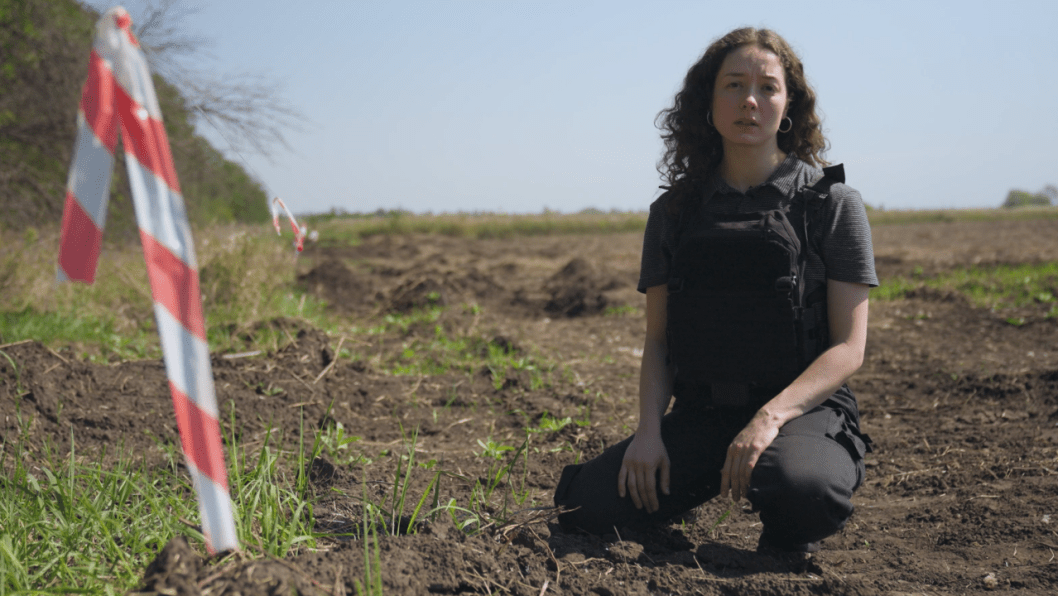
The campaign features several prominent Ukrainian creators whose work was ended by the invasion, including children’s author and poet Volodymyr Vakulenko, poet and artist Nika Kozhushko, writer and human rights activist Victoria Amelina, and documentary filmmaker Ihor Malakhov.
The push for Russian representation in Venice has sparked backlash from Italian authorities and European leadership. On April 29, Ansa reported that the Italian Culture Ministry sent inspectors to the Venice Biennale to examine the contentious choice to permit the Russian Pavilion’s reopening for the 2026 season.
Discuss this article:

-480d70a36b9b34492b0b32ca04af4489.jpg "People attend the funeral ceremony of the famous Ukrainian writer Victoria Amelina at the Garrison Church, in Lviv, Ukraine, on July 5, 2023. (Source: Getty Images)")
-32d15505fc2972c43cc64011a4cf60cd.jpg "Sir Paul McCartney performs during a concert at Estadio BBVA on November 8, 2024 in Monterrey, Mexico. (Source: Getty Images)")
-58027ba3c731b844e3279bf1086a8d0b.jpg "Ukrainian DJ KOROLOVA. (Source: @korolova.dj/Instagram)")