- Category
- Culture
Russian Singer Netrebko Is Back in the Spotlight. So Here's the Long History of Her Clear Association With The Kremlin
 Prefer U24 Media on Google
- Authors


Anna Netrebko has spent the last two years trying to have it both ways. She wants to maintain her place on the world’s biggest opera stages while avoiding the consequences of her long-standing ties to the Kremlin.
From universities to opera houses to private parties, the decision to host Anna Netrebko carries moral weight. Many critics of her long-documented ties to the Kremlin—and her careful refusal to break with them—can claim that this is not incidental. It's strategic.
The Hungarian State Opera House @OperaBudapest is hosting Russian soprano Anna Netrebko on March 23, 2025—despite her support for Putin and Russia’s war on Ukraine.
— UNITED24 Media (@United24media) March 22, 2025
Every ticket sold funds Russian aggression. Russia must not be allowed to use culture to whitewash war crimes. pic.twitter.com/EPsMc3S7Ub
Earlier this year, amid growing public criticism, the Royal Opera House in London responded to a complaint via email, stating:
“We believe that culture is an international force, and Anna is one of the best performers in the world. We're delighted to welcome her back,” read a statement from the institution. “We are also clear that Russian nationality does not equate to alignment or association with the current regime in the Kremlin. We have a policy of not casting individuals who have a clear association with the regime in the Kremlin, or those who have publicly endorsed the terrible actions of Russia in Ukraine.”
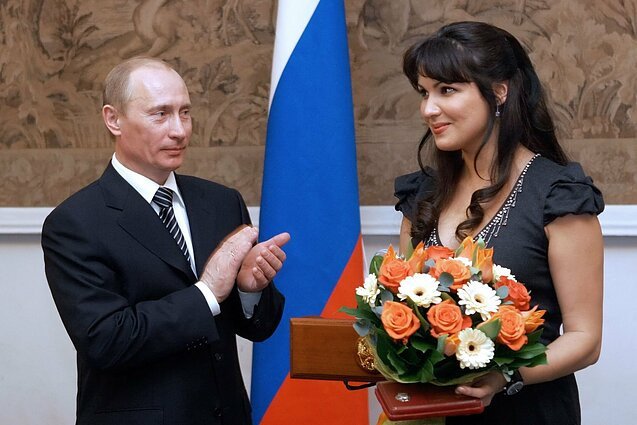
But Netrebko’s own words and actions suggest a different story. In 2012, she endorsed Vladimir Putin’s reelection and allowed her name to appear on an official list of campaign supporters. “In 2012, I voted for Putin and made no secret of it beforehand. At the time, I also thought he was good for art in Russia,” she told Die Zeit in 2022. “It would have been very unwise to refuse. There are things you’d better not refuse.”
It’s a matter of trust
While Netrebko has portrayed herself as someone who was simply “too trusting,” her longstanding ties to the Kremlin — and her visible proximity to key political figures linked to Russia’s wars — continue to raise serious doubts, particularly among critics who question whether her associations can be so easily dismissed.
From endorsing Vladimir Putin’s presidency to financially supporting Russian-backed forces to appearing at Kremlin-organized celebrations, she has repeatedly leveraged her platform in ways that align with Russia’s state interests. Her position is not ambiguous—it’s simply obscured by talent. Institutions that engage with her must do so with full awareness of the message they send.
Asked directly why she wouldn’t condemn Russia’s invasion of Ukraine, she gave a revealing answer: “Putin is still the president of Russia. I’m still a Russian citizen, so you can’t do something like that. Do you understand?”
This isn’t a new position for her. In a 2009 interview with a Russian state newspaper, Netrebko defended Russia’s invasion of Georgia and described criticism of the Kremlin as foreign propaganda.
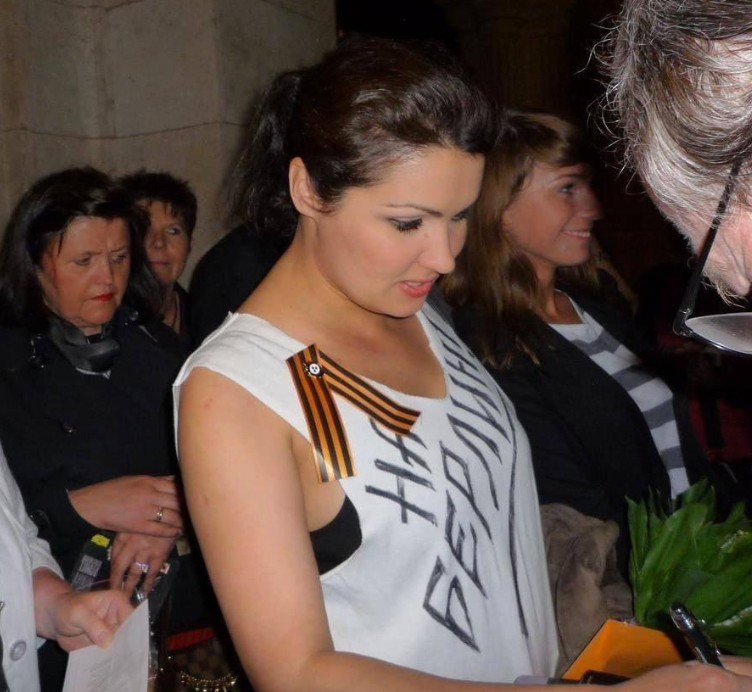
“I am offended by what they write about us in foreign newspapers... For example: "In August 2008, Russia tried to destroy free Georgia and the courageous democrat Saakashvili."
Later in the interview, she would wipe any ambiguity from her position, saying, “I am always unambiguously for Russia.” Her self-declared mission is “to fight Russophobia in all its forms.”
Friends in high places
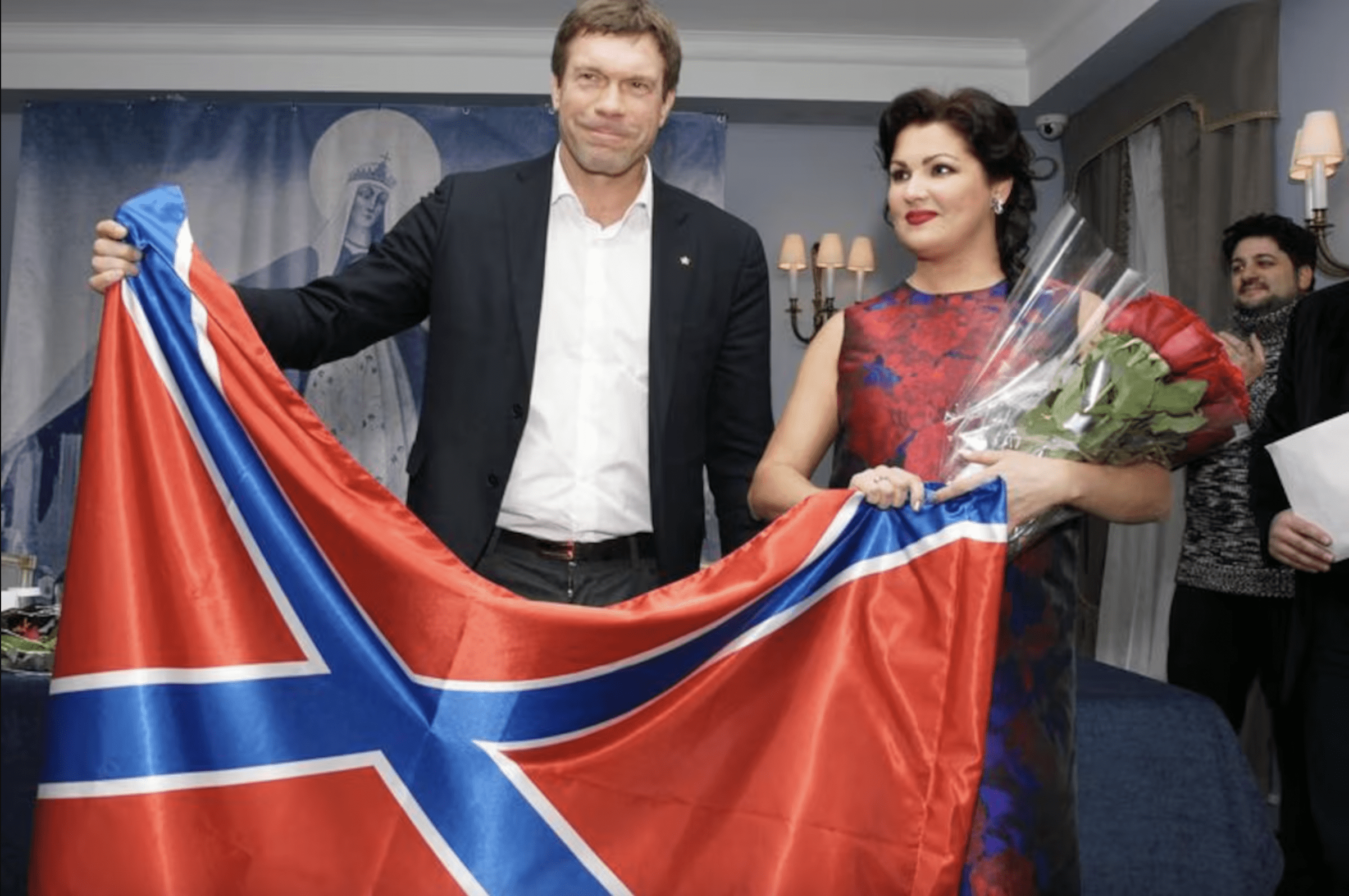
In 2014, during Russia’s first attempt to annex eastern Ukraine, Netrebko donated $20,000 to support an opera house in Donetsk—a city then under the control of Russian-backed forces. The money was handed directly to Oleg Tsaryov, a sanctioned Russian proxy leader, in a public ceremony where Netrebko was photographed holding the flag of “Novorossiya.” She later claimed the gesture was “not about politics,” but the symbolism was unmistakable.
In 2017, ahead of Putin’s re-election campaign, Netrebko told the Russian state news agency RIA Novosti that it was “impossible to think of a better president for Russia.” She has also used her social media platforms to boost his messaging—at one point sharing a statement from Putin on Instagram, accompanied by flexed biceps emojis.
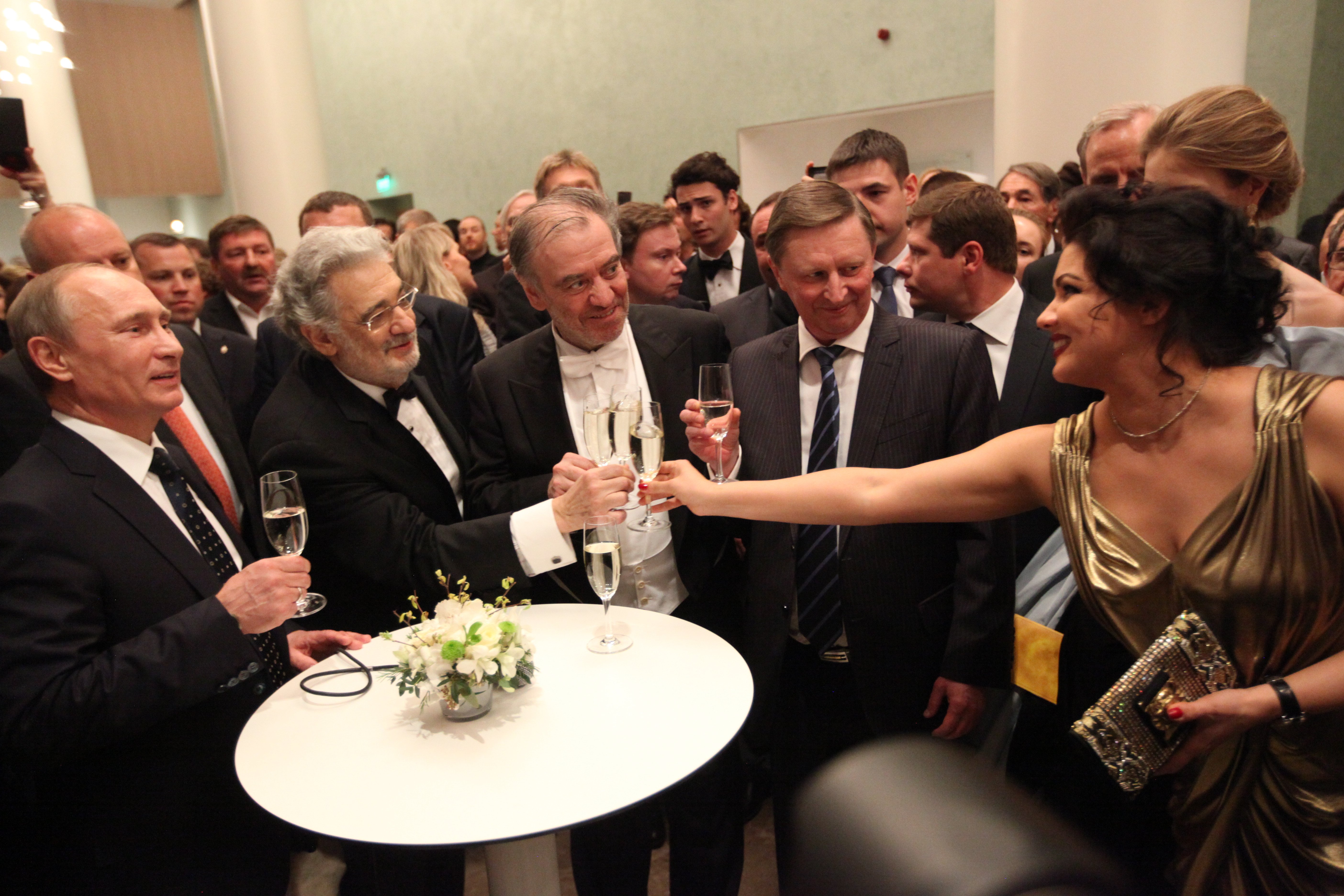
In September 202—just five months before Russia’s full-scale invasion—Netrebko celebrated her 50th birthday with a gala concert at the State Kremlin Palace. From the stage, Putin’s press secretary, Dmitry Peskov, read a personal message from the president, calling Netrebko a representative of the Russian nation and praising her “clear civic position.”
Netrebko has consistently benefited from her closeness to the Kremlin. She’s received state honors from Putin and been a prominent cultural figure used to represent Russia on the global stage. In a 2011 interview with Newsweek, she praised Putin’s “strong, male energy” and joked that she wished she could have been his lover.
When the full-scale war broke out in 2022, Netrebko waited. She eventually published a statement saying she opposed the “senseless war of aggression,” but paired it with a photo of herself holding hands with conductor Valery Gergiev—a longtime Putin loyalist who, unlike her, was immediately dropped from most Western venues. Her caption included the hashtag “#friendship.”
The statement wasn’t a clean break. It was a performance. “Yes, I want to sit in two chairs at a time,” she told Die Zeit. “And I’m ready to sit even in three if necessary.”
Three chairs
On February 26, 2022, she posted a statement opposing the war. But she also seemed to resent the scrutiny, adding, “Forcing artists, or any public figure, to voice their political opinions in public and to denounce their homeland is not right.” In another post, alongside heart and praying hands emojis, she shared a text that used an expletive to refer to her Western critics, saying they were “as evil as blind aggressors.”
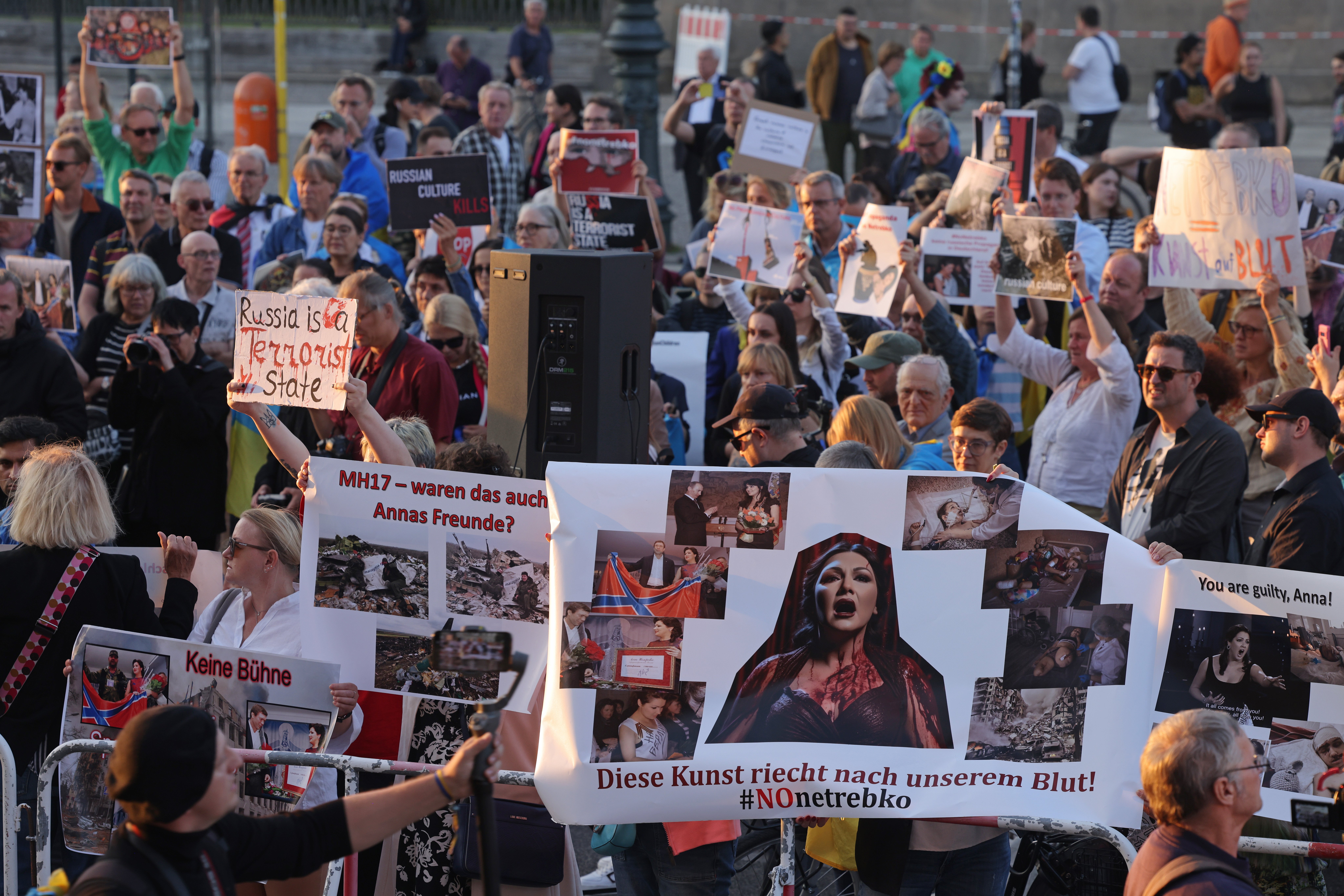
That’s what’s really at stake. Netrebko wants the benefits of being seen as Russian in Russia and apolitical in the West. She wants to speak out against the war without alienating its sponsor. But there’s no neutral ground here. Russia has bombed theaters, flattened cities, and buried civilians under rubble. Its army is still occupying Ukrainian territory. Its soldiers are still committing atrocities.
And for years, Netrebko used her status as a world-renowned performer to whitewash and legitimize Putin’s regime. She endorsed it, backed its expansion, and has refused at every turn to hold it accountable.
This isn’t just a political matter—it’s a question of accountability. Netrebko spent years lending credibility to a regime that now stands accused of war crimes. Having helped elevate that image, she can’t reasonably ask to be treated as neutral. Her position is clear. The only question is whether the world still chooses to ignore it.
Discuss this article:


-e00d178a31a987cd514e15ad3a8c2131.jpeg "Max Klymenko wearing the Etnodim, featuring embroidery inspired by traditional Ukrainian crafts. (Source: Ian Treherne)")
-e88c01988249cd60b6f04f79d29156b7.jpeg "Damage to “Cosmogony,” the largest painting in Ukraine, following a Russian drone attack on Lutsk on October 13, 2026. (Source: @sashyyna/Instagram)")