- Category
- Defense Tech
Gripen vs F-16: How Ukraine’s Incoming Swedish Fighters Could Hunt Russian Shahed Drones
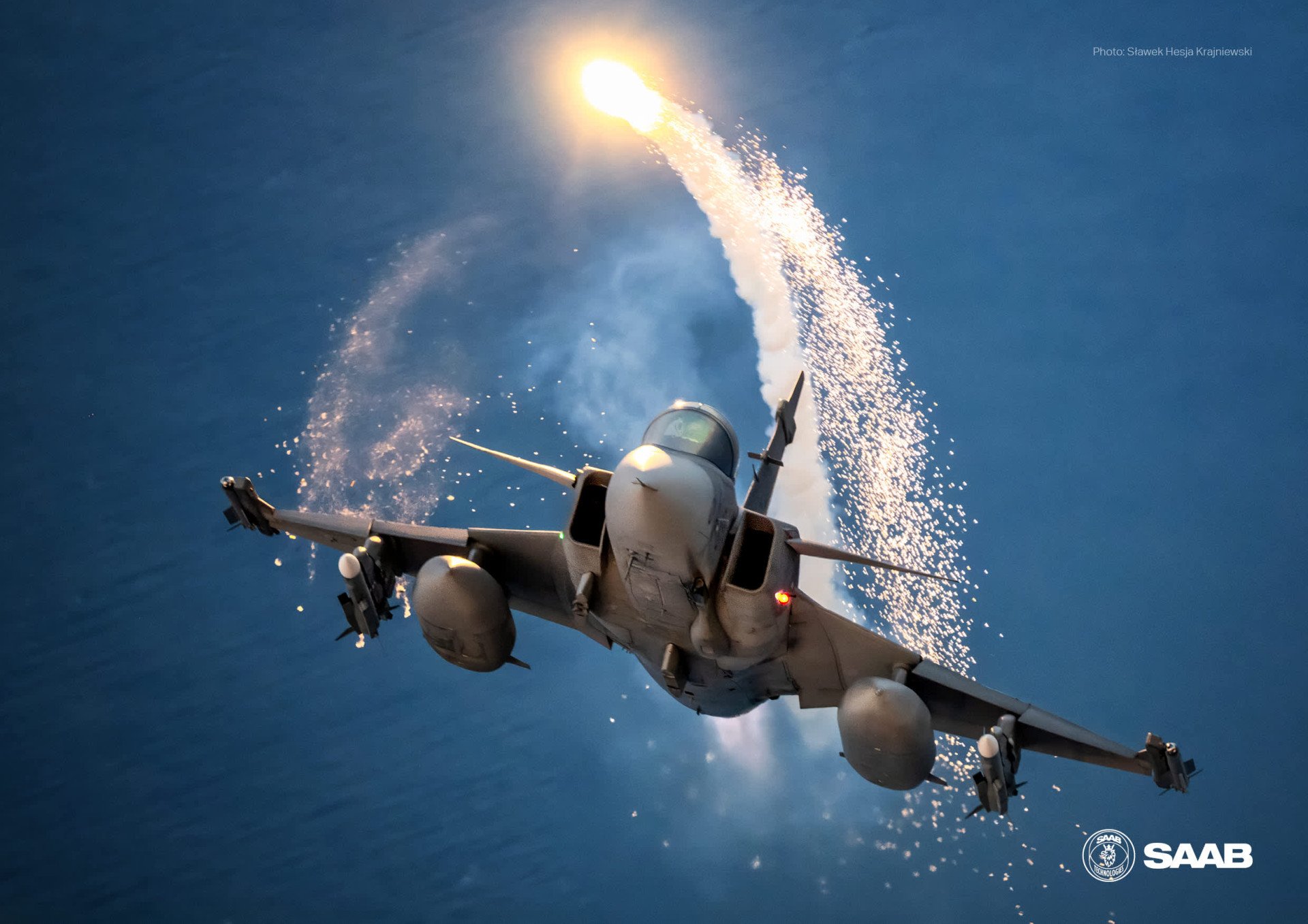
Ukraine’s upcoming Swedish-made JAS 39 Gripen fighter jets could become another important tool against Russian Shahed and Geran attack drones, bringing heavier cannon fire and a wide selection of air-to-air missiles.
 Prefer U24 Media on Google
- Authors


However, the aircraft currently lack one of the more affordable weapons already adapted for Ukraine’s F-16s, which could complicate their use in large-scale drone-interception missions.
We bring you stories from the ground. Your support keeps our team in the field.
According to Defense Express on November 12, the Gripen’s weapons arsenal shares many similarities with that of the American F-16, although several differences could affect how efficiently the Swedish fighters engage Russian unmanned aircraft.
Ukrainian President Volodymyr Zelenskyy recently announced that Kyiv expects to receive its first Gripen fighters in January or February 2027, with the aircraft expected to strengthen Ukraine’s air defenses against Russian drones, including jet-powered Shahed variants.
Step into the invisible battlefield of electronic warfare. See how Gripen E dominates the spectrum to outsmart radars, sensors, and missiles—through intelligence and innovation.
— Saab (@Saab) October 3, 2025
Watch the full video here: https://t.co/zXKkEDaTXy pic.twitter.com/hwBwUXZhGT
One of the most significant differences between the two aircraft lies in their built-in cannons, which can provide an alternative to expensive air-to-air missiles when intercepting drones.
The single-seat Gripen C is equipped with a 27mm Mauser BK-27 cannon capable of firing approximately 1,700 rounds per minute. By comparison, the F-16 carries a six-barrel, 20mm M61A1 Vulcan cannon, which can achieve a firing rate of up to 6,000 rounds per minute.
Although the American fighter has a considerable rate-of-fire advantage, the Gripen’s larger-caliber ammunition delivers greater destructive power per round.
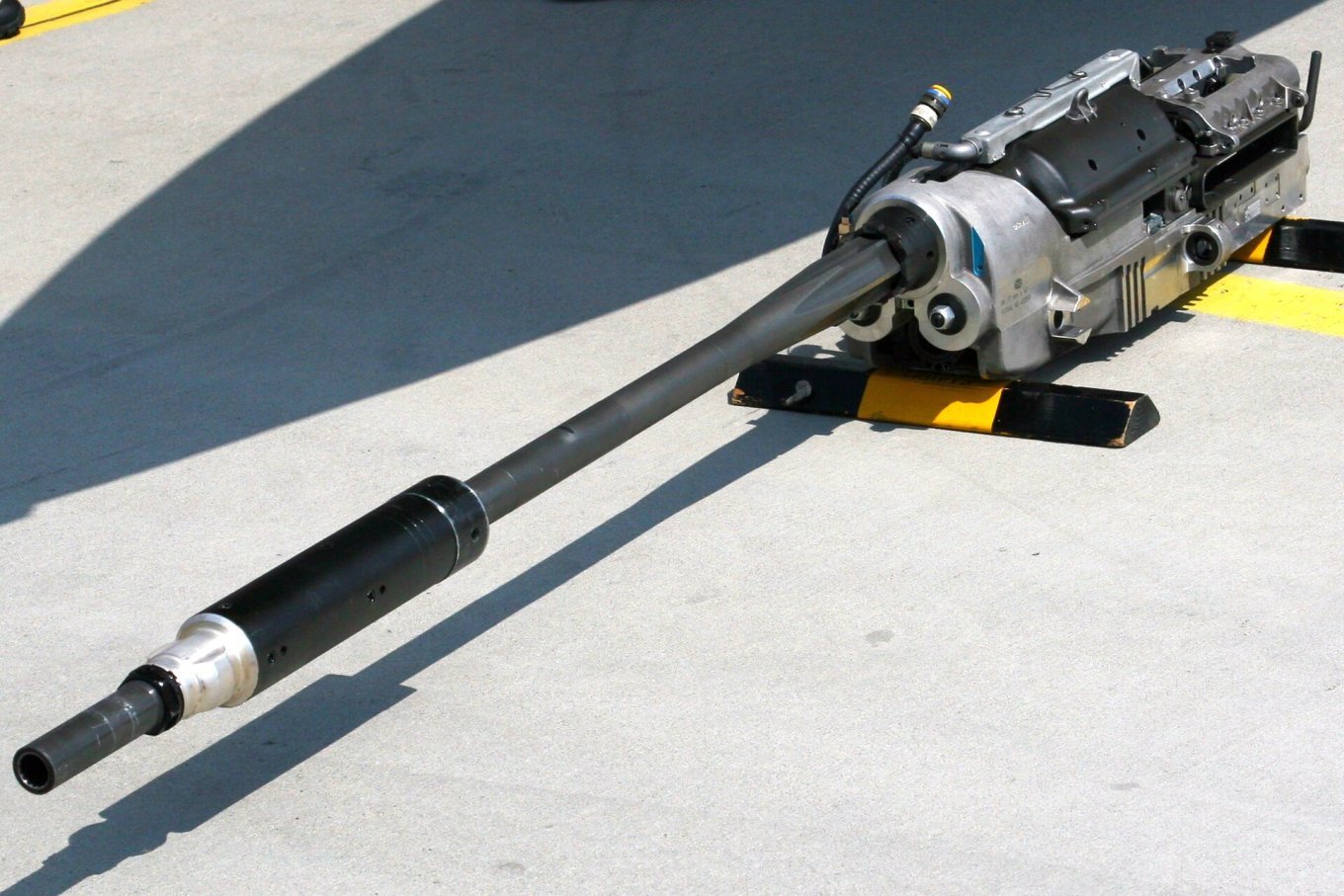
According to Defense Express, this could allow the Swedish aircraft to bring down a drone with fewer successful hits, potentially offsetting some of the difference in firing rate.
Beyond their cannons, Gripen fighters can carry several types of short- and medium-range air-to-air missiles commonly used by Western combat aircraft.
These include the American AIM-9 Sidewinder and AIM-120 AMRAAM, both of which are also compatible with the F-16. The Gripen can additionally employ the German-developed IRIS-T short-range missile, expanding the range of weapons available for engaging aerial targets.
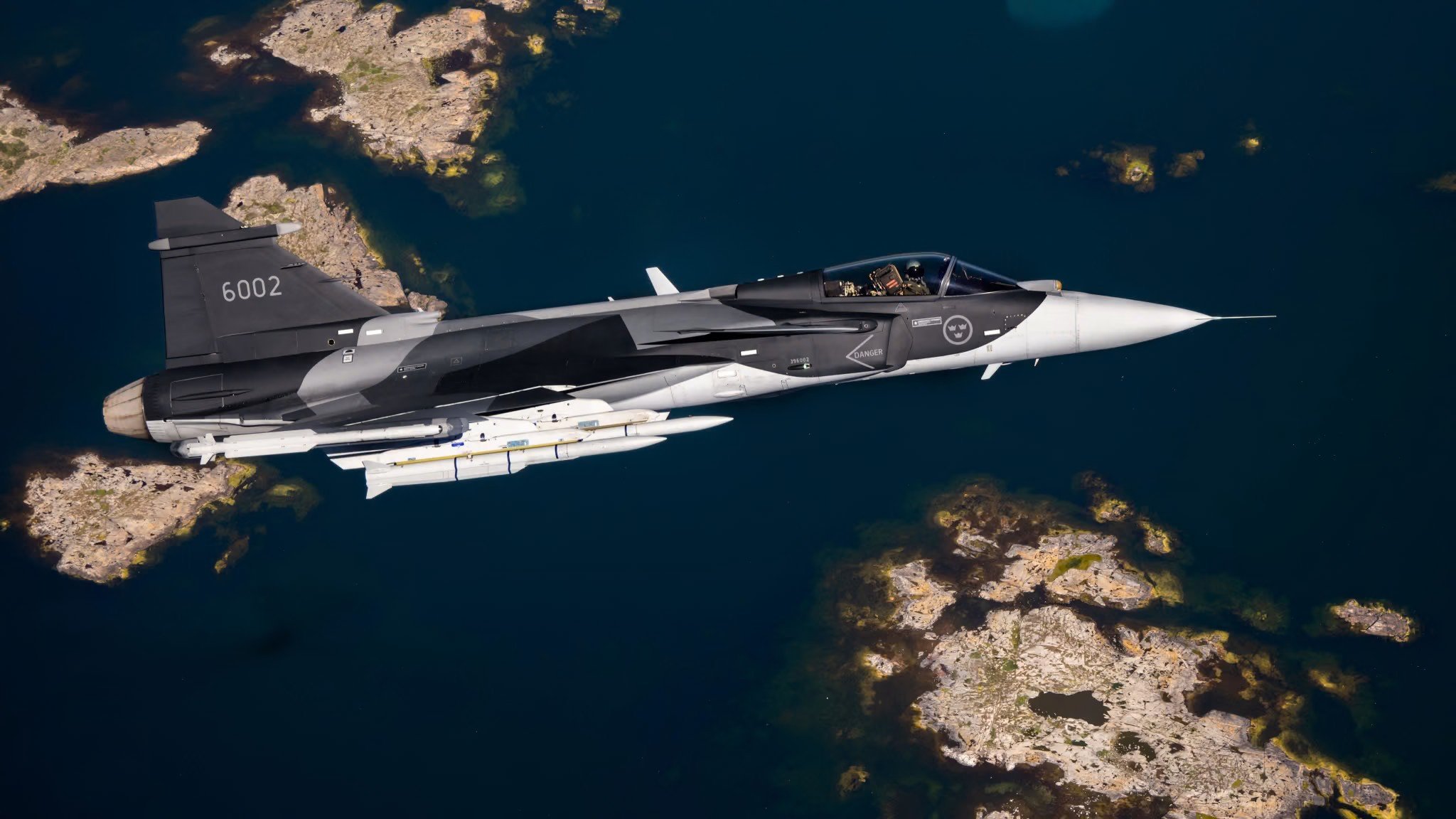
Defense Express noted that IRIS-T compatibility is less common among the F-16 configurations pledged to Ukraine, identifying Norwegian aircraft as an option capable of carrying the German missile. However, the arrival of those particular fighters has not been confirmed.
While such missiles provide substantial interception capabilities, their cost presents a major challenge. Depending on the weapon and configuration, modern air-to-air missiles can cost hundreds of thousands to several million dollars each, making them an expensive solution for destroying comparatively inexpensive Russian drones.
Although using these weapons can be justified in certain combat situations, repeatedly firing costly missiles against mass-produced UAVs places additional pressure on ammunition supplies and air defense budgets.
Did you know? 💭
— Saab (@Saab) August 28, 2025
▪️ Gripen can use a road of 16x800 m for take off and landing.
▪️ Combat turn-around time is remarkably short and requires only a minimal number of ground crew and equipment. pic.twitter.com/zUBERzZKZt
This is where the F-16 currently holds a potentially important advantage.
The American fighter has been adapted to employ APKWS laser-guided 70mm rockets, or comparable precision-guided weapons, offering a significantly cheaper way to intercept drones than conventional air-to-air missiles.
The Gripen, however, has not yet received APKWS integration. Swedish manufacturer Saab has been exploring the possibility of adding the system to both the Gripen C and newer Gripen E, but the capability is not currently part of the aircraft’s operational weapons inventory.
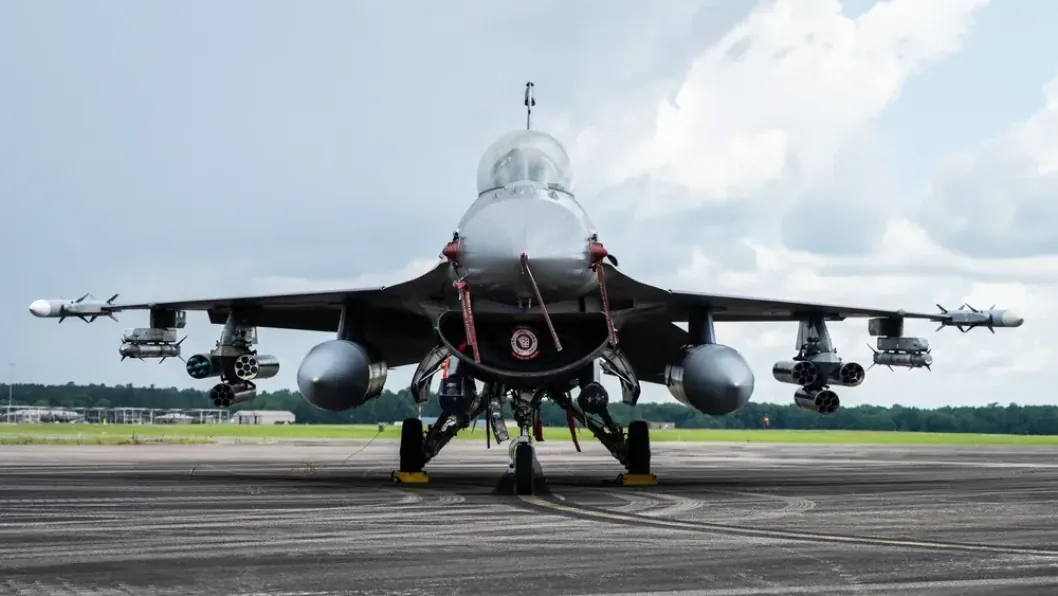
The absence of such a weapon could become particularly relevant for Ukraine, where Russian forces regularly launch large numbers of attack drones, making the cost and availability of interceptors important considerations.
At the same time, the Swedish fighter has a capability that Ukraine’s current F-16s lack: compatibility with the European Meteor long-range air-to-air missile.
Meteor offers significantly greater reach than conventional short-range weapons and could strengthen Ukraine’s ability to threaten Russian combat aircraft, particularly those launching guided aerial bombs from beyond the front line.
Meteor is an advanced radar-guided, beyond-visual-range air-to-air missile with the greatest no-escape zone. Gripen E can carry seven of them simultaneously. Read more: https://t.co/9u5Swi81L1 pic.twitter.com/uUypSCgVeK
— Saab (@Saab) November 12, 2024
However, using such an advanced and expensive missile against a Shahed-type drone would be economically impractical in most circumstances. Its capabilities are far better suited to engaging high-value aerial targets, including Russian fighter jets and strike aircraft.
Beyond air-to-air combat, the Gripen also supports a variety of air-to-ground weapons. Recent integration work has expanded its compatibility with the Taurus long-range cruise missile.
Previously, reports emerged that Ukraine has begun operational combat use of the Swedish-supplied ASC 890 airborne early warning and control aircraft, adding a long-range surveillance capability designed to detect aerial threats and coordinate fighter operations.
The ASC 890, also known as the Saab 340 AEW&C, is designed to provide long-range detection and tracking of aircraft, missiles, and other aerial targets while supporting the coordination of combat aviation.
Discuss this article: