- Category
- Defense Tech
Ukraine Brought Its Defense Tech to Eastern Europe’s Biggest Arms Expo. Here’s What It Showed
For years, Ukraine came to Western defense exhibitions looking for weapons. At MSPO this year, European and allied manufacturers were increasingly looking back at Ukraine—at technologies developed, tested, and scaled during more than four years of full-scale war.
 Prefer U24 Media on Google
- Authors

-f88628fa403b11af0b72ec7b062ce954.jpeg "Photo of Amira Barkhush")
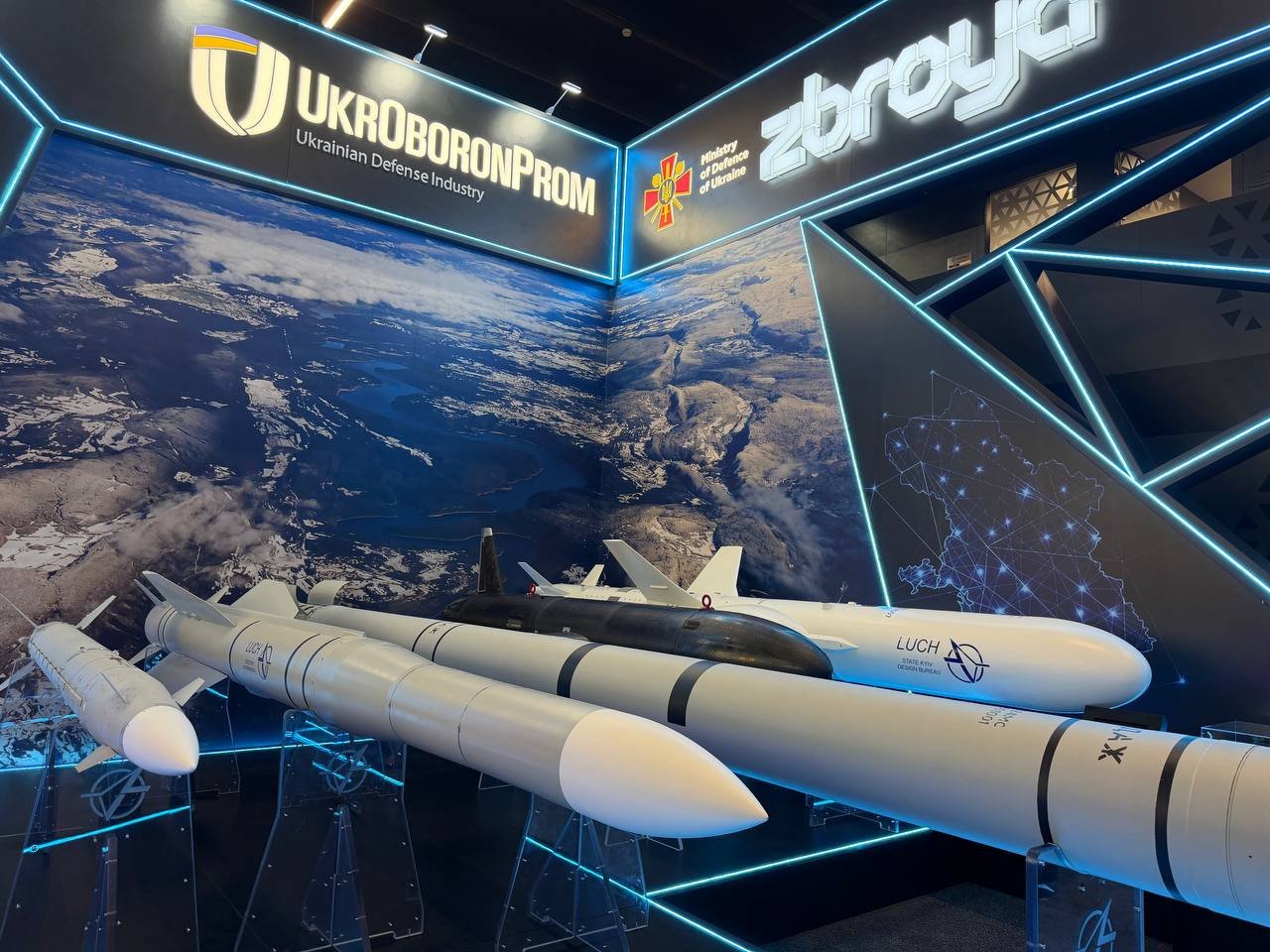
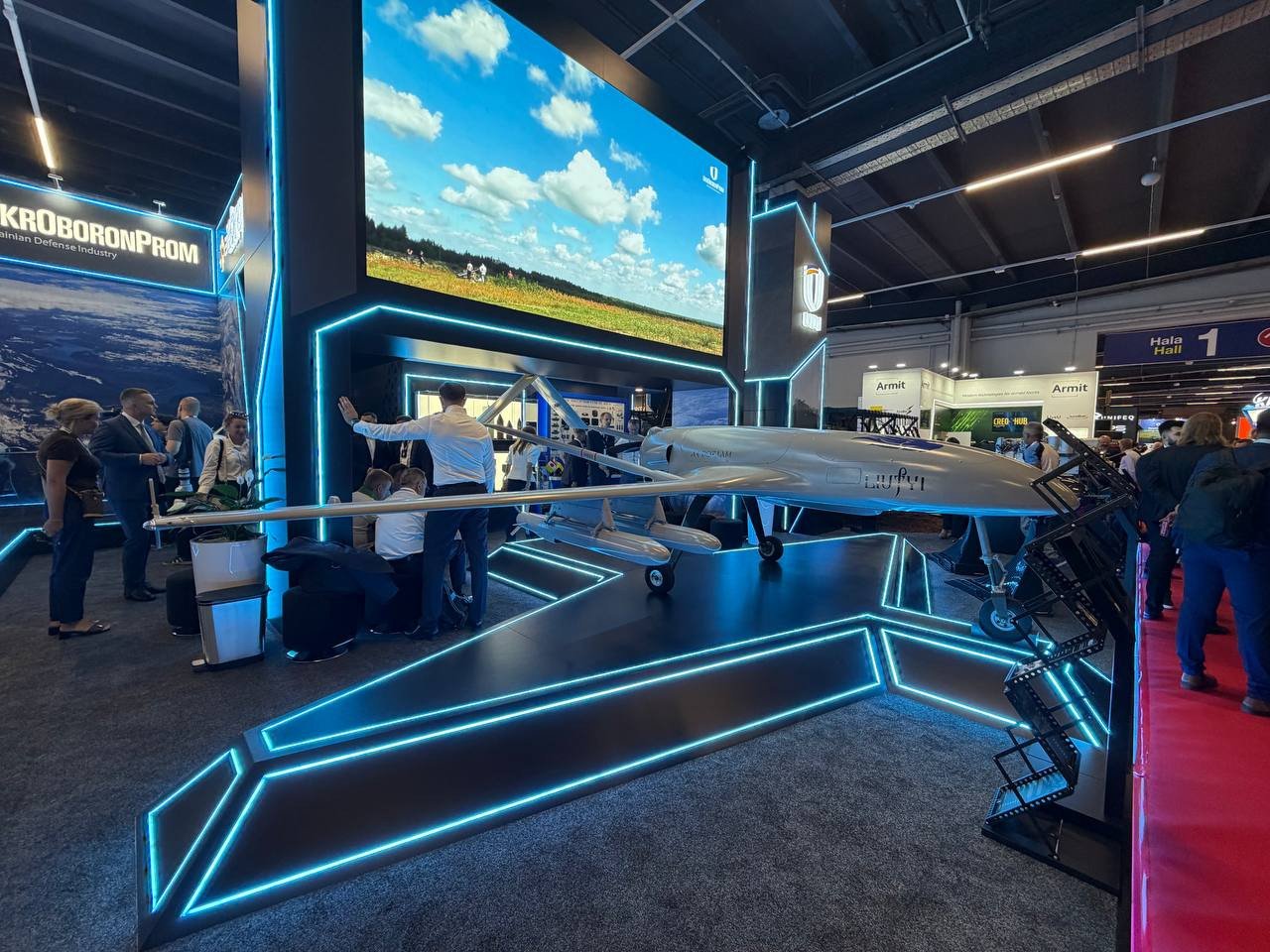
Fire Point, TAF Industries, Grim Tech, Hobbit House, SICH, and more than 20 other Ukrainian defense companies presented their products at the 34th edition of MSPO, the International Defence Industry Exhibition—the largest defense trade fair in Central and Eastern Europe. Held September 8–11 in Kielce, Poland, this year’s exhibition featured Canada as its Lead Nation Partner.
This year, Ukraine was no longer represented simply as a country looking for Western weapons. After more than four years of full-scale war, Ukrainian companies came to MSPO with their own technologies and experience developing, testing, adapting, and scaling them under wartime conditions. Increasingly, discussions also focused on what European and other allied countries could buy, build, and develop together with Ukraine.
Following the Canada-Ukraine Defense Industry Cooperation conference, we spoke with Milton Moffat, Director of Contracts at Colt Canada.
“There’s a lot that we can learn from Ukraine and Ukrainian companies, especially drone technology,” Milton said. “Canada, like any other NATO partner, needs to focus on the same things that Ukraine has found effective as being tried and tested and proven in combat.”
Moffat has visited Ukraine, where he met with military units and defense companies. He said Canada “should be and is” interested in working with Ukrainian manufacturers.
“The skill in relation to development of technology is that ability to adapt and iterate and use what is effective and build on that,” he said.
The battlefield-to-factory cycle
Russia’s full-scale invasion has dramatically accelerated the pace at which defense technologies are developed, tested, modified, and deployed.
“Our products are constantly changing because everything depends on what is happening on the frontline,” said Viktoriia, Head of the Legal Department at Grim Tech, a Ukrainian developer and manufacturer of combat FPV drones and interceptors.
“Every few months, we change our product line. Some products that were relevant four years ago are still relevant today. But we’re seeing the trend shift from fiber-optic systems back toward radio-frequency control, because greater range is needed to carry out combat missions.”
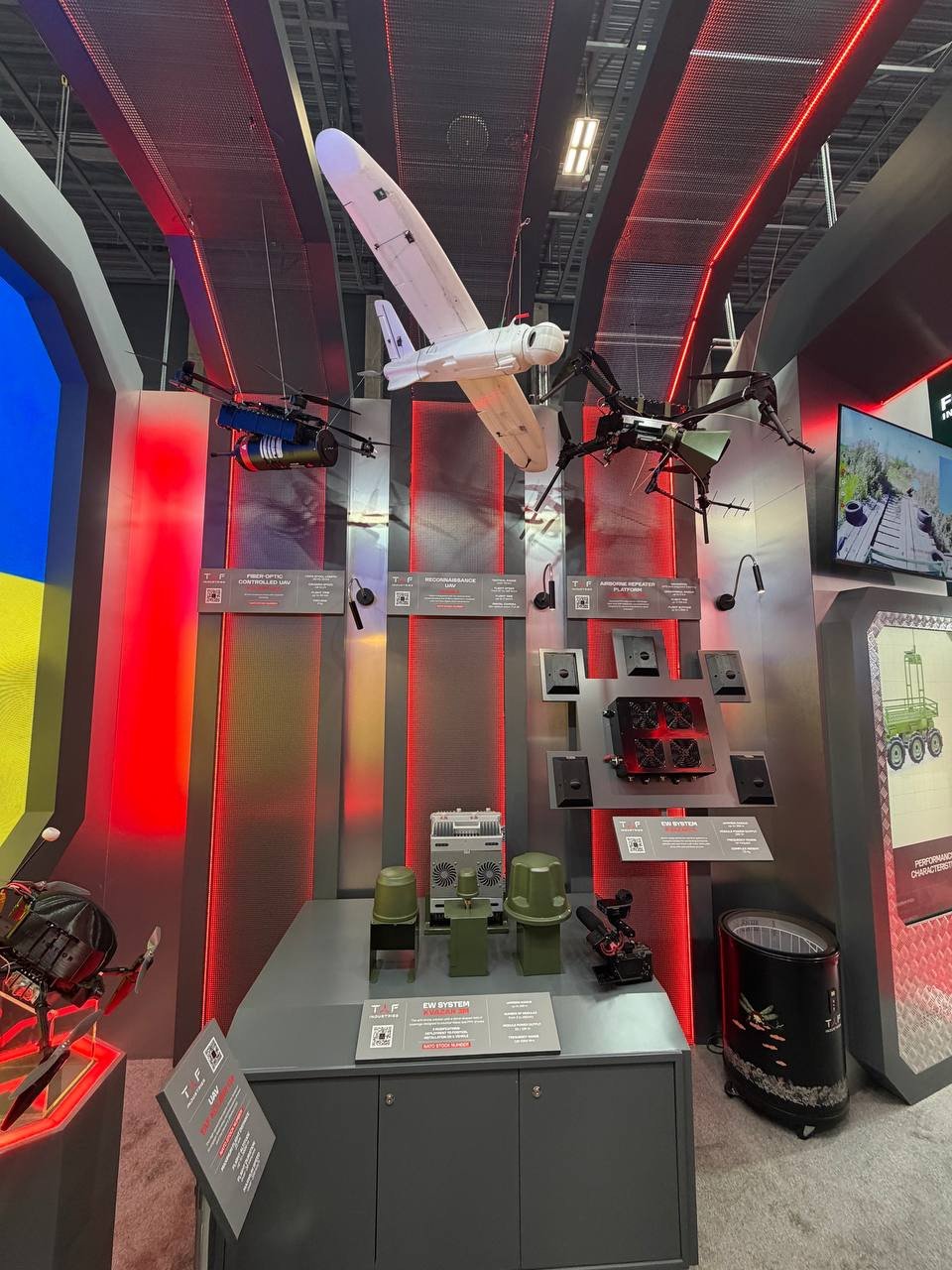
Fiber-optic drones are FPV loitering-munition UAVs connected to their operators by fiber-optic cables, with their use surging in 2024. And although their advantage is being invulnerable to electronic warfare systems, their range is limited to the length of the cable.
When three months is a long time in technology
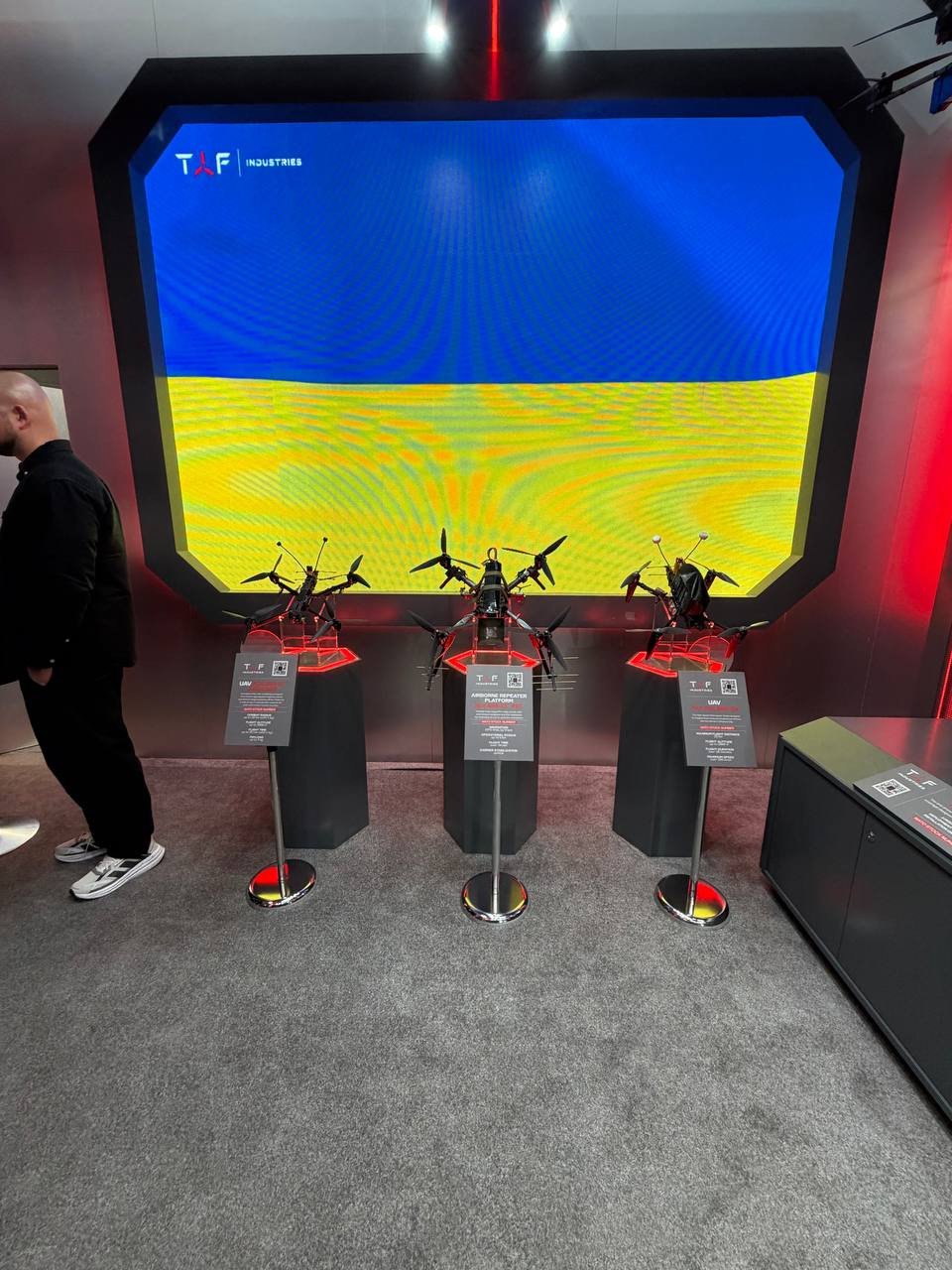
At the TAF Industries stand, CEO Volodymyr Zinovskyi described speed and the ability to scale as central to the company’s approach.
“Our strongest side is that we know how to rapidly scale the solutions that are needed,” Zinovskyi said, explaining that TAF first applied this approach to FPV drones and is now doing the same with unmanned ground systems.
But technological advantages can be short-lived.
“There are certain technologies that they [Russian forces] still haven’t found an effective way to counter, such as certain types of digital communications. That gives us an advantage for a relatively long time,” Zinovskyi said. “And when I say ‘a relatively long time,’ I mean anywhere from three to six months.”
For radio-controlled FPVs, he said frequencies may have to change from month to month, while a system that works effectively on one section of the front may not work on another.
“A solution has to arrive at the right place, at the right time,” he said.
That pace contrasts sharply with the development cycles traditionally associated with the global defense industry.
“The global defense industry is accustomed to five- or ten-year development cycles,” Zinovskyi said. “When they [foreign manufacturers] hear that a product can be improved every month or every three months, it’s something they just can’t comprehend.”
When adaptation reaches industrial scale
For Fire Point CEO Iryna Terekh, rapid development is only part of the challenge. The next step is producing increasingly sophisticated systems at scale without sacrificing consistency.
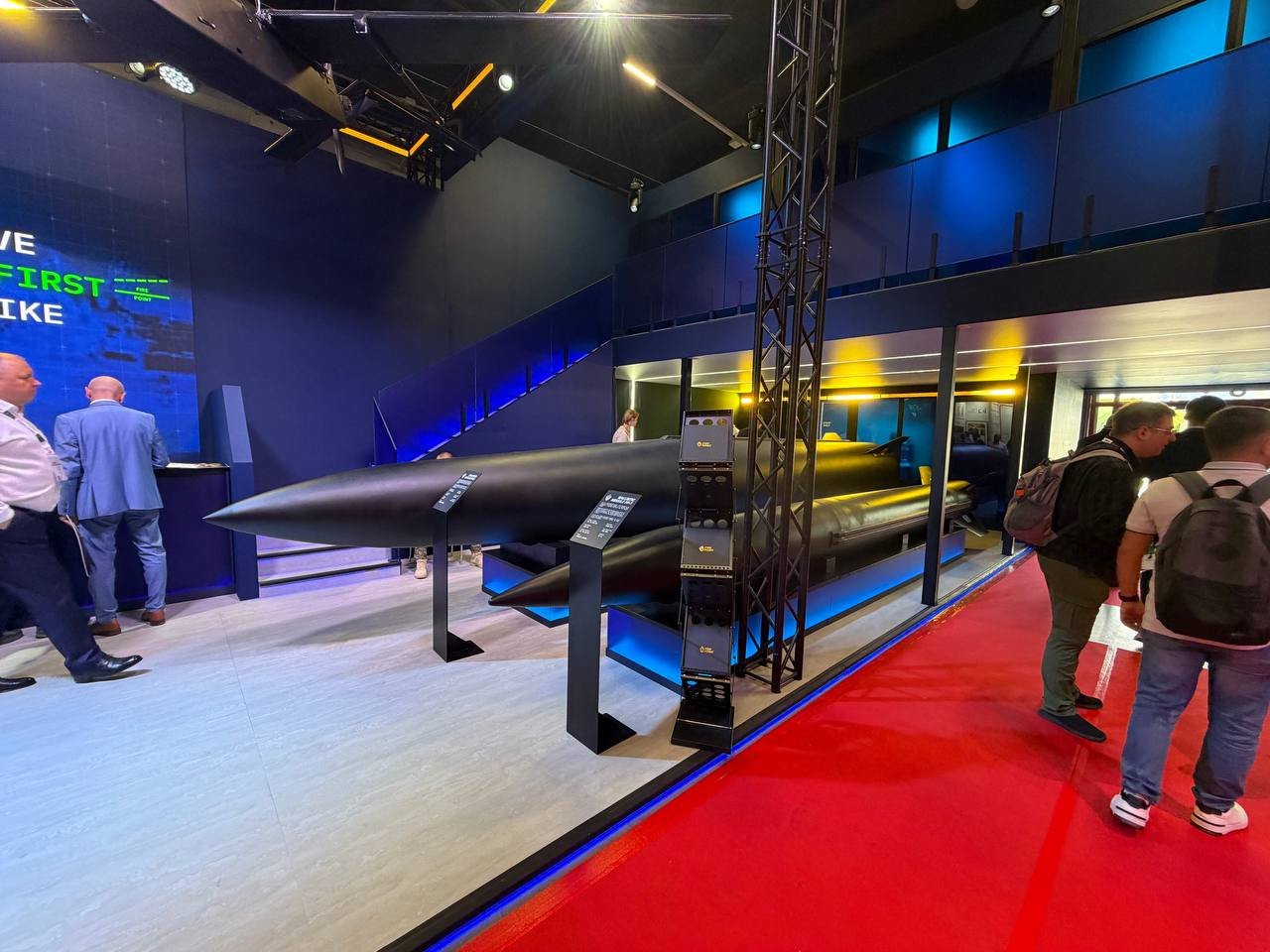
“It’s one thing to make 10 technological products. It’s another to make 10,000 with predictable quality,” Terekh said during a press briefing at MSPO.
She said this ability to scale is one of the things attracting the attention of foreign partners.
“They come to us as experts who know how to manufacture and scale without losing quality,” Terekh said.
From FP-1 to missile defense
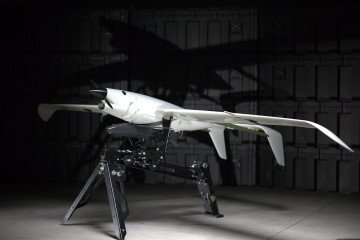
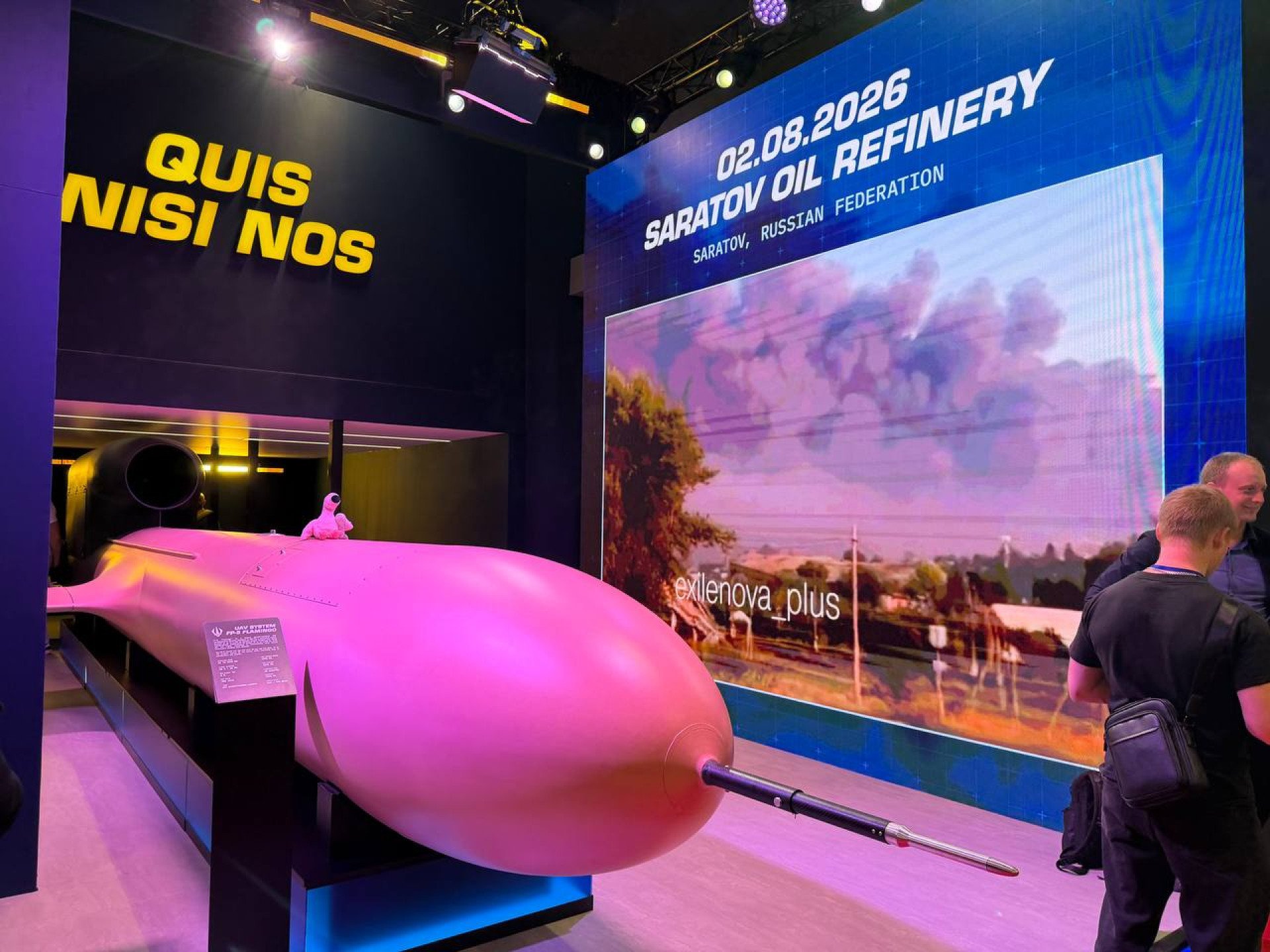
Fire Point, founded after Russia’s full-scale invasion, has moved rapidly from producing the FP-1 long-range strike drone to developing increasingly complex missile programs. Its portfolio now includes the FP-5 Flamingo cruise missile and FP-7 and FP-9 ballistic missile programs. With Freyja, the company is pursuing another goal: an integrated system intended to counter ballistic missiles.
The evolution of the FP-1 also illustrates the growing reach of Ukrainian long-range strike systems. Fire Point said on September 9 that FP-1 drones had flown more than 3,200 kilometers during a mission targeting energy infrastructure in Russia’s Yamalo-Nenets Autonomous Okrug.
Fire Point is now trying to apply its experience to one of Ukraine’s most difficult air-defense problems.
“We already have quite a lot of options for shooting down cruise missiles, jet-powered Shaheds, and conventional Shaheds,” Terekh said while discussing the Freyja project—a pan-European, multilayered missile defense architecture. “But apart from Patriot, there is still no anti-ballistic interceptor in service.”
Not only about weapons
The same process of learning from the battlefield is also visible among Ukrainian companies focused on protecting people from the consequences of modern warfare.
Among them at MSPO were modular shelter developer Hobbit House and SICH-Ukraine, producer of the SICH-Tourniquet.
For Hobbit House, Russia’s attacks on Ukrainian cities have directly influenced the design of its shelters. The company has repeatedly adapted the geometry of shelter entrances after observing how fragmentation behaves during actual strikes.
“We grew together with this war and this market. We developed our models from scratch based on the needs of the war—to protect people,” said Alla Radchenko, a sales manager at Hobbit House.
One such change involved adding another protective barrier beyond the shelter’s metal door to prevent fragments from traveling directly into the main compartment.
“Observing what happens with incoming rounds, how shrapnel penetrates, we realized this design couldn’t be used,” Radchenko said. “You can’t have a door leading to the main compartment in a surface-level shelter. There is no door capable of stopping that kind of shrapnel—the kind that Russian drones and missiles are currently packed with.”
SICH-Ukraine offers a different example of what battlefield feedback can produce.
The company began making its tourniquets in 2014, sending them to the front and refining the design based on feedback from those using them. But unlike drone technologies that may require changes every few months, the core design of the SICH-Tourniquet has remained relatively stable.
“We understand that every part of the tourniquet is well thought out and works well, so we don’t plan to change anything,” said Yuliia Halushchenko, a pre-hospital care instructor and SICH representative. “We understand how important every element we designed is and that they can physically withstand stress and external conditions. So far, they continue to show very good results.”
“A stable formula is the key to our success,” she added.
Ukraine still needs its partners
The growing interest in Ukrainian technology does not mean Ukraine’s defense industry can scale alone. Ukrainian manufacturers continue to need foreign investment, industrial capacity, components, technologies, and access to international markets.
For Diana, Head of International Affairs at the Technological Forces of Ukraine, who helped coordinate the Canada-Ukraine Defence Industry Cooperation conference, that is what makes the emerging relationship potentially valuable to both Ukraine and Canada.
“Ukrainian companies were interested in finding potential partners who could help them increase production and acquire capabilities that are difficult to develop in Ukraine, especially under wartime conditions,” she said.
“Canadian companies, meanwhile, are interested in learning from Ukrainian companies’ experience in scaling production and developing technologies under wartime conditions,” she said.
She described the relationship as “an interesting kind of yin and yang.”
“The knowledge of one side, combined with the resources of the other, can strengthen both equally,” she said.
For much of the full-scale war, one of the central questions in Europe’s defense relationship with Ukraine was what Western industry could provide Kyiv. At MSPO, another question was increasingly visible: what can Ukraine and its partners now build together—and what can allied militaries and manufacturers learn from an industry that has spent more than four years designing under fire?
Discuss this article:




-111f0e5095e02c02446ffed57bfb0ab1.jpeg "Photo of Roman Kohanets")