- Category
- Defense Tech
Ukraine’s Mangal Net Launcher Catches FPV Drones in 0.2 Seconds, Heads for Mass Production
 Prefer U24 Media on Google
- Authors


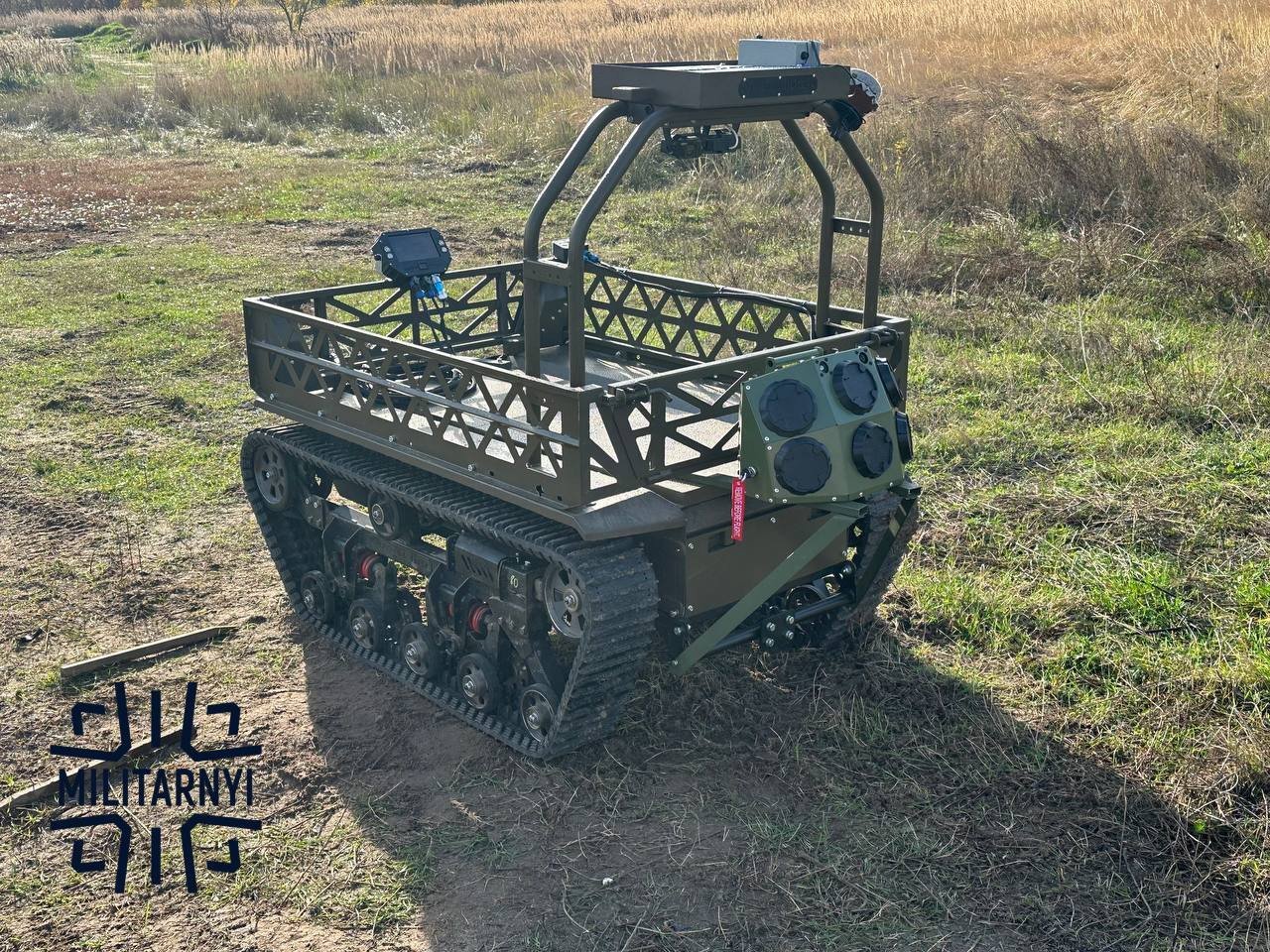
Ukrainian company Phantom Defense is preparing to mass-produce Mangal, an automated active protection system that detects incoming FPV drones and catches them with nets, Militarnyi reported.
The system was showcased during a field trial demonstration, where company representatives detailed testing outcomes, combat performance, and serial manufacturing plans.
We bring you stories from the ground. Your support keeps our team in the field.
The development evolved from the KARAKURT net launchers initially installed on unmanned aerial vehicles for drone interception. Personnel from Ukraine’s 100th Separate Mechanized Brigade were the first to mount and operate this net launcher on ground robotic platforms to defend against FPV attacks.
Early iterations operated manually, requiring human operators on unmanned ground vehicles (UGVs) to identify incoming FPV drones and press a release button. These manual systems have seen frontline deployment since March 2026.
Phantom Defense subsequently developed the fully automated Mangal platform.
A single autonomous unit provides coverage over a 90-degree sector, and multiple modules can be integrated onto a vehicle to deliver 360-degree coverage. Each block contains its own microcomputer, control module, daylight and thermal imaging cameras, and net launch tubes, Militarnyi reported.
The system detects incoming FPV drones at a range of about 40 meters against complex backgrounds like trees, and over 60 meters against open sky. Once detected, the onboard processor calculates the flight path and automatically fires the best-positioned launcher at the right moment, with a response time of 0.2 seconds.
Each interceptor round costs approximately 2,000 UAH ($48). The cost covers a 6-by-6-meter net, a squib charge, and secondary components. Engineers conducted around 1,000 test firings during the development phase to refine the design.
A key structural feature of the Mangal module is its rapid-disassembly mechanism, allowing soldiers to quickly detach the unit from vehicles and deploy it near shelters. If a vehicle sustains damage and infantry must leave, the team can move the unit to nearby cover to maintain protection against incoming drones.
Future production models will incorporate quick-release mounts. The unit provides an operational battery life of at least 12 hours, with test runs demonstrating up to 36 hours of continuous operation, alongside support for external battery hookups, according to Militarnyi.
The hardware was engineered to operate within dense electronic warfare environments. Phantom Defense reported allocating significant engineering time to ensure system electronics remain functional near strong electronic countermeasure sources.
Phantom Defense envisions the Mangal system operating as a secondary defense layer for combat vehicles. If electronic warfare devices fail to neutralize incoming threats—such as fiber-optic guided FPV drones—the net launcher serves as a short-range physical interceptor.
On September 30, Ukrainian defense company Frontline Robotics unveiled “Frodo,” a six-wheeled unmanned ground vehicle designed for logistics, evacuation, and combat missions.
The robotic platform reaches speeds of up to 40 kilometers per hour, features a 150-kilometer range, and carries payloads weighing up to 400 kilograms.
Designed with an adaptive suspension and adjustable ground clearance, the vehicle retains mobility even if it loses a wheel. Following its successful codification, the platform is now eligible for official procurement by Ukraine’s Defense Forces to support robotic operations on the battlefield.
Discuss this article: