- Category
- Interview
The Sound He Thought Was a Tank Was a Skateboard—A Japanese Photographer’s Ukraine
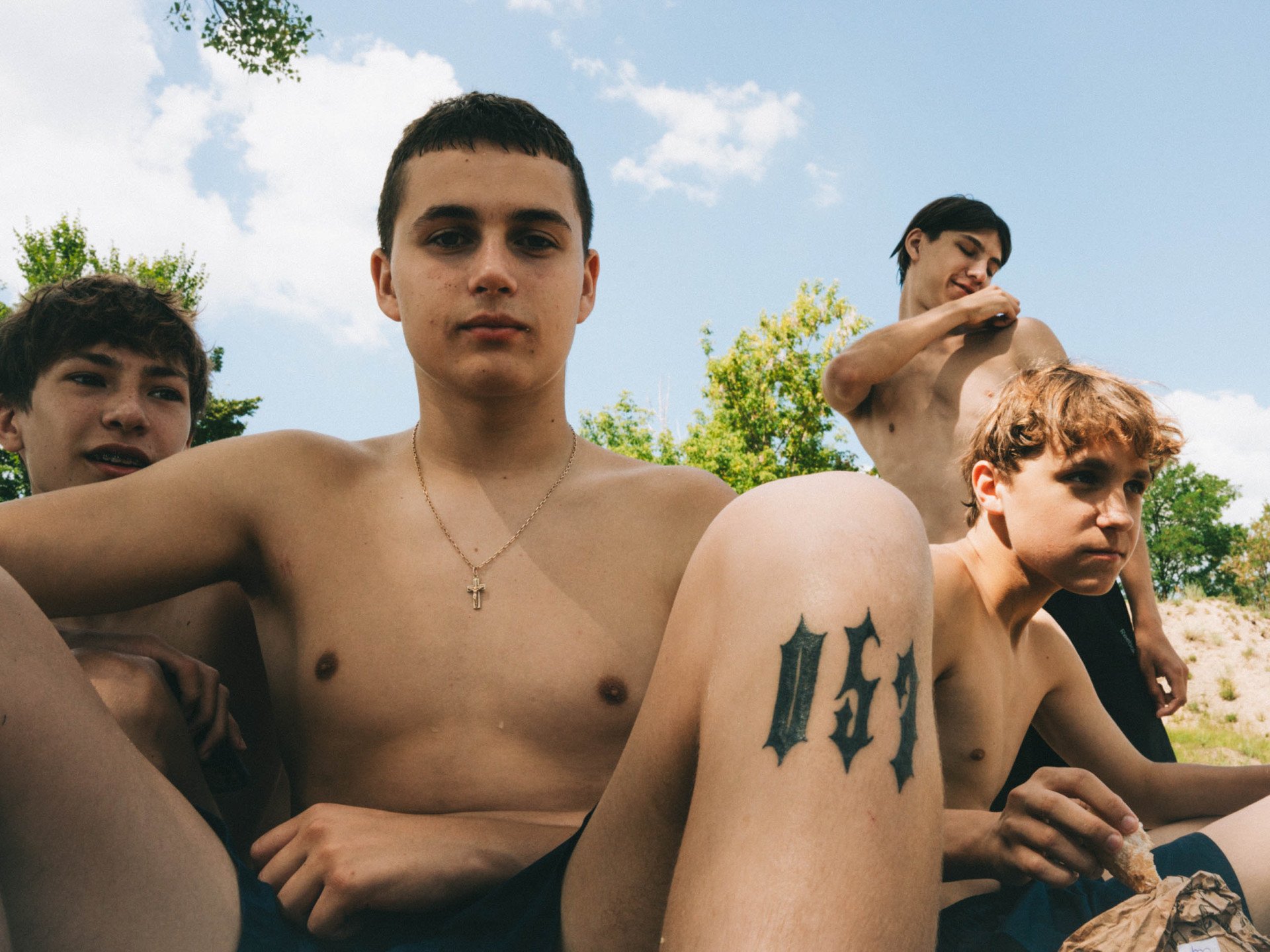
At the start of Russia’s full-scale invasion of Ukraine, Japanese photographer Hironori Kodama entered the country at war expecting to document destruction. On the silent streets of Kharkiv, he also found teenagers on skateboards.
 Prefer U24 Media on Google
- Authors

-7f13adef9f97dfa59a9257c32bf618cc.png "Photo of Vladyslav Volochai")
Hironori Kodama, a Tokyo-based photojournalist and video journalist who has spent years documenting Russia’s war across Ukraine, from Donbas and Zaporizhzhia to Kherson. Yet, something unexpected has become part of that story. Known for his work for Japanese media and his 2022 photo book Notes in Ukraine, Kodama arrived to capture destruction.
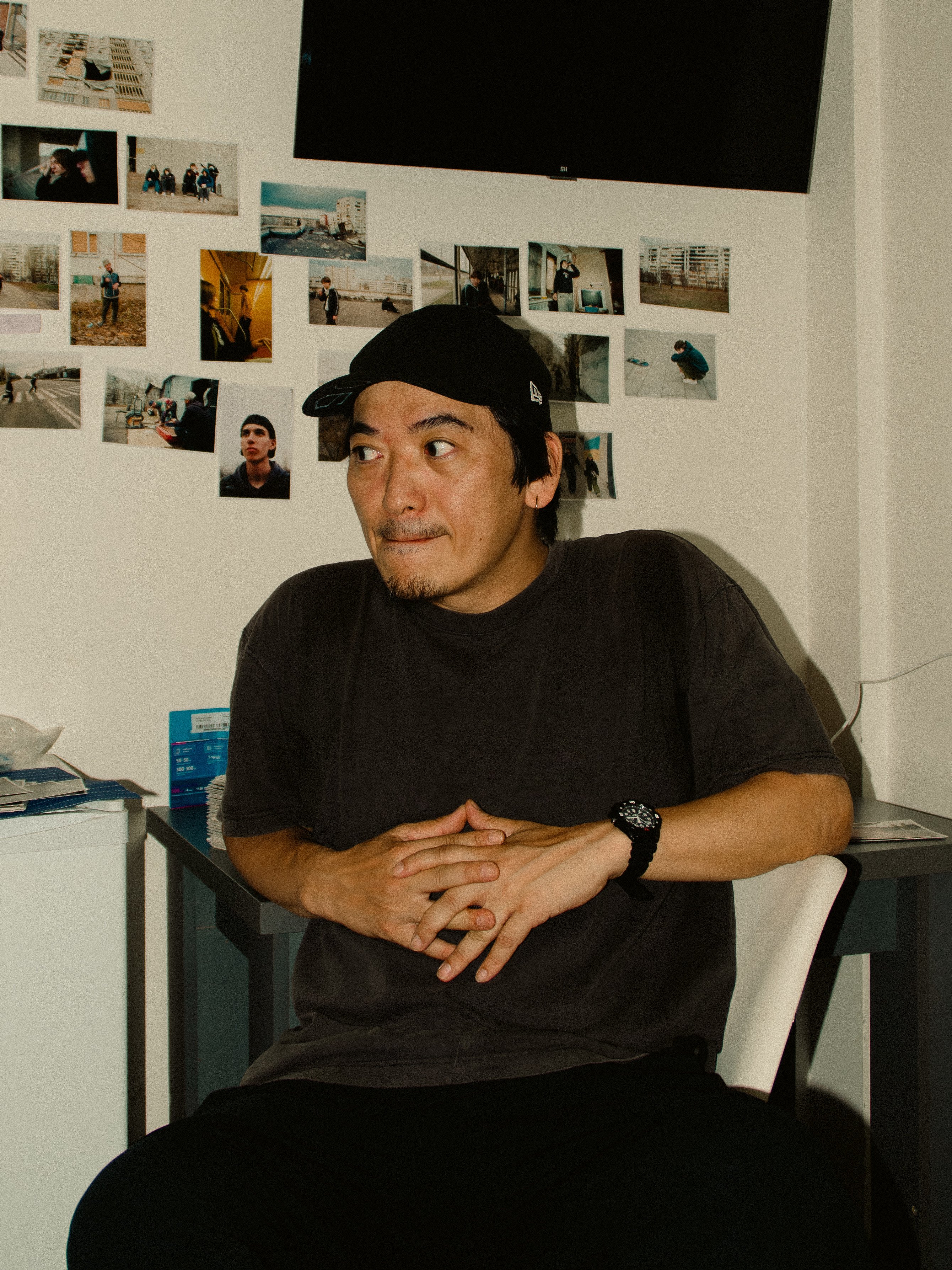
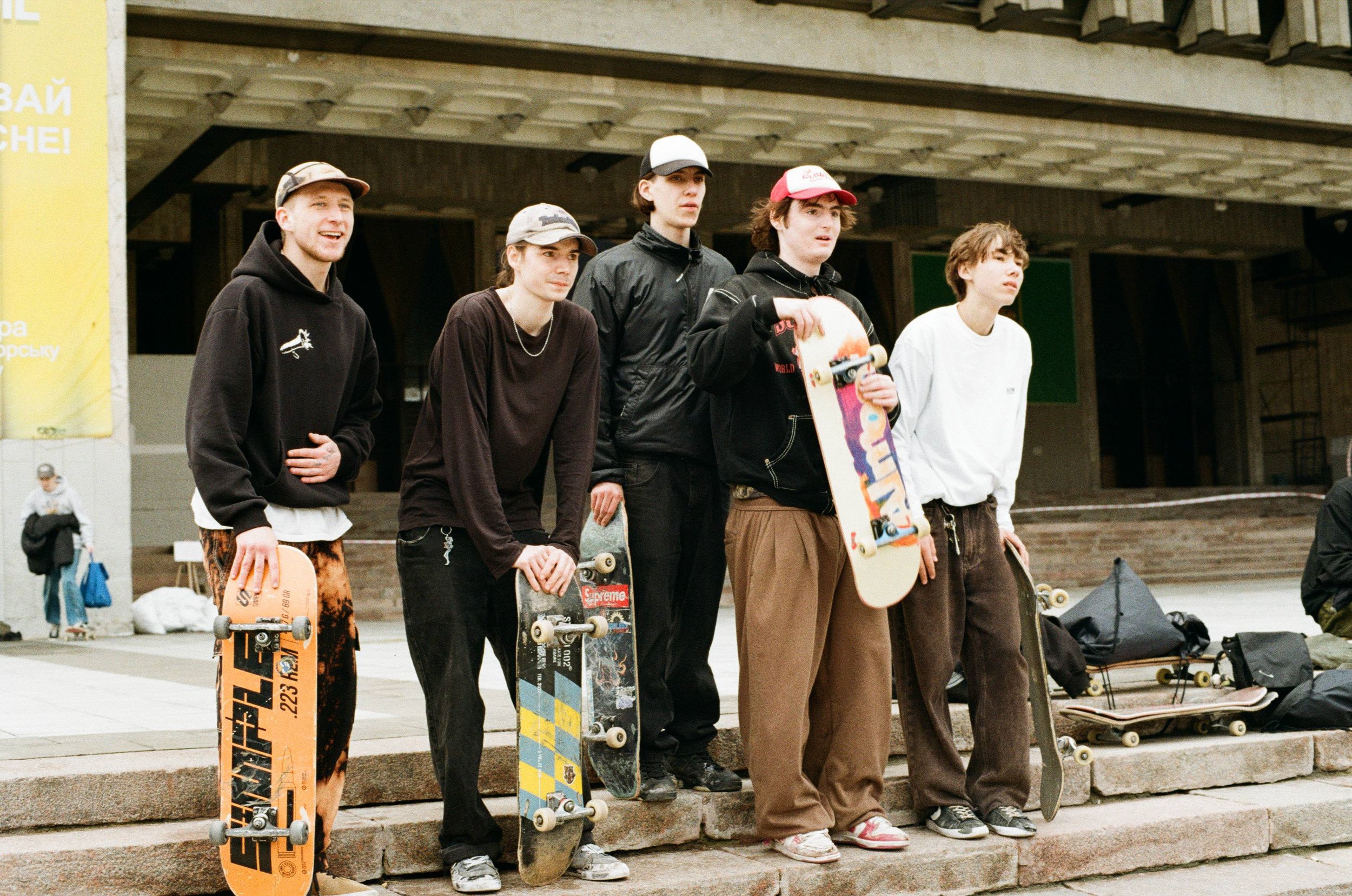
Beyond documenting its horrors, his lens yet discovered Ukraine’s skateboarding subculture. Gaining the trust of young skaters, he captured the fragile lives of teenagers riding not for fun, but to feel alive—suspended in a moment of fear, uncertainty, and an unwritten future.
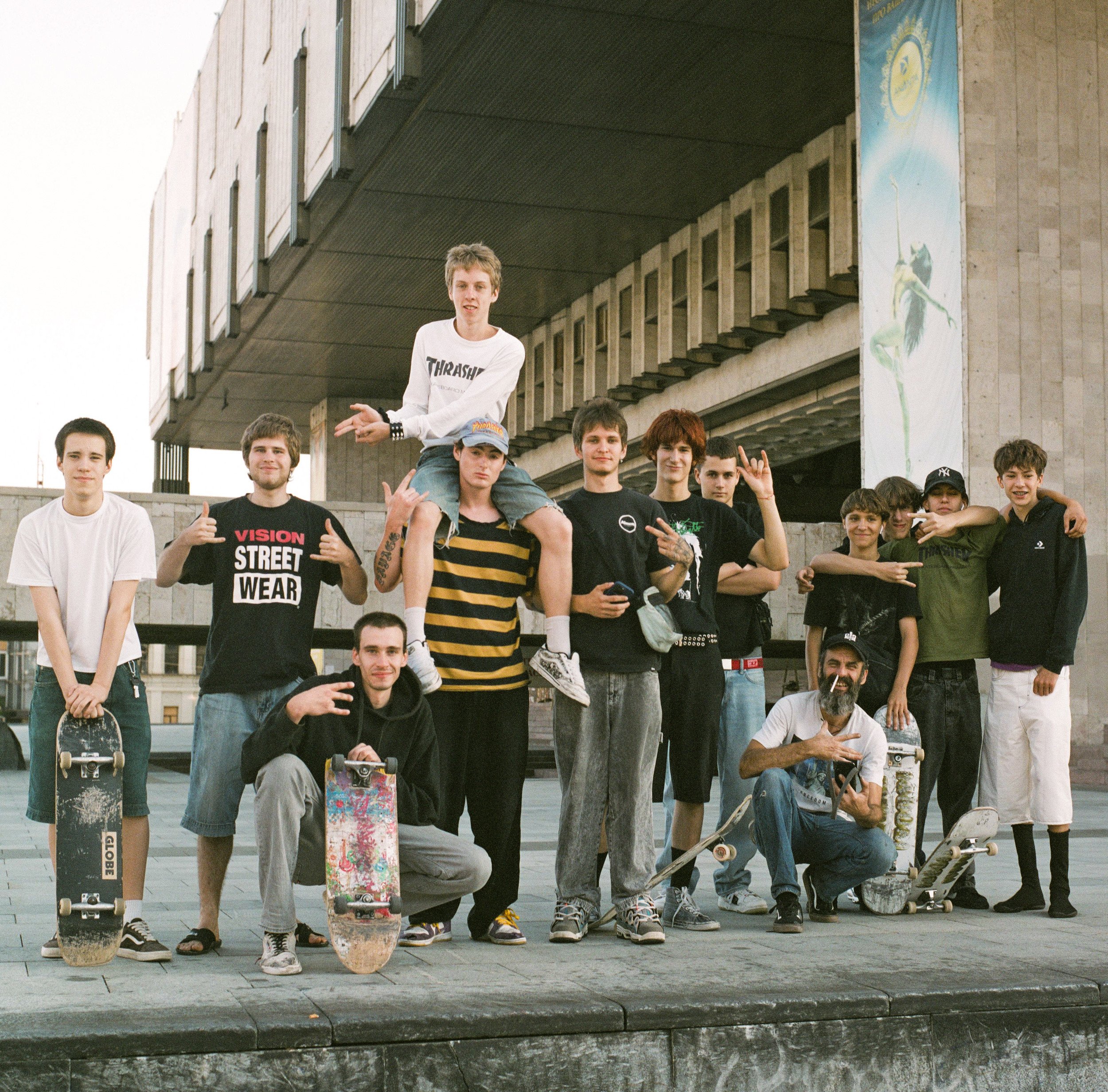
Skating through war-torn Kharkiv
“After the full-scale invasion, I was walking alone in Kharkiv in May 2022,” says Kodama. “The city was very quiet. It really felt like a ghost town. At that time, many people were living underground, in the metro.”
Walking down the street, he heard a strange sound.
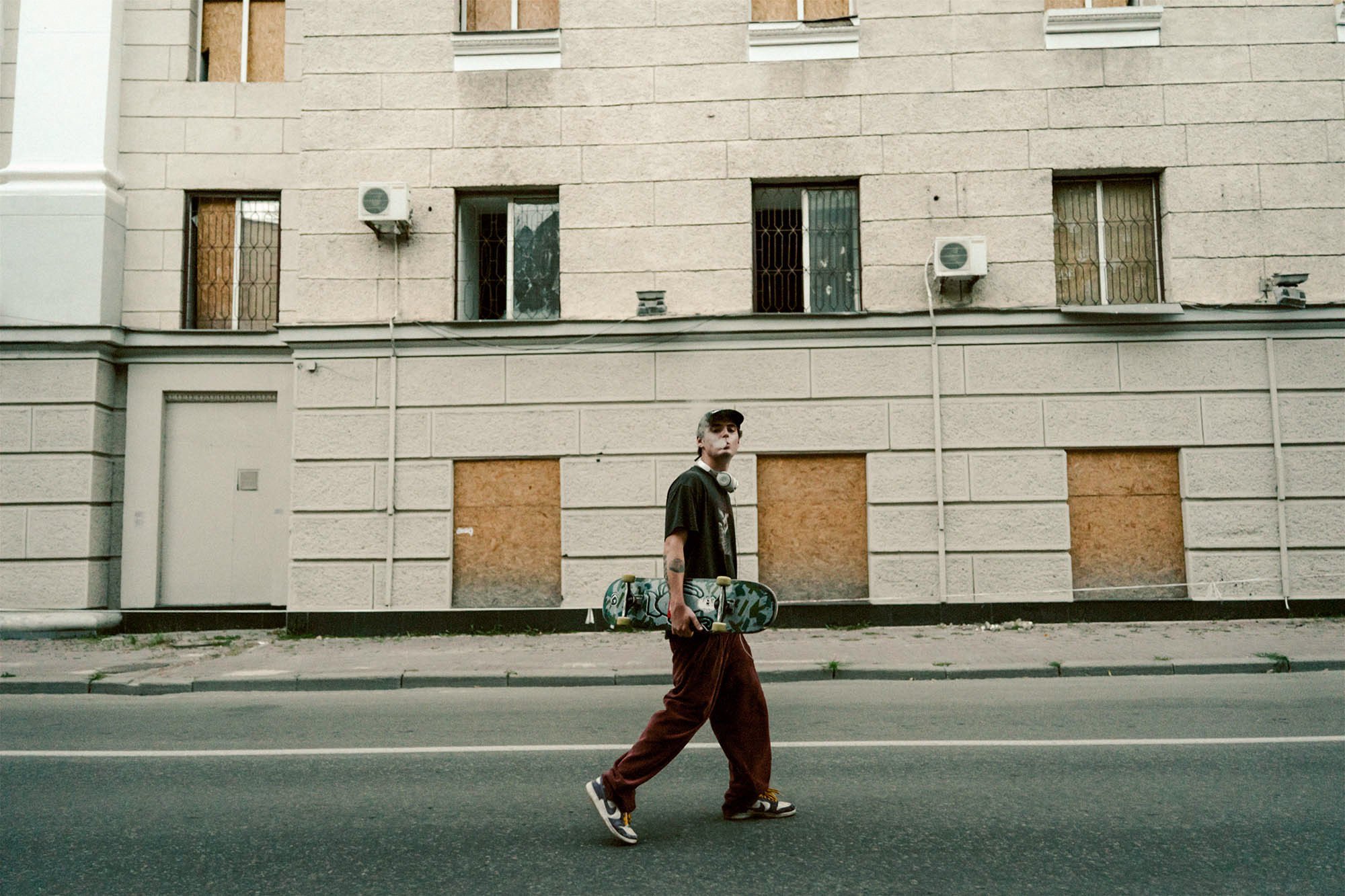
“I thought it was an armored vehicle, or maybe a tank,” he says. “Hearing those sounds in the city had already become normal. But when I turned around, I was surprised. There was a skateboarder coming down a slope. I thought, ‘Oh... another crazy guy....again,’ because of the mental stress of the war, I had already seen many people doing things that looked strange.”
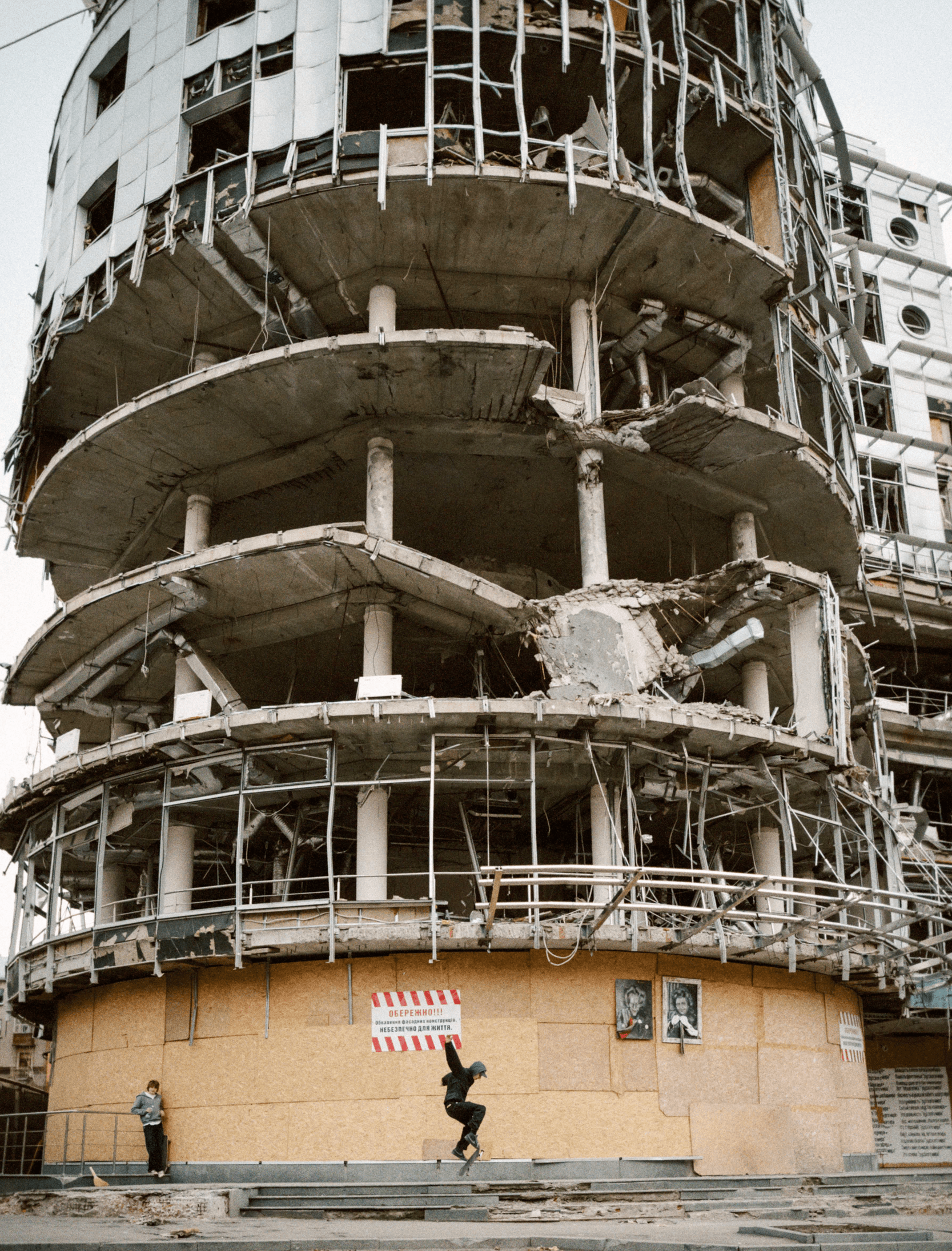
But the skateboarder was skating alone, on a carless, wide street, and did a “manual.” “That moment really moved me,” says Kodama. “It felt like he was saying, ‘This street is mine!’”
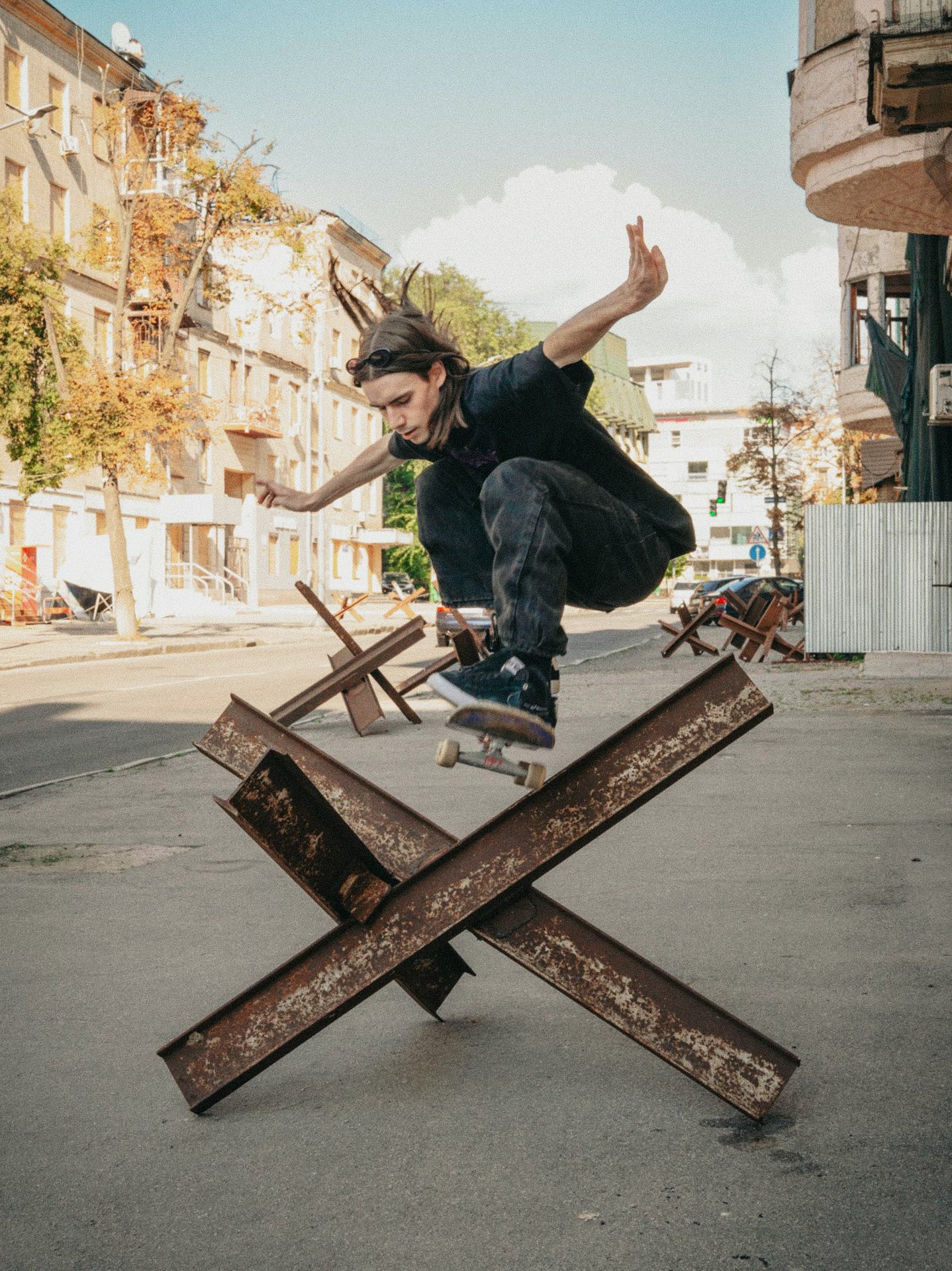
As Kodama later found a skateboarding community in Kharkiv, he kept asking himself: What does it mean to skateboard during a war? “Living under wartime conditions puts a very heavy burden on the mind,” he says. “It becomes really hard to stay ‘normal.’”
At first, the way this community was so deeply into skateboarding looked very strange to Kodama. But as he started skating, he slowly began to understand. “I started asking myself, Is skateboarding a protest? Is it an escape from reality? Or is it some kind of therapy?”
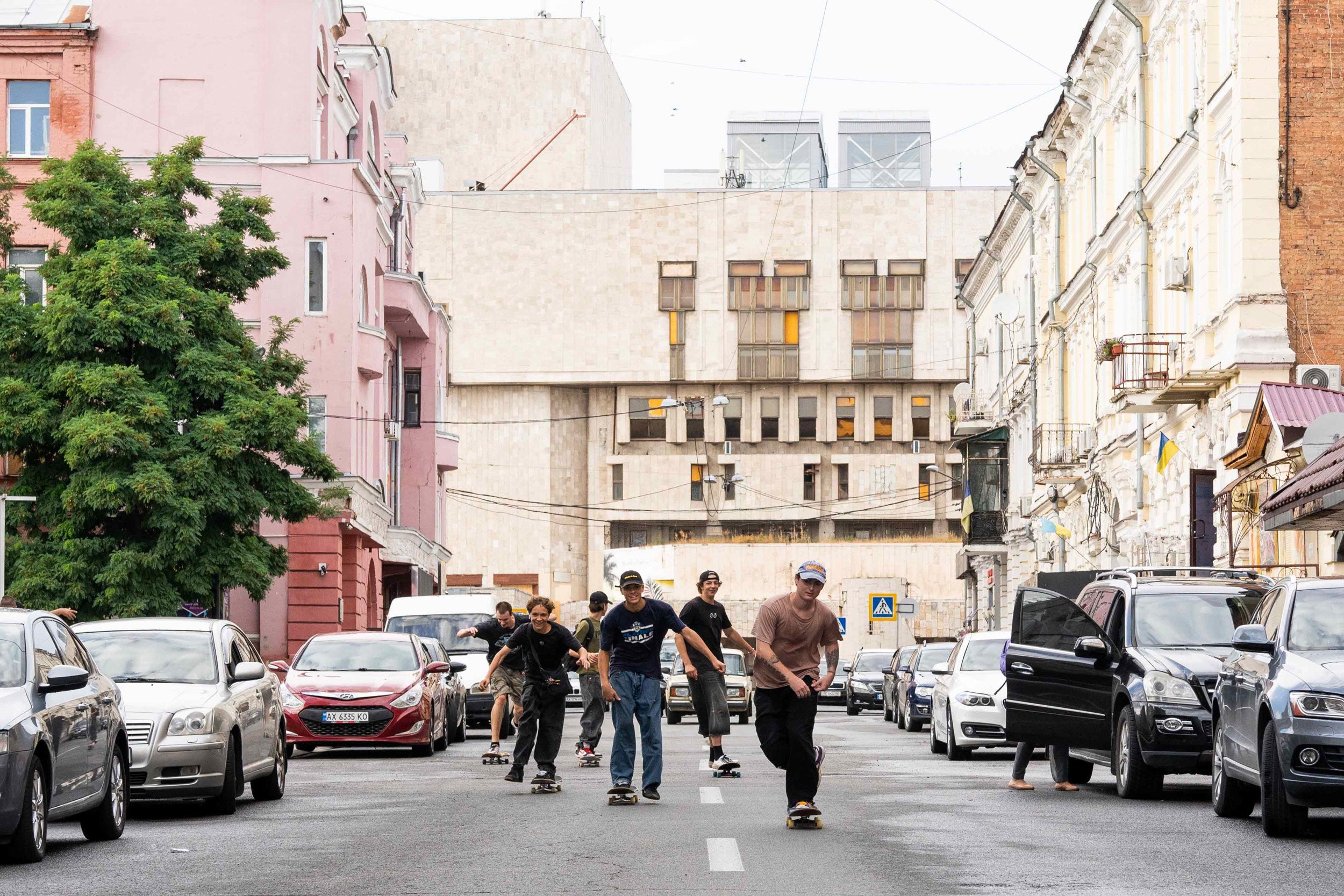
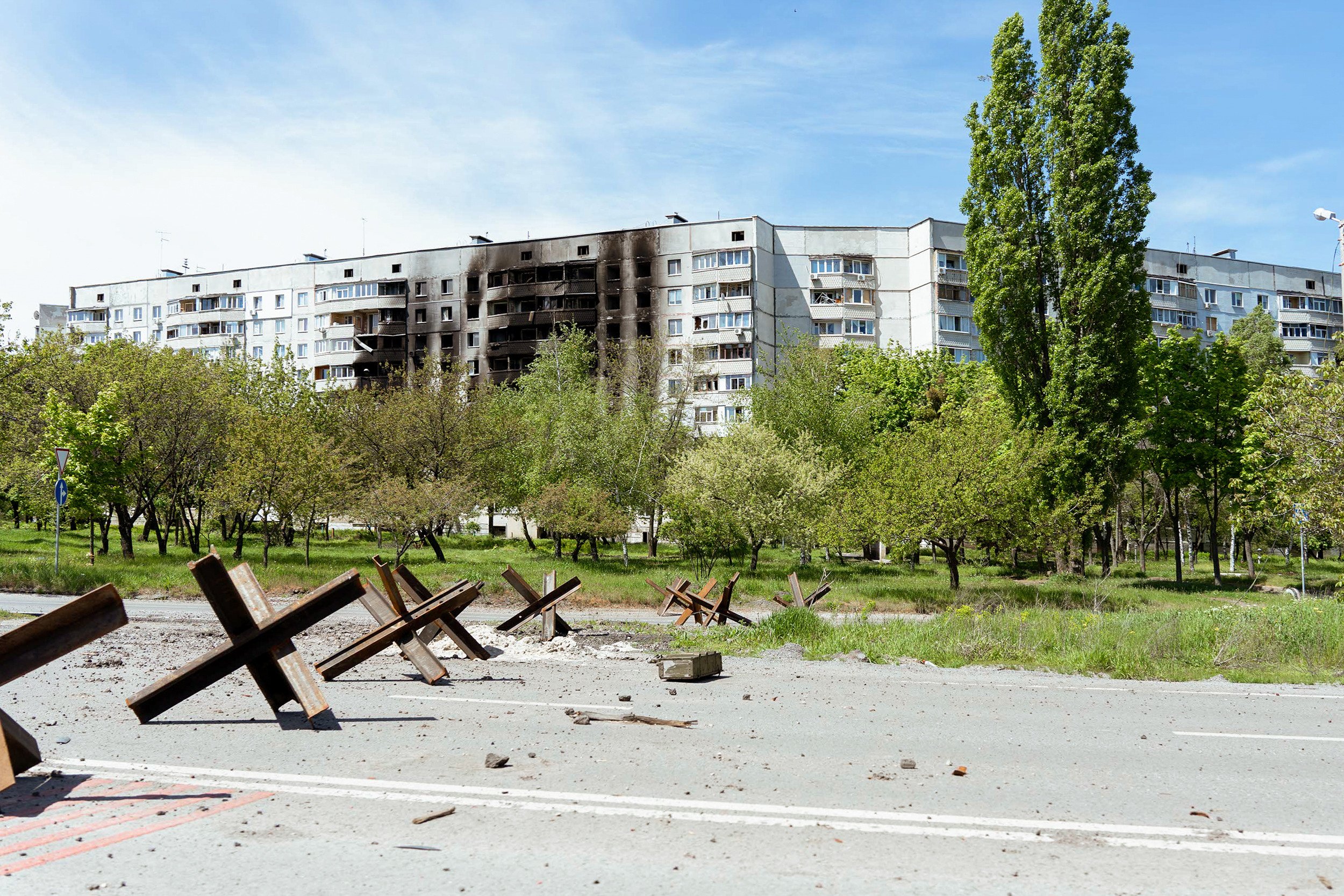
For the skateboarders, it was a way to remain themselves, he concluded. “They don’t really have the option to do nothing just because there is a war,” says Kodama. “By focusing on skateboarding, they keep their mental strength. By moving their bodies, they take back their sense of physical presence. Take back control of their own lives.”
“I could not stay quietly in my room”
What exactly motivated you to come to Ukraine during the war?
I knew Ukraine as a country. But it existed mainly as an image of a distant place in Eastern Europe. I was very young when the Soviet Union collapsed, and in school I learned that the Chornobyl disaster had taken place in Ukraine. Later, I occasionally saw news about the war in Donbas.
At that time, there were still restrictions on traveling abroad for filming because of COVID. I felt strongly frustrated about that. I had also covered the pro-democracy protests in Hong Kong, the intense clashes. I filmed there many times. Some people described the atmosphere by saying, “This feels like a battlefield.” But I did not use that expression.
The reason was simple: I had never experienced an actual battlefield myself.
After the beginning of 2022, I kept seeing news that Russian forces were being deployed around Ukraine, and I sensed that something was about to begin. Then, when the invasion started on February 24, I immediately began completing the procedures necessary to travel, including obtaining proof of vaccination. If I thought too far ahead, I became frightened. I focused on what was right in front of me and completed each step one by one. At the same time, I was preparing my camera equipment.
Was it more intuition, an inner impulse, or a conscious decision as an artist?
In a sense, it was intuitive. Even if you ask me why, I cannot explain it clearly. Based on my experience up to that point, I felt, “With who I am now, I can go.” Once I realized that I could go, I could not stay quietly in my room. Some of my friends misunderstood and, in tears, asked me, “Are you going to the war as a soldier?”
But I answered, “No—that’s not it at all. I’ll just go for a short time, take photographs, and come back. The war will probably end soon.” At that time, I truly believed that.
Witnessing without forcing
How did Japanese cultural traditions of observation, witnessing, and memory influence your decision?
When many people in Japan think of war, they imagine World War II, the Pacific War. That was about eighty years ago. As a photographer, researching records from that time is extremely important.
It is also important to understand war as it exists in the present.
From a typically Japanese, restrained sensibility, I do not feel comfortable with aggressive photography that pushes forward with force. I also do not want my presence to add pressure to people who are already vulnerable.
Personally, I value first being there—witnessing, carefully observing the situation, the atmosphere, and what is happening—and then receiving what I can feel from it.
What was your first feeling when you arrived in a Ukrainian city during the war?
When I first stepped onto the platform at Kyiv station, I heard explosions nearby. For a brief moment, I regretted coming. On the platform, I saw men seeing off families who were evacuating, and I felt the loneliness of a city inhabited only by those who remained. At that time, Russian forces were still occupying areas near Kyiv, including Irpin and Bucha, as they advanced toward the capital, and fighting was ongoing. I tried to get closer, but I could not pass the checkpoints.
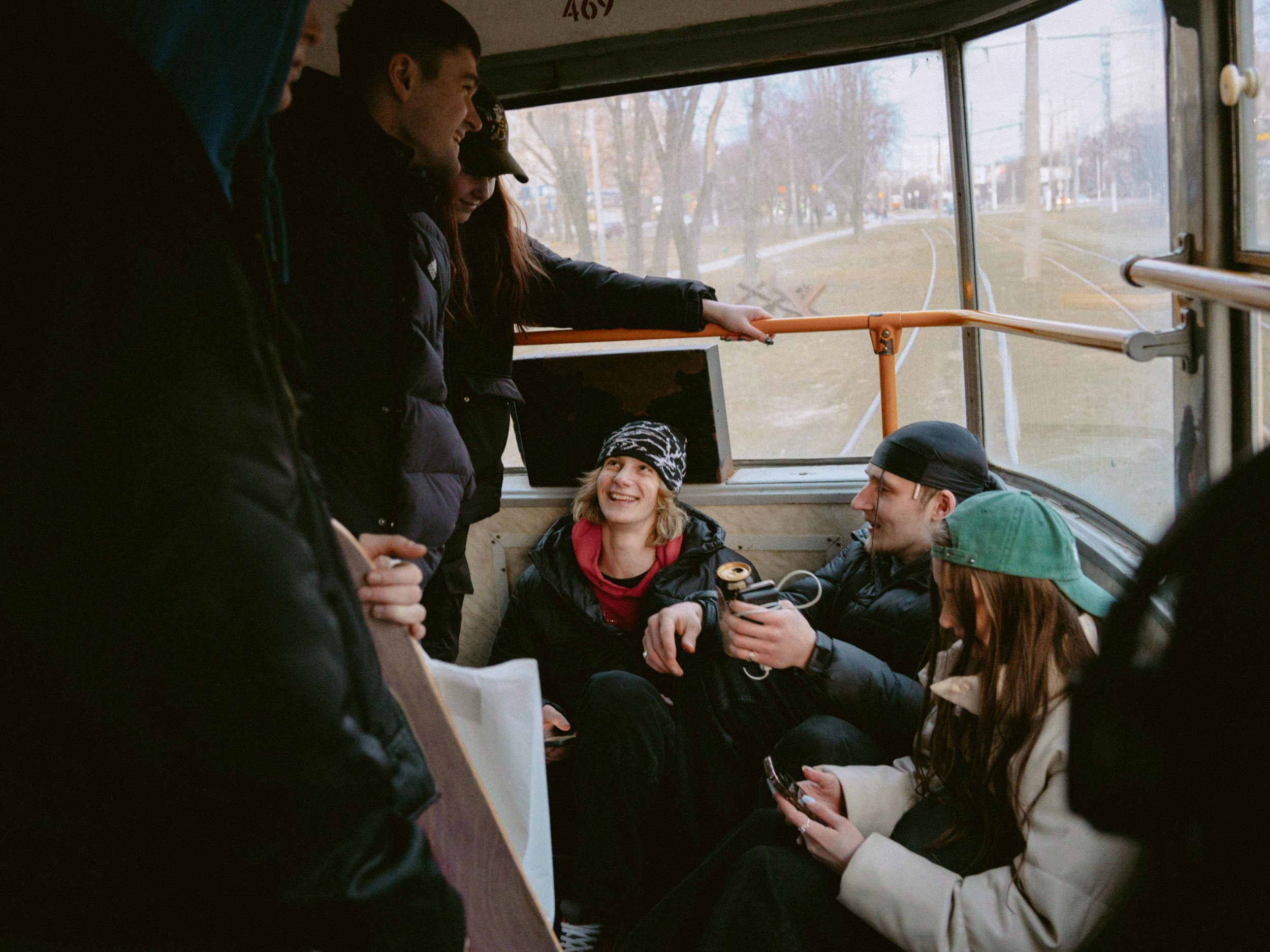
There were almost no people on the streets, and the emptiness felt strange. In particular, the Podil district, known for its beautiful historic buildings, was completely empty, and I vividly remember a Ferris wheel standing still. Occasionally, I saw tanks heading toward the outskirts and trams running with no passengers on board.
I found an open café stand and ordered coffee. When the staff handed it to me, they said in English, “Have a nice day.” I was deeply confused by that phrase and could not respond.
War in peaceful streets
Did any of your perceptions or assumptions about war change after experiencing it in person?Even in the modern, globalized world, I had believed that war happened somewhere far away, caused by foolish people. That belief collapsed. Seeing people suffer right in front of me fundamentally changed my understanding. We often imagine war only as direct combat, such as ground battles. But war is not limited to that.
I feel its presence everywhere—even in streets that appear peaceful at first glance, and even in people’s eyes. War seems to be engraved into daily life itself.
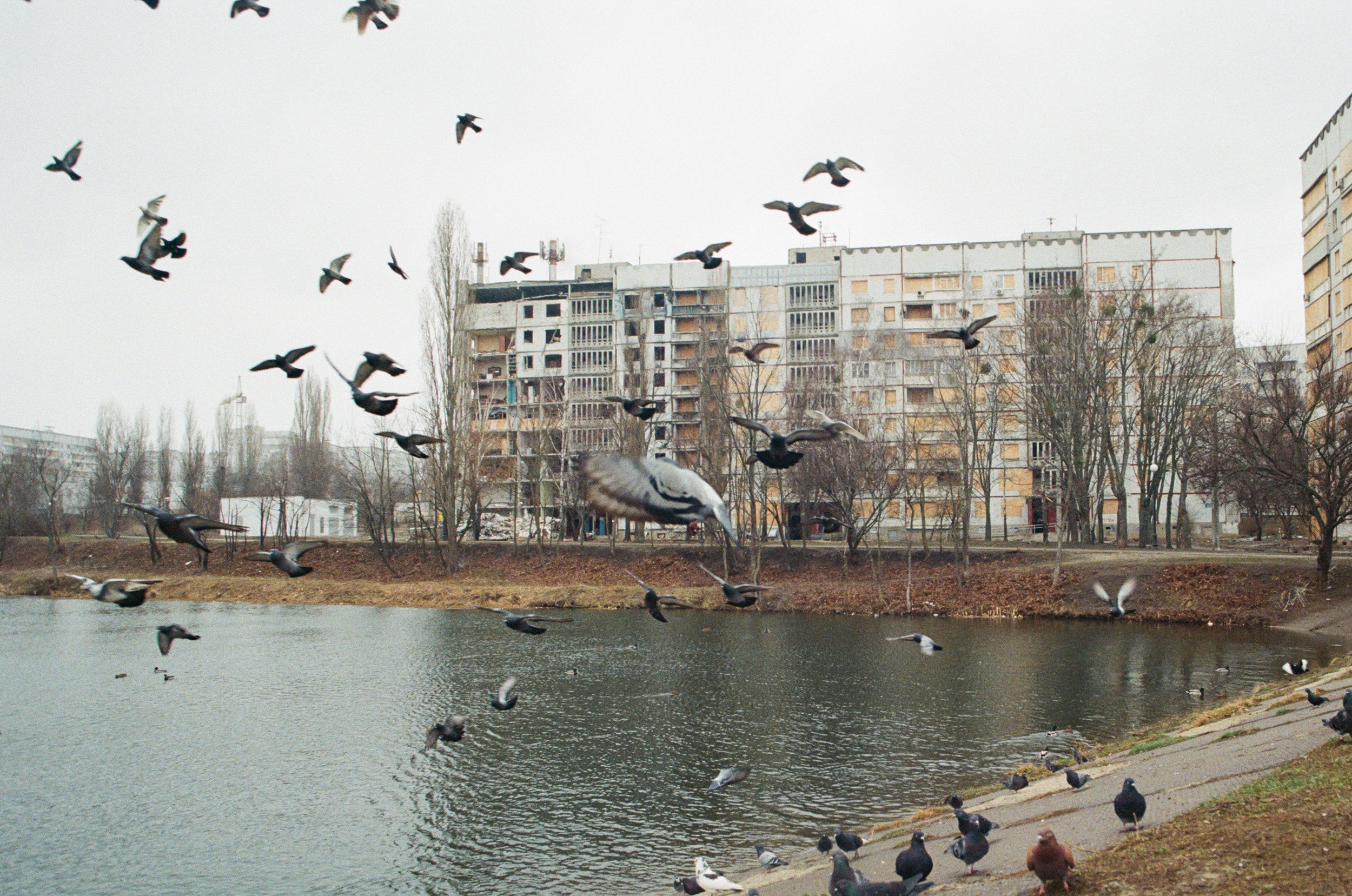
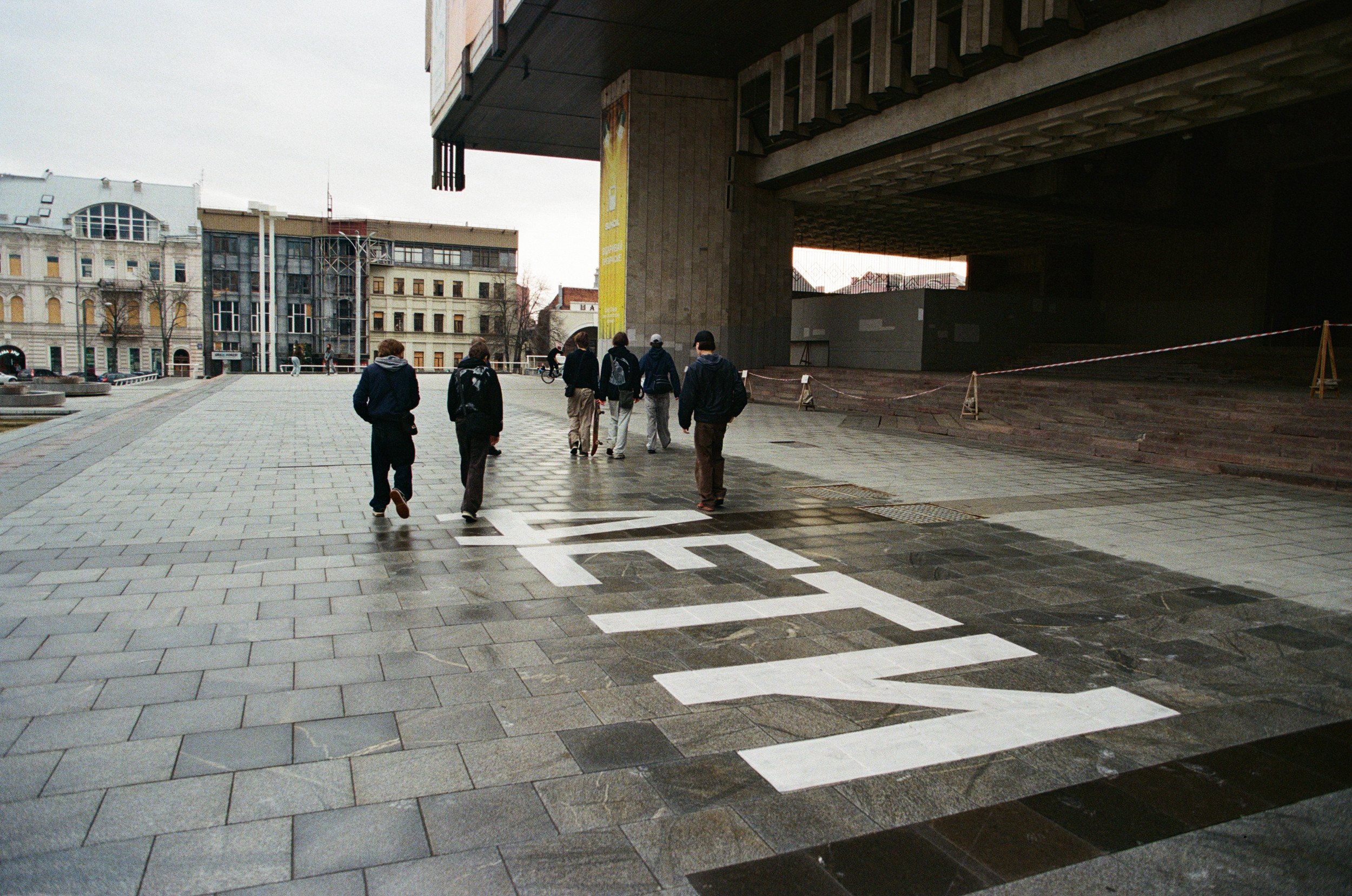
How do you sense the difference between how war is seen from the outside and how it is lived here?Imagine footage shared globally of a couple drinking coffee in a Ukrainian café, or a street musician playing in a public square. Many people would think, “It’s more peaceful than I expected. That’s a relief.” But it is difficult to imagine the background of that couple’s life, or why the musician is performing there. Why are there so many men walking in darkness late at night, after the city lights are turned off? Some remain indoors because they fear conscription. Others walk outside for brief relief, even in the dark. Their inner conflict is also part of the war.
Was there a moment when you stopped feeling like an observer and became part of the reality?
While photographing skateboarders in Kharkiv, I could not sleep because of the explosions I heard every night. I felt exhausted, and at the same time, anger rose inside me. I came to Ukraine prepared, so I did not want to complain. But I felt frustrated because I simply wanted to photograph the skaters. The moment I thought, “If only there were no war,” I realized that I had become part of the reality of the war itself.
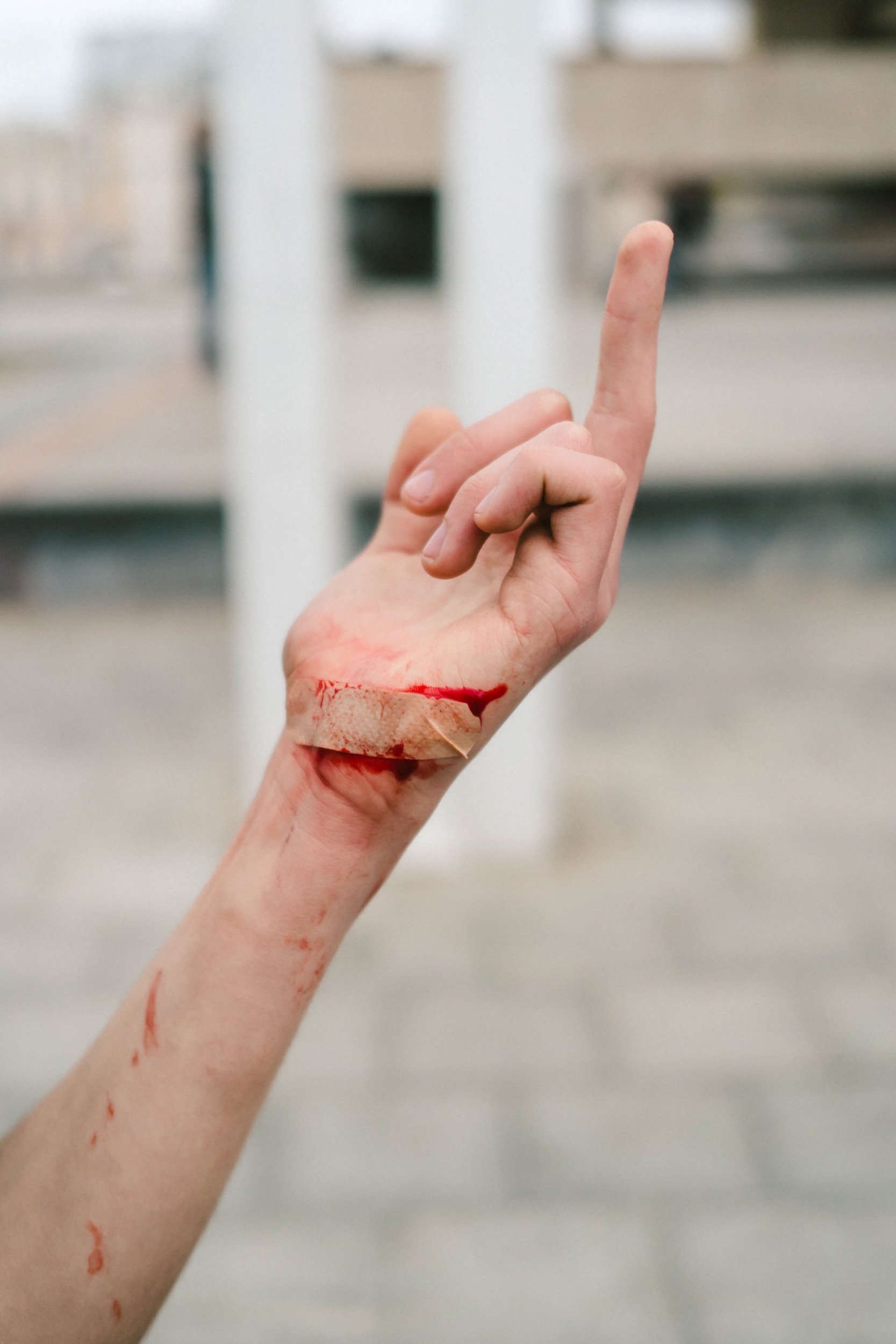
The inner world of the skaters
Why skateboarding? What did you see in it within the context of war?
At the beginning of the invasion, many young people gathered at a skatepark in Lviv. Boys, teenagers, and young adults had evacuated with their families from various cities.
They brought skateboards and BMX bikes, searched for the skatepark on Google Maps, and came on their own. Adults were busy finding places to stay or figuring out work.
A skatepark that welcomed anyone became a world belonging only to young people.
Later, in Kyiv, I hardly saw any skaters. The skateparks were empty.
I grew up in a very rural part of Japan, in Hyogo Prefecture, where urban culture like skateboarding barely existed. In the 1990s, I was a bored teenager in the countryside—bored enough that I sometimes wish I could redo that period of my life. That is why I feel such a strong connection to the skaters in Kharkiv. If I could, I would have wanted to be like them—of course, without the experience of war.
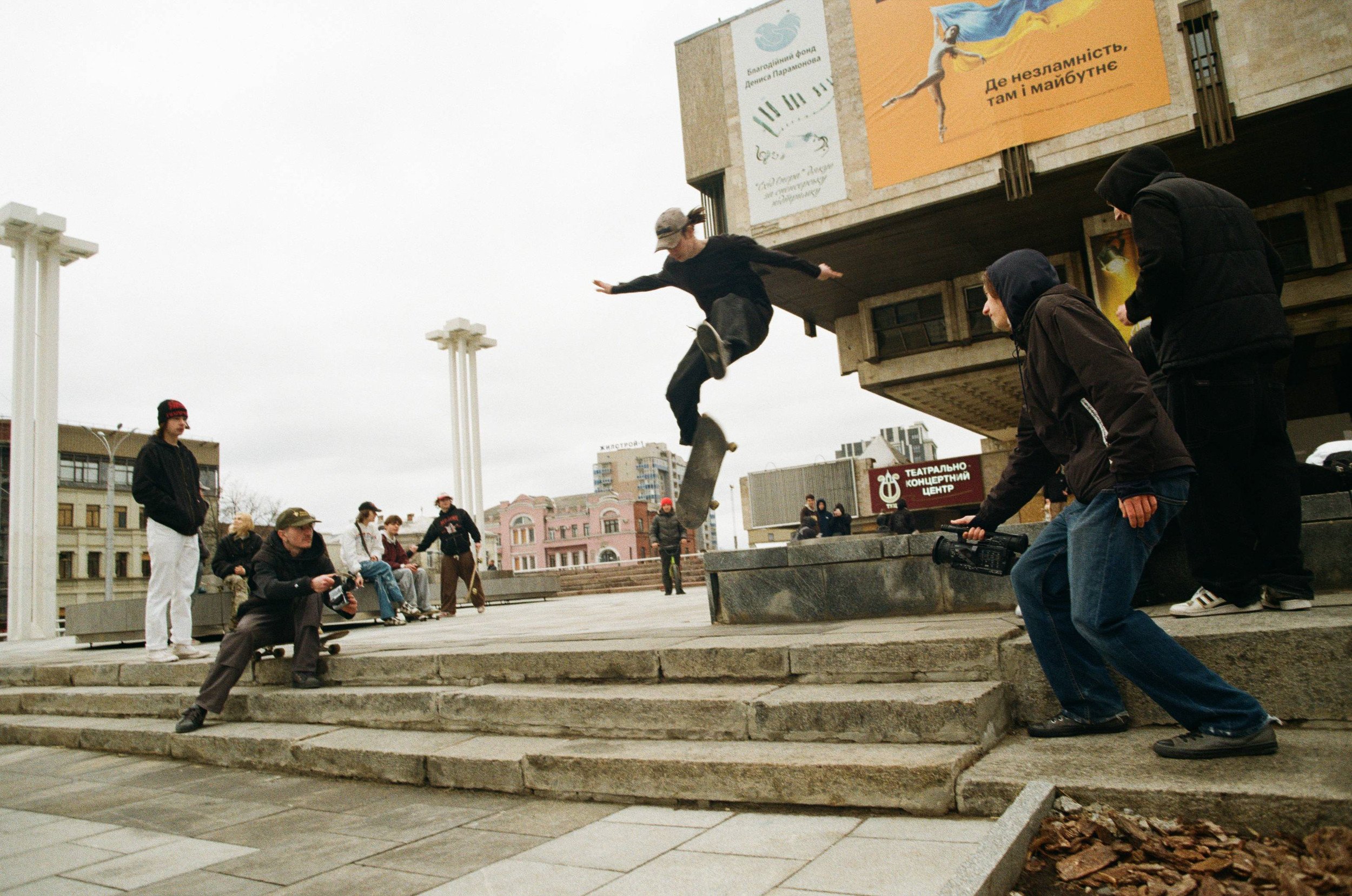
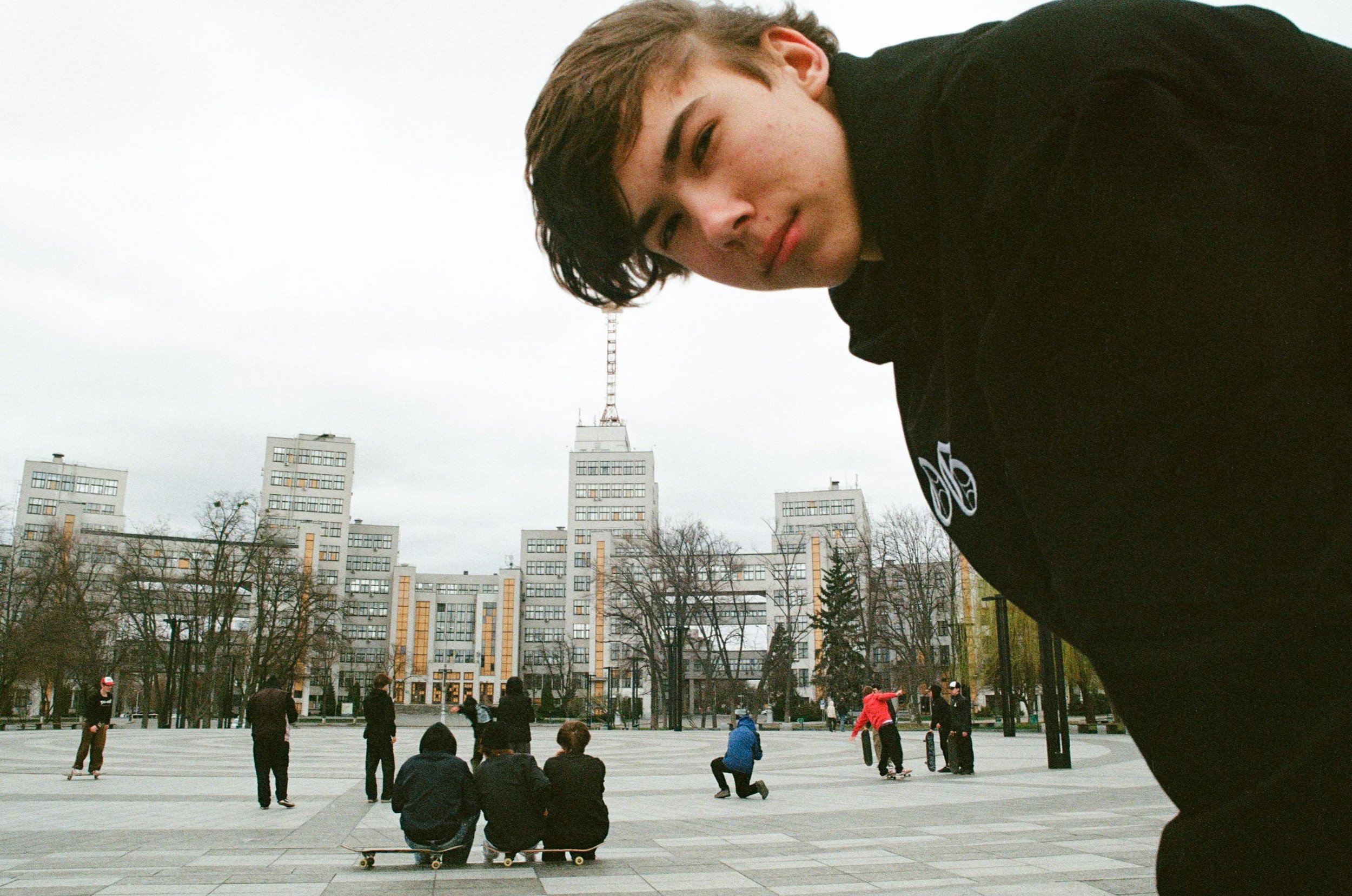
How would you define this image yourself: skateboarding during war—is it protest, escape, therapy, or something else?
Living under wartime conditions places an enormous burden on the mind. Remaining “normal” becomes extremely difficult. I still find it remarkable how deeply they immerse themselves in skateboarding.
The Hungarian psychologist Mihaly Csikszentmihalyi proposed the concept of “flow.” After World War II, in his war-devastated homeland of Hungary, he witnessed people losing hope in life. Time, that experience became the starting point for his exploration of how human beings can find mental harmony even under the most difficult and extreme conditions.
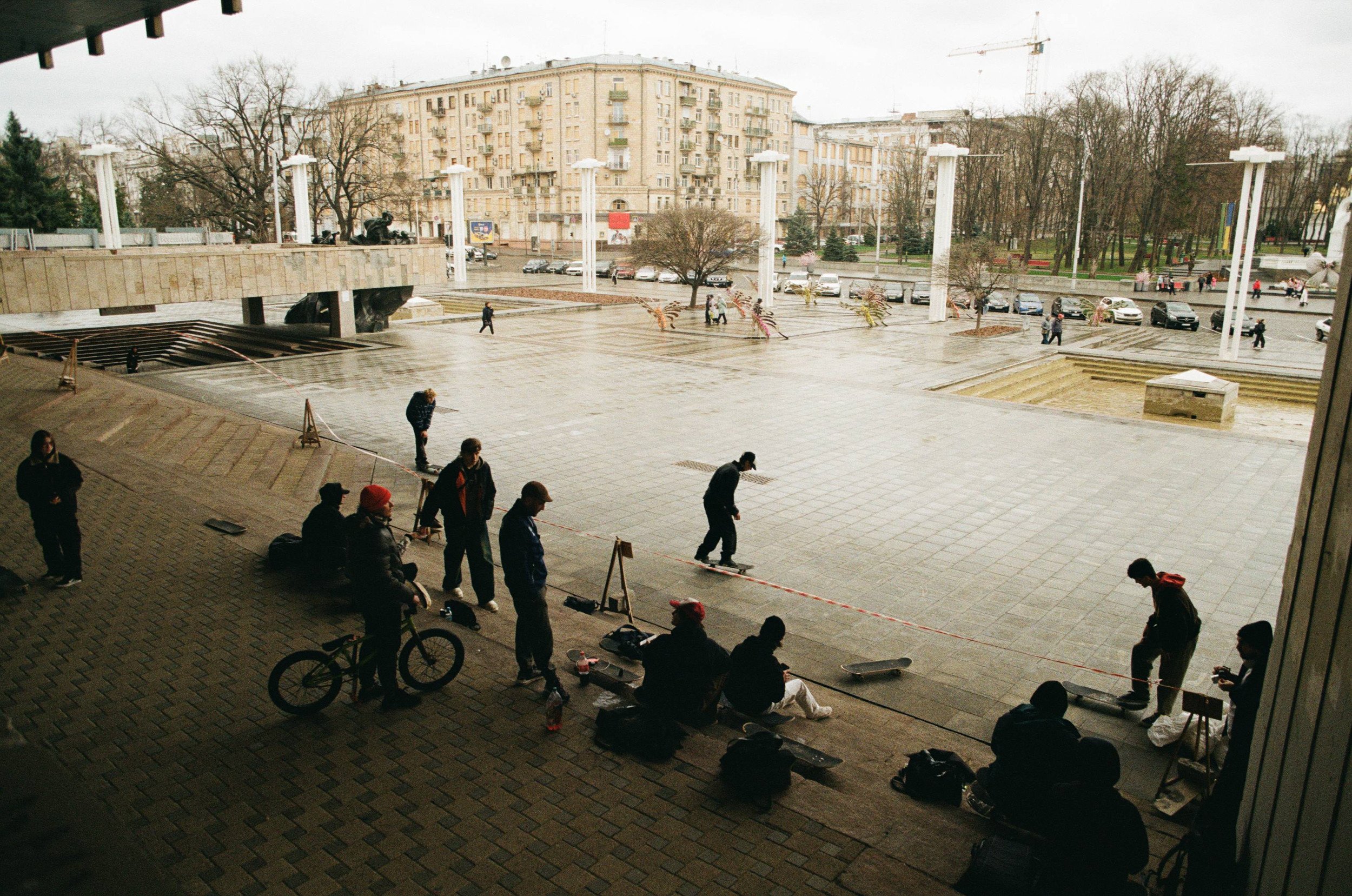
He described a flow state as involving intense concentration, losing awareness of one’s surroundings, engaging in an activity for its own sake rather than for evaluation or results, a distortion of time, diminished self-consciousness, and a strong sense of satisfaction.
Many conditions must be met to reach such a state. This is only my hypothesis, but I feel skateboarding may contain many of those conditions.
There is a balance between challenge and ability, clear goals such as landing a new trick, immediate feedback—success or failure—and most importantly, companions who share the experience.
Why do they skate not in well-equipped skateparks, but in central public squares? And why, even while skating together, does each person wear earphones and listen to loud music?
It begins to feel as if everything has a reason.
So, is it protest, escape, therapy, or something else? I think it is a way to remain oneself and to become a better version of oneself. No one tells them to skate. They decide to do it themselves. By engaging in something that is an end in itself, they try to regain control over their own lives. I believe this is something universal.
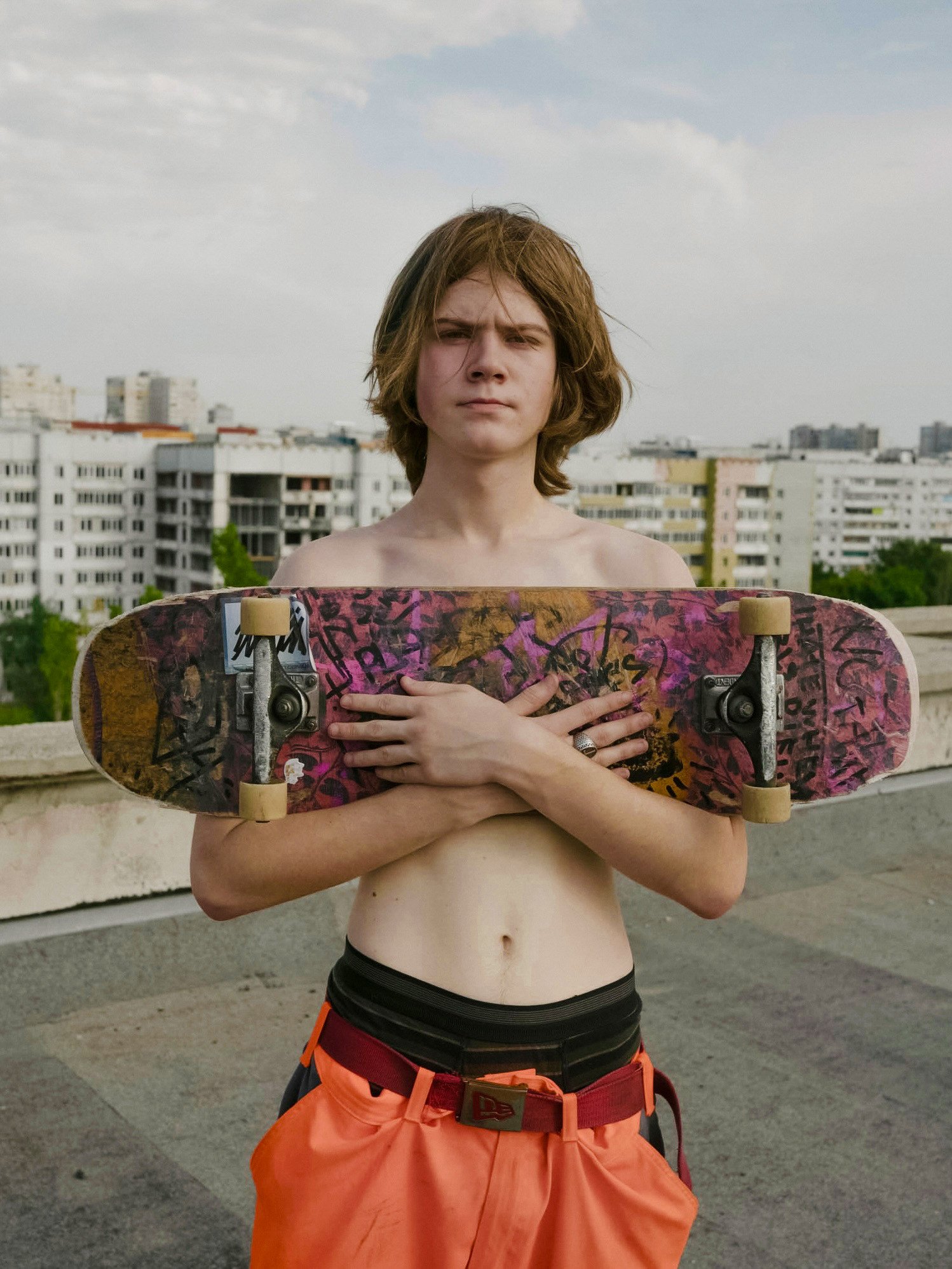
What strikes you more: the tricks, the spaces, or simply the fact of skating despite the danger?
I am not a skate photographer, so I am not particularly interested in the tricks themselves. What draws me is their inner world. Some grew up in complex family situations, and the war made life even harder. How do they overcome that?
To me, it feels like a crack in the timeline of a life. Do you fall into it, or do you leap over it?
I am interested in how teenagers, in such a sensitive period of life, confront the hopelessness of war and still try, through their own strength, to take control of their lives.
The responsibility of photographing war
How do you build connections with Ukrainians?
At first, Ukrainians felt difficult to approach. But the closer you become, the more you realize how warm, bright, and unwavering they are. Teenagers taught me how to skateboard. From an adult’s perspective, that might seem embarrassing. But I believe that showing everything—including weakness—is essential for building trust. It is about spending time together. Sometimes we drink coffee or alcohol, say stupid things, laugh, and of course, eat borshch.
By skating together in the same place, at the same time, and sharing that experience, a shared history begins to form. Little by little, understanding becomes possible.
Many people consciously try to switch off the topic of war. They often ask me, “Any news?” I realized they were not asking about war news—they wanted to hear something good, something enjoyable.
I do not force people to talk about the war. Instead, I sense it through behavior, gestures, and the deeper meaning of words.
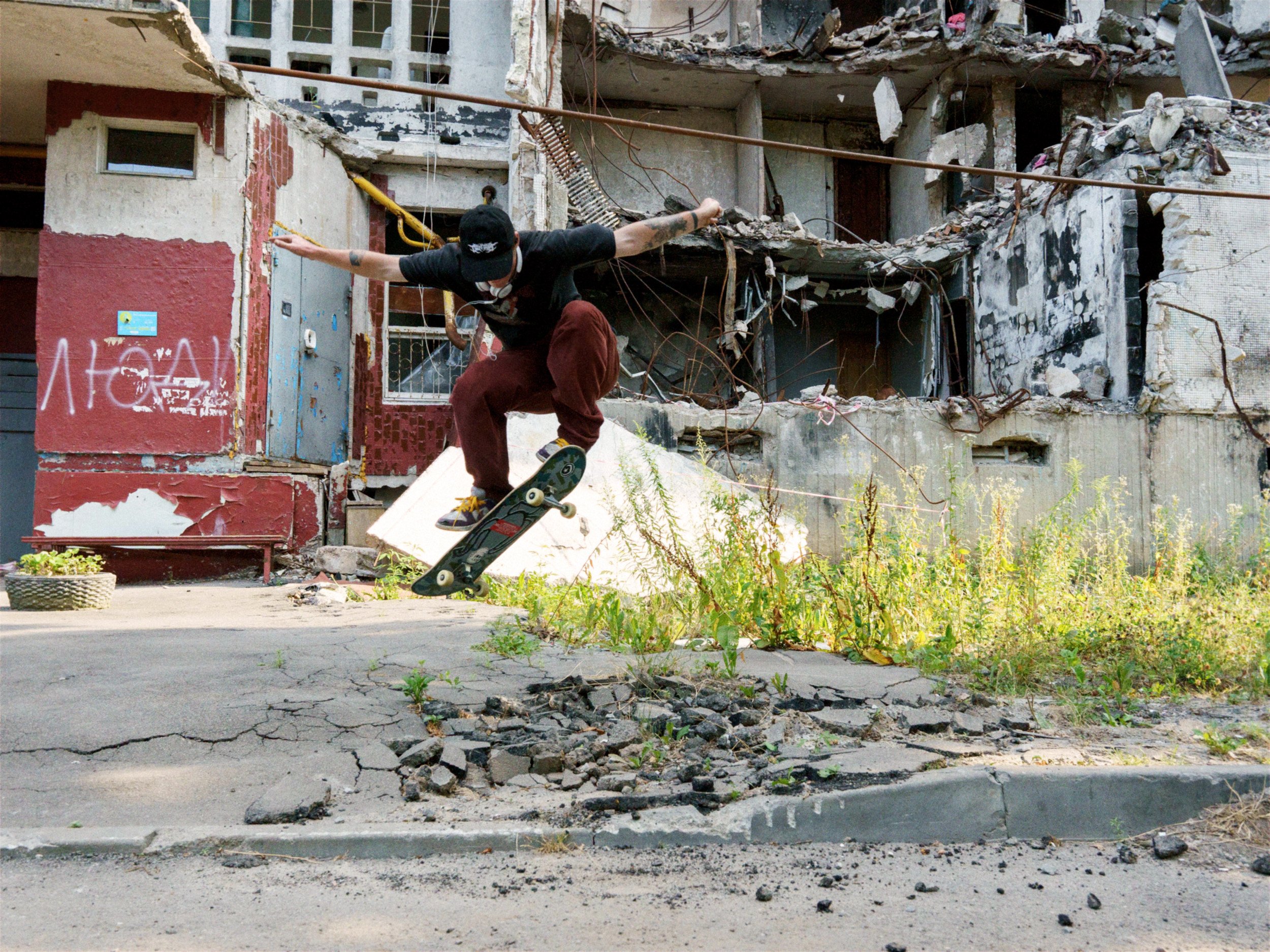
Were there stories that deeply affected you but never made it into the frame?
There are countless such stories. I am not working as a journalist. I am working as a photographer, which means my perspective and movement are different. Because of that, I was reported many times, interrogated by police, searched at military posts, and even had guns pointed at me. It was frustrating, but it is something that must be accepted in wartime.
Do you feel a sense of responsibility toward the people you photograph?
Of course. There are many photographs I have taken but have not published, and others that people want me to publish, but I have not yet been able to. I am always hesitating to press the shutter. When trust has not yet been built, I feel, “Not yet.”
Where do you draw the line between documenting war and aestheticizing it?
In the age of social media, people may spend only seconds looking at a photograph. Images that are intense or tragic attract attention, then disappear. I want to create photographs that allow viewers to imagine what lies beyond the frame—images that reward time and reflection.
In the early days of the Russian invasion, many journalists came from Japan. Now, I rarely see them. That makes me sad.
“Doing nothing because it is wartime is not an option”
Who are you taking these photographs for?
In the early stage of the invasion, there was strong interest in Japan, and I had media assignments. Now that interest has faded, attention has shifted elsewhere. Since it no longer functions as a job, I photograph entirely for myself, covering all expenses personally. I may not possess something as noble as a strong sense of justice. What sustains me is curiosity.
Of course, I would be happy if my work eventually brings comfort to people in Ukraine, but that is not something I can control.
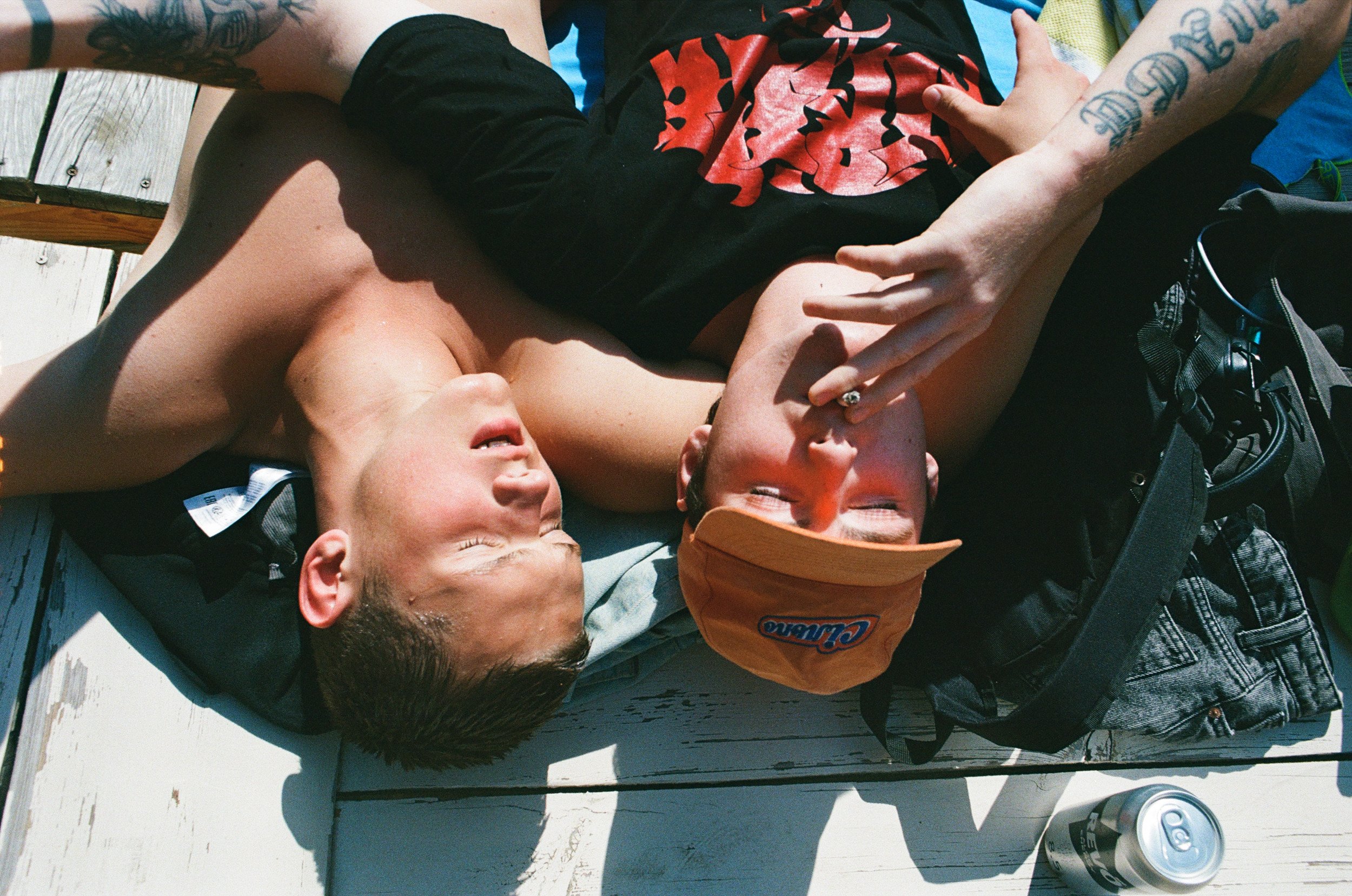
That is why I decided not to keep it one-sided. Last year, I made a dramatic film together with skaters in Kharkiv. All performers were non-professionals. I was the only crew member. It became a fully collaborative process, and a precious time. I am now preparing to edit the film.
How has the war changed you?
Just as teenagers devote themselves passionately to skateboarding, I began to devote myself passionately to photography again. I am grateful that photography exists in my life. My approach—suggesting unheard voices and unseen stories—has become stronger, closer to conviction.
Safety and freedom should always be guaranteed. I learned how fragile their foundations are. I still do not have a clear answer for how they should be protected. Physical youth lasts only a moment. But spiritual youth can be eternal. From the skaters in Kharkiv, I learned that “doing nothing because it is wartime” is not an option.
Did you experience fear—and how do you work with it?
I became used to it. When I hear an explosion, I think, “If I can hear it, I am still alive.” Now, when the sky flashes red, I count the seconds until the sound arrives and estimate the distance.
Even more frightening was going east—to places like Kostiantynivka or Lyman in the Donetsk region—and imagining the future lives of the people there. No one knows what will happen next. I imagined the fear of remaining in a place without knowing the future.
What are you taking with you from Ukraine, besides photographs?
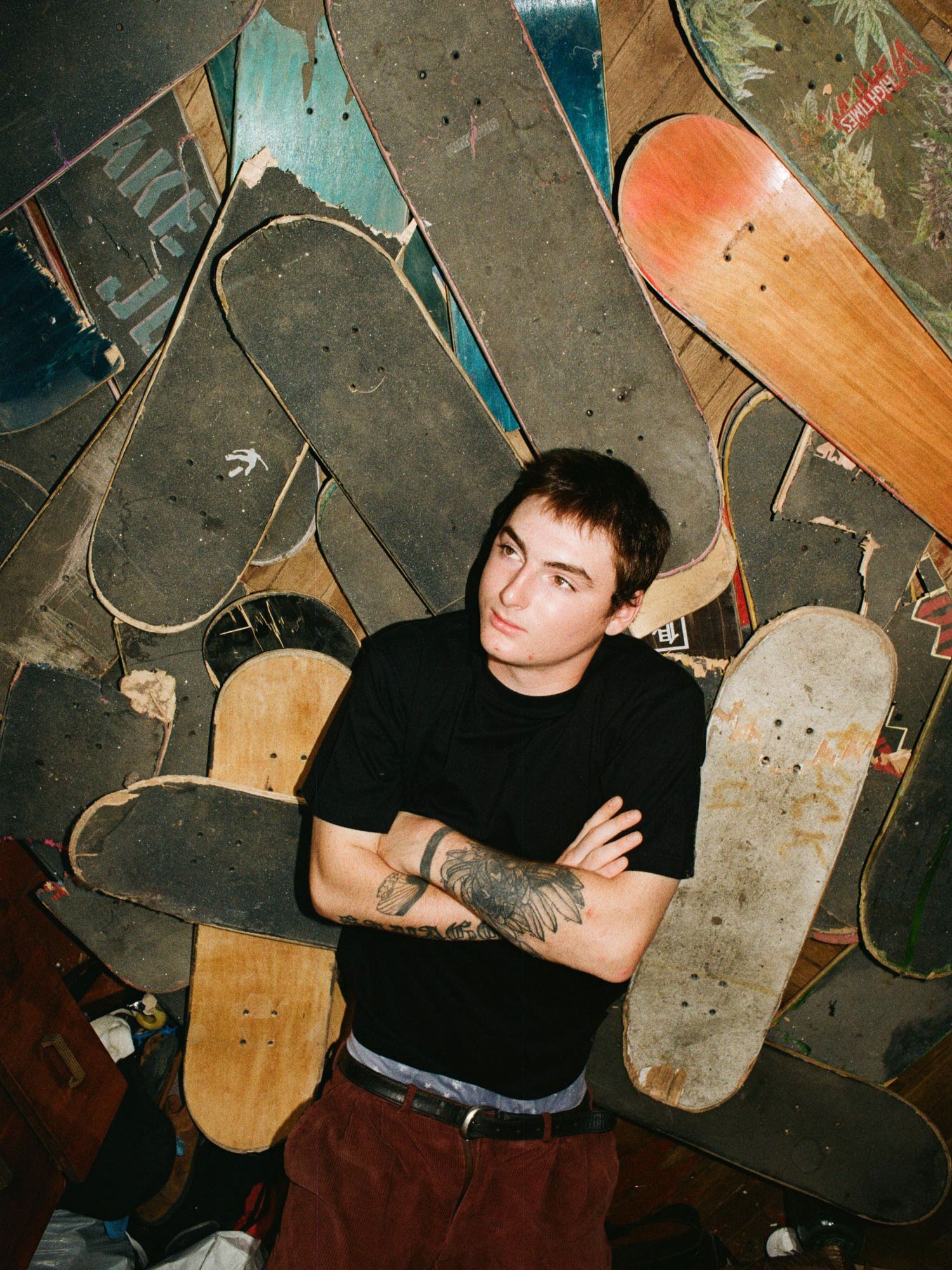
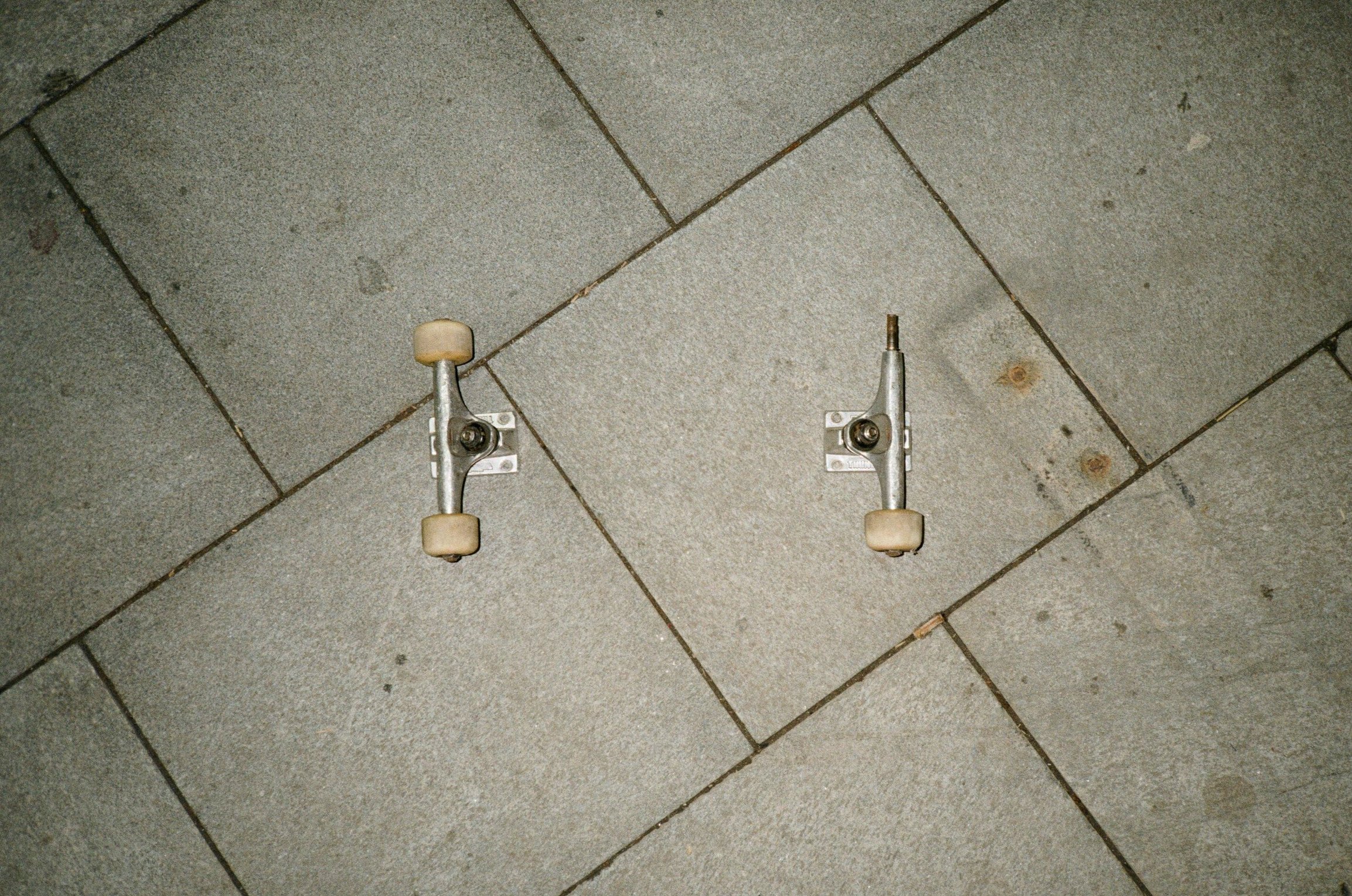
For now, nothing but memories—and a desire to maintain this strong passion. Physically, I have brought back old, broken skateboard decks and sneakers bought from the skaters.
One day, I hope to display them together with photographs in an exhibition.
What would you like to say to the audience through these photographs?
When people face difficulty, how do they respond? Do they get stuck, or do they break through? The movement between body and mind is the sensation of being alive itself.
How do we gain confidence, and how do we lose it again? What we can do differs for each person. I want to tell a story that is deeply personal, yet universal.
Discuss this article:

-206008aed5f329e86c52788e3e423f23.jpg "Photo of Oleksandr Moiseienko")
-f3430f0449615e9897dff835086ac204.jpg "Ukraine Broke With a Soviet-Era Military System and Rebuilt It Around the Soldier")
-e126c16a85d580738cf2d57e760b80a3.jpeg "Photo of Vladyslav Greziev")